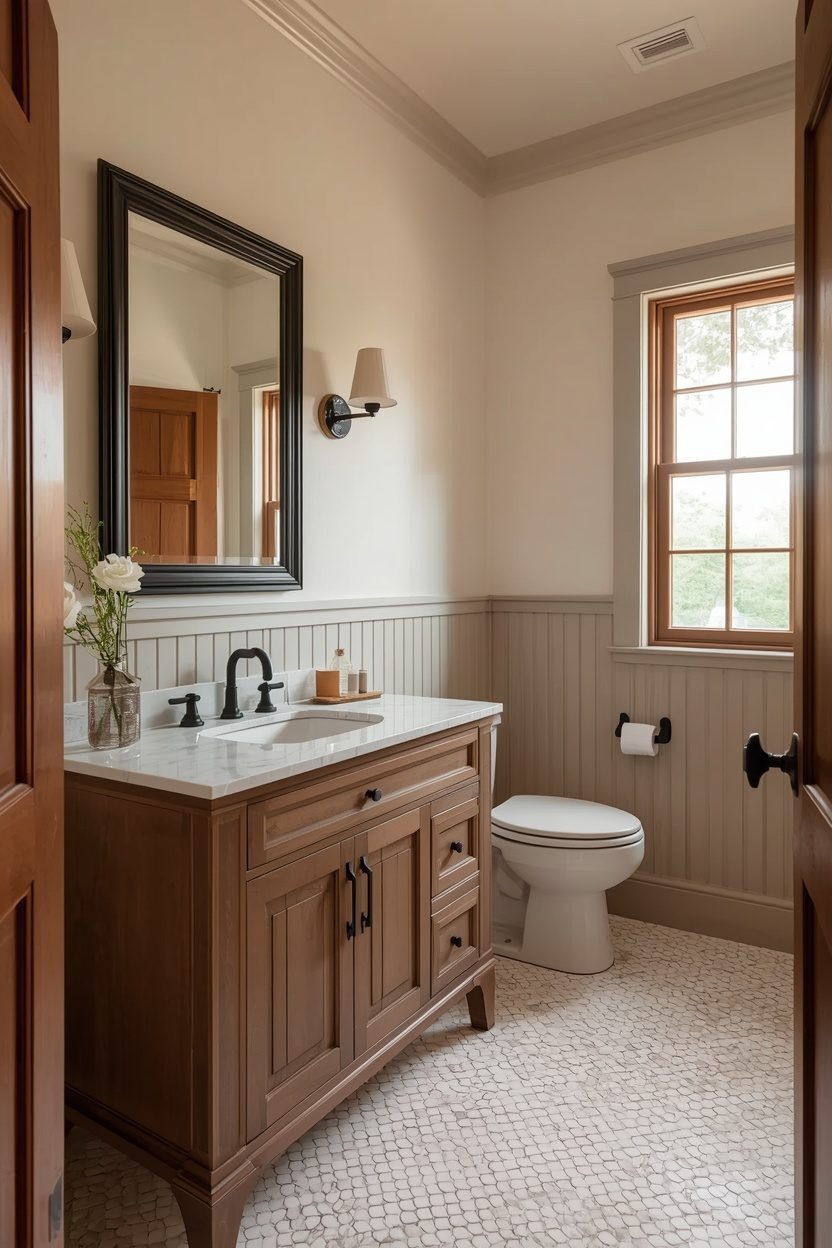
Traditional modern — often called transitional — is the sweet spot where classic, timeless detail meets clean contemporary lines, and it is one of the most expensive-looking styles you can create on a sensible budget. The trick is knowing where high-end looks come from: a few well-chosen materials, the right fixtures, and clever swaps that mimic luxury for a fraction of the price.
Each of these 15 traditional modern bathroom ideas is a complete look you can recreate, a whole room that blends classic warmth with modern simplicity. Throughout, you will find honest notes on where to save and where the affordable alternatives genuinely fool the eye, so find the version that suits your space and create a bathroom that reads high-end without the high cost.
1. The Marble-Look Porcelain Bathroom
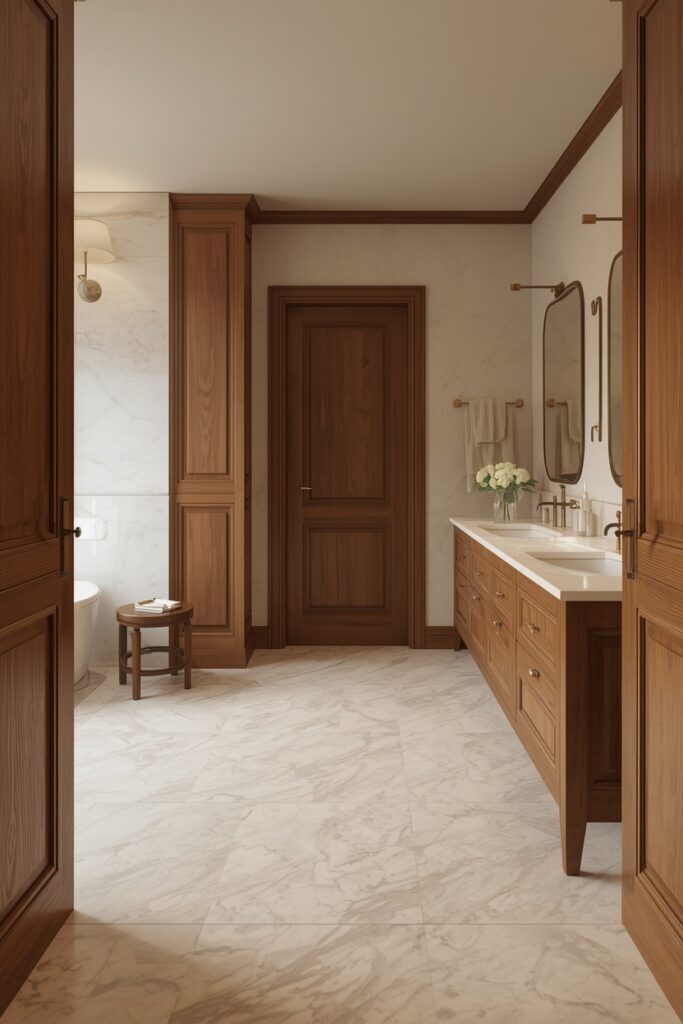
Nothing reads expensive quite like marble, but real marble is costly and high-maintenance — so the smartest budget move is large-format marble-look porcelain tile, which captures the soft grey veining at a fraction of the price. Run it across the floor or a feature wall, pair it with a simple modern vanity and classic fixtures, and the room instantly looks high-end. Porcelain is also non-porous and tougher than marble, so unlike the real thing it shrugs off water and stains. It is the single most convincing way to fake luxury, and most visitors will never know the difference.
2. The Classic Subway Tile With Modern Fixtures
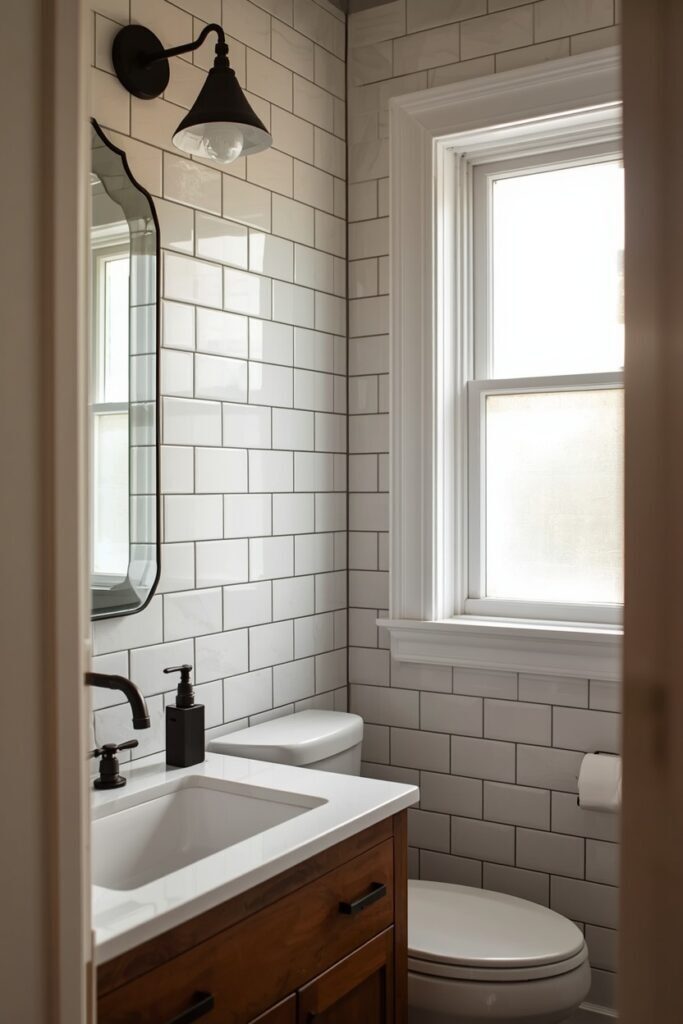
White subway tile is one of the most affordable backsplash and wall materials there is, yet paired with the right details it reads classic and expensive. Lay it in a clean running bond or a tailored herringbone, choose a soft grey or charcoal grout to define the pattern, and pair it with modern matte black or brushed brass fixtures for that traditional-meets-contemporary balance. The contrast of a humble, timeless tile with crisp modern hardware is exactly the transitional look. It proves that a high-end bathroom is far more about styling than about spending.
3. The Painted Vanity Refresh
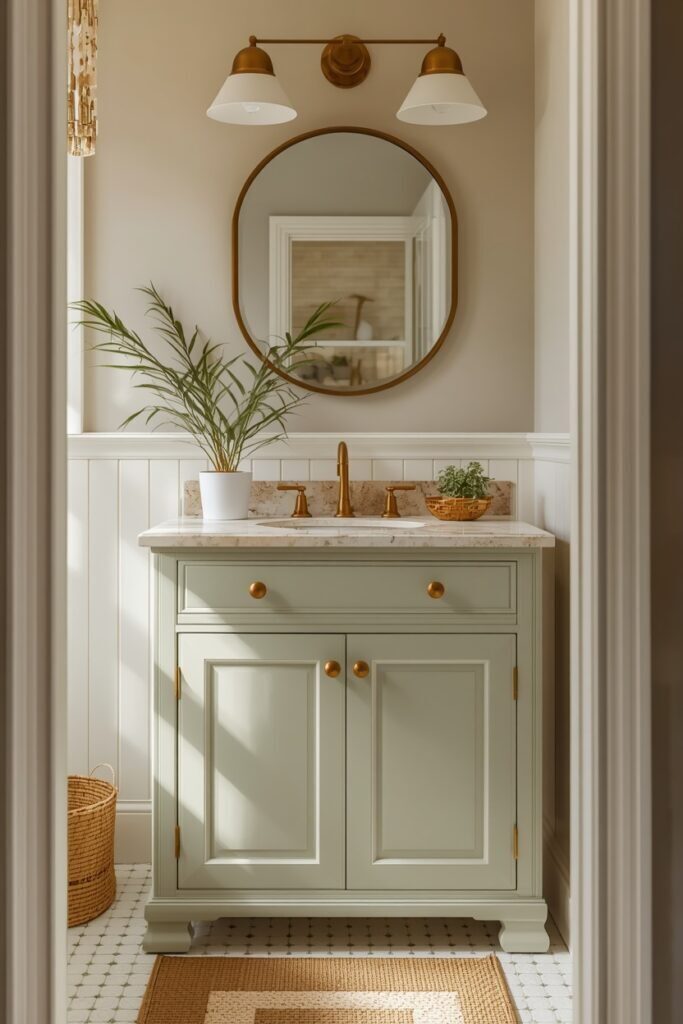
Replacing a vanity is expensive, but painting an existing one and swapping the hardware transforms it for very little. A coat of hardwearing cabinet paint in a soft sage, deep navy, warm greige, or classic off-white instantly updates a dated unit, and new brushed-brass or matte-black handles lift it to look custom. Add a new tap and a stone-look top and the vanity reads bespoke. It is one of the highest-impact, lowest-cost upgrades in any bathroom, turning the room’s biggest piece of furniture from tired to expensive-looking over a single weekend.
4. The Framed Mirror Upgrade
A plain frameless builder-grade mirror is a dead giveaway of a budget bathroom, and framing it is a cheap, transformative fix. Add a slim wood, brass, or black frame around the existing mirror, or replace it with an arched or round framed mirror, and the whole room reads more polished and intentional. The frame draws the eye and gives the vanity a finished focal point. It is a small, affordable change with an outsized effect, since a framed mirror is one of those details that quietly signals a considered, high-end bathroom rather than a basic one.
5. The Statement Fixture Swap
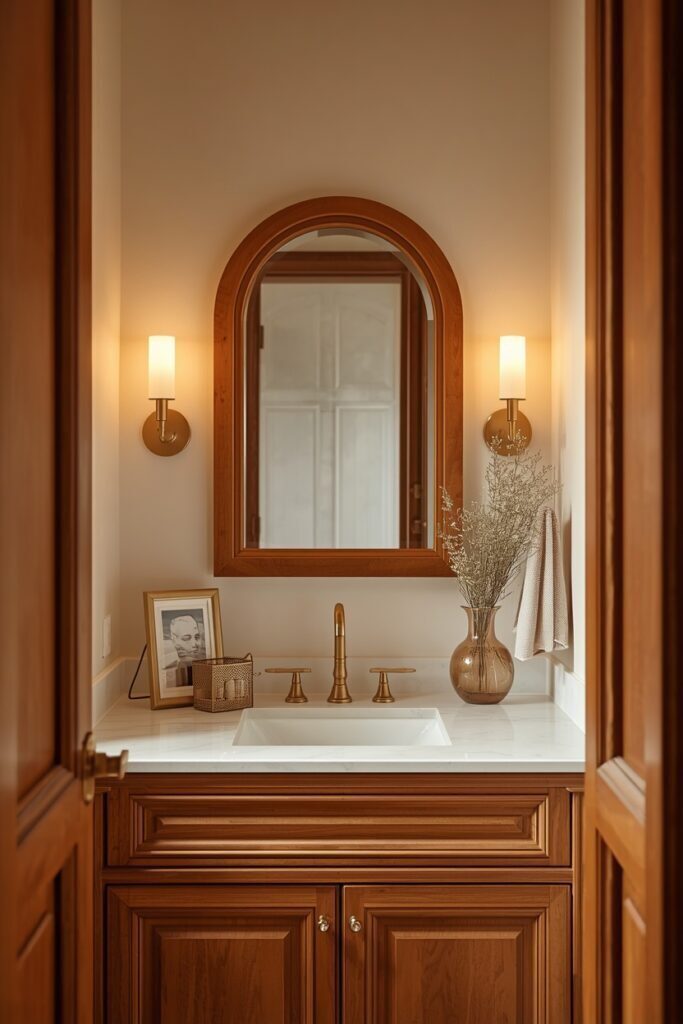
Swapping out dated chrome taps, the showerhead, and towel rails for a single cohesive tone — brushed brass, matte black, or warm gold — instantly elevates a bathroom and ties the whole scheme together. Keeping every metal in one tone is the trick that reads designed and expensive, where mismatched metals look accidental. Fixtures are a relatively small spend with a big visual return. It is one of the most effective transitional updates, because the contrast of warm or dark modern metals against classic white tile and a wood vanity is the heart of the traditional modern look.

6. The Panelled Wall Bathroom
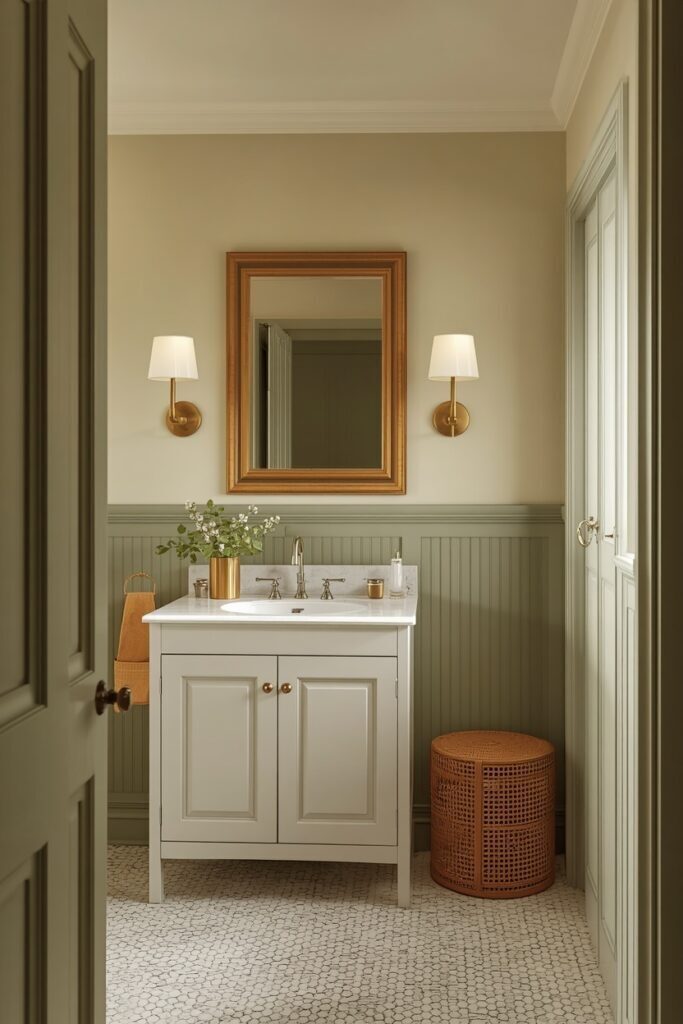
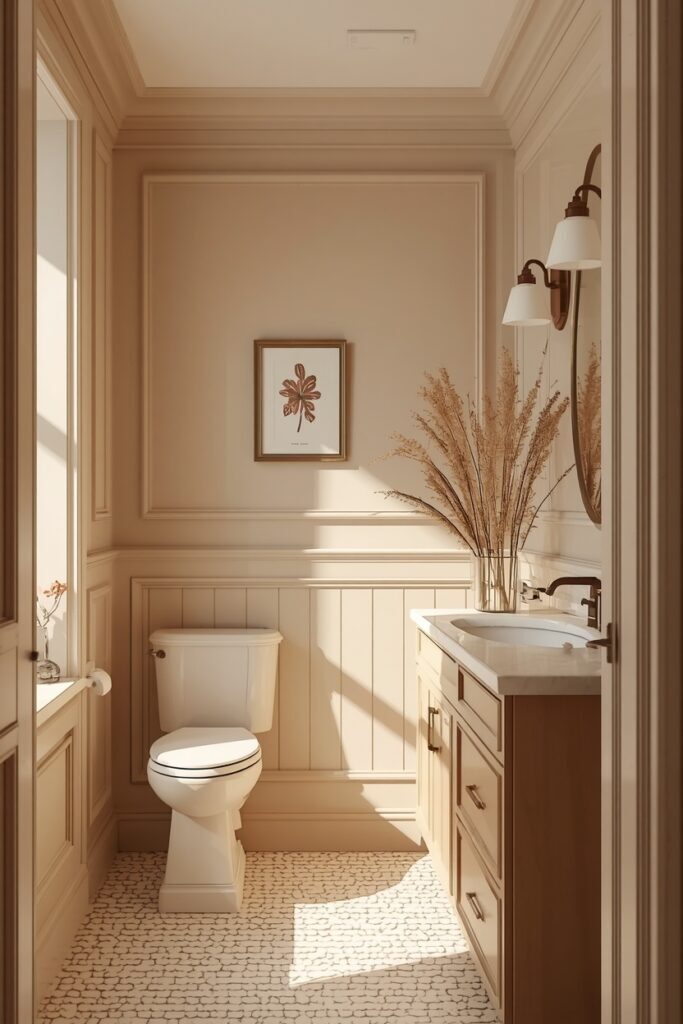
Wall panelling or wainscoting brings classic, characterful detail to a bathroom, and in budget-friendly MDF or simple beadboard it is genuinely affordable to add. Run it to dado height around the room or full-height behind the bath, paint it in a soft heritage tone, and pair it with a modern vanity and fixtures for that traditional-modern balance. The panelling adds texture and a sense of period craftsmanship that reads expensive. It suits anyone wanting to inject classic character cheaply, and the contrast of traditional moulding with clean contemporary fittings is exactly the transitional sweet spot.
7. The Sconce-Lit Vanity
Lighting is one of the clearest signals of an expensive bathroom, and swapping a single harsh ceiling light for a pair of wall sconces flanking the mirror instantly reads high-end and hotel-like. Choose sconces in your chosen metal tone, position them roughly at eye level on either side of the mirror for flattering, even light, and the vanity becomes a designed moment. Warm bulbs around 2700K keep the glow soft. It is an affordable upgrade with a luxurious payoff, since considered, layered lighting is something budget bathrooms almost always lack and high-end ones never do.

8. The Console or Pedestal Sink Bathroom
A console sink with slim metal legs or a classic pedestal basin brings an airy, traditional elegance that reads expensive, especially in a smaller bathroom or a powder room. The exposed legs and open form feel refined and a little vintage, and paired with modern fixtures and a framed mirror they strike the transitional balance beautifully. Console units are widely available at modest prices. It suits a compact space that needs character without bulk, and the classic silhouette of a console or pedestal sink lends a budget bathroom an instant sense of timeless, considered quality.

9. The Crisp White and Warm Wood Bathroom
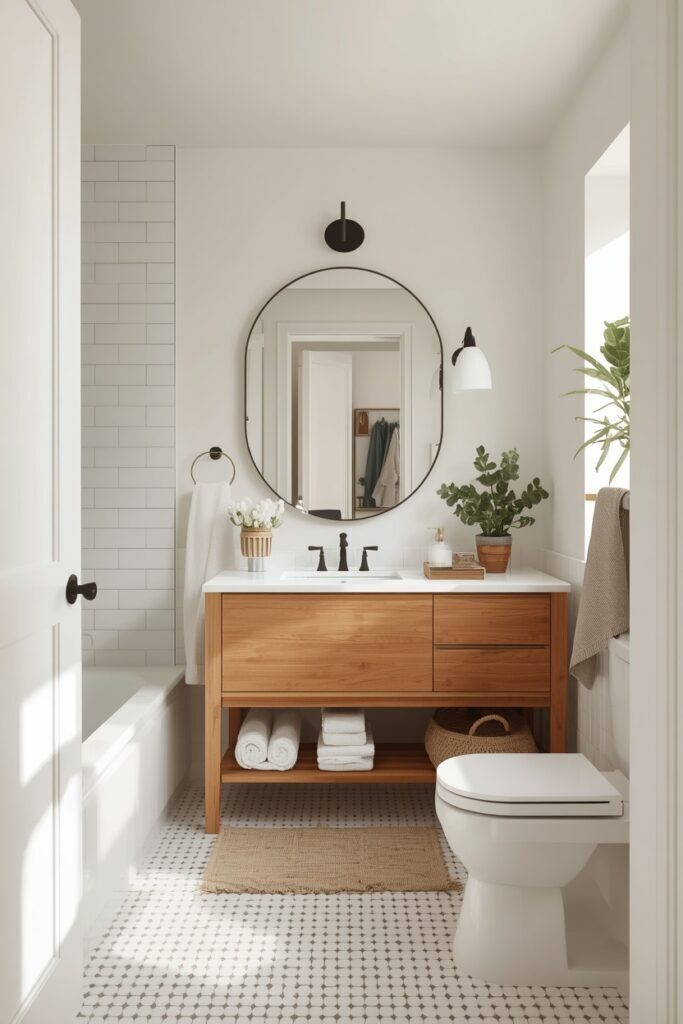
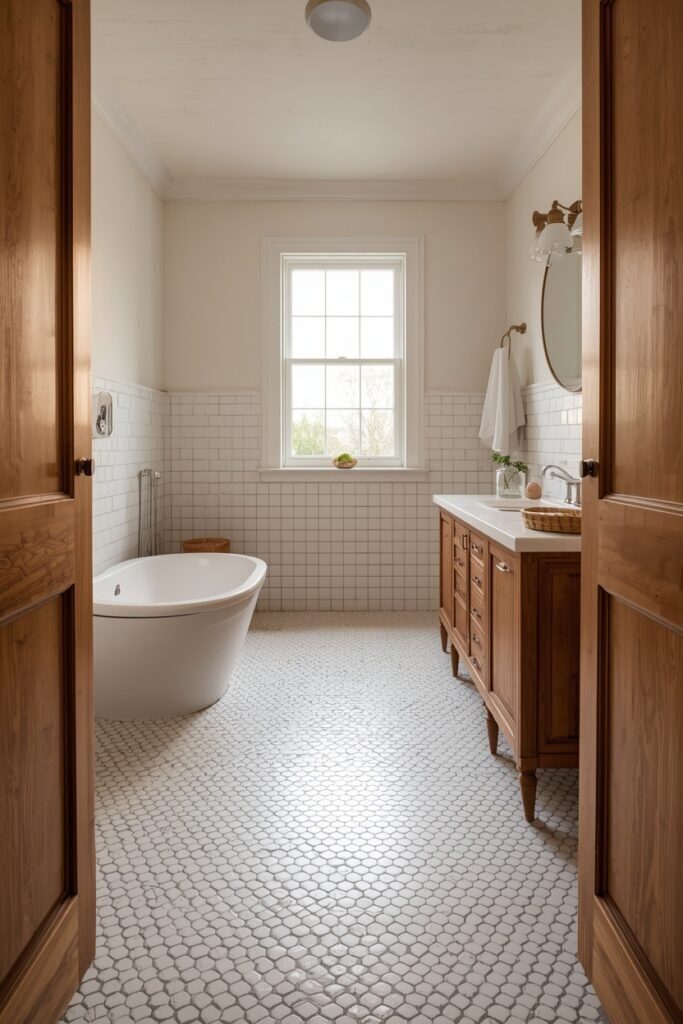
The most reliably timeless and affordable luxury scheme is crisp white paired with warm wood — white tile and walls keeping the room bright, wood bringing warmth and natural texture. A wood vanity or wood shelving against white instantly warms the space and reads high-end without any costly materials, and a few greenery and textile touches complete it. The pairing never dates. It suits anyone wanting a fail-safe, broadly appealing bathroom, and the simple combination of white and warm wood is the quiet backbone of countless expensive-looking transitional bathrooms.
10. The Picture-Frame Moulding Wall
Adding simple picture-frame moulding — lengths of affordable trim arranged in rectangles on a painted wall — brings classic architectural detail that makes a plain bathroom look custom and expensive. Painted the same colour as the wall for a tonal, sophisticated effect, the moulding adds depth and craftsmanship for the cost of a few strips of timber. Pair it with modern fixtures to keep the look current. It is a clever, low-cost way to add traditional character, and the subtle shadow and structure of frame moulding is exactly the kind of detail that reads high-end and considered.
11. The Classic Hex or Penny Floor
A classic hexagon or penny-round floor tile in white or soft marble tones brings timeless, slightly vintage character that reads expensive, especially when set off with a contrasting grout. These small mosaic tiles come on mesh sheets, so they are affordable and achievable, and they instantly give a bathroom floor a designer, considered quality. Pair them with simple white walls and modern fixtures for the transitional balance. It suits anyone wanting a floor with character on a budget, since a patterned classic floor tile is one of the most recognisable signatures of a high-end traditional bathroom.
12. The Layered Textile Bathroom
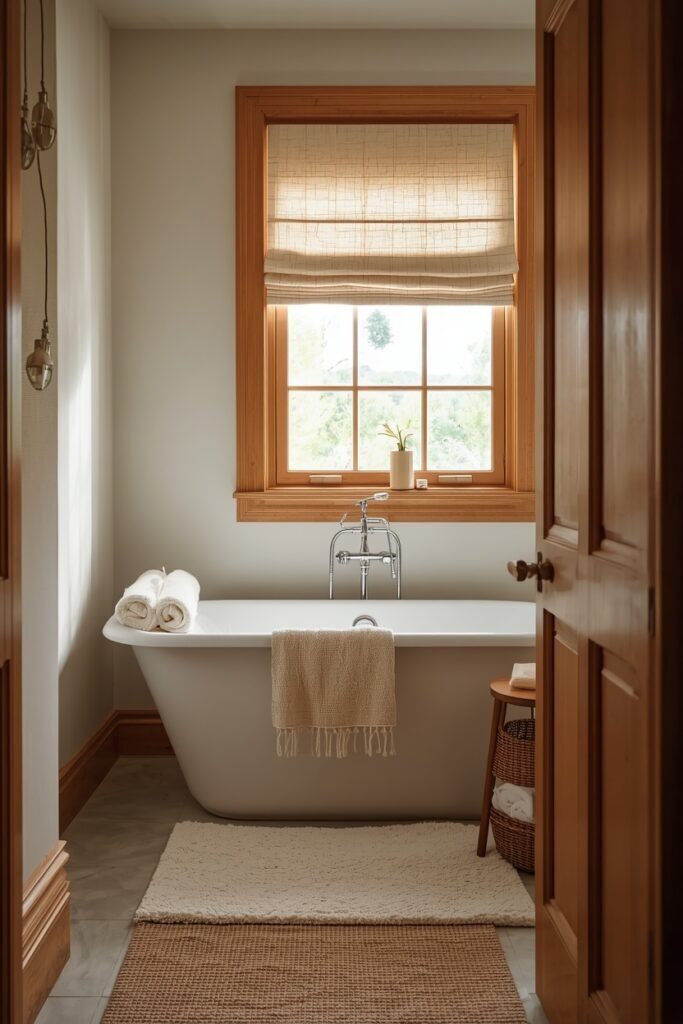
Soft furnishings make a bathroom read warm and expensive rather than cold and basic, and they cost very little. A Roman blind or a linen curtain at the window, a plush bath mat, rolled spa-style towels, and a small rug bring colour, texture, and a hotel-like sense of comfort. Keeping the textiles tonal and natural — linen, cotton, soft neutrals — reads refined. It is an affordable finishing layer that transforms the mood, since the difference between a budget bathroom and a luxurious one is often simply the presence of soft, considered textiles where a basic room has none.
13. The Hotel-Style Open Shelving
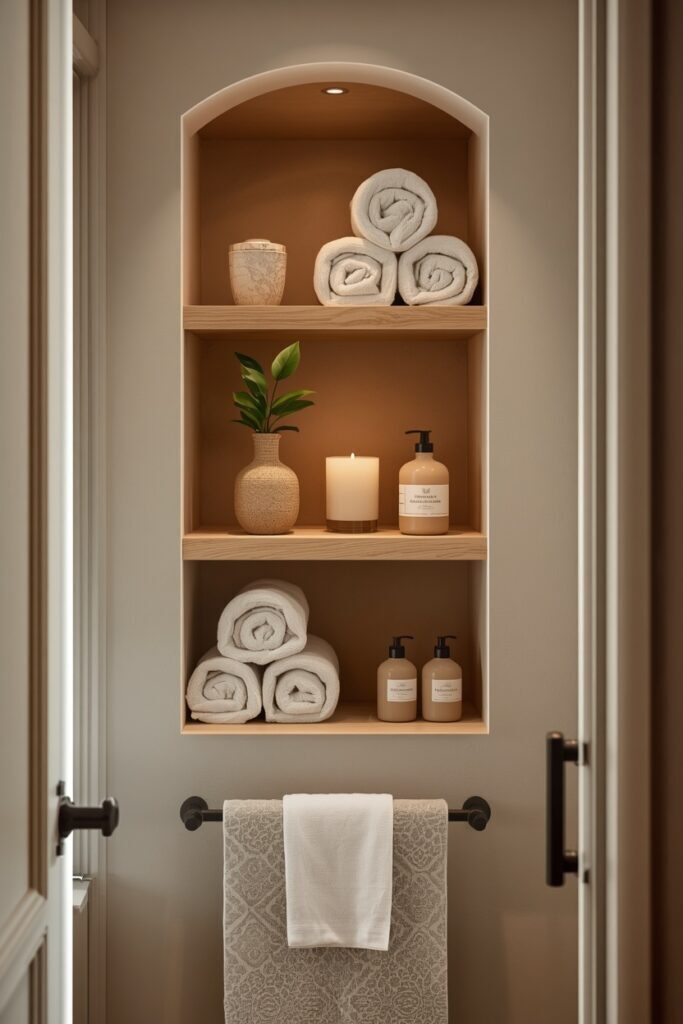
Styling open shelving or a niche like a boutique hotel — rolled white towels, a small plant, a candle, and a tray of toiletries decanted into matching bottles — brings an expensive, curated look for almost nothing. The trick is restraint and uniformity: matching containers and a few well-chosen objects read luxurious, where clutter reads cheap. A simple wood or metal shelf holds it all. It is pure styling, costing little beyond a few containers, yet it delivers the polished, considered display that makes high-end bathrooms feel like a retreat and budget ones rarely achieve.
14. The Deep-Clean and Regrout Refresh
Before spending anything on new materials, a thorough refresh — regrouting tired tile, recaulking the bath and basin, and deep-cleaning every surface — can make an existing bathroom look dramatically more expensive on its own. Discoloured grout and yellowing caulk are the clearest signs of a neglected room, and crisp white grout lines instantly read clean and high-end. It costs little more than time and a few materials. It is the unglamorous but genuinely transformative starting point, proving that much of what makes a bathroom look cheap is wear and grime rather than the fittings themselves.
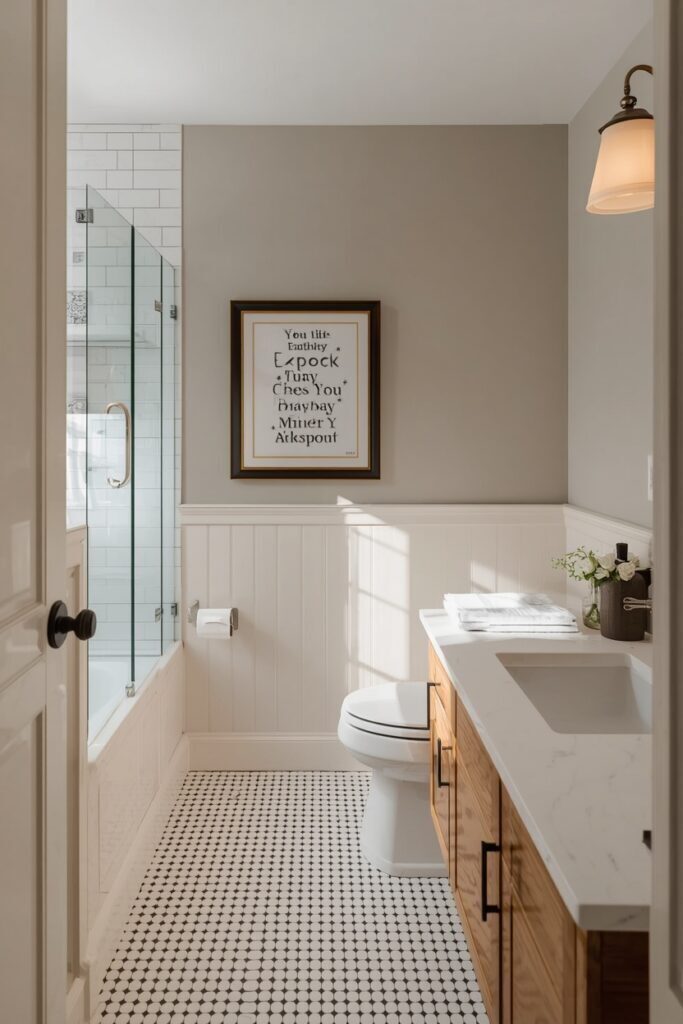
15. The Complete Traditional Modern Bathroom
Bringing it all together, the complete traditional modern bathroom pairs marble-look porcelain or classic tile with a painted wood vanity, a framed mirror, coordinated brass or black fixtures, wall sconces, panelling or frame moulding, and styled hotel-like textiles and shelving. Each element either mimics luxury affordably or upgrades an existing feature, and keeping the metals and palette cohesive is what makes the whole room read high-end. The blend of classic detail and clean modern fittings is the timeless transitional balance. The result is a bathroom that looks genuinely expensive and considered, achieved almost entirely through smart materials, coordinated fixtures, and careful styling rather than a big budget.
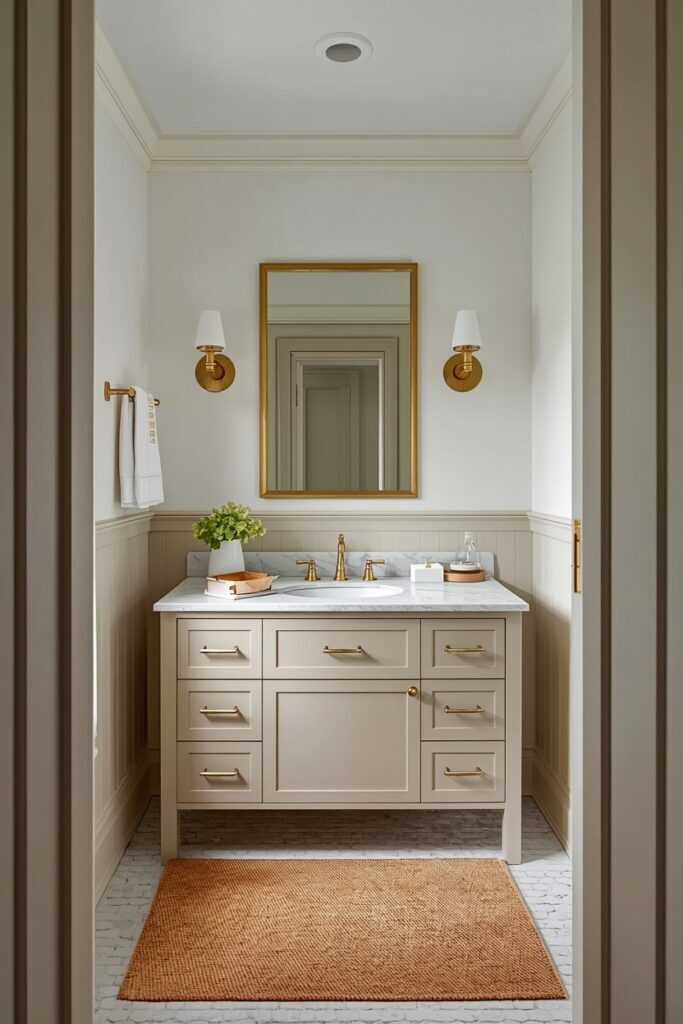
Where I’d Start if I Only Did Three Things
If I were making a bathroom look expensive on a budget, I would start with the things that fake luxury most convincingly: marble-look porcelain tile and a single cohesive metal tone across every fixture, since those two choices read high-end and cost a fraction of the real thing. Next, I would upgrade what is already there — paint the vanity, swap the hardware, and frame the mirror — because refreshing existing features is far cheaper than replacing them and lifts the whole room. Third, I would add wall sconces and styled textiles for that hotel-like finish. Convincing materials, coordinated fixtures, and a few styled upgrades: that trio makes a bathroom look expensive without the high cost.
FAQs
What makes a bathroom look expensive without spending a lot?
The most convincing high-end signals are surprisingly affordable: marble-look porcelain tile instead of real marble, a single coordinated metal tone across all the fixtures, a framed mirror rather than a plain builder one, wall sconces for layered lighting, and styled hotel-like textiles. Upgrading what you already have — painting the vanity, swapping hardware, and regrouting tired tile — also lifts the room dramatically for very little. Expensive-looking bathrooms are far more about cohesion, clean surfaces, and considered styling than about how much you actually spend.
What is a traditional modern bathroom style?
Traditional modern, often called transitional, blends timeless classic detail with clean contemporary lines for a look that feels both warm and current. Think classic elements like subway tile, panelling, a framed mirror, and a console or wood vanity, paired with modern fixtures in matte black or brushed brass and simple, uncluttered styling. It sits comfortably between fully traditional and fully modern, which is part of why it reads so expensive and never dates. The contrast of classic warmth and modern simplicity is the heart of the style.
What are the cheapest high-impact bathroom updates?
The biggest visual returns for the least money come from painting the vanity and swapping its hardware, framing or replacing the mirror, changing the taps and fixtures to one cohesive tone, regrouting and recaulking, and adding styled textiles and a couple of wall sconces. Marble-look porcelain or peel-and-stick options can refresh a wall affordably too. None of these require a full renovation, yet together they transform how expensive a bathroom looks, which is why a considered budget refresh often rivals a costly remodel in visual impact.
How do I make builder-grade bathroom features look high-end?
Focus on the giveaways. Frame a plain builder mirror with slim wood, brass, or black trim; paint a basic vanity and add quality hardware; swap dated chrome fixtures for a single warmer or darker tone; and regrout tired tile so the lines read crisp and white. Add wall sconces in place of a harsh ceiling light, and style surfaces with matching containers, rolled towels, and a plant. These targeted upgrades disguise the budget origins of standard fittings and give the whole bathroom a custom, expensive look.
Final Thoughts
A traditional modern bathroom is the perfect style to fake luxury on a budget, because its blend of timeless classic detail and clean modern fittings reads expensive while relying on smart choices rather than costly materials. Lean on the convincing fakes like marble-look porcelain and a single coordinated metal tone, upgrade what you already have by painting the vanity, framing the mirror, and swapping hardware, then add sconces and styled textiles for that hotel-like polish. Whichever complete look suits your space, build it around cohesion and clever swaps, and your bathroom will read genuinely high-end without the high cost.
Leave a Reply