
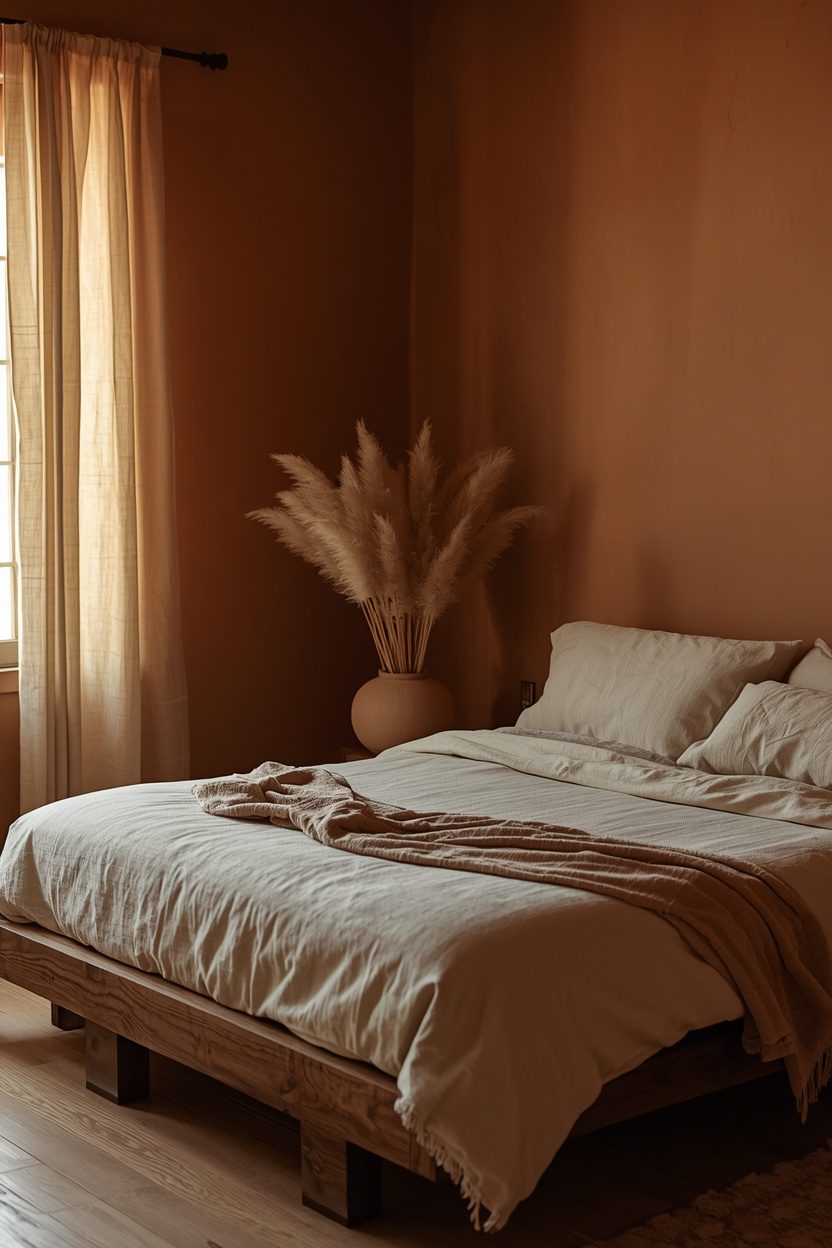
The internet has turned wabi sabi bedroom design into a synonym for beige minimalism, but that misses the entire philosophy. True wabi-sabi is not about buying fewer things in neutral tones — it is about choosing materials that show their age honestly, arranging a room without forcing symmetry, and finding beauty in the crack, the worn edge, and the handmade wobble. These ideas lean into that real definition, and each one includes at least one deliberately imperfect element that a typical decor guide would smooth away.
None of this requires an expensive renovation. Most of these concepts start with what you already have — stripping back layers, choosing raw over polished, and letting your bedroom breathe rather than perform. If your room currently looks too curated or too cluttered, both roads lead here.
1. Raw Linen Bedding on a Weathered Wood Frame
Start with undyed flax linen sheets and a matching duvet cover in their natural oatmeal tone — the fabric wrinkles the moment you pull it from the dryer, and that is the point. Pair the bedding with a bed frame in reclaimed or wire-brushed oak where the grain stands up in visible ridges beneath your fingertips. Skip the perfectly matched nightstands and instead use a rough-hewn wooden stool on one side and a stack of old hardcover books on the other.
The asymmetry creates a lived-in quality that symmetrical setups cannot replicate. A single dried branch in a clay jar on the stool replaces a lamp-and-clock arrangement.
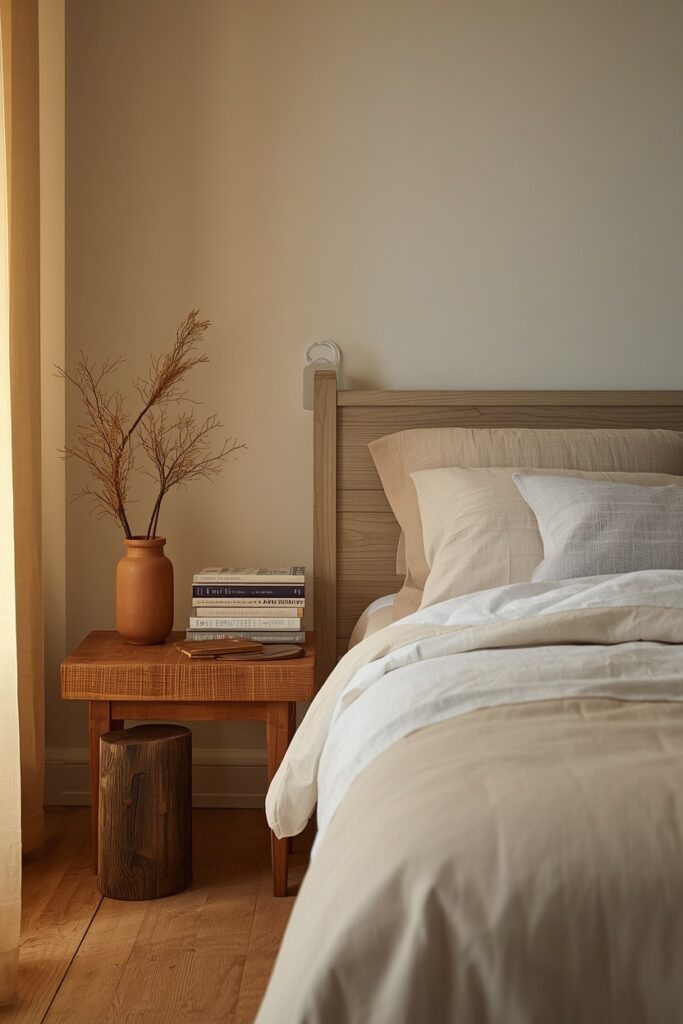
This room starts looking right from the first night because linen only improves with washing — it softens, it drapes differently, and it develops character that cotton never will.
2. Clay-Plastered Accent Wall Bedroom
Apply natural clay plaster to the wall behind your bed in a warm putty or soft terracotta and leave the trowel marks slightly visible rather than buffing them smooth. The surface will show subtle variation in colour and depth that changes as light moves across it during the day. Keep the remaining three walls in a quiet off-white to let the clay wall do all the talking. Dress the bed in a cream linen coverlet and add a single wool throw in a muted rust that picks up the warmest tones in the plaster. Clay plaster regulates humidity naturally — it absorbs excess moisture and releases it when the air dries — which makes it genuinely functional in a sleeping space. The material costs roughly double that of standard paint, but you save on labour because imperfection is built into the technique.

3. Low Platform Wabi Sabi Bedroom with Natural Grain
A platform bed sitting just 200 mm off the floor, built from wide planks of unvarnished ash or cedar, grounds the room immediately and forces everything else to sit lower with it. Place the mattress directly on the platform without a box spring so the wooden edge is visible all around like a frame. Bedside lighting should come from paper lanterns or simple ceramic lamps resting on the floor or on a single low shelf. The low profile makes the ceiling appear taller and the room larger, which is particularly useful in compact bedrooms.
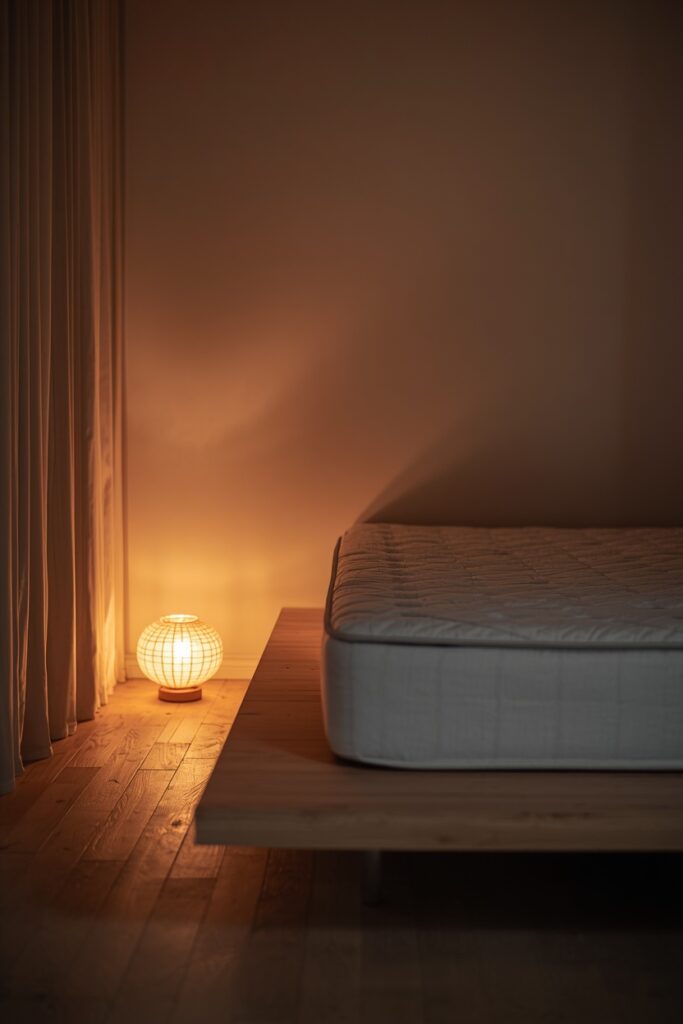
Leave the wood unsealed or treat it with a natural hard-wax oil that allows the grain to darken naturally over years of use. This wabi sabi bedroom setup is the most direct expression of the philosophy: close to the ground, honest materials, nothing hidden.
4. Handmade Ceramic Bedside Setup
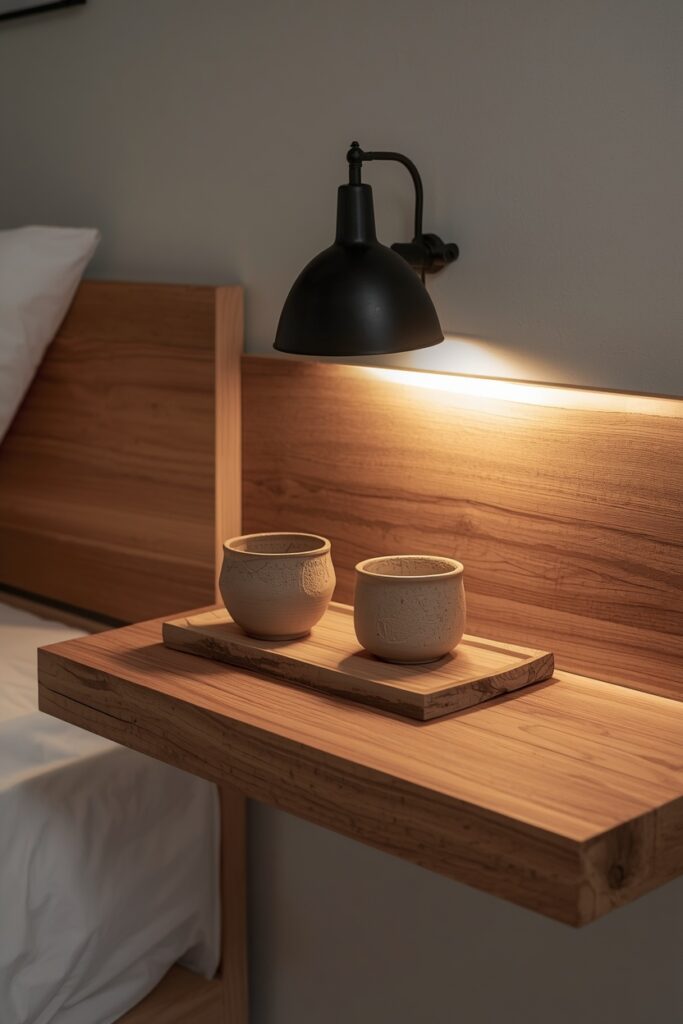
Replace mass-produced nightstand accessories with a collection of handmade ceramics — a pinch pot for rings, a rough-thrown mug for water, and a small slab-built tray for your phone. Each piece should look like it was made by a human hand, with visible finger marks, uneven glazes, and slightly off-centre shapes. Group them on a thick slab of live-edge timber or a simple reclaimed plank shelf mounted at mattress height. The warmth of uneven pottery against raw wood creates a corner of the room that invites you to slow down.
Seek out local potters or small-batch makers rather than mass-market ceramics painted to look handmade — the difference is visible and tactile. This is a low-cost entry point into the aesthetic because you are furnishing a single surface, not the whole room.
5. Undyed Wool and Cotton Layered Bedroom
Layer the bed with textiles in their natural, undyed states — raw cotton sheets, an undyed wool blanket, and a chunky hand-knit throw in cream wool — so the colour palette comes entirely from the fibres themselves. Each textile will be a slightly different shade of white, cream, or oatmeal, and those subtle differences create depth without introducing any dye at all. Drape the wool blanket at an angle across the foot of the bed rather than folding it symmetrically.
Add a pair of linen euro shams — not plumped to bursting but relaxed, with visible creases — behind your sleeping pillows. The texture does the work here: the nubby weave of raw wool against the smooth drape of cotton against the slubby weight of linen.

Skip fabric softener entirely so each material keeps its natural hand and does not blur into the same generic softness.
6. Cracked Plaster Feature Wall
Instead of repairing hairline cracks in old plaster, lean into them — sand the wall lightly, apply a thinned lime wash in warm white, and let the cracks show through as natural texture. This only applies to cosmetic surface cracks, not structural damage, so check that the wall is solid behind the plaster before committing. The lime wash settles unevenly into cracks and pits, creating a surface that looks like it belongs in a centuries-old farmhouse. Pair the wall with a simple iron bed frame — not ornate, just clean lines in dark metal — and white bedding to keep the focus on the wall’s character.
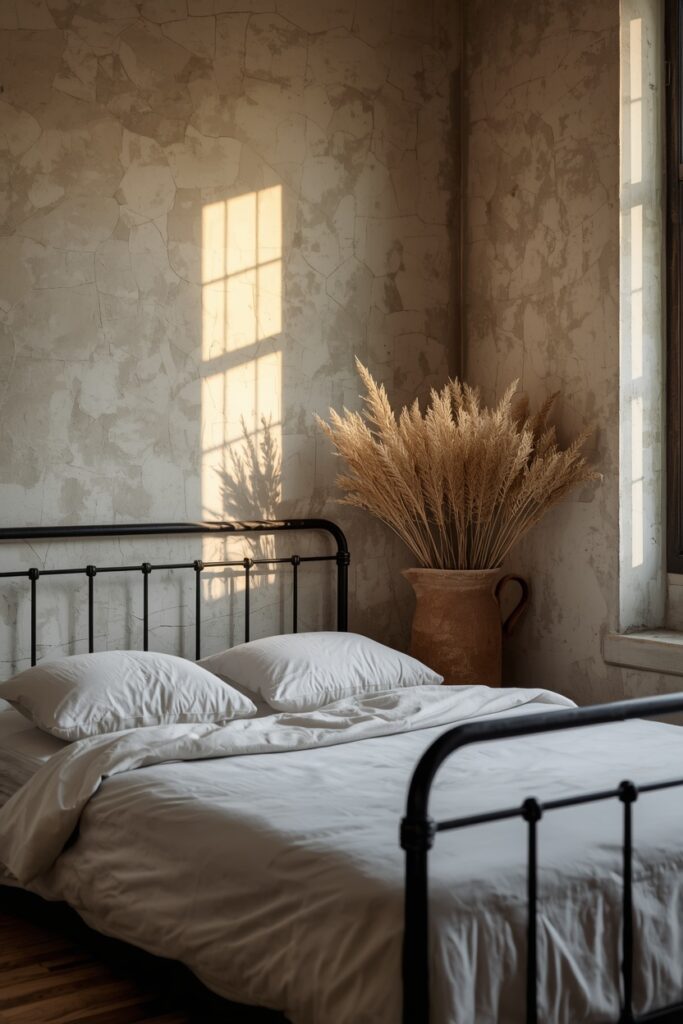
A single oversized dried floral arrangement in a stoneware pitcher beside the bed adds a vertical element that draws the eye upward. This is one of the rare cases where doing less renovation work produces a better result.
7. Driftwood and River Stone Bedroom
Bring the outdoors in literally by using a large piece of driftwood as a wall-mounted headboard and placing a few smooth river stones on a tray at the bedside. The driftwood should be a substantial piece — wide enough to span at least two-thirds of the bed — and mounted with heavy-duty brackets behind it so it floats against the wall. Its natural twists, grey tones, and weathered surface become the room’s centrepiece. Keep the rest of the room spare: white walls, a simple cotton bedspread, and bare wooden floors. The river stones serve no functional purpose except to remind you of a riverbank, and that is enough. This concept demands restraint everywhere else — one piece of found wood and a handful of stones can carry a room only if nothing else competes for attention.

8. Paper Lantern Soft Glow Bedroom
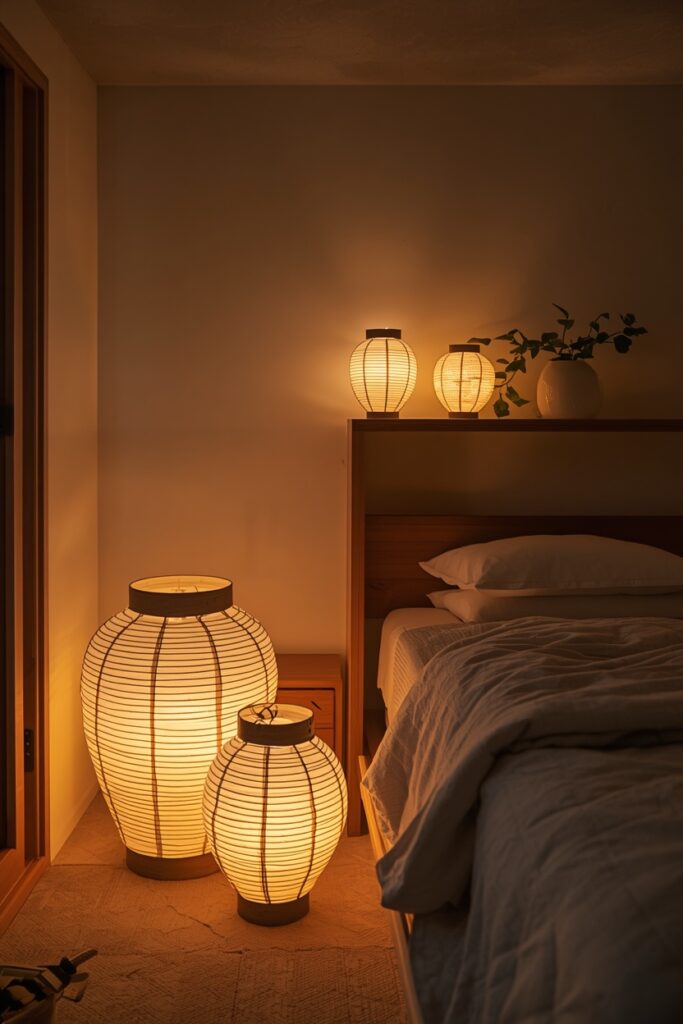
Replace overhead lighting and bedside lamps entirely with two or three Noguchi-style paper lanterns in different sizes — one large floor lantern beside the bed, one medium on a shelf, and one small on the opposite nightstand. The soft diffused glow through washi-style paper creates a warmth that no exposed bulb or fabric shade can replicate. Use warm-white LED bulbs at 2200K inside each lantern to push the colour temperature even lower than standard warm white. The lanterns themselves become sculptural objects during the day, adding organic round shapes to a room full of straight-edged furniture.
Pair them with a low timber bed and pale linen bedding to keep everything in the same tonal family. The only downside is durability — paper lanterns dent if you bump them, but that damage becomes part of their story.
9. Reclaimed Beam Headboard Wabi Sabi Bedroom
A single reclaimed timber beam — at least 200 mm deep and wide enough to span the bed — mounted horizontally behind the pillows creates a headboard with visible history. Look for beams with original nail holes, saw marks, and natural checking in the wood. Wire-brush the surface to remove loose splinters but leave the patina and discolouration intact.
Mount it at sitting-back height so you can lean against it while reading. Pair the beam with simple white plaster walls and a muted bedspread in stone grey or soft clay. This approach takes one object with genuine age and makes it the anchor for a room that values history over polish.
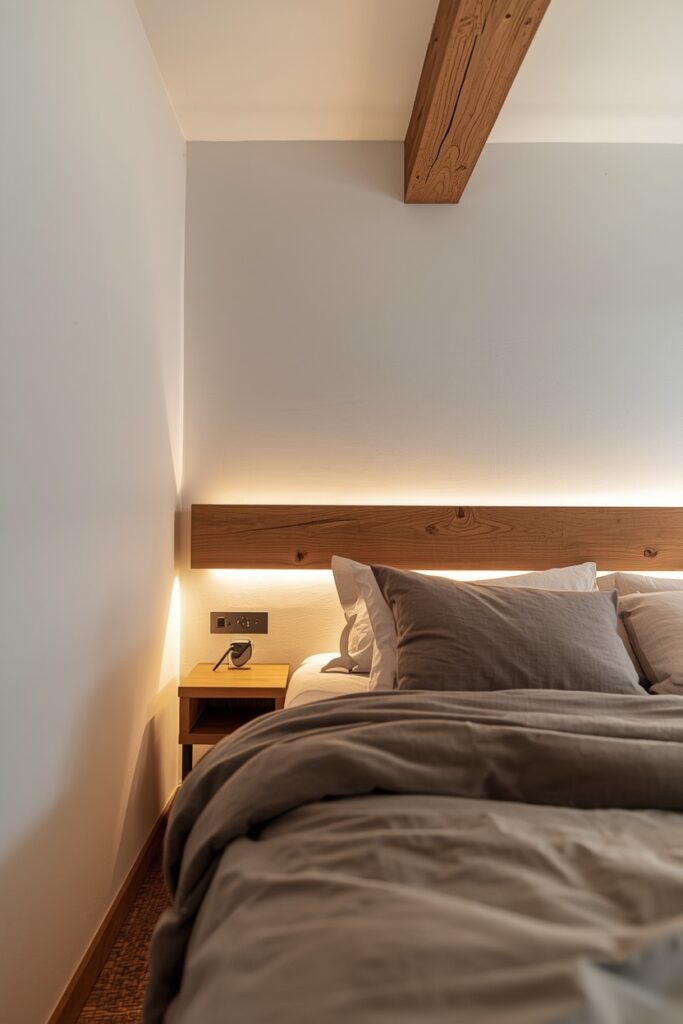
Check any reclaimed wood for pests — a heat treatment to 60 degrees Celsius for 30 minutes eliminates concerns.
10. Unfinished Oak and Stone Floor Bedroom
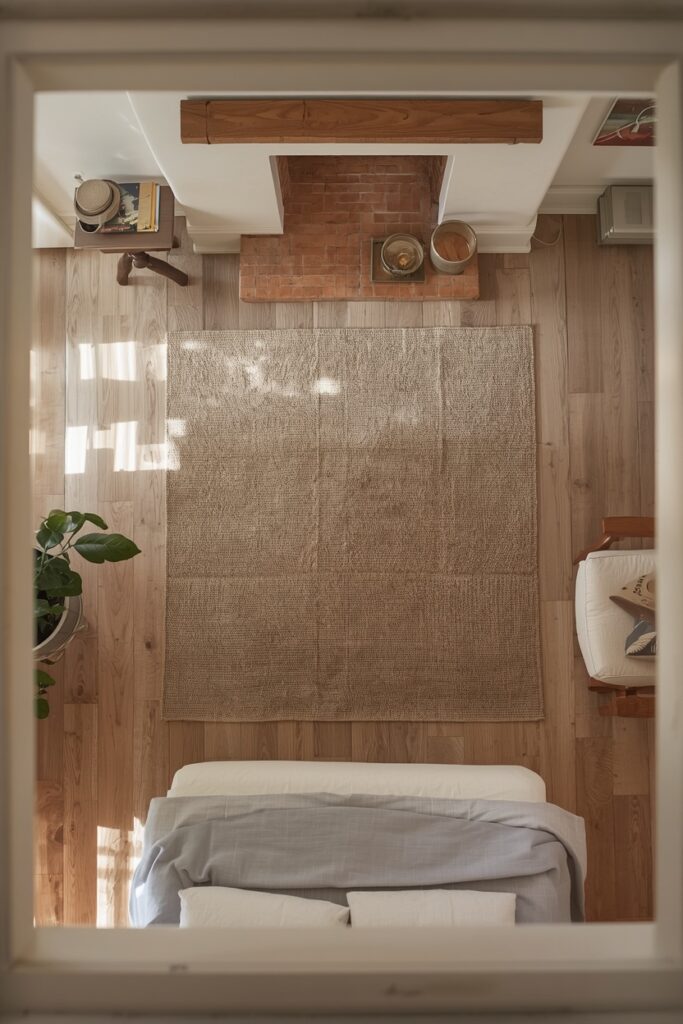
Pair wide-plank unfinished white oak flooring with a poured concrete or polished stone-look tile base beneath the bed for a grounding combination of two raw materials. The oak will develop a natural honey patina over months of foot traffic, especially near the doorway and bedside, and those wear patterns become part of the room’s evolving story. Lay a flat-weave linen rug in undyed cream between the bed and the door — not wall to wall, just enough to step onto each morning. Keep furniture minimal: the bed, one low stool, and a wall-mounted shelf. This pairing works because both materials are honestly what they are — no laminate pretending to be wood, no porcelain pretending to be stone. If you are concerned about the oak staining, apply a single coat of matte hard-wax oil, which protects without adding any visible sheen.
11. Dried Arrangement and Earthenware Display Bedroom
Curate a shelf or windowsill display of dried flowers, seed pods, and grasses arranged in a collection of earthenware vessels — no two the same shape or glaze. The arrangement should look gathered rather than designed, as if you picked things on a walk and placed them where they landed. Mix tall dried stems like pampas or wheat with shorter seed heads and a sprig of dried eucalyptus for variation in height and density. The earthenware — rough stoneware, unglazed terracotta, and wood-fired pottery — ties the display back to the earth tones of the room.
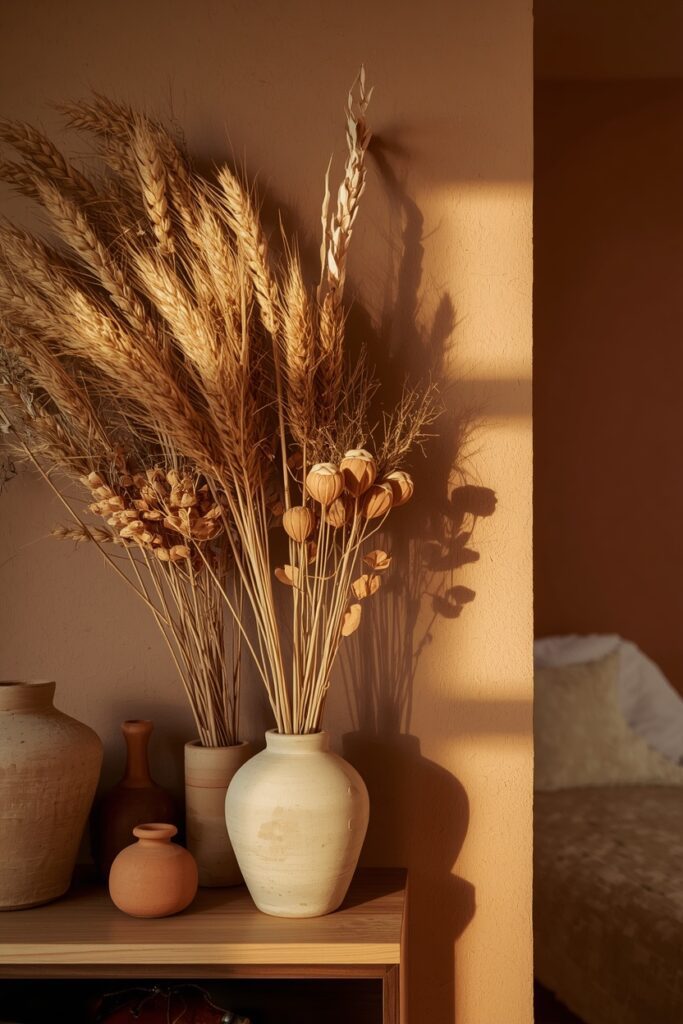
Place this collection against a plain white or warm plaster wall so the shapes stand out in silhouette. Dried arrangements last for months but eventually fade and shed, so refresh them seasonally to keep the colours honest rather than dusty.
12. Woven Rush and Bamboo Bedroom
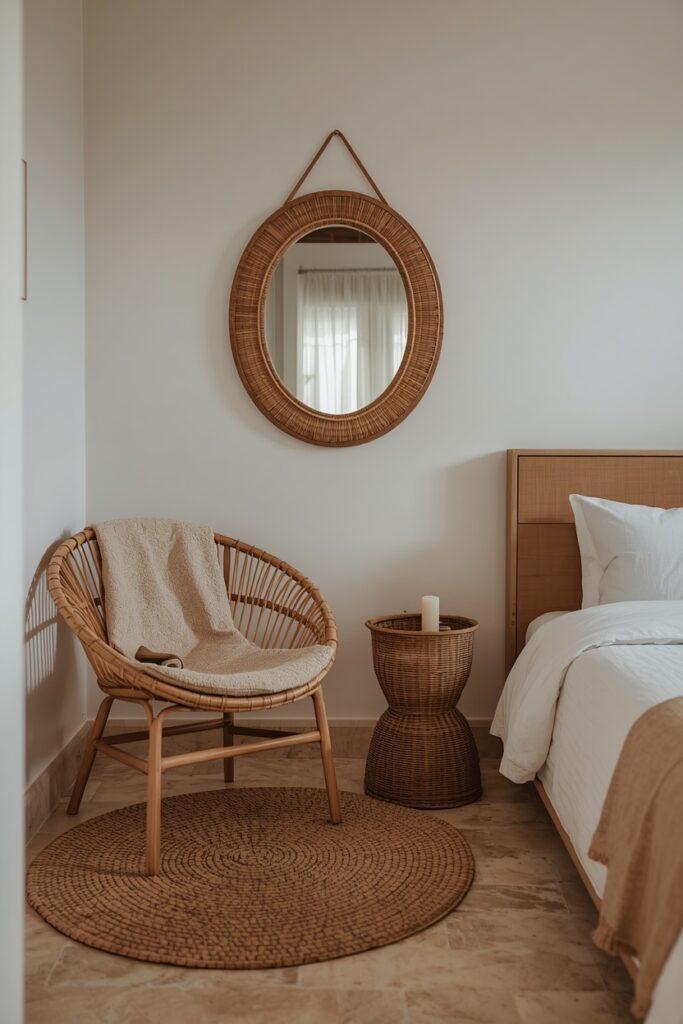
Introduce woven rush and bamboo through a rush-seated chair, a bamboo-framed mirror, and a woven rush floor mat beneath the bed. Each piece brings a slightly different weave pattern and colour — golden rush, pale bamboo, warm straw — which creates texture without repeating the same material. A rush-seated chair in the corner with a folded blanket draped over its back serves as both a practical seat and a display object. The bamboo-framed mirror — oval or round — placed opposite the window bounces light and adds a natural-material focal point to the wall.
Keep the rest of the palette in warm whites and soft stone tones. These materials are lightweight and biodegradable, which aligns with the philosophy of using what the earth provides without overengineering it.
13. Asymmetric Shelf Display Bedroom
Mount two or three open shelves at deliberately uneven heights on the wall beside the bed and arrange objects with visible negative space between them. Place a small handmade bowl on one shelf, a single dried stem in a ceramic bud vase on another, and leave one shelf holding only a small stone or nothing at all. The asymmetry and emptiness are the point — this is the opposite of a fully styled shelfie.
Use raw timber planks with visible bark edge or simple blackened steel brackets to keep the shelves from looking too polished. The display should change with the seasons: a found pinecone in autumn, a smooth shell in summer, a bare branch in winter.
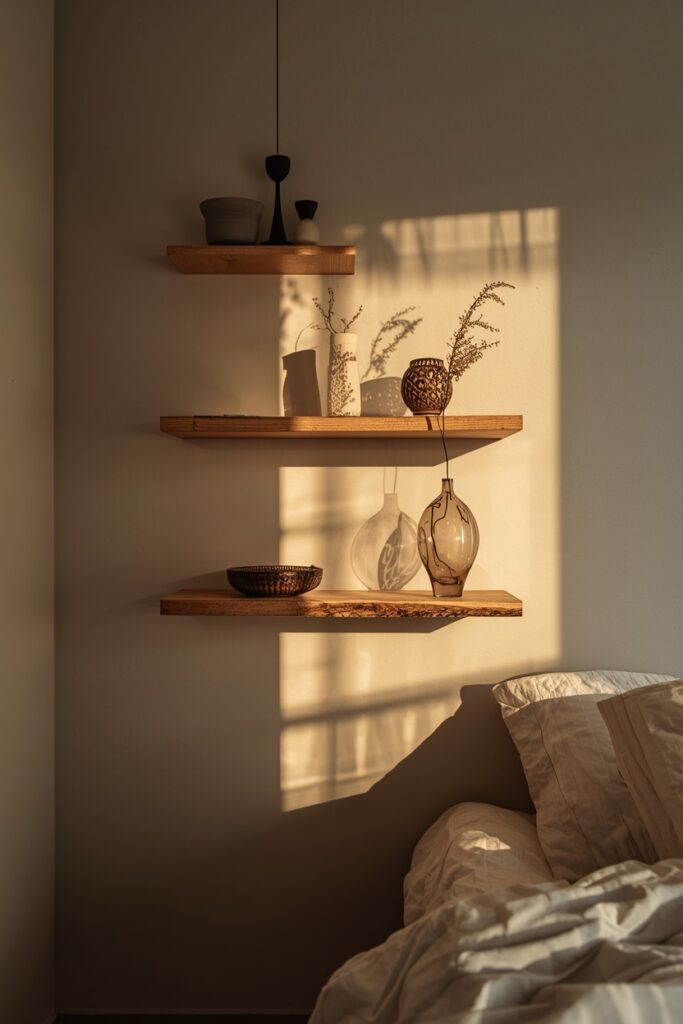
This approach only works if you resist the urge to fill every surface — the beauty here is in what you leave out.
14. Tadelakt Alcove Wabi Sabi Bedroom
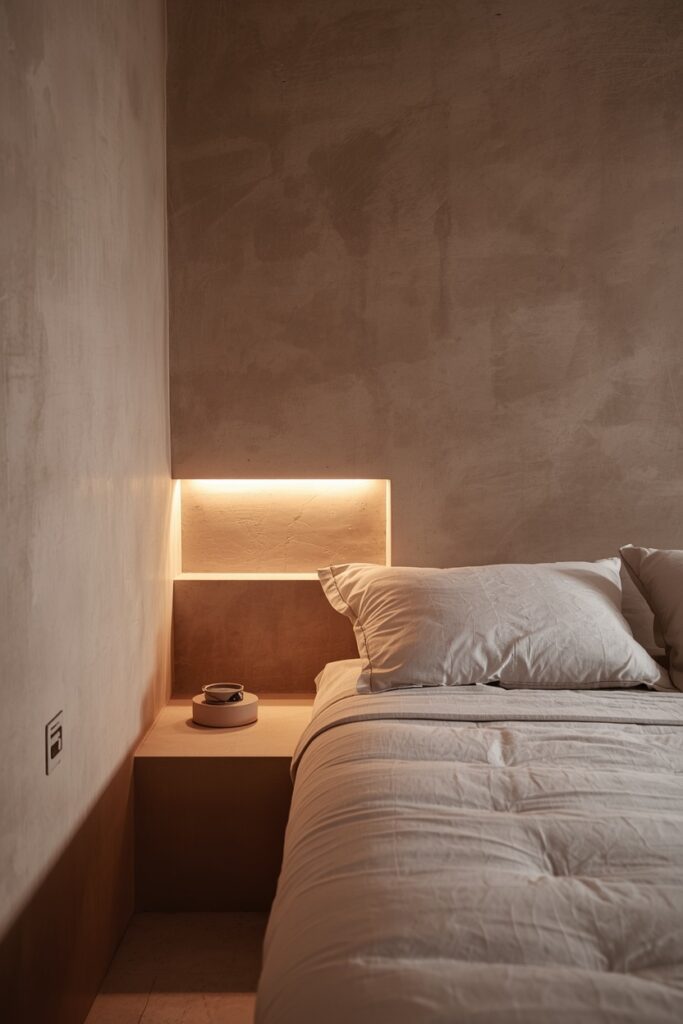
Build a shallow alcove — 150 mm deep — into the wall behind the bed and coat the recessed surface in tadelakt, the traditional Moroccan lime plaster that cures to a smooth waterproof sheen with natural colour variation. A tadelakt alcove in a soft mushroom or warm clay tone becomes a headboard, a display niche, and a textural accent in one move. The slight ripples and tonal shifts in the plaster surface catch side light beautifully and change character throughout the day. Place the mattress directly against the alcove with no headboard — the plaster wall itself is the backdrop. Keep lighting simple with a single recessed downlight above the alcove angled to graze the surface and reveal its texture. This is a specialist application — tadelakt requires a trained plasterer — but the result is a distinctive bedroom feature that nothing else can replicate.
15. Patina Brass and Linen Bedroom
Use unlacquered brass for every metal element in the room — curtain rod, bedside lamp base, drawer pulls — and let it develop its own patina over months rather than polishing it. New unlacquered brass starts bright and golden but gradually shifts to a warm brownish tone with dark spots where hands touch it most, and that uneven ageing is the whole appeal. Pair the evolving brass with crisp white linen bedding and a stone-grey wool blanket to keep the textile palette simple. A brass bedside lamp with a linen shade in natural flax brings the two materials together in a single object.
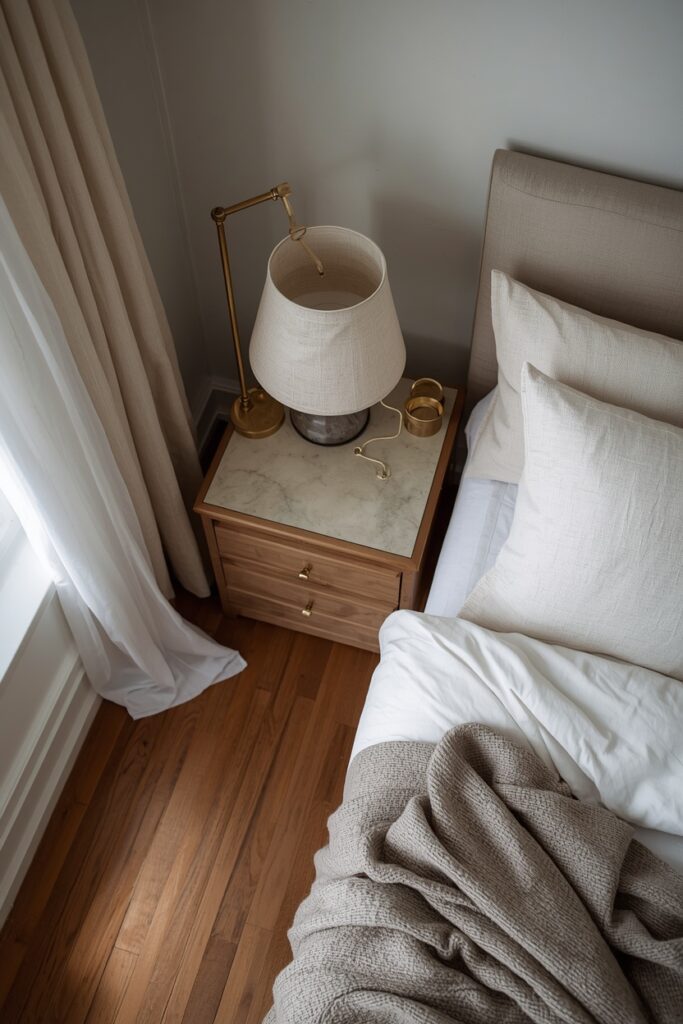
The brass patina varies depending on humidity and use, so the lamp base will look different from the drawer pulls within a few months. Embrace the inconsistency — uniformity is what polished chrome offers, and that is a different story entirely.
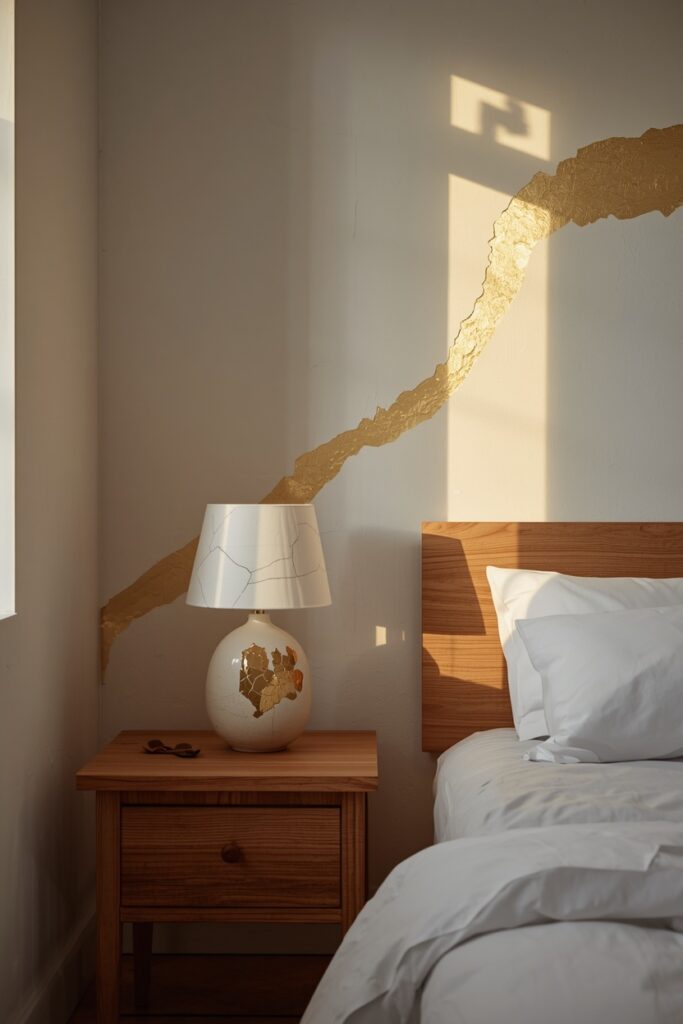
16. Kintsugi-Inspired Accent Bedroom
Apply the kintsugi principle — repairing cracks with gold — as a design concept rather than a literal technique. Find a vintage ceramic lamp or bowl with a crack or chip and highlight the damage with gold paint or gold leaf rather than hiding it. Use a similar philosophy on the walls: if your plaster has a repaired patch, skim it with a thin line of metallic gold paint along the repair edge rather than concealing it. This translates the Japanese art of golden repair from pottery to an entire room concept.
Keep the gold accents small and specific so they read as deliberate marks rather than decoration. The rest of the room should stay understated — pale plaster walls, simple bedding, natural timber — so the gold moments stand out as quiet celebrations of imperfection.
17. Sun-Bleached Palette Bedroom
Design the entire room around colours that look like they have been faded by years of sunlight — soft straw, bleached denim, washed-out sage, and pale driftwood grey. Use a cotton bedspread in sun-faded blue, curtains in washed-out linen, and a rug in pale straw to build a palette that appears aged even when the materials are new. Whitewash a timber dresser or nightstand so the wood grain shows through the paint in patches.
The trick is choosing colours a few shades lighter than their saturated versions and pairing them with white or near-white walls that amplify the washed-out quality. Add a single terracotta pot with a dried grass arrangement to anchor the room with a warm earth tone.
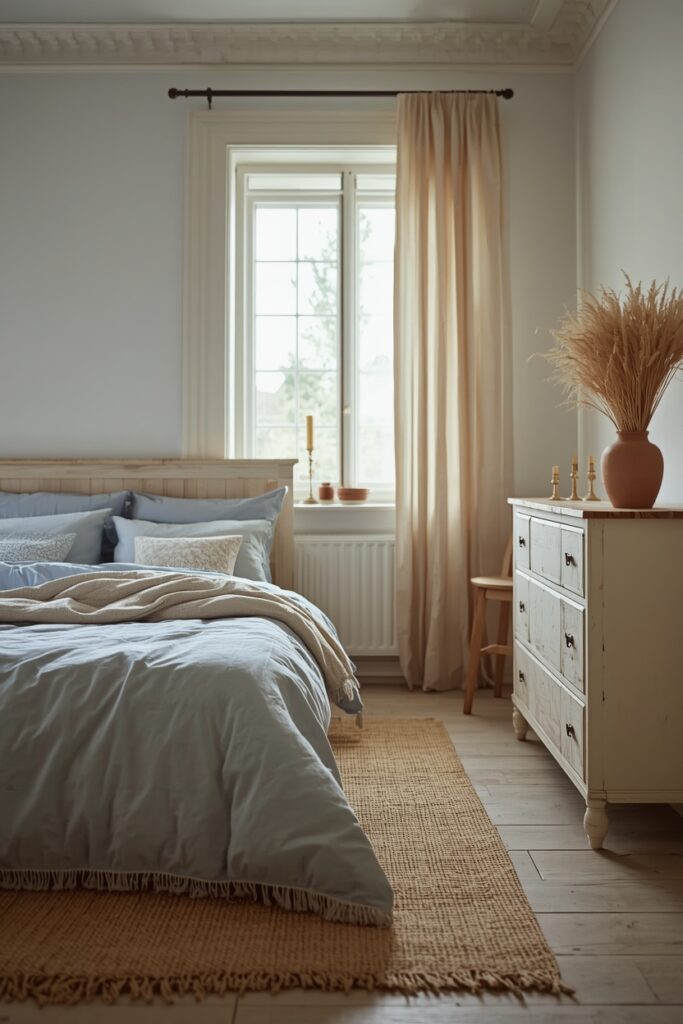
This is a bedroom that looks like it has lived through a hundred summers, which is the highest compliment in this aesthetic.
Where I’d Start if I Only Did Three Things
If I only did three things, I’d start by switching all my bedding to undyed flax linen — it transforms the look of the bed overnight and gets better with every wash. Next, I would introduce one piece of genuinely imperfect pottery to the nightstand, something handmade with visible marks, to set the tone for the room. Finally, I would strip one wall back to its raw plaster or apply a lime wash, because that single textured surface changes how the entire room reads and gives you a backdrop that no amount of paint can replicate.
Frequently Asked Questions
What makes a wabi sabi bedroom different from general minimalism?
Minimalism prioritises clean lines, perfect surfaces, and the absence of clutter. Wabi-sabi shares the restraint but actively embraces imperfection — visible wood grain, cracked plaster, uneven pottery, fabrics that wrinkle. A minimalist room might look the same in ten years. A wabi-sabi room is designed to age and change, and those changes are treated as improvements rather than damage.
Can you achieve this look on a tight budget?
Absolutely — in fact, a tight budget can help because it forces you toward found objects, reclaimed materials, and DIY finishes rather than expensive curated products. A lime-washed wall costs less than a good paint job. Handmade pottery from local makers is often cheaper than designer decor. And undyed linen, while not bargain-priced, lasts for years and never needs replacing because wear only improves it.
Which wood types work best for this style?
Light-coloured, open-grained woods that show their structure clearly work best: white oak, ash, and cedar are all strong choices. Avoid heavily lacquered or dark-stained woods, as they hide the grain rather than revealing it. Reclaimed timber of any species is ideal because it arrives with its history already visible — nail holes, weathering marks, and tonal variation included.
How do you keep a wabi-sabi room from looking unfinished or neglected?
The line between wabi-sabi and neglect is deliberateness. Every imperfect element should be chosen and placed with care — a cracked bowl displayed on a clean shelf reads as curated, the same bowl lost in a pile of clutter reads as forgotten. Keep surfaces clean, beds made, and floors swept. The imperfection is in the materials and objects themselves, not in how you maintain the room.
Final Thoughts
A wabi sabi bedroom is not a style you install in a weekend — it is a way of looking at your space that values age over newness and character over perfection. These ideas give you specific starting points, from clay-plastered walls to patina brass hardware, but the real shift is in deciding that a cracked surface or a faded textile is not a problem to solve. Let the room change with time, resist the urge to match everything, and you will end up with a space that reads calm and honest in a way that polished interiors never quite manage.
Leave a Reply