
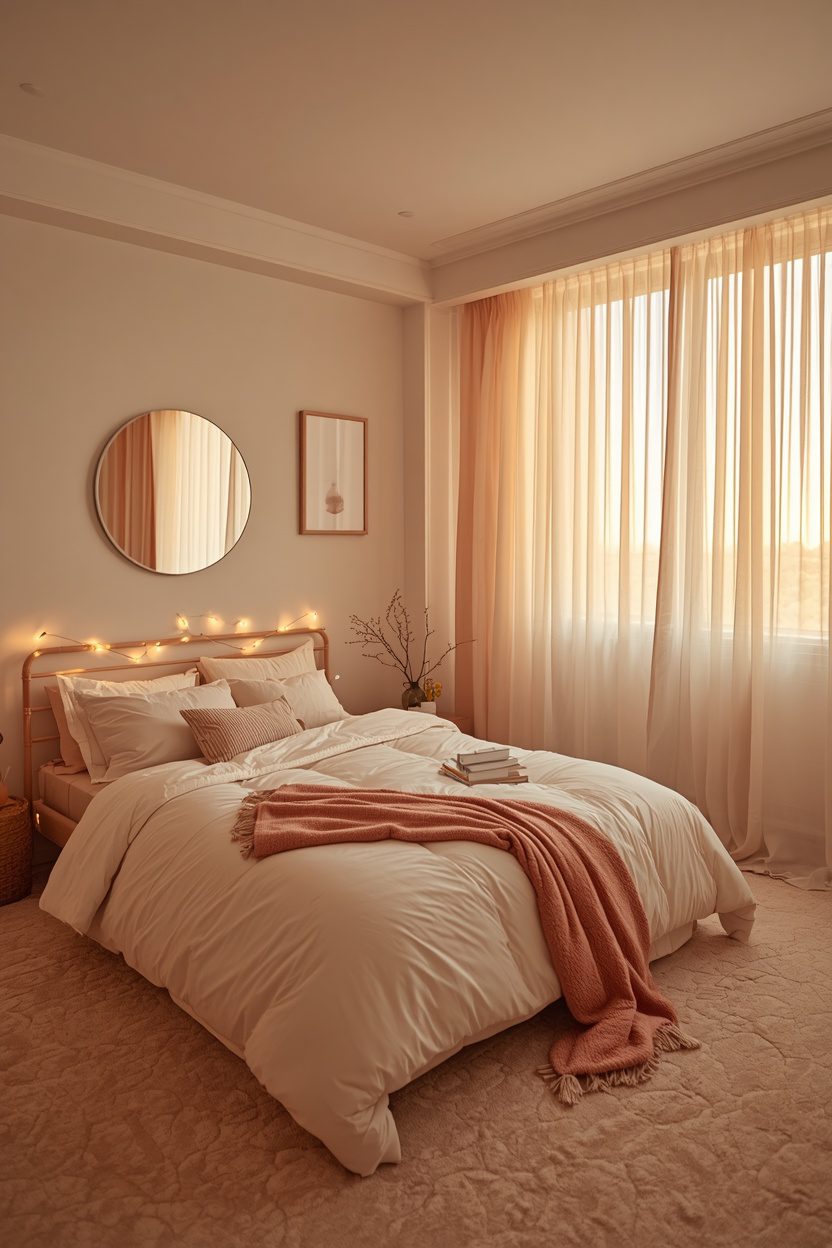
The Korean bedroom aesthetic has taken over mood boards everywhere, but most guides stop at showing you a white bed and a string of fairy lights. What actually makes a K-style room work is a layered approach to softness — every surface, every light source, and every colour choice is designed to make the space look gentle, warm, and quietly personal. These 22 ideas go deeper than surface styling, giving you full room concepts that capture what Korean interior design actually looks like in real apartments in Seoul.
You do not need to gut your room or spend a fortune. Most of these ideas build on simple swaps — the right bedding weight, the right lamp tone, the right mirror shape — that shift a room from generic to distinctly soft and curated. Whether your space is compact or spacious, each concept adapts to what you already have.
1. Soft Cream and Blush Minimalist Bedroom
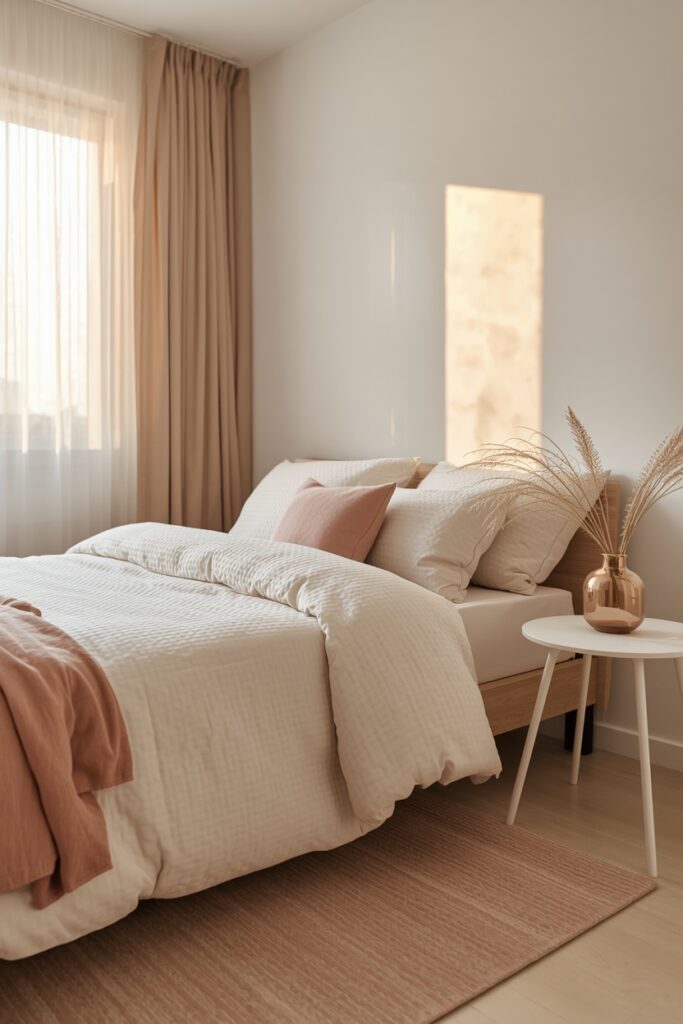
Build the entire room around two tones only — soft cream on walls and bedding, with blush pink appearing in just two or three accent pieces like a throw pillow, a small rug, and a candle. The restraint is what makes the palette read Korean rather than generic pastel — you are not adding blush everywhere, you are placing it sparingly so it reads as a whisper. Use a cream cotton duvet cover with a subtle waffle texture for visual interest without pattern. A slim white bedside table with rounded edges keeps the furniture geometry soft.
Skip anything with sharp corners or heavy hardware — the whole room should look like it would be gentle to bump into. This palette photographs beautifully in natural light, which is why it dominates K-style room tours online.
2. Low Bed Frame with Muted Pastel Bedding
A low-profile wooden bed frame in pale birch or whitewashed pine, sitting no more than 250 mm off the floor, anchors the room and creates that grounded look common in Korean bedrooms. Top it with a muted lavender duvet cover — not bright purple, but a dusty, greyed-out lavender that looks soft in every light. Layer a thin cream knit blanket folded at the foot and add a single round cushion in pale sage for contrast.
The low frame makes the room appear taller and gives you more visible wall space for art or a shelf display. Keep the floor clear around the bed — the open floor plane is essential to the spacious quality this style depends on.
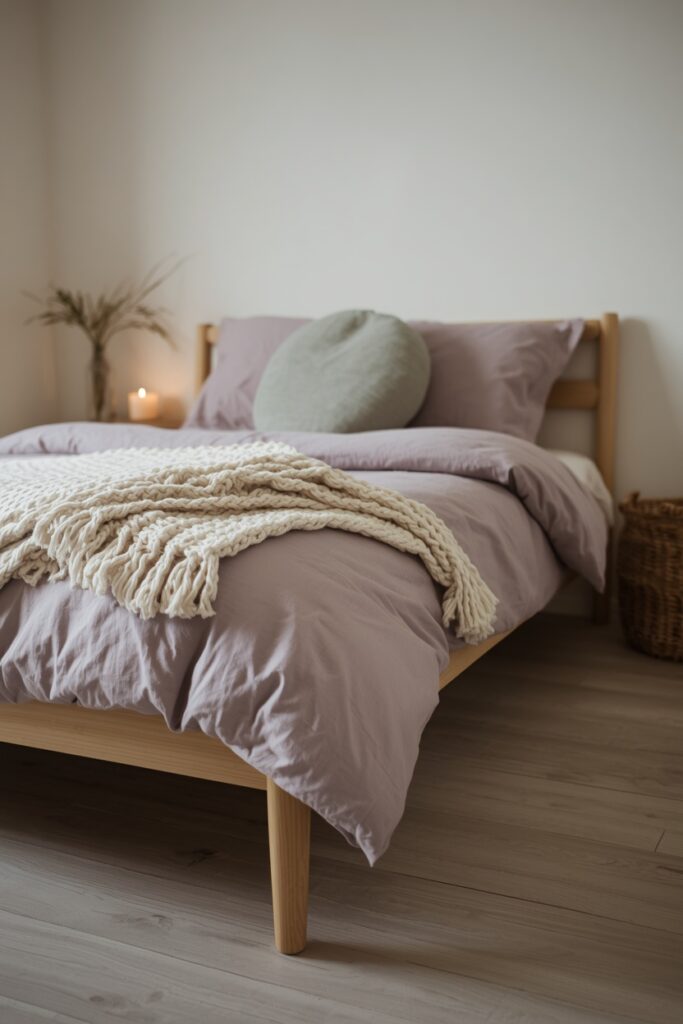
A small woven basket beside the bed for books and a phone is the only floor-level accessory you need.
3. Korean Vanity Corner with Round Mirror
Dedicate a corner of the room to a simple white desk used as a vanity, topped with a large round mirror on a stand and a curated tray of skincare in matching glass bottles. The round mirror — at least 400 mm diameter — is non-negotiable because it softens the straight lines of the desk and the wall behind it. Arrange skincare and makeup in a small acrylic or ceramic organiser, keeping only what you use daily visible. A small potted plant — a mini monstera or a trailing string of pearls — adds a single green note. Mount a strip of warm LED tape behind the mirror or along the desk edge for that soft back-glow that defines Korean vanity setups. This corner becomes the most photographed spot in the room and doubles as functional daily-use space.

4. Cloud-White Korean Bedroom Aesthetic with Layered Bedding
Stack three layers of white bedding in different textures — a fitted sheet in smooth sateen, a duvet cover in cotton percale, and a lightweight throw in gauze or muslin draped loosely on top. Each white is slightly different in warmth and weave, which creates the cloud effect that makes K-style rooms look like you could sink into them. Plump the pillows generously and add a pair of quilted euro shams behind the sleeping pillows for height. The all-white approach only works if you commit fully — no patterned accents, no bright throw pillows, just white on white on white with texture doing the talking.
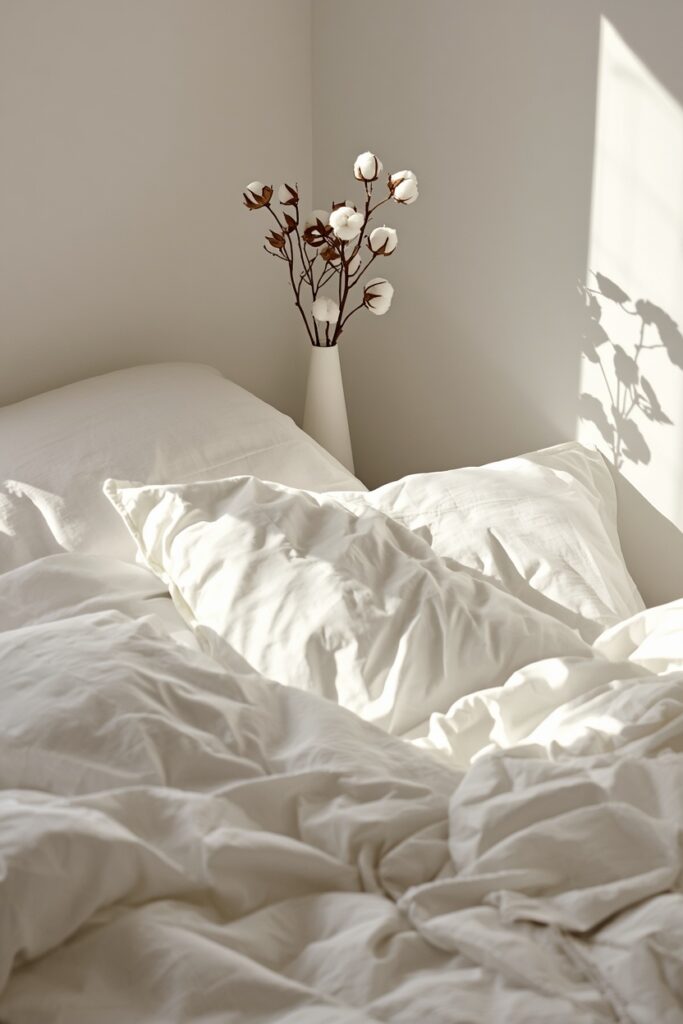
A single stem of dried cotton in a slim white vase on the nightstand reinforces the cloud theme without adding colour. Keep the walls white too, and let natural window light create the only shadows and tonal variation in the room.
5. Sheer Curtain Dreamy Light Bedroom
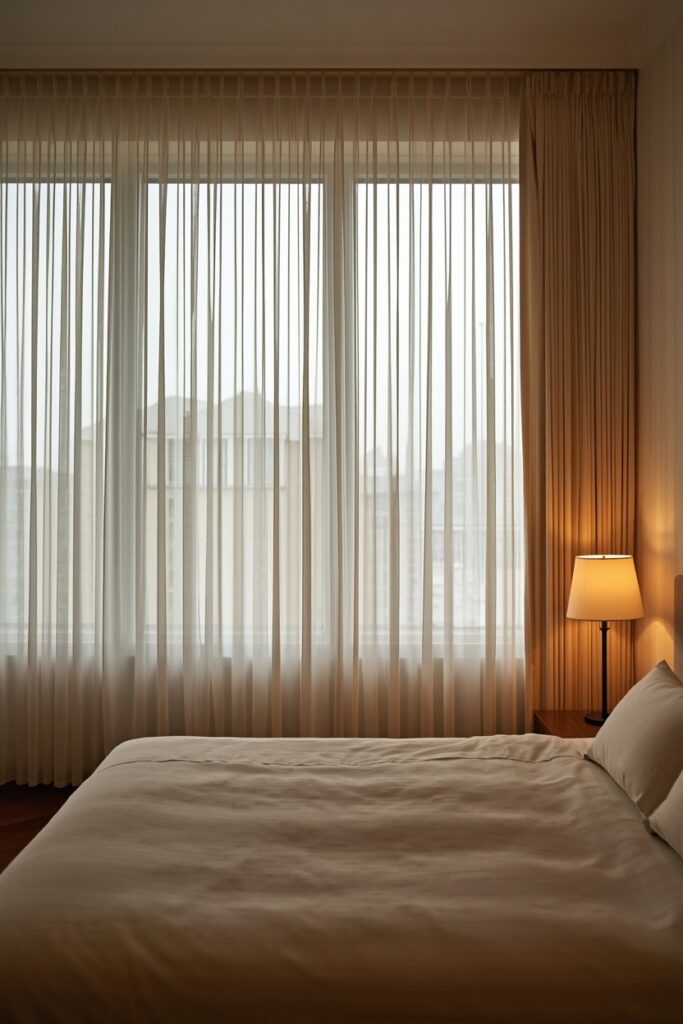
Hang floor-to-ceiling sheer curtains in ivory or soft white across the entire window wall — not just the window frame — so the fabric creates a continuous soft-focus backdrop. The sheers filter harsh light into a diffused glow that makes everything in the room appear softer and warmer, which is the foundation of the dreamy K-room look. Double-layer the sheers for extra diffusion if your window gets direct afternoon sun. Behind the curtains, install a simple curtain rod in white or matte gold so the hardware disappears into the wall colour.
Pair the curtain wall with a bed dressed in pale tones and a small floor lamp with a fabric shade for evening warmth. This single change — sheers across the full wall — alters how every photo of the room turns out and how the space reads when you walk in.
6. Warm Wood Floor Cushion Seating Bedroom
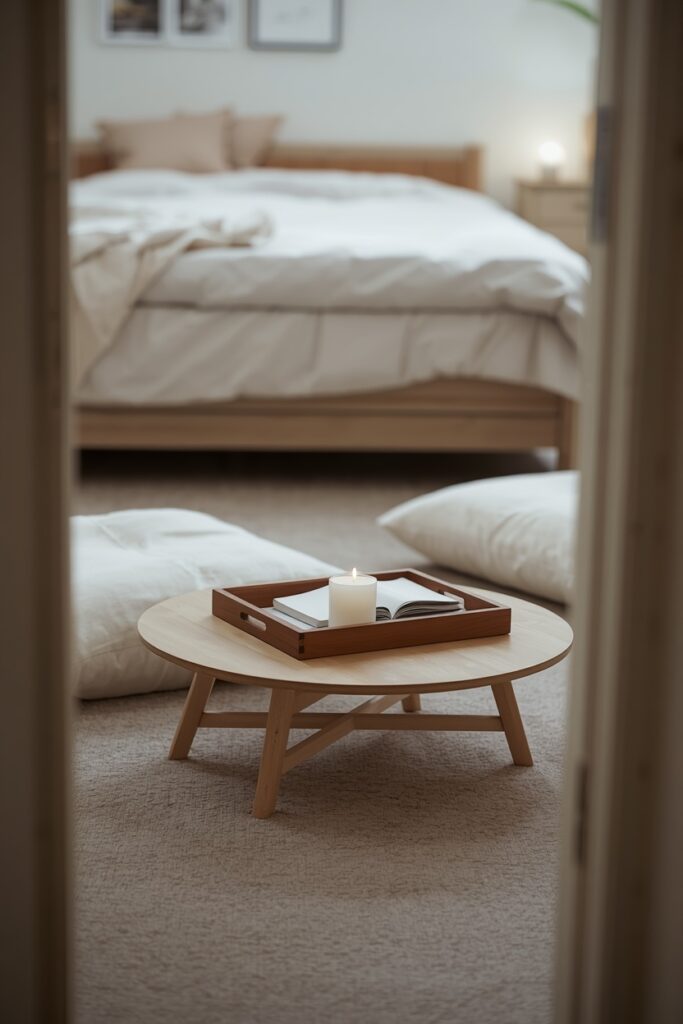
Place a low wooden tray table on the floor beside the bed with two large floor cushions in cream linen for a seating area that borrows from Korean floor-sitting culture. The tray table — round, in pale wood — serves as a spot for tea, journaling, or a laptop, and the cushions stack neatly when not in use. This replaces the need for a chair or desk entirely, freeing up floor space and keeping the room’s profile low. Choose cushions with a thick inner pad — at least 100 mm — so they are genuinely comfortable for sitting, not just decorative. A small candle and a book on the tray complete the scene. The floor-level seating shifts how you use the room and makes it a space for slowing down rather than just sleeping.
7. Fairy Light Canopy Bed
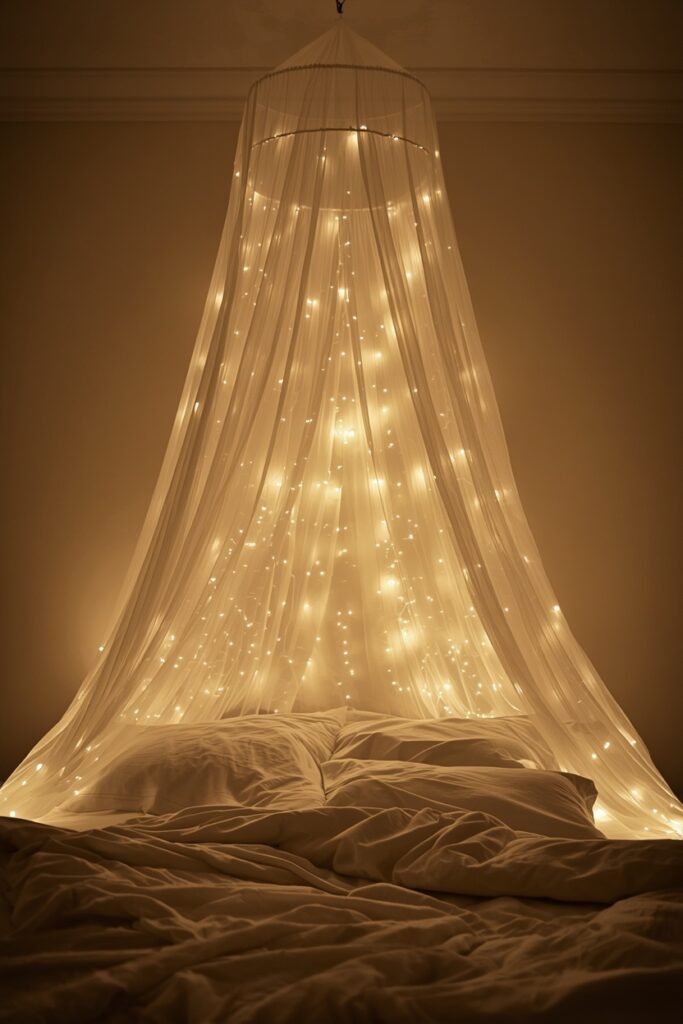
Drape warm-white micro fairy lights through a sheer fabric canopy hung from a single ceiling hook above the bed to create a soft overhead glow without any harsh point source. Use a lightweight voile fabric in ivory — roughly 3 metres of it — gathered at the hook and allowed to fall in a wide circle around the head of the bed. Thread the fairy lights through the fabric folds so they glow through the voile rather than being directly visible.
This creates a warm halo effect that replaces a bedside lamp for evening reading and sets the mood for winding down. Secure the canopy hook into a ceiling joist, not just drywall, to ensure it holds the weight of both fabric and lights safely.
The total cost is under thirty dollars, which makes this one of the most affordable transformations on this list.
8. Soft Sage and White Bedroom
Paint one accent wall in a very soft sage — almost grey-green — and keep all other walls, furniture, and bedding in warm white. The sage accent reads fresh and calming without being bold enough to dominate the room. Pair it with a white bed frame, white bedding, and a single sage-toned throw blanket folded at the foot. Add a small trailing plant on a white wall shelf against the sage wall to echo the green without doubling down.
Paint Picks: Benjamin Moore Quiet Moments 1563, Sherwin-Williams Sea Salt SW 6204, Behr Breezeway N420-1
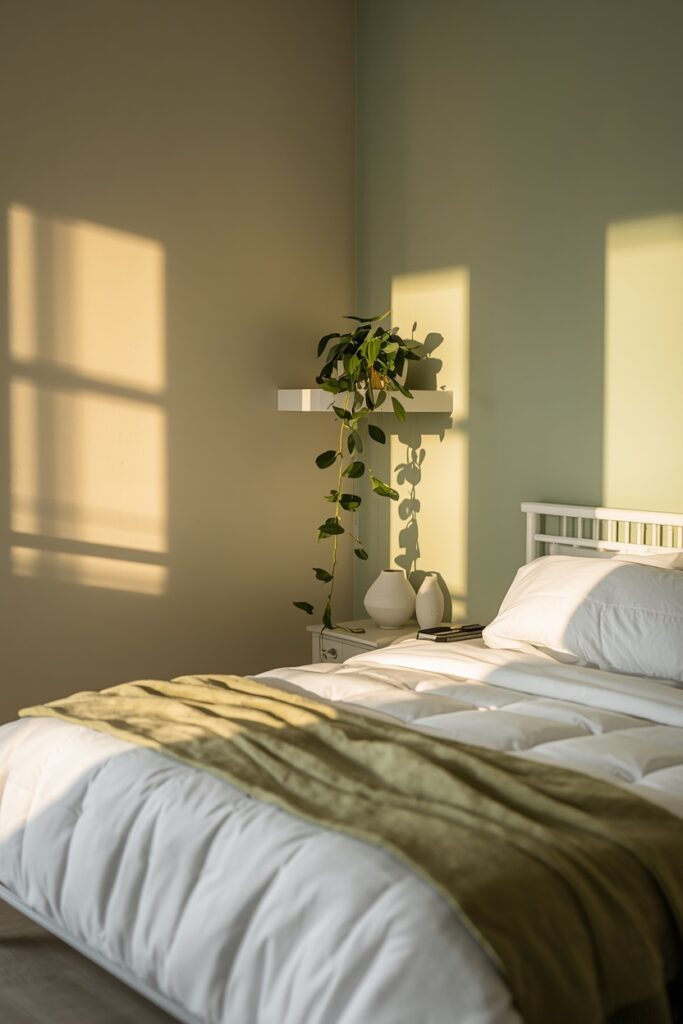
White ceramic accessories — a vase, a tray, a small dish — keep the surfaces tonal and quiet. This two-colour approach is foolproof because the sage acts as a natural accent without requiring any additional colour coordination.
9. Minimalist Bookshelf Wall Bedroom
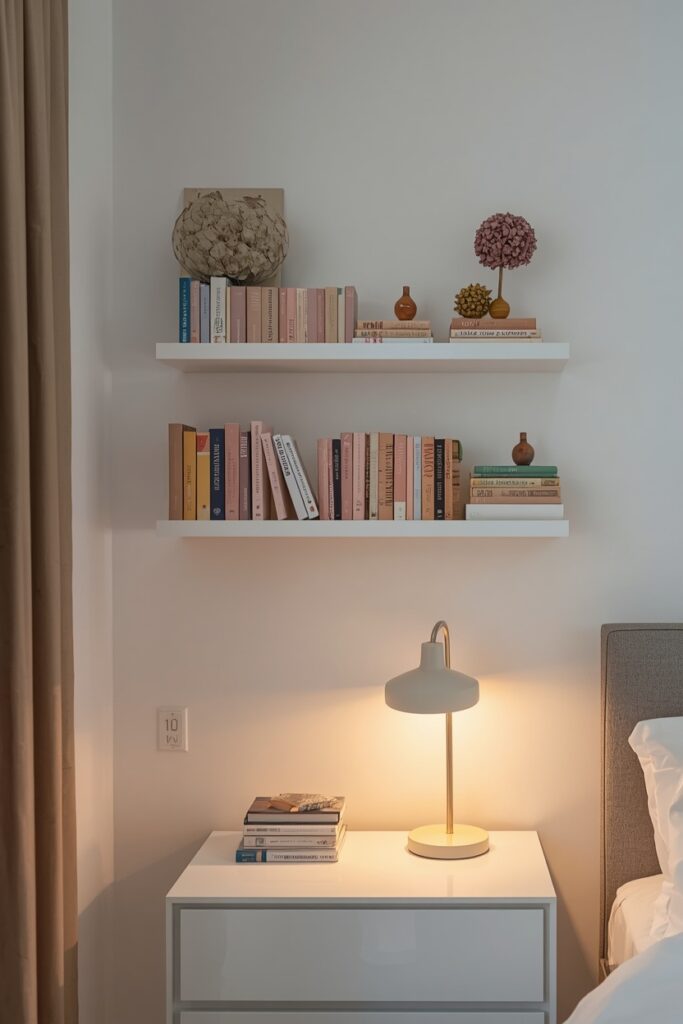
Mount a series of slim white floating shelves — three or four — on the wall opposite the bed and arrange books by colour in soft pastel groups with small gaps between each cluster. The colour-sorted arrangement turns your book collection into a visual feature that doubles as decor. Intersperse a few small objects — a tiny ceramic figurine, a photo in a white clip frame, a dried flower — between the book clusters to break the linear rhythm. Keep the shelves deliberately not full, with empty space at the ends, so they read as curated rather than crammed.
Below the shelves, a slim white console or a low cabinet provides closed storage for anything that does not belong on display. This setup gives the room visual depth and personal character without introducing any pattern or bold colour.
10. Teddy Bear Fur Accent Bedroom
Add a single piece of teddy-bear-texture faux fur — a throw blanket or an accent pillow cover — in warm cream or soft caramel to introduce a tactile focal point on the bed. The plush texture against smooth cotton bedding creates a contrast that your hand wants to reach for, which makes the room not just look inviting but actually draw you in. Limit the fur to one item; too much reads juvenile rather than soft.
Pair it with a low wooden bed frame and muted bedding in soft grey or ivory. A small matching fur rug beside the bed gives your feet a soft landing in the morning.
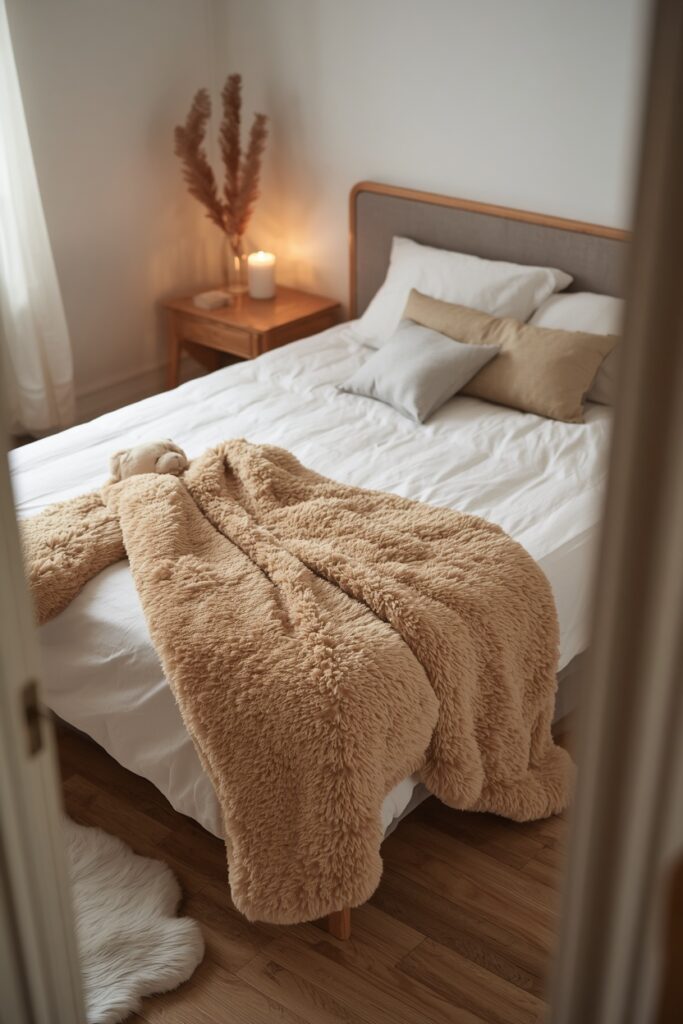
This detail appears constantly in Korean room tours because it bridges the gap between minimalism and comfort without adding any visual clutter.
11. Neutral Tone Desk Nook Bedroom
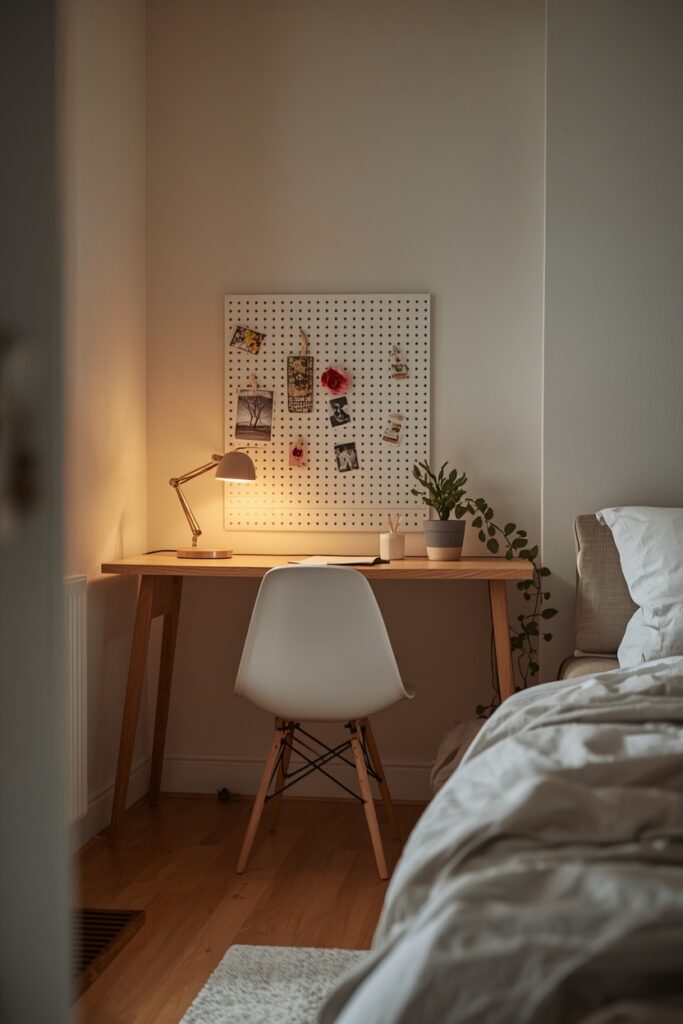
Tuck a slim wooden desk in natural birch or white oak into a corner of the bedroom with a simple white chair and a pegboard above for organising notes, photos, and small accessories. The desk should be narrow — 500 mm deep is enough — so it does not eat into the room’s floor space. On the desk, keep only a laptop, a small desk lamp with a warm-toned shade, and a pencil holder. The pegboard in white or natural cork becomes a changeable display — pin postcards, dried pressed flowers, or polaroids for personality without permanent commitment. A single trailing plant on the desk corner softens the workspace and ties it back to the bedroom’s organic palette. This nook gives you a dedicated work zone without the room reading as an office.
12. Rounded Furniture Korean Bedroom Aesthetic
Replace angular furniture with pieces that have rounded corners and soft edges — a bed frame with curved headboard, a nightstand with rounded edges, and a dresser with pill-shaped drawer pulls. The absence of sharp angles changes how the room reads at a subconscious level, making it appear gentler and more approachable. A rounded-corner nightstand in warm white lacquer paired with a curved wooden bed frame in pale ash is the core combination. Add a round area rug in soft ivory beneath the bed for a floor element that echoes the curves above.
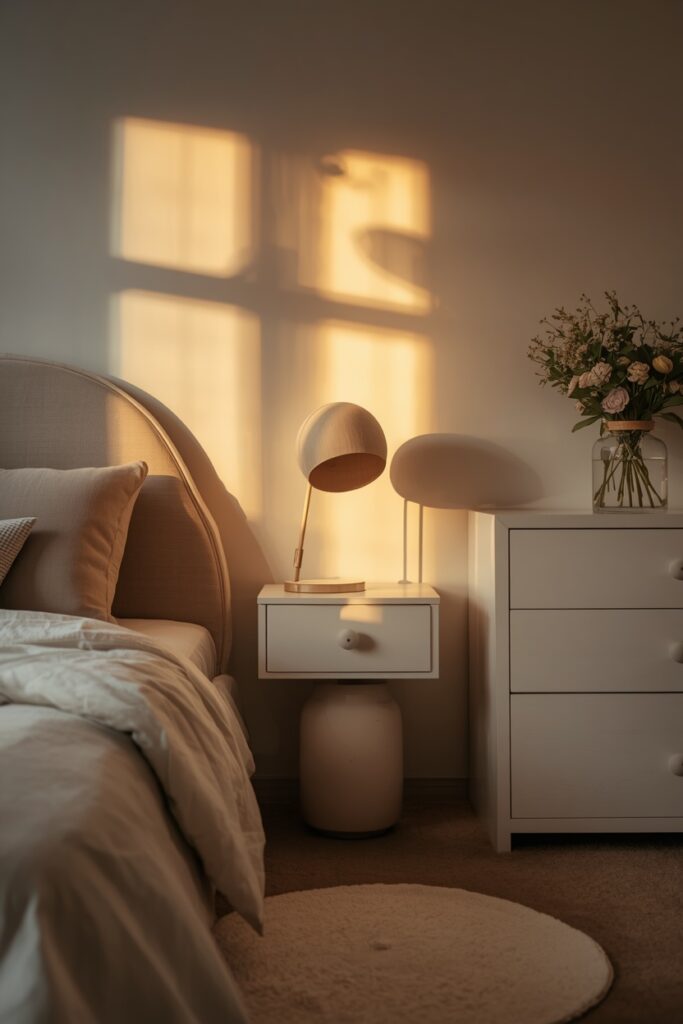
This Korean bedroom aesthetic concept draws from the broader K-design preference for soft geometry that you see in everything from furniture to packaging. The rounded shapes also make compact rooms safer and more navigable, which is a practical bonus in tight spaces.
13. Lavender and Cream Bedroom
Pair a soft dusty lavender with warm cream throughout the room — lavender on the bedding and one accent wall, cream everywhere else. This combination avoids the childish quality of brighter purple by keeping the lavender muted and grey-toned, closer to dried lavender flowers than to a crayon. Use a lavender linen duvet cover with cream linen pillowcases and a cream knit throw for tonal layering. A small bunch of real dried lavender in a cream ceramic vase on the nightstand ties the colour back to its natural source.
Keep the furniture in warm white or natural light wood — nothing dark, nothing glossy. The scent of real dried lavender is a bonus that no other decor colour can offer, making this concept multi-sensory.
Paint Picks: Benjamin Moore African Violet 2116-50 (muted), Sherwin-Williams Veiled Violet SW 6268, Behr Dusty Lilac S100-2

14. Muji-Style Storage Wall Bedroom
Install a wall of modular open-front storage boxes in pale birch plywood — stacked three high and four across — to create a storage system that looks like a display wall. Fill each box with folded knitwear, books stored spine-out, small baskets holding accessories, and one or two left intentionally empty. The uniform grid imposes order while the varied contents keep it from looking sterile.
This borrows directly from the Muji storage philosophy popular in Korean and Japanese interiors, where organisation itself becomes the decor. Mount the unit on the wall opposite the bed so it serves as the room’s visual anchor when you are lying down.
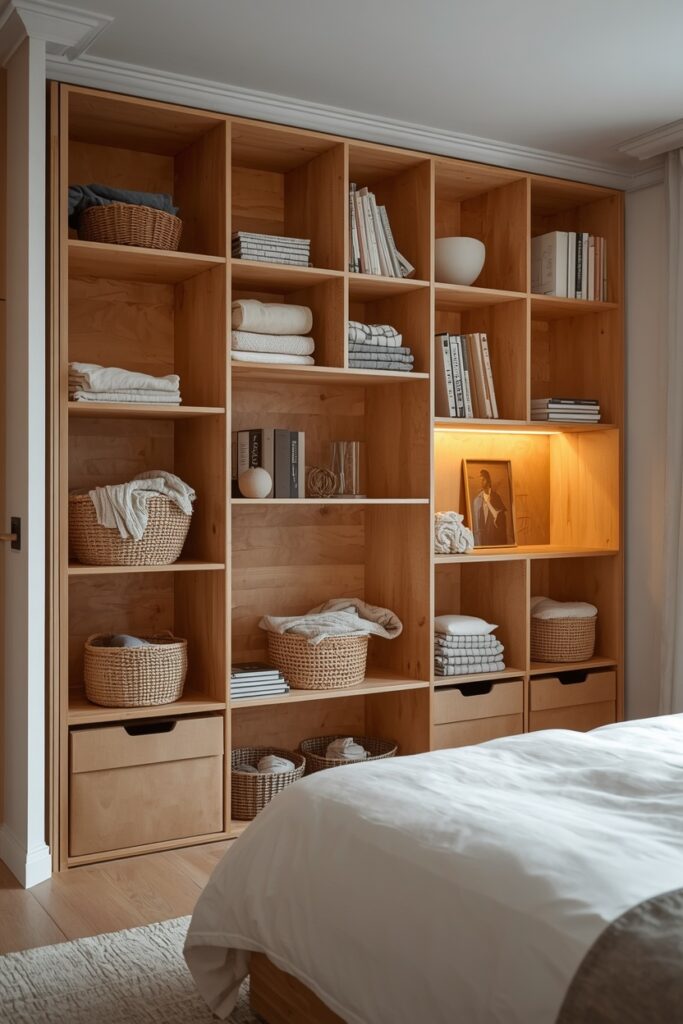
Keep the bed simple — white bedding, no headboard — so the storage wall remains the focal point.
15. Diffused Lamp Warm Glow Bedroom
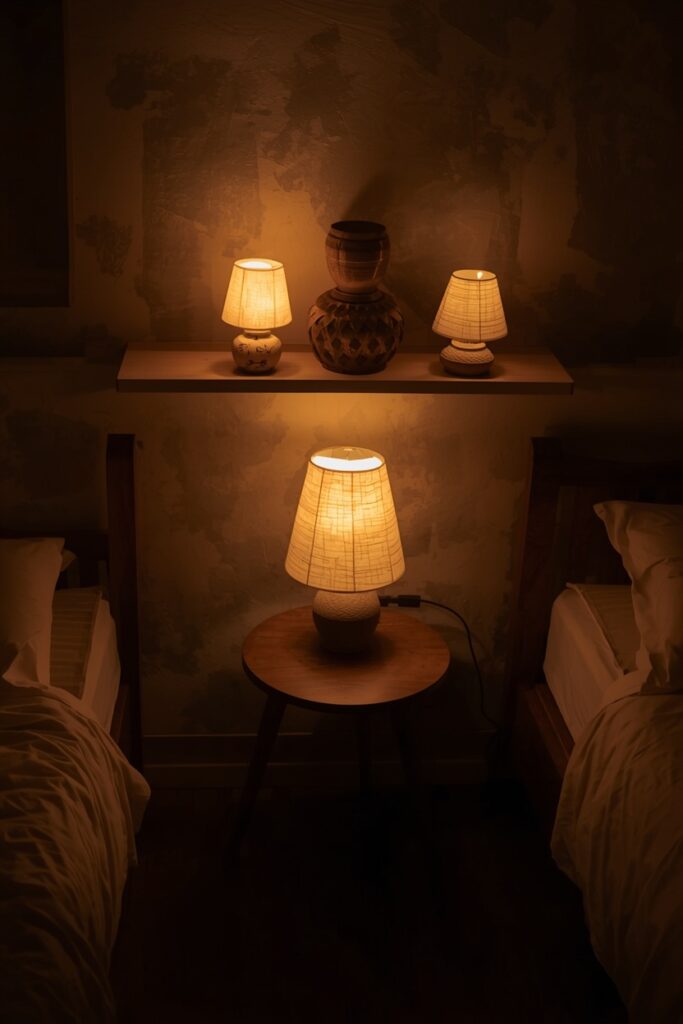
Replace all overhead lighting with two or three table lamps using frosted glass or rice-paper shades and warm LED bulbs at 2200K to 2700K. Position one on each nightstand and one on a shelf or dresser across the room so the light comes from multiple low points rather than a single overhead source. The diffused glow eliminates harsh shadows and makes the room look like it is lit by late afternoon sun even at midnight. Choose lamp bases in ceramic, wood, or brushed brass to keep the material palette natural. This lighting approach is the single most important element in Korean-style bedrooms because it controls the mood of the entire space more than any piece of furniture or bedding. The trade-off is that you lose the convenience of a single overhead switch — consider adding a smart plug to control all three lamps at once.
16. Floor Mattress Korean Ondol-Inspired Room
Place your mattress directly on the floor — no frame, no box spring — on top of a large tatami mat or a thick cotton pad for insulation and comfort. This is the most traditional Korean sleeping arrangement, adapted from the ondol heated-floor culture where proximity to the warm floor surface was the point. Fold a thick cotton yo (floor mattress pad) or a quilted mattress topper beneath the mattress for cushioning and air circulation. During the day, you can fold or roll the bedding and reclaim the entire floor as living space, which is how many small Seoul apartments actually function.
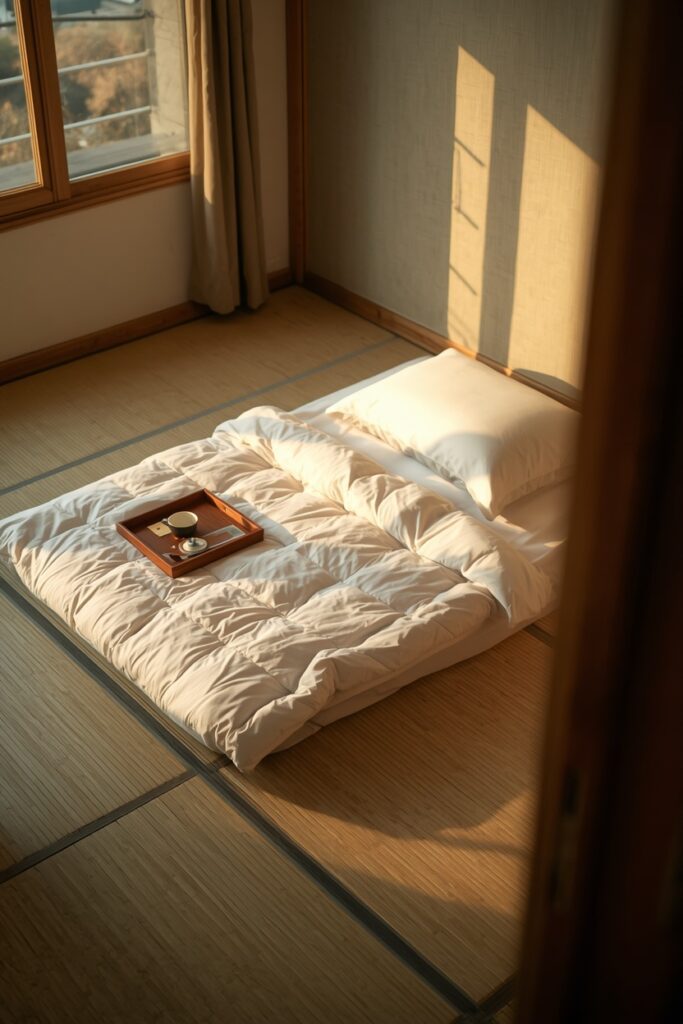
Keep bedding minimal — a single duvet in white or cream and one pillow — to maintain the streamlined look. This concept suits small rooms beautifully because the absence of a bed frame opens up the entire visual footprint.
17. Milk Tea Palette Bedroom
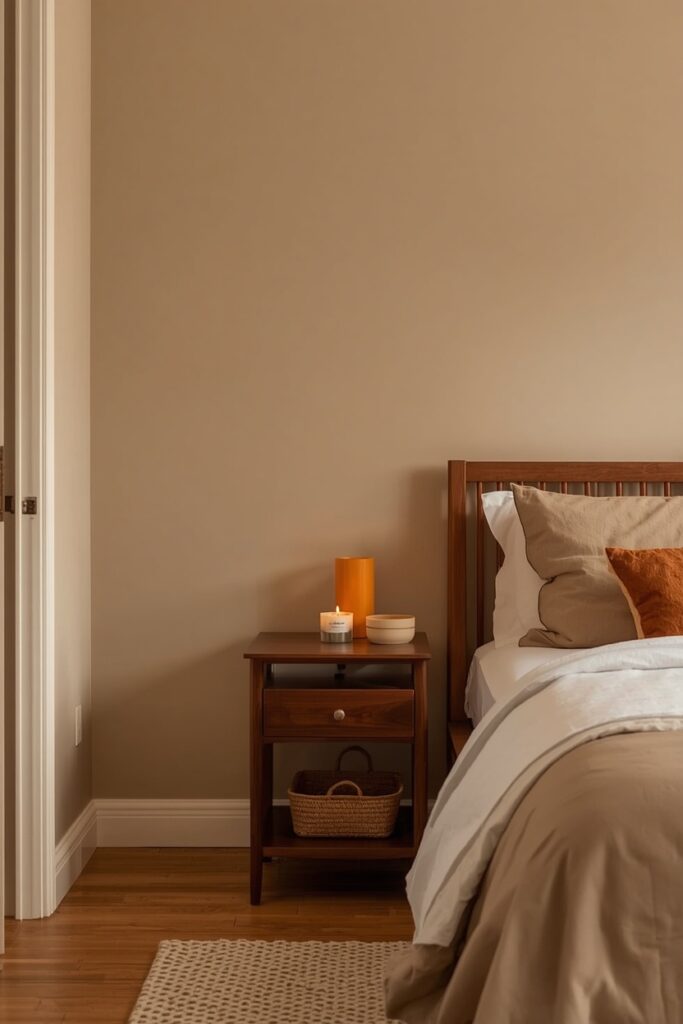
Name the palette after the drink — warm beige, soft taupe, cream, and a hint of brown — and build the entire room around it. Start with walls in a warm off-white with a beige undertone and add bedding in a deeper taupe, a cream throw, and a caramel-toned cushion. A wooden nightstand in warm walnut and a rattan basket below the bed contribute to the brown end of the spectrum. The milk-tea palette is inherently soothing because every tone sits in the same warm family with no cool undertones to create contrast.
Add a small caramel-toned candle and a cream ceramic mug on the nightstand for details that reinforce the theme without trying too hard. This is one of the most popular Korean room palettes because it looks warm in every season and every light condition.
18. Tulip and Fresh Flower Bedroom
Keep a rotating single-variety fresh flower arrangement on the nightstand — white tulips one week, pale pink peonies the next, cream roses after that — in a simple glass or ceramic bud vase. The single-variety approach is key because mixed bouquets read busy, while a cluster of one flower type looks deliberate and calm. Buy from a local market in small bunches of five to seven stems so they stay fresh for the full week without wilting.
Trim stems at an angle and change the water every two days to maximise bloom life. Place the vase on a small tray with a candle so the arrangement looks anchored rather than random.
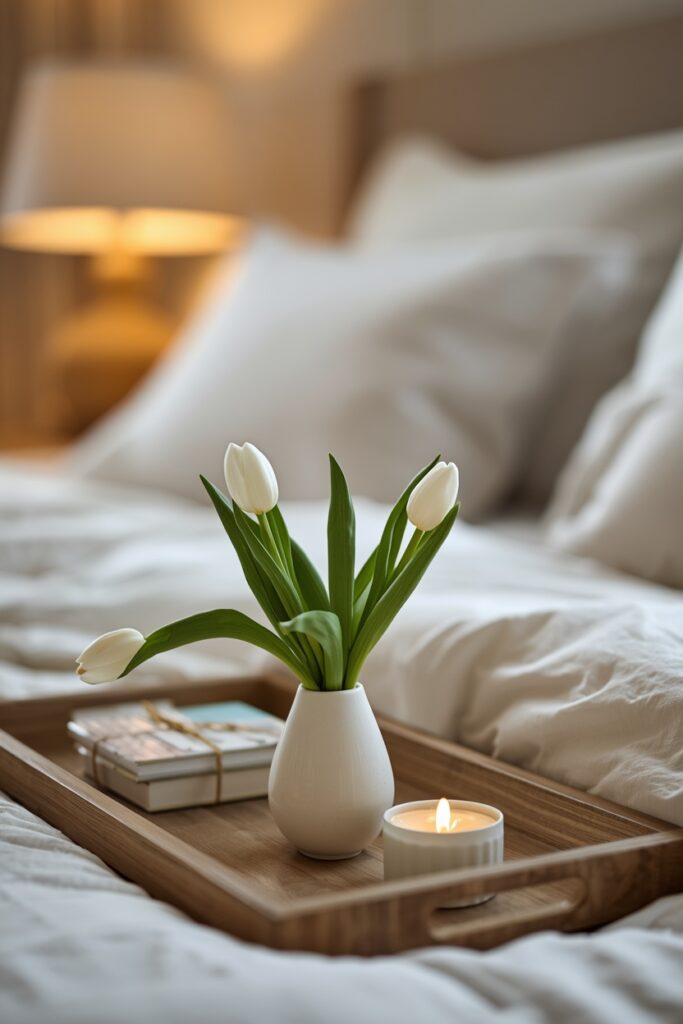
Fresh flowers are the one detail that Korean room tours almost never skip because they signal that the space is actively cared for.
19. Arch Mirror Korean Bedroom Aesthetic Statement
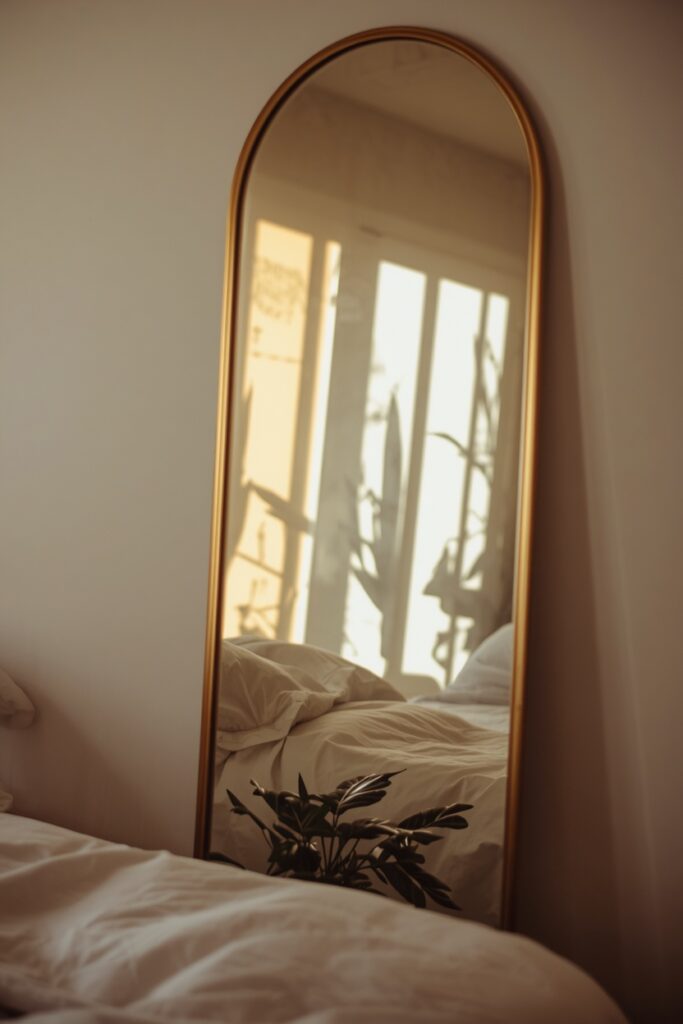
Lean a tall arch-top mirror — at least 1500 mm tall — against the wall opposite or beside the bed to serve as both a practical full-length mirror and a sculptural accent. The arched top softens the wall and adds a shape that contrasts with the rectangular bed, dresser, and windows. Choose a frame in warm brass, pale wood, or matte white depending on your room’s metal and material direction. Position it where it catches and reflects natural light to brighten a dim corner or visually extend a small room. Lean it rather than mounting it — the casual lean is part of the K-style approach and reads more relaxed than a fixed wall mount. Place a small potted plant or a pair of slippers at its base to ground the mirror and make the corner look purposeful.
20. Soft Corduroy and Knit Textile Bedroom
Layer the bed with tactile fabrics — a corduroy duvet cover in soft ivory, a chunky knit throw in cream, and cable-knit cushion covers in warm white — so every surface invites touch. The narrow-wale corduroy (8-wale or finer) reads sophisticated rather than retro when kept in neutral tones. Fold the knit throw in thirds and drape it across the lower third of the bed at a slight angle. The cable-knit cushions should be large — 500 mm square — and slightly under-stuffed so they look relaxed rather than stiff.
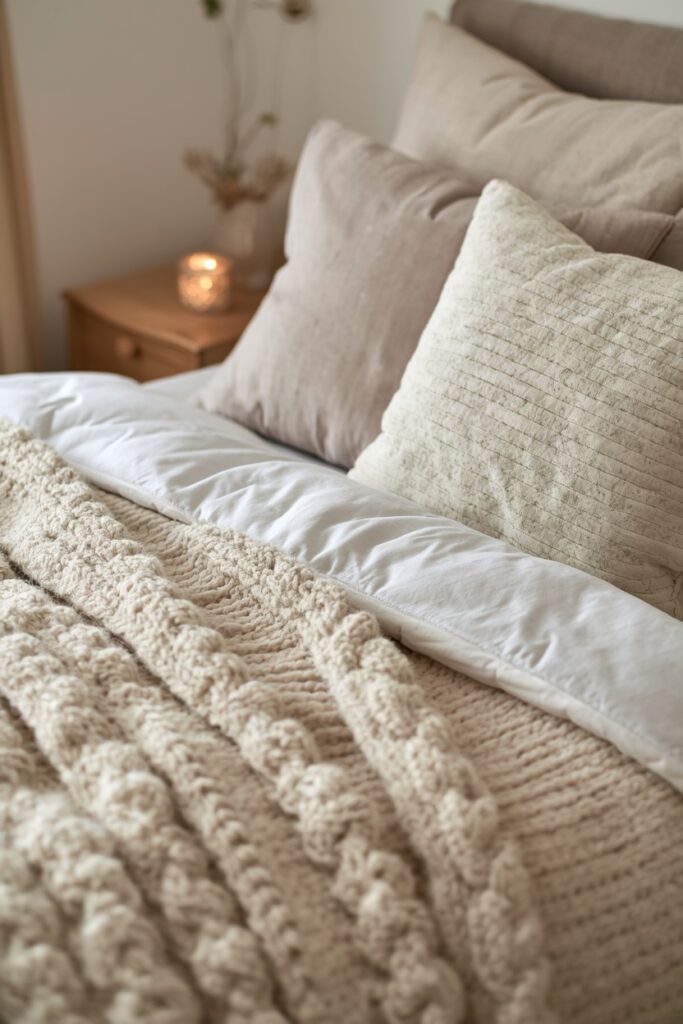
This all-texture approach works because it creates visual interest through surface variation rather than colour or pattern. One caveat: corduroy attracts lint and pet hair, so this setup is better for pet-free bedrooms or for households willing to keep a lint roller nearby.
21. Daybed Reading Nook Bedroom
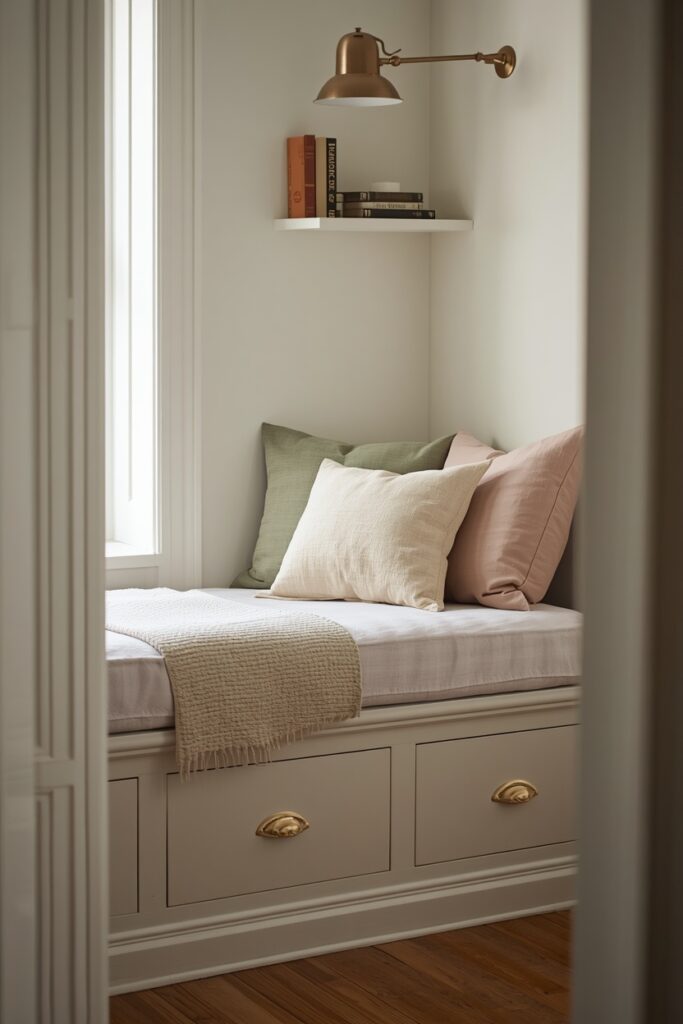
If your room has a window alcove or an unused wall section, install a built-in daybed with storage drawers beneath and pile it with cushions in soft pastels for a dedicated reading and lounging spot. The daybed should be roughly 800 mm deep and as long as the wall allows, with a plywood base and a thick foam cushion covered in washable linen. Add a wall-mounted reading light above — a slim brass arm that swings — so you can direct light exactly where you need it. Scatter three or four cushions in cream, blush, and soft sage so the daybed looks layered without being overstuffed.
A small shelf above with a few books and a candle completes the nook. This second seating zone transforms the bedroom from a room you only sleep in to a room you genuinely want to spend time in during the day.
22. Peach and Ivory Sunset Palette Bedroom
Build the room around the colours of a soft sunset — peach, ivory, and warm gold — by painting the accent wall in a muted peach, dressing the bed in ivory linen, and adding gold-toned accessories like a small lamp base, a picture frame, and curtain rings. The peach should be dusty and muted, closer to dried apricot than neon coral, so it reads warm rather than loud. Use ivory rather than pure white for all textiles — the slight warmth in ivory keeps the palette cohesive and prevents the peach wall from looking disconnected.
A gauze curtain in pale peach or ivory filters light and softens the window edge. Place a small terracotta dish on the nightstand for a natural earth-tone anchor.
Paint Picks: Benjamin Moore Soft Peach 2015-50, Sherwin-Williams Certain Peach SW 6625, Behr Pale Apricot P200-1
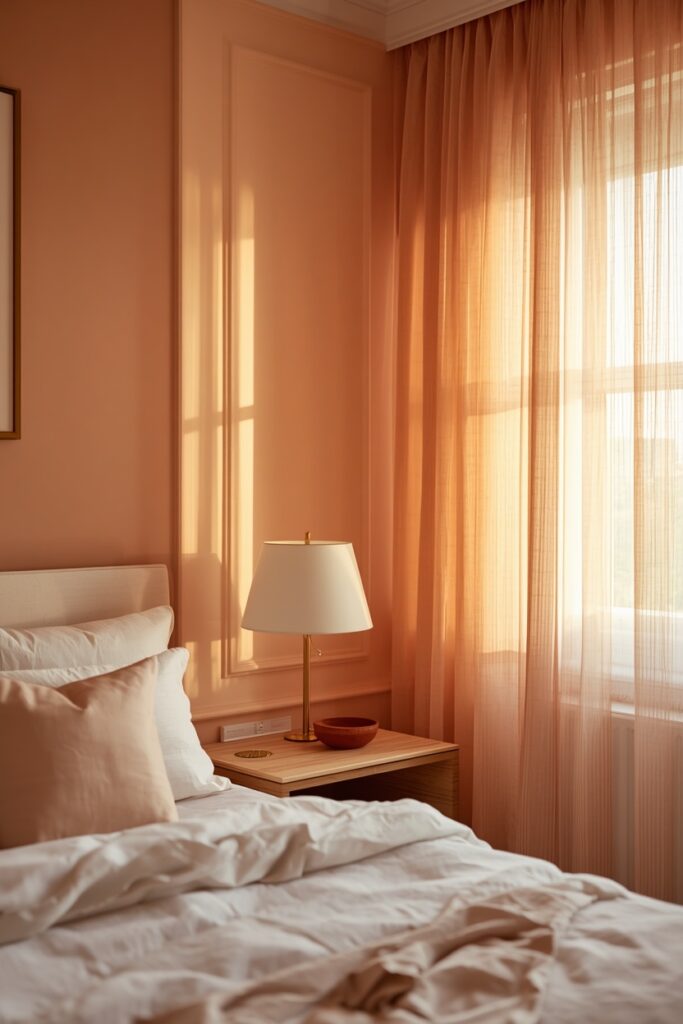
This palette makes the room glow at golden hour and look soft and warm under lamplight, which is why it performs so well in evening room tours.
Where I’d Start if I Only Did Three Things
If I only did three things, I’d start by replacing every overhead light with two or three table lamps using frosted shades and 2700K bulbs — the lighting shift alone transforms how the room reads and photographs. Next, I would switch to an all-white layered bedding setup with three different textures, because the cloud-bed look is the visual foundation of every successful K-style room. Finally, I would lean a tall arch mirror against the wall to add depth, reflect light, and introduce that distinctly Korean casual styling that makes the room look effortlessly put together.
FAQs
What defines the Korean bedroom aesthetic compared to other minimalist styles?
This style prioritises softness over starkness. Where Scandinavian minimalism uses contrast and functional furniture, K-style rooms favour rounded shapes, pastel tones, layered whites, diffused warm lighting, and tactile fabrics. The overall goal is a room that looks gentle and personal rather than architectural. Floor-level elements, sheer fabrics, and fresh flowers are also more prominent in Korean rooms than in other minimalist traditions.
How do I make a small room look like a Korean-style bedroom?
Start by removing furniture that sits above waist height — low bed frames, floor cushions, and slim nightstands keep the sightlines open. Use a pale monochrome palette to make walls recede, and lean a large mirror to visually double the space. Replace overhead lighting with low-placed lamps so light comes from below the midline, which makes the ceiling appear higher. Keep the floor visible around the bed by using a compact rug rather than wall-to-wall carpet.
Which colours work best for this room style?
Stick to soft, muted tones with warm undertones: cream, blush, dusty lavender, soft sage, warm beige, and milk-tea taupe are the core palette. Avoid saturated or cool colours — no bright pink, no icy blue, no stark grey. Every colour should look like it has been softened through a warm filter. If you add only one accent colour beyond neutrals, dusty blush or soft sage are the safest choices.
Is the Korean room aesthetic practical for everyday living?
It is, as long as you commit to the lower furniture profile and the decluttered surfaces. The biggest practical adjustment is switching from overhead lighting to multiple lamps, which can mean more plugs and cords to manage. Sheer curtains reduce privacy at night if you lack blinds behind them, so pair them with roller blinds. Otherwise, the aesthetic is actually designed around daily living in small spaces, which makes it more practical than most Pinterest-driven styles.
Final Thoughts
The Korean bedroom aesthetic is not about copying a single room you saw online — it is about understanding the principles that make K-style rooms look so calm and then applying them to your own space. Soft lighting from multiple low sources, muted warm palettes, layered white bedding, and rounded furniture shapes are the building blocks. Pick three or four ideas from this list that match your room’s size and your daily habits, commit to them fully, and you will end up with a dream room that looks and photographs exactly the way you want it to.
Leave a Reply