
Tile can make a small bathroom read cramped or surprisingly open, and the deciding factors are size, layout, sheen, and continuity — not the tile itself. The right choices reflect light, stretch sightlines, and remove the visual breaks that chop a tiny room into smaller pieces.
Each of these 12 bathroom tile ideas is a complete scheme for a small bathroom, a whole tiled room designed to read bigger and brighter. Find the approach that suits your space, and use it as a blueprint to make a tight bathroom read noticeably more open.
1. The Large-Format Tile Scheme
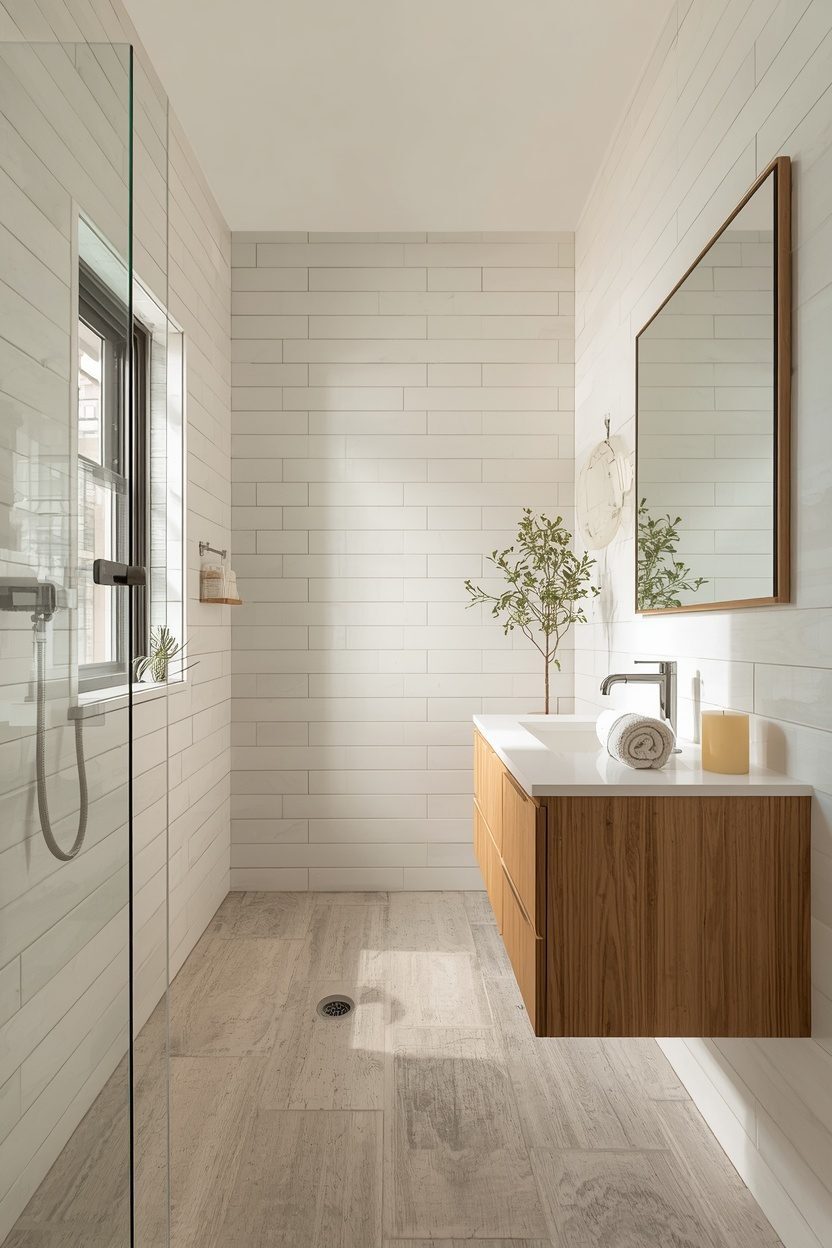
This whole small bathroom uses big, large-format tiles with the thinnest possible grout lines. Fewer grout lines means fewer visual breaks, so the walls read as smooth, continuous planes and the room reads larger.
It seems counterintuitive to put big tiles in a small room, but it works — the unbroken surface tricks the eye into seeing more space. The complete large-format scheme is the single most effective tile move for enlarging a small bathroom.
How it enlarges the room
• Choose the largest tile that fits your walls so grout lines stay minimal.
• Match the grout closely to the tile colour so the lines almost disappear.
• Run the same tile from wall into the shower for an unbroken surface.
• Keep the tile light — white, greige, pale stone — to reflect the most light.
2. The Glossy Light Tile Scheme
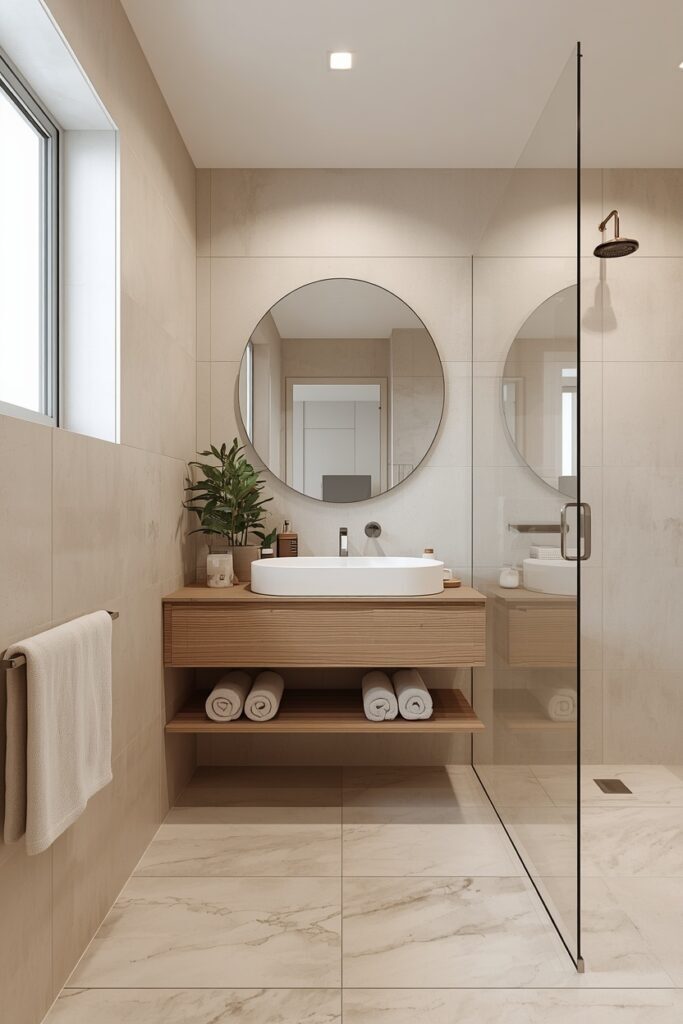
This entire small bathroom leans on glossy light tile, whose reflective surface bounces light around and makes the walls read brighter and farther away. The sheen does the space-expanding work that a matte tile can’t.
Glossy tile is also easy to wipe clean. The complete glossy-light scheme is a renter-friendly classic that turns a dim, boxed-in bathroom luminous and open.
3. The Vertical Tile Scheme
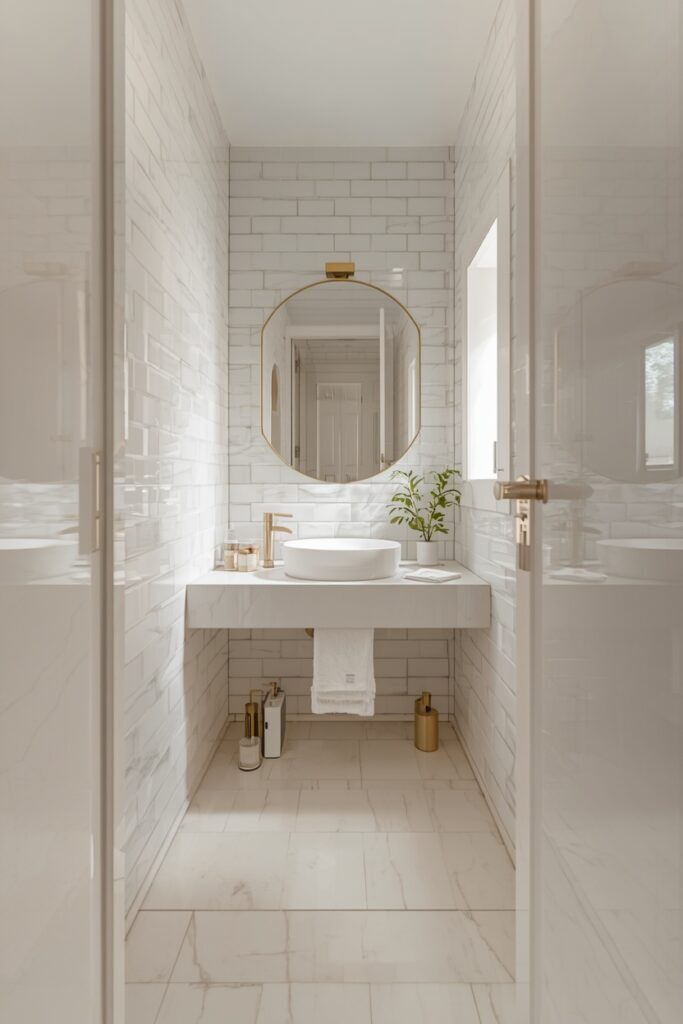
This whole small bathroom stacks tile vertically to lift a low ceiling. The vertical lines draw the eye upward, making the room read taller and adding a fresh, current twist to ordinary subway tile.
Pair it with a tall mirror to reinforce the height. The complete vertical scheme stretches a small bathroom upward, the perfect trick where a low ceiling makes the room read boxed in.
4. The Floor-to-Ceiling Continuous Tile Scheme
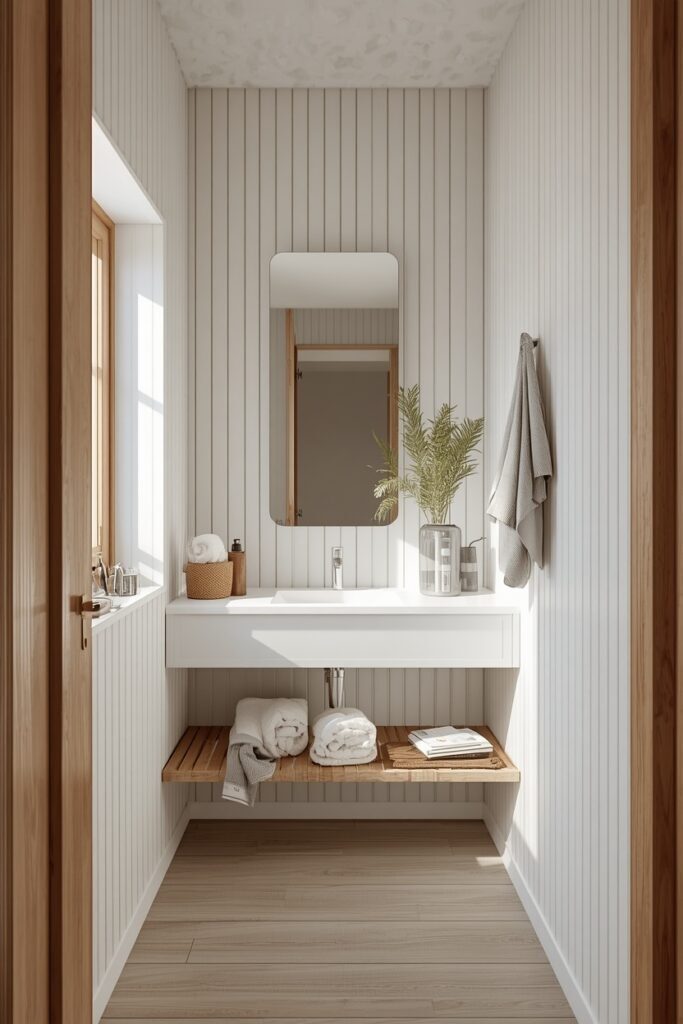
This entire small bathroom runs the same tile across floor, walls, and shower as one continuous surface. With no change of material or colour to break the eye’s path, the room reads as one seamless, larger space.
Wrapping everything in one tile blurs where surfaces end. The complete continuous scheme is the most enveloping way to enlarge a small bathroom — a single material with nowhere for the eye to stop.
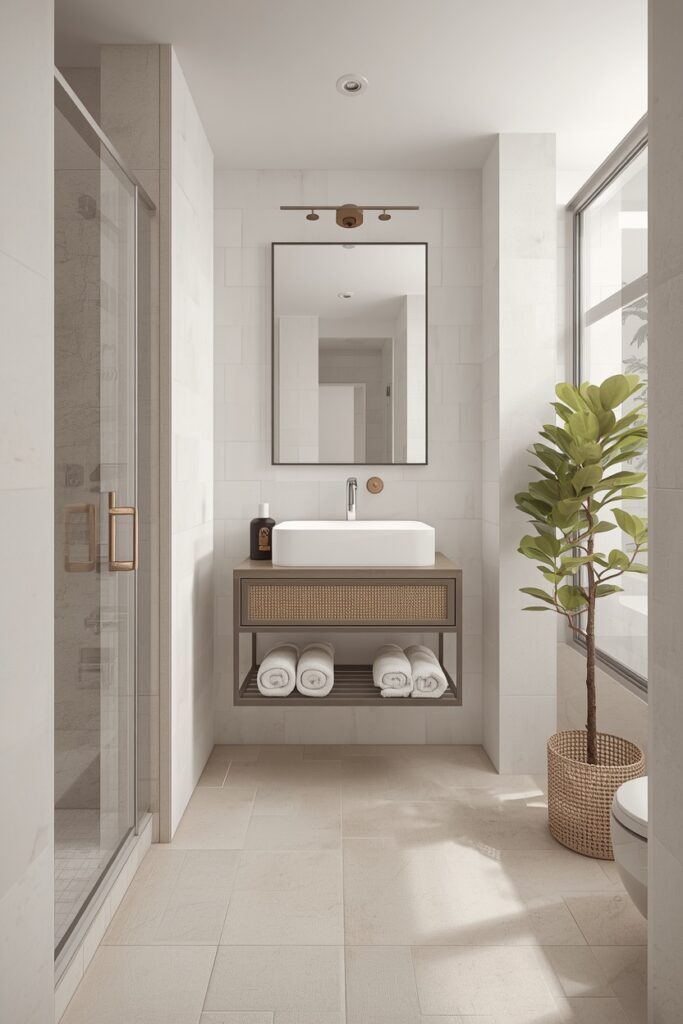
5. The Monochrome Tonal Tile Scheme
This whole small bathroom tiles everything in one tonal palette — walls, floor, and shower all in closely related greige tones. Without hard colour breaks between surfaces, the room reads continuous and larger.
The subtle tonal shifts add depth without chopping up the space. The complete monochrome scheme proves that one colour family, used throughout, is a powerful way to expand a tiny bathroom.

6. The Light Marble-Look Tile Scheme
This entire small bathroom uses light marble-look tile to read both luxe and large. The pale stone with soft veining reflects light and keeps the surfaces bright, while the high-end look lifts a small room.
Brass adds warmth against the cool stone. The complete marble-look scheme gives a compact bathroom an expensive, expansive look for far less than real marble.

7. The Diagonal Floor Tile Scheme
This whole small bathroom lays the floor tile on the diagonal, which draws the eye along the longest line across the room and makes the floor read wider. The angled grid stretches a narrow space sideways.
Light tile and minimal grout keep it airy. The complete diagonal-floor scheme is a classic trick: turning the tile 45 degrees makes a small floor read more generous than a straight grid.

8. The Pale Wood-Look Tile Scheme
This entire small bathroom uses pale wood-look plank tile run lengthwise across the floor. The long planks lead the eye down the room’s longest dimension, stretching it, while the pale wood keeps it warm and light.
It brings the warmth of wood with the water-resistance of tile. The complete wood-look scheme enlarges a small bathroom along its length and stops a light room from reading cold.

9. The Light Tile and Single Accent Scheme
This whole small bathroom keeps the bulk of the tile light and adds just one small accent — a sage-tiled niche or a single shower band. The mostly-light scheme keeps the room open while one accent adds personality.
Confining colour to a small area avoids shrinking the space. The complete look proves you can add a hit of colour to a small tiled bathroom without losing the openness, as long as you keep it to one spot.
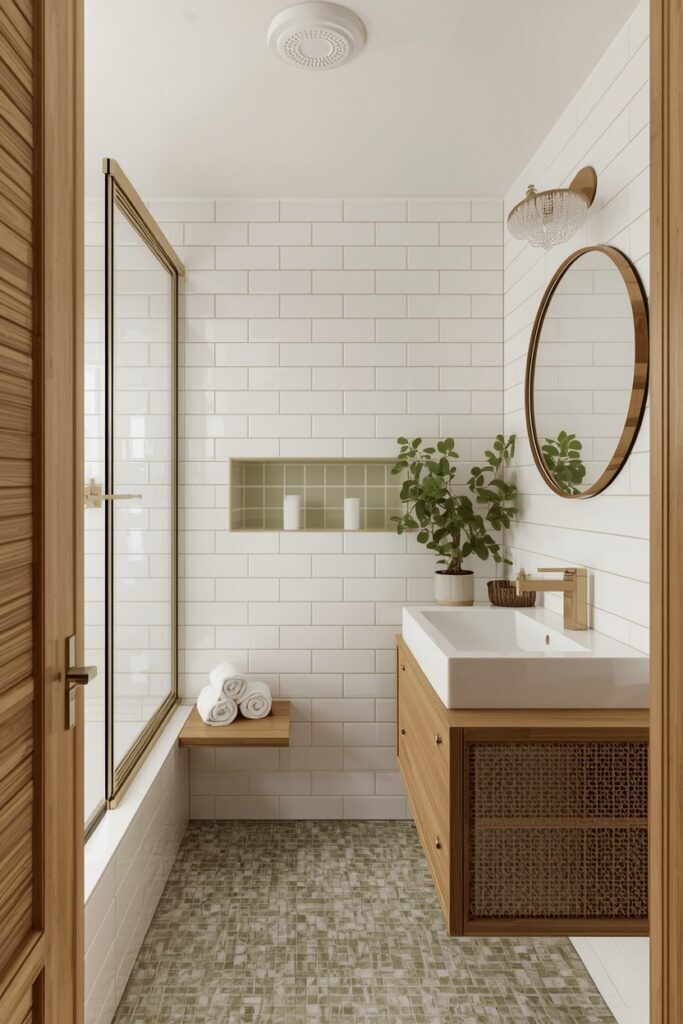
10. The Glossy Vertical Subway Scheme
This entire small bathroom combines two enlarging tricks: glossy subway tile, stacked vertically. The sheen reflects light while the vertical lines lift the ceiling, so the room reads both brighter and taller.
It’s the same affordable tile, working twice as hard. The complete glossy-vertical scheme is a budget-friendly way to make a small bathroom read open on two fronts at once.

11. The Light Penny or Mosaic Floor Scheme
This whole small bathroom uses a light penny-round or small mosaic floor for fine texture that adds interest without a heavy pattern. Keeping the mosaic light and the walls plain stops it from busying up the room.
The small scale grips underfoot and reads detailed, not loud. The complete mosaic-floor scheme adds character to a small tiled bathroom while keeping the palette light and the room open.

12. The Complete Space-Stretching Tile Bathroom
This is every enlarging trick in one room: large-format, glossy, light tile run floor to ceiling and into the shower, with a continuous floor and minimal grout. Each choice reflects light or removes a visual break.
Format, sheen, colour, and continuity all pull in the same direction. The complete scheme shows how the right tile choices combine to make a genuinely small bathroom read open, bright, and noticeably bigger.
Where I’d Start if I Only Did Three Things
If I wanted tile to make a small bathroom feel bigger, I’d start with format — go large-format with minimal, colour-matched grout, because fewer lines means a smoother, larger-reading surface. Next, I’d keep it light and glossy so the tile reflects daylight and lamplight around the room. Third, I’d run the same tile continuously — floor to ceiling and into the shower — so there are no breaks to chop up the space. Large-format, light and glossy, run continuously: that trio is the whole formula for tile that stretches a small bathroom.
FAQ
Should small bathrooms use small or large tiles?
Large tiles, in most cases. It seems backwards, but large-format tile with minimal grout creates a smooth, continuous surface that makes a small bathroom seem bigger, while lots of small tiles add busy grout lines that visually chop up the space. Save small mosaic tile for the floor or a single accent, and use large-format on the walls to open the room up.
What tile colour makes a small bathroom look bigger?
Light, warm tones — white, greige, pale stone, and soft pale wood-look. Light tile reflects daylight and lamplight, which pushes the walls back and brightens the room, while dark tile absorbs light and pulls the walls in. If you want colour, keep it to one small accent and let light tile cover the main surfaces so the room stays open.
Does glossy or matte tile work better in a small bathroom?
Glossy tile is better for making a small bathroom feel bigger because its reflective surface bounces light around and brightens the walls. Matte tile reads calmer and hides water spots but absorbs more light. A good compromise is a satin or semi-gloss finish, which reflects some light without the high shine, but for maximum brightness in a tiny room, glossy wins.
Which tile layout makes a small bathroom read more spacious?
Layouts that lead the eye along the room’s longest line or upward. Vertical tile lifts a low ceiling, diagonal or lengthwise floor tile stretches the floor, and running the same tile continuously from floor to ceiling and into the shower removes the breaks that shrink a room. Avoid lots of contrasting borders and changes of direction, which fragment a small space.
Conclusion
In a small bathroom, tile is one of your most powerful tools — the right format, colour, sheen, and layout can make a tight room read noticeably bigger and brighter. Go large-format with minimal grout, keep it light and glossy, run it continuously, and lead the eye up or along the longest line. Pick the complete tile scheme that suits your space, build the whole room around it, and even the smallest bathroom can read open, airy, and bigger than its footprint.
Leave a Reply