

Almost every bedroom people call “transformed” for the holidays actually comes down to the bed itself, not the decor around it. The bed is the single largest surface in the room, so layering it well changes the whole space faster — and far more cheaply — than adding garlands, a tree, or new furniture ever could. Most people get this backwards, decorating around a flat, unchanged bed instead of starting with it.
These sixteen Christmas bedding ideas focus on the one element that does the most work in the room: what you layer, in what textures, in what palette, and the small styling details that separate a bed that looks made from one that looks styled. Apply them to whatever bedroom you already have — the layering principles hold regardless of the style or colors around them.
1. Start With a Neutral Base and Layer the Season on Top
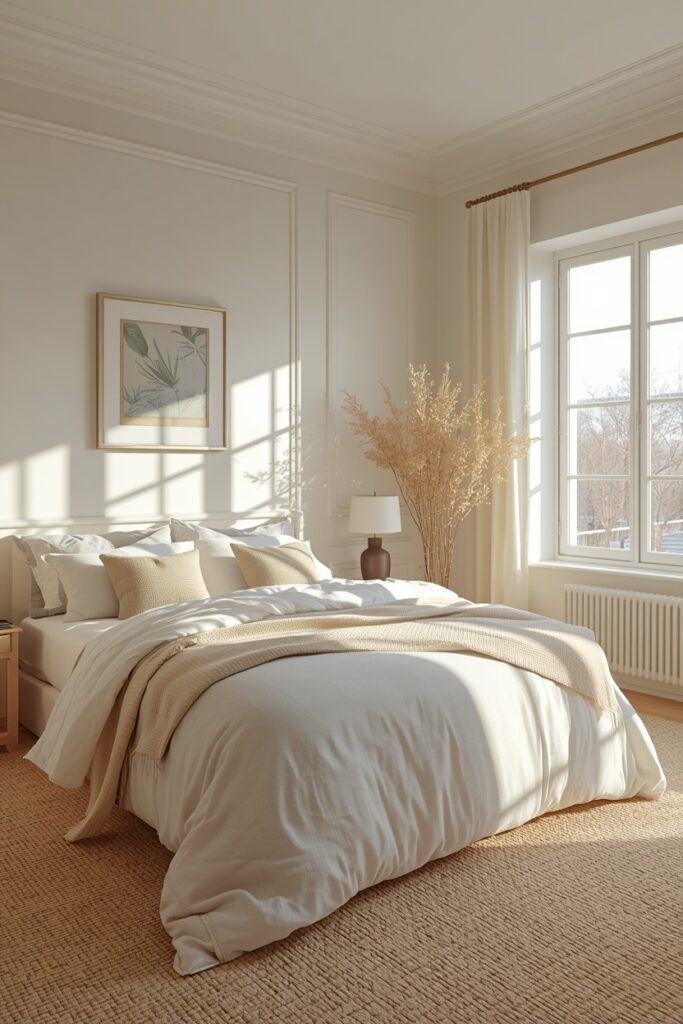
A crisp white or oatmeal duvet as the year-round base is what makes seasonal layering work, because it lets you add and remove festive pieces without rebuying a full set each December. Keep the foundation neutral and treat the Christmas elements — a plaid throw, red shams, a knit blanket — as removable layers on top. It’s the single decision that makes every other idea on this list cheaper and easier to pull off.

2. Swap Just the Duvet Cover, Not the Whole Bed
The duvet cover is the largest visible surface on the bed, so changing only that one piece transforms the whole room for a fraction of the cost of a new set. Slip your existing insert into a festive cover for December, then switch back in January and store the cover flat. A single seasonal cover does more visual work than any number of small accessories combined.

3. Switch to Flannel or Brushed-Cotton Sheets for Real Winter Warmth
Flannel or brushed-cotton sheets add genuine warmth rather than just the look of it, which matters most in the coldest weeks when a standard percale sheet feels cool to climb into. Look for a fabric weight around 170 gsm or higher for real coziness without feeling heavy. Wash them once before the first use — flannel softens noticeably after its first cycle.
4. Drape a Chunky Knit Throw Across the Foot of the Bed
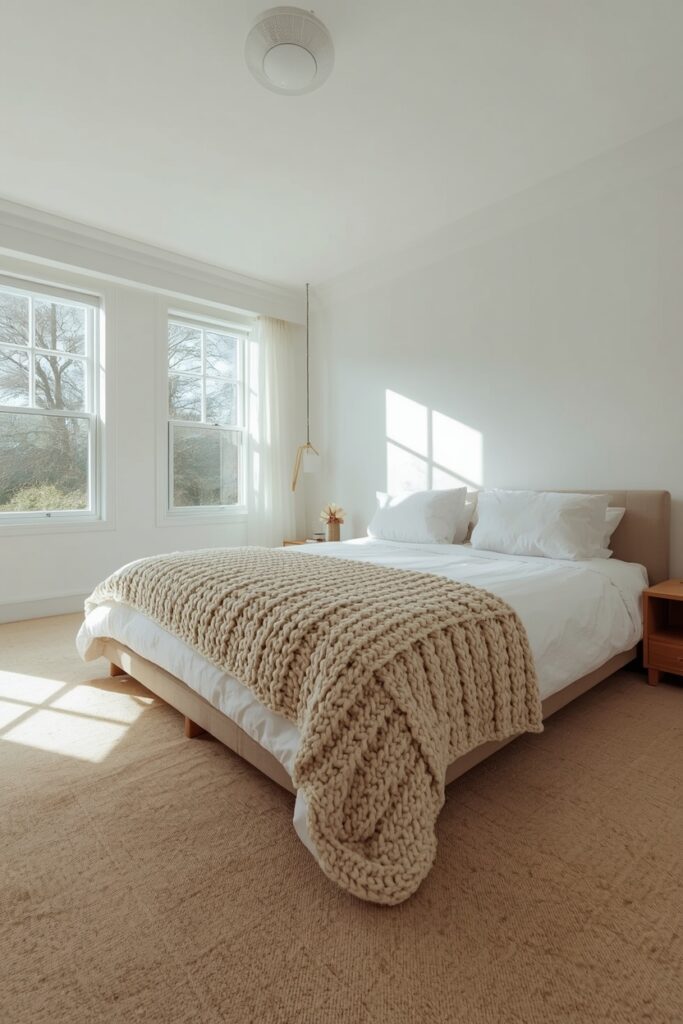
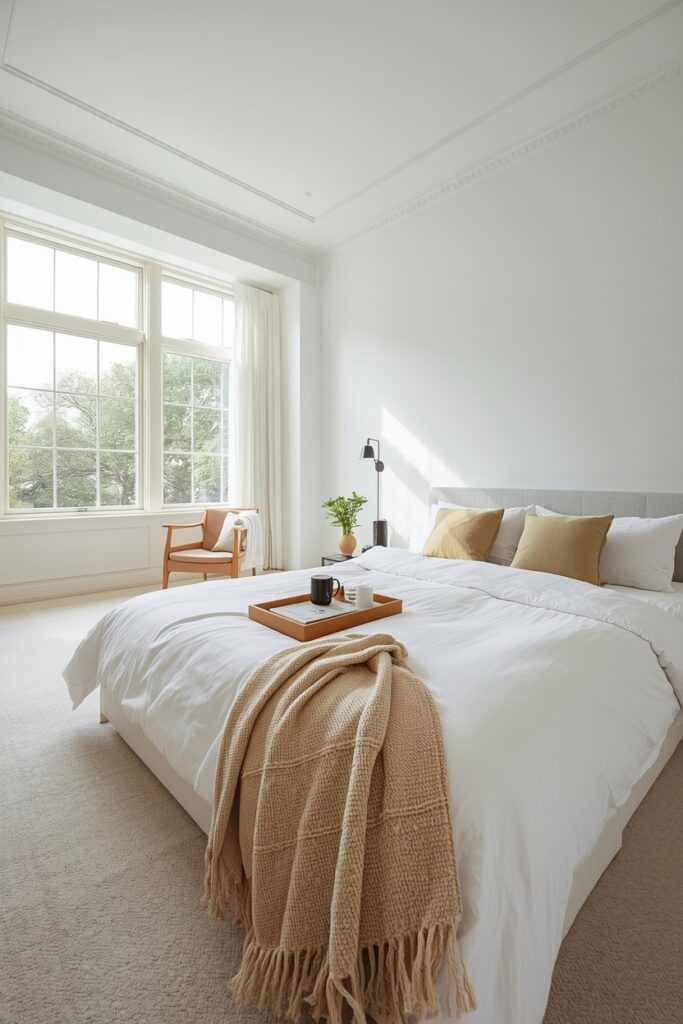
A chunky knit throw folded across the lower third of the bed adds instant texture and reads as cozy from the doorway, even on an otherwise simple set. Choose a cable knit or waffle weave in a warm neutral or deep seasonal tone, and let it drape slightly over one side rather than sitting perfectly square. The uneven drape is what makes it look styled rather than stiff.
5. Make Plaid or Tartan Your One Signature Pattern
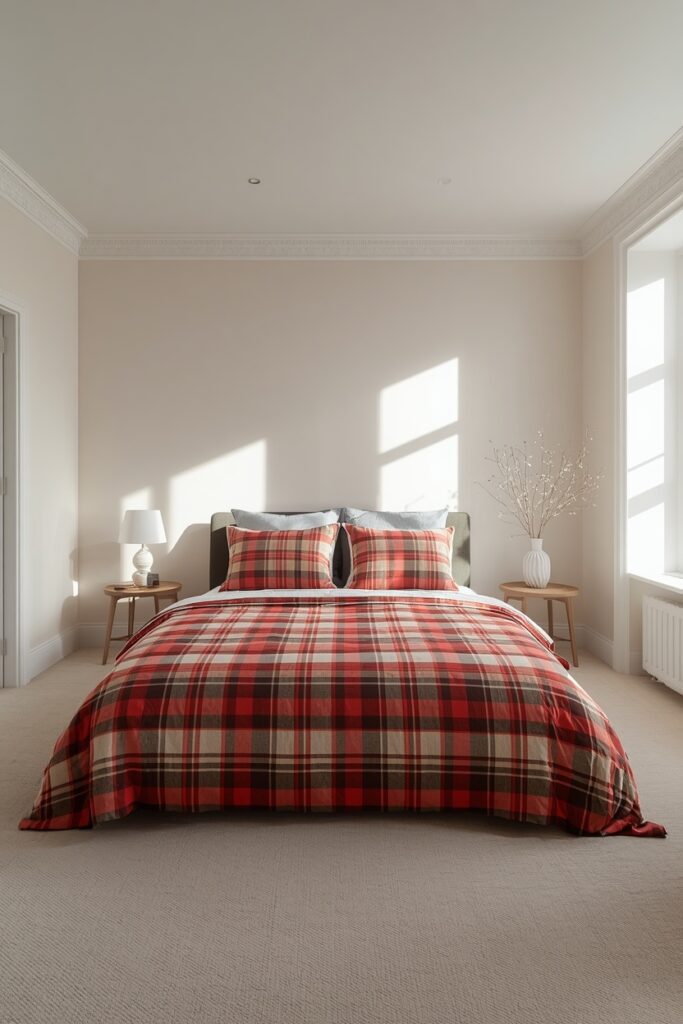
Plaid is the most recognizable Christmas bedding pattern, so let it carry the theme on one or two pieces rather than everywhere at once. A tartan duvet cover or a pair of plaid shams reads as festive immediately, while covering the whole bed in it quickly tips into busy. One strong patterned piece against solid layers is the balance that actually looks intentional.
6. Limit the Palette to Two Colors Plus One Metallic
A restrained palette — say deep green and cream, or classic red and white, plus a single metallic like brass or soft gold — keeps a Christmas bed feeling considered instead of chaotic. More than two dominant colors starts to compete, and the metallic accent adds the festive shimmer without introducing a third full color. Decide the two colors first, then buy every piece to fit them.

7. Layer Textures, Not Just Patterns
Depth on a bed comes from mixing textures — smooth cotton, chunky knit, velvet, faux fur, brushed flannel — far more than from mixing patterns. Three or four different textures in the same or similar colors read richer and more expensive than the same number of clashing prints. It’s the trick hotels and stylists use to make an all-white or all-neutral bed still look layered.
8. Build the Pillow Arrangement in Odd Numbers
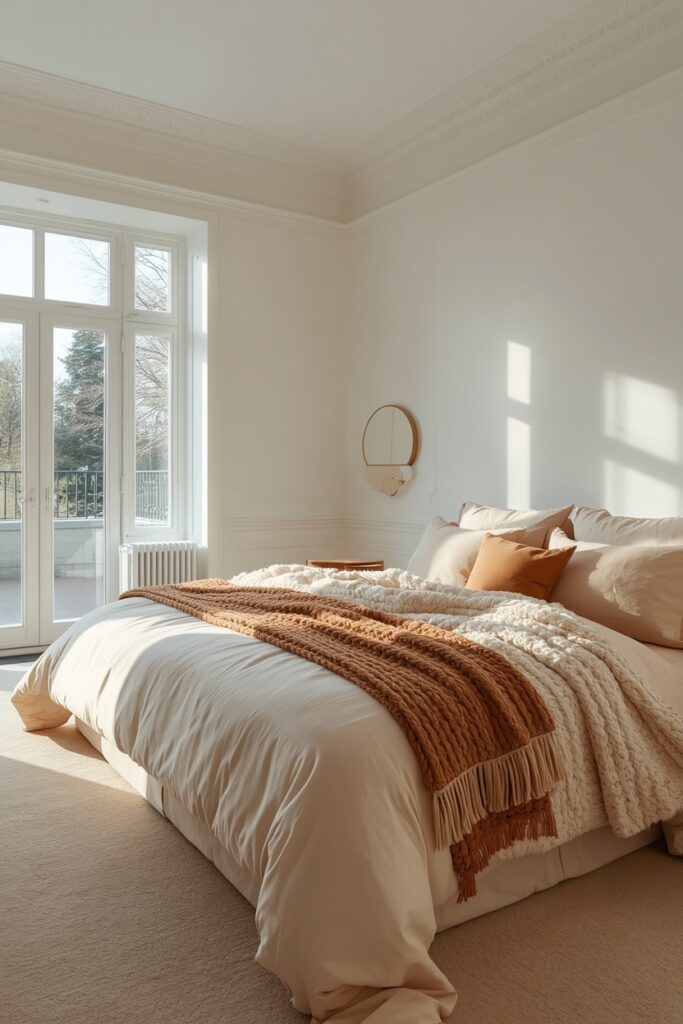
An arrangement built on odd numbers — five or seven pillows rather than four or six — looks more natural and less rigidly symmetrical. A reliable formula is two euro shams at the back, two standard pillows in front, and one lumbar or novelty pillow leaning at the center. Layer largest at the back to smallest in front so every pillow stays visible.

9. Add a Faux Fur Throw or Blanket for Instant Luxe
A faux fur throw brings a plush, winter-lodge texture that instantly reads as seasonal and expensive, even draped over a plain duvet. Keep it to one fur piece per bed — layered with a knit or velvet rather than more fur — so the effect stays luxe instead of costume. Choose a longer-pile version in ivory, grey, or a warm caramel for the most versatile winter look.

10. Bring in Velvet Euro Shams for Depth and Richness
Velvet euro shams add a deep, light-catching richness that flat cotton can’t match, and they anchor the back of a layered pillow arrangement beautifully. Jewel tones — emerald, garnet, sapphire — feel especially festive, while a soft champagne or charcoal stays elegant enough to leave up past the holidays. Velvet also photographs with a subtle sheen that makes the whole bed look more finished.
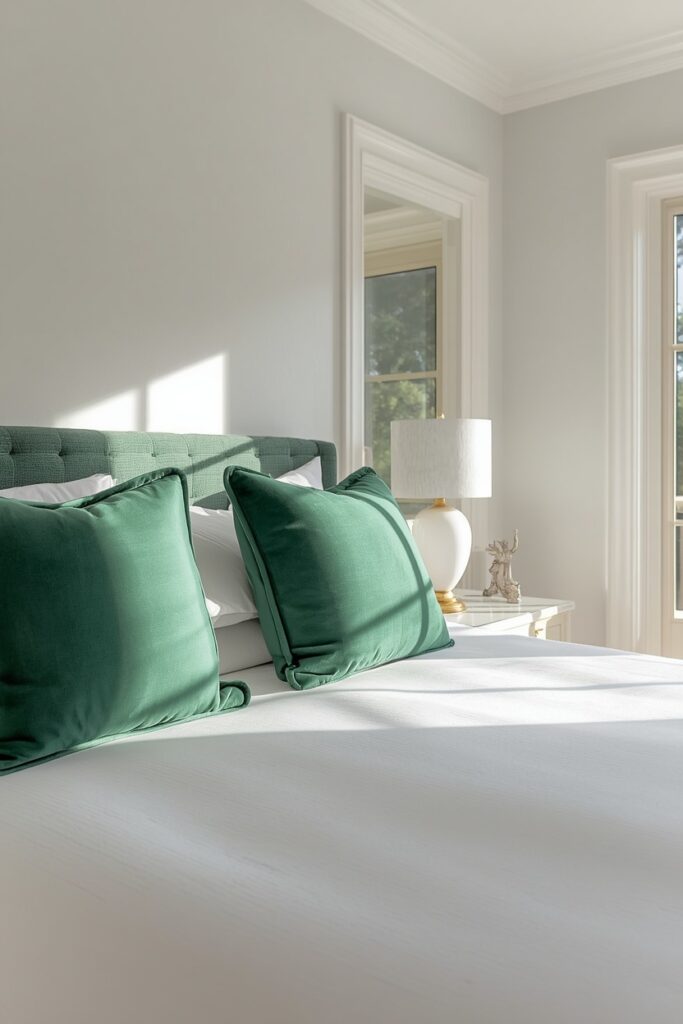
11. Use a Quilted Coverlet for Lightweight Warmth
A quilted coverlet or matelassé layered over the duvet adds a bit of extra warmth and a lot of visual structure without the bulk of a second comforter. Fold it across the bottom half or layer it fully under the throw for a tailored, made-bed look. It’s especially useful in a warmer room where a full second blanket would be too much but the bed still looks flat.
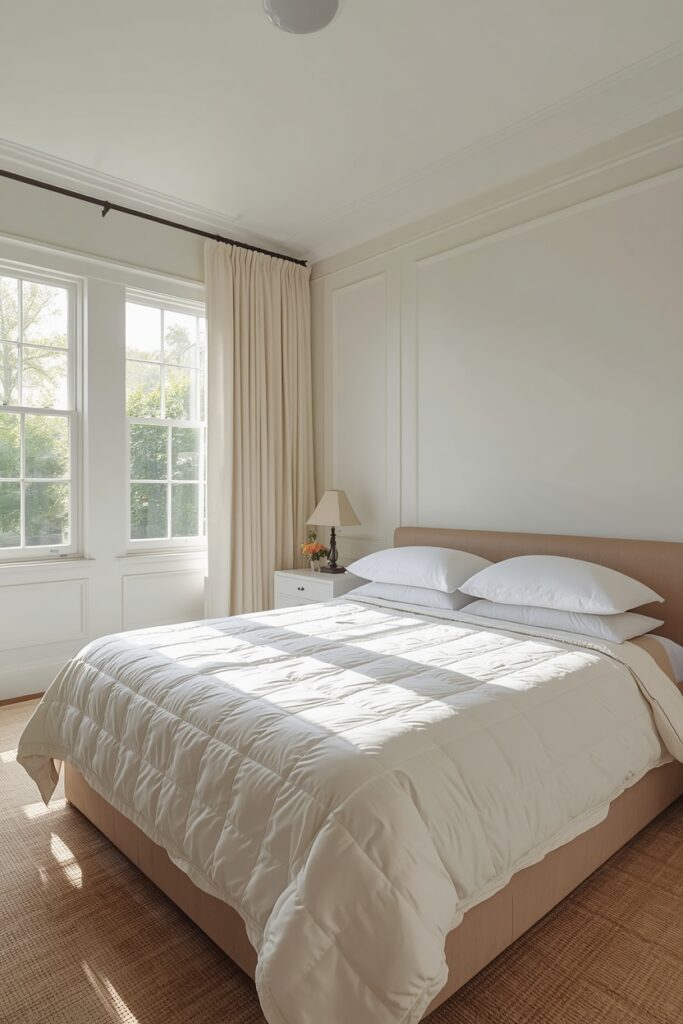
12. Let a Festive Fitted Sheet Peek Out at the Edges
A subtly festive fitted or flat sheet — a fine red stripe, a small Fair Isle print — adds a hit of holiday detail that shows only at the folded-back edge and the corners. It’s an inexpensive way to work in pattern without committing the whole bed to it, and it reads as a considered detail rather than an obvious theme. Fold the top sheet back over the duvet so the pattern actually shows.

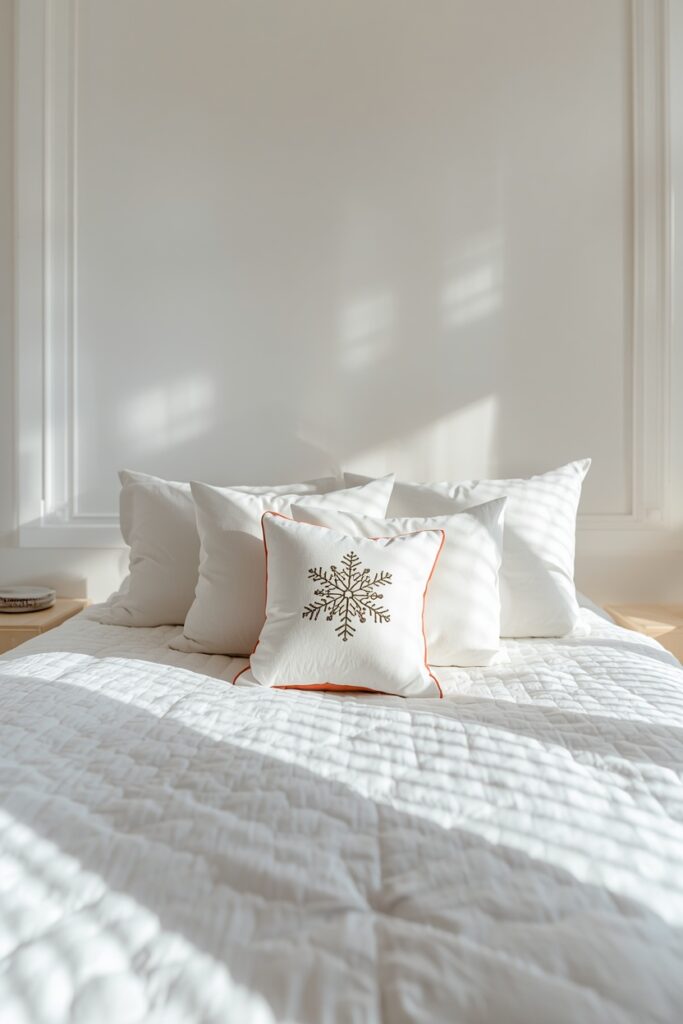
13. Add One Novelty Holiday Pillow as the Accent
A single novelty pillow — an embroidered snowflake, a Fair Isle knit, a small “Merry” lumbar — is the piece that makes the theme unmistakable without taking over. Keep it to one per bed and lean it at the front center of the pillow stack where it becomes the focal point. Because it’s the most seasonal piece, it’s also the first thing to store away in January.
14. Consider a Weighted Blanket for the Coldest Weeks
A weighted blanket layered under the duvet adds warmth and a cocooning weight that suits the coldest, darkest weeks of the year. Choose one around ten percent of your body weight, and pick a removable, washable cover in a seasonal tone so it doubles as a visible layer. Keep it as the bottom layer so the decorative bedding still sits on top.

15. Invest in a Quality Duvet Insert as the Foundation
Everything on the bed sits over the duvet insert, so a good one — evenly filled, the right warmth rating for your climate — is what makes the whole arrangement look full and drape well. A flat, lumpy insert makes even expensive covers look sad, while a well-lofted one fills a cover to the corners and holds its shape. Match the fill weight to your room: lighter for a warm bedroom, a higher fill power for a cold one.
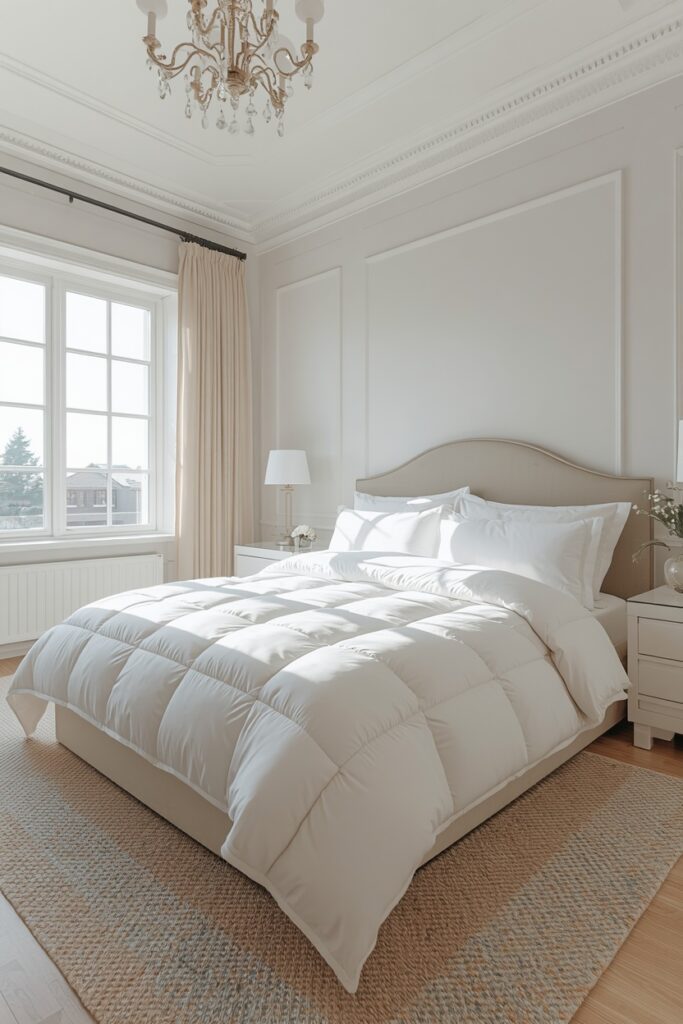
16. Finish With a Folded Throw and a Styled Tray
The final ten percent — a throw folded in thirds across the foot, a small tray with a book and a mug or a sprig of greenery — is what pushes a bed from made to styled. These finishing touches take two minutes but are the difference between a bed that looks decorated and one that looks like a magazine photo. Keep the styling props minimal and seasonal so they read as intentional, not cluttered.
Where I’d Start If I Only Did Three Things
If I only had an afternoon, I’d start with a neutral base and a single festive duvet cover swap from ideas one and two, since that one change transforms the largest surface in the room instantly. Second, I’d layer in texture — a chunky knit and a faux fur throw from ideas four and nine — because texture does more for a cozy Christmas feel than pattern ever does. Third, I’d finish the pillow arrangement in odd numbers with one novelty accent pillow from ideas eight and thirteen, which is the detail that makes the whole bed read as deliberately styled rather than just made.
FAQ
What’s the easiest way to make a bed feel Christmassy without buying a whole new set?
Swap only the duvet cover and add one or two festive throw pillows over your existing neutral base. The duvet is the largest surface on the bed, so changing it transforms the room, while a couple of seasonal pillows carry the theme for very little cost.
How many pillows is too many on a Christmas bed?
Five to seven is the sweet spot for most beds — enough to look layered without burying the bed or having a pile to remove every night. Build in odd numbers, largest at the back to smallest in front, and stop once the front pillows start hiding the ones behind them.
Are flannel sheets too warm if my bedroom is already heated?
They can be for a consistently warm room. If your bedroom runs warm, skip flannel and get your winter coziness from a quilted coverlet or a knit throw on top instead — those add warmth you can pull off easily if the night gets too hot.
How do I store seasonal bedding so it lasts year to year?
Wash and fully dry everything before storing, then keep it in a breathable cotton bag or bin rather than sealed plastic, which can trap moisture. Add a cedar block for knits and fur, and store flat or loosely rolled rather than tightly compressed so the pieces keep their loft.
Conclusion
Bedding is the fastest way to transform a bedroom for the holidays, because the bed is the largest single surface in the room and layering it costs far less than redecorating around it. Start with a neutral foundation, swap one or two seasonal pieces, layer your textures, and finish with a styled throw and a few pillows in odd numbers — and the room reads as fully, effortlessly festive without a single new piece of furniture.