the bathroom floor is the surface you see first when you walk in and last when you leave. It sets the tone for everything above it — the vanity, the walls, the fixtures.
Get the floor tile right and the entire bathroom reads as designed. Get it wrong and no amount of expensive fixtures can compensate.
These 16 ideas cover every modern direction in bathroom floor tile — from large-format terrazzo and zellige to bold geometric patterns and warm travertine — with specific guidance on format, grout, slip rating, and the precise combinations that work in 2026.
The Technical Non-Negotiables First
Before choosing any tile aesthetically, confirm it meets the functional requirements of a bathroom floor.
Slip rating: Bathroom floor tiles must carry a minimum R9 wet slip rating. Tiles designed for walls or dry interior floors are not appropriate for bathroom floors — they become dangerously slippery when wet.
Porosity: Natural stone tiles (marble, travertine, limestone) are porous and require annual sealing in wet areas. Porcelain tiles are essentially non-porous and require no sealing. Understand which category your chosen tile falls into before purchasing.
Grout width: The minimum grout joint width for floor tiles is typically 2mm for rectified tiles (machine-cut with precise edges) and 3–5mm for natural stone and handmade tiles with irregular edges. Check the manufacturer’s recommendation.
Tile Technical Quick Reference
| Tile Type | Slip Rating | Porosity | Maintenance | Best For |
| Porcelain | R9–R12 | Non-porous | Very low | All bathroom styles |
| Ceramic | R9–R10 | Low-medium | Low | Budget, low-traffic |
| Natural marble | R9 | High (seal required) | Medium | Luxury, dry areas |
| Travertine | R10 | High (seal required) | Medium | Warm, natural styles |
| Terrazzo | R10–R11 | Low-medium | Low-medium | Contemporary, bold |
| Zellige | R9–R10 | Medium | Low | Feature, wet wall |
| Encaustic cement | R10 | High (seal required) | Medium | Patterned feature |
| Mosaic | R11–R12 | Varies | Medium | Wet zones, showers |
Idea 1: Large-Format Porcelain in Warm White or Cream
A single large-format porcelain tile — 60x60cm, 60x120cm, or 120x120cm — in warm white or cream is the most timeless and most spatially generous bathroom floor treatment. The fewer the grout lines, the larger the room reads.
Why large format works: Standard 30x30cm tiles in a small bathroom create a grid of grout lines that breaks the floor into a pattern that makes the room feel smaller. A single 120x60cm tile per row creates a floor that reads as one continuous surface.
Grout: Match the grout to the tile colour as closely as possible. The goal is invisible grout lines, not a contrasting grid.
Finish: Matte or honed finish only for bathroom floors. Polished porcelain is beautiful on walls but becomes a slip hazard on wet bathroom floors.

Idea 2: Warm Travertine-Effect Porcelain
Travertine — the warm, honey-toned sedimentary stone beloved of Roman baths and Mediterranean villas — has returned as one of the dominant bathroom tile directions of 2026. The porcelain version delivers the aesthetic with zero maintenance.
What makes travertine beautiful: The natural pitting, cross-cut veining, and warm honey-to-cream tonal variation of travertine is impossible to replicate in a manufactured material — which is why the genuine article remains highly valued. The porcelain version captures the surface pattern while eliminating the porosity and sealing requirement.
Format: 60x60cm or 60x120cm in a cross-cut (horizontal) vein pattern. Avoid overly uniform digital-repeat patterns — the best travertine-effect porcelain has sufficient variation across tiles to read as genuinely natural.
Pairing: Travertine floor with white or warm plaster walls. Warm brass fixtures. Timber vanity. The warm tone of travertine works against warm neutrals and clashes against cool whites.

| ⭐ Pro Tip Order 15% more tiles than your measured floor area requires. Tile breakage during cutting is unavoidable, especially around curves and bathroom fixtures. Pattern-matched tiles (travertine-effect, marble-effect) need extra allowance to align veining across the floor. Leftover tiles are also essential for future repairs — and dye lots change between production runs, making an exact match impossible once a product is discontinued. This 15% rule applies to both floor and wall tiles in any bathroom renovation. |
Idea 3: Black and White Classic Checkerboard
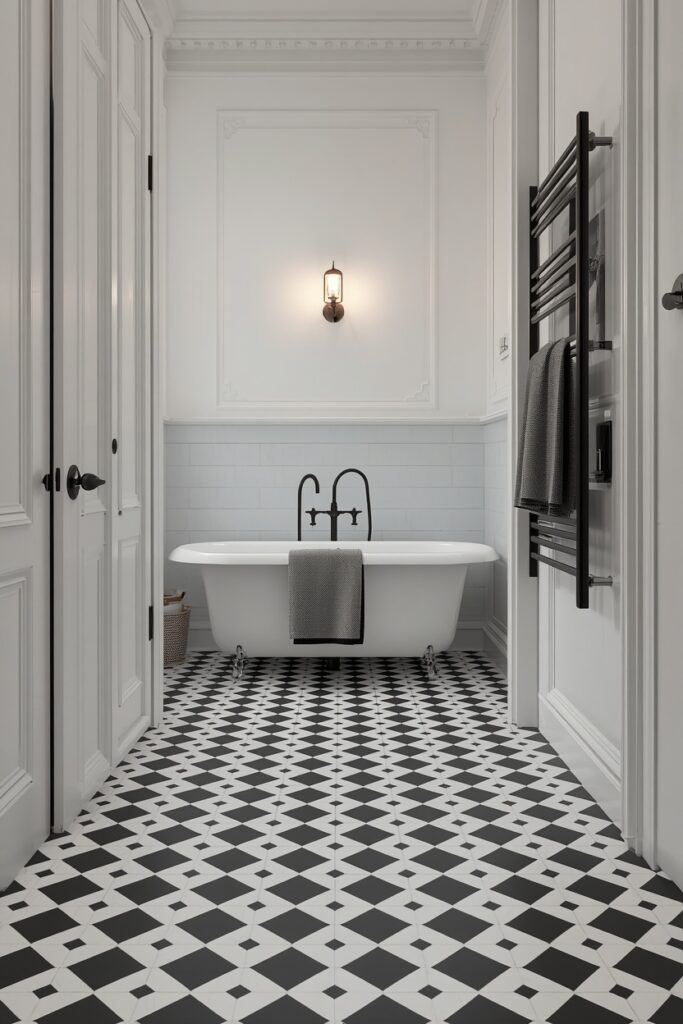
The black and white checkerboard floor — one of the most enduring tile patterns in domestic architecture — is experiencing a genuine revival in 2026, updated with new formats, new finishes, and a more considered approach to the scale of the pattern relative to the room.
2026 direction: The classic 10x10cm square format updated to 20x20cm or 30x30cm for contemporary bathrooms. Or the traditional vinyl/linoleum version replaced with genuine porcelain tiles in matte black and warm white (not bright white — cool bright white is the one colour that dates this pattern most quickly).
Scale rule: The larger the bathroom, the larger the tile format can be. For a bathroom under 4 sqm, stick to 10x10cm or 15x15cm. For a bathroom over 6 sqm, 20x20cm or 30x30cm.
Diagonal vs straight: The classic checkerboard is laid in a straight grid (squares aligned with the walls). The diagonal version (squares rotated 45 degrees) makes the room feel wider. Both are correct applications.
Idea 4: Warm Terrazzo
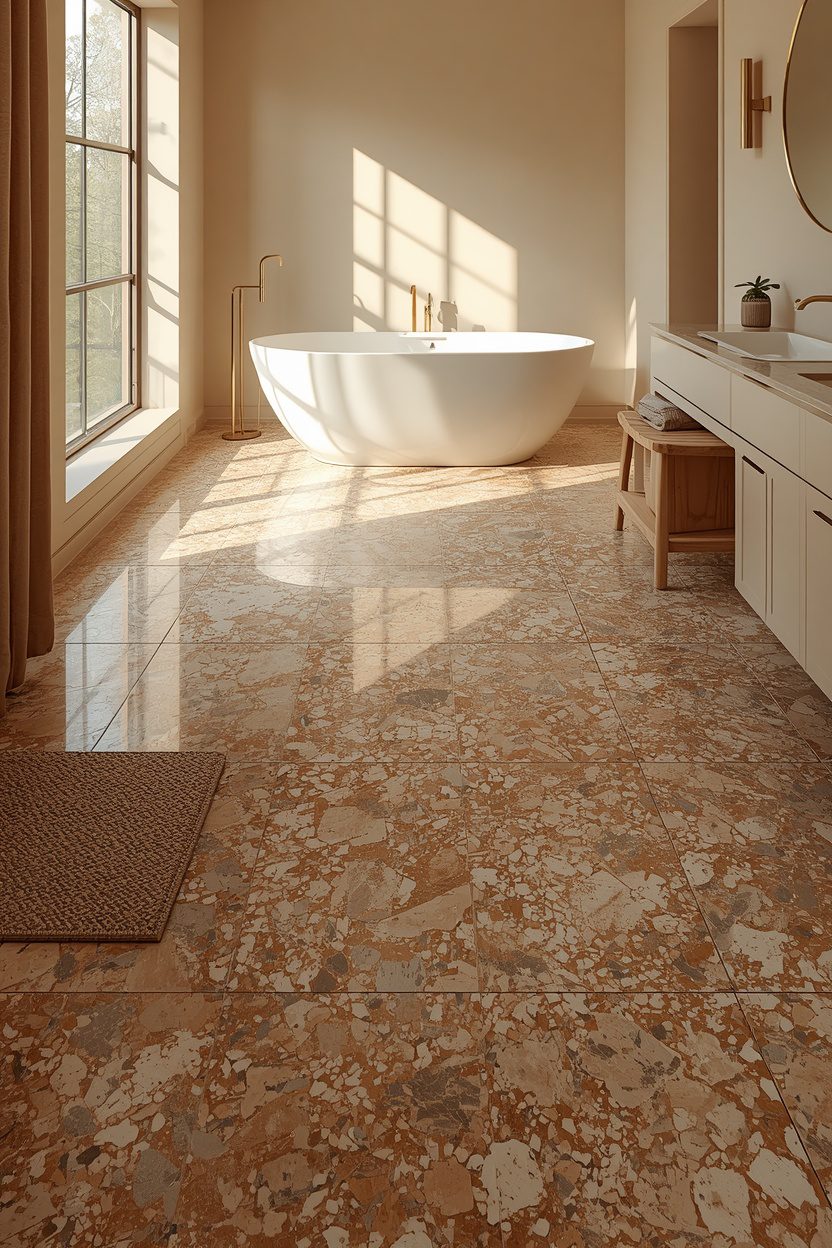
Terrazzo — a composite of marble or stone chips set in a cement or resin binder — is the defining bathroom floor material of 2026. Its visual complexity, inherent uniqueness, and warm character make it the most popular premium bathroom floor choice of the moment.
The 2026 terrazzo palette: Warm cream or pale grey base with terracotta, warm white, caramel, and sage chips. Moving away from the cool white-base-with-grey-chips version that defined the 2020–2023 period.
Real terrazzo vs porcelain terrazzo: Real terrazzo is poured and ground in situ — it’s a specialist installation but produces a seamless floor with no grout lines. Porcelain terrazzo tiles deliver the aesthetic at a fraction of the cost and are DIY-installable. Both are excellent bathroom floor choices.
Grout: For porcelain terrazzo tiles, use a grout colour that matches one of the less dominant chip colours — often a warm sand or light terracotta. The grout should not compete with the tile pattern.

Idea 5: Zellige-Look Glazed Tile
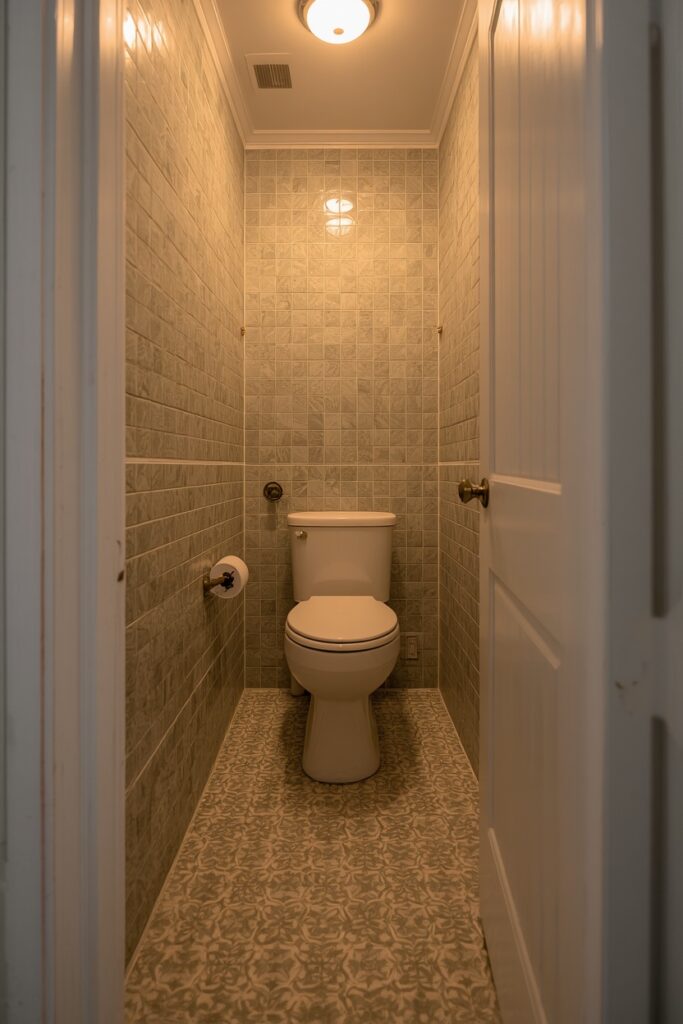
Zellige — hand-cut Moroccan glazed tile with inherent surface variation and slight irregularity — is primarily used on bathroom walls but a floor application in a low-traffic bathroom powder room creates one of the most distinctive and most beautiful bathroom floors available.
Practicality note: True zellige on bathroom floors requires careful selection (only honed or lightly textured surfaces, not highly raised glaze) and a higher slip rating. Most zellige is best suited to walls. Zellige-look porcelain tiles deliver the visual effect on floors with appropriate slip performance.
Colour: Warm sage green, deep teal, warm terracotta, and warm ivory are the dominant zellige floor colours of 2026.
Best room: A powder room (downstairs toilet) where the traffic is light and the floor area is small — 2–4 sqm maximum for a zellige floor treatment. This is not a practical choice for a primary family bathroom with high traffic.
Idea 6: Herringbone Pattern in Warm Tones
The herringbone pattern — rectangular tiles laid in a V-shaped zigzag — is one of the most dynamic floor patterns available and one of the few that makes a bathroom feel both longer and wider simultaneously.
Tile format for herringbone: 5x25cm or 7.5x30cm brick-format tiles are the classic choice. The longer and narrower the tile, the more pronounced the herringbone chevron effect.
Colour direction for 2026: Warm cream or warm white herringbone creates the most versatile bathroom floor. Warm terracotta herringbone for a more distinctive statement. Charcoal herringbone for a dramatic contemporary look.
Grout: A contrasting grout (light tile with a mid-tone grout, or dark tile with a lighter grout) makes the herringbone pattern highly visible. A matching grout creates a subtle textural effect. Both are valid design choices.

Idea 7: Encaustic Cement Pattern Tiles
Encaustic cement tiles — with their richly pigmented geometric and floral patterns — create the boldest and most personality-driven bathroom floors available. They have been used in Moroccan riads, Spanish Colonial architecture, and Victorian bathrooms for centuries, and their endurance is a testament to their genuine beauty.
How encaustic cement tiles differ from printed tiles: The pattern in encaustic cement tiles is integral to the tile — different coloured cement layers are compressed together so the pattern goes several millimetres into the tile body. This means the pattern doesn’t wear away with use.
Maintenance requirement: Encaustic cement tiles are porous and must be sealed before grouting and annually thereafter. Unsealed cement tiles stain permanently from water, grout, and cleaning products.
Best use: A bathroom under 5 sqm where the pattern can be appreciated without becoming overwhelming. A large bathroom in full encaustic cement can feel visually busy.

| ⚠️ Important Warning Never install bathroom floor tiles without confirming the slip resistance rating is R9 or above. Wall tiles, decorative tiles, and some natural stone tiles sold without a specific floor slip rating are not safe for bathroom floor installation. A slip and fall on a wet bathroom floor tile is one of the most common home injury incidents. Always ask your tile supplier for the R-rating or the COF (Coefficient of Friction) rating of any floor tile you are considering. R9 is the minimum for wet indoor floors. R10 or above is preferable for bathroom floors that receive heavy water exposure, such as shower floors. |
Idea 8: Dark Slate or Charcoal Tiles
A dark floor — deep charcoal, slate grey, or near-black porcelain — creates the most dramatic bathroom aesthetic and acts as a visual anchor for a room that might otherwise feel top-heavy with white walls and fixtures.
Why dark floors work in bathrooms: They show water droplets during use (which some find unfavourable) but hide dust and soap residue better than light floors. They also create a striking contrast with white freestanding baths, white walls, and warm brass fixtures.
Grout: Dark grout with dark tiles for a monolithic effect. Light grout with dark tiles creates a grid pattern that can feel retro — choose deliberately, not by default.
Lighting consideration: Dark bathroom floors absorb light rather than reflecting it. Ensure the bathroom has excellent artificial lighting before committing to a dark floor — otherwise the room will feel dim even with adequate fixture count.

Idea 9: Marble-Effect Porcelain
Marble — the most luxurious natural bathroom surface — is replicated by high-quality porcelain with sufficient fidelity that professional photographers can no longer reliably distinguish photographed porcelain from photographed genuine marble.
What to look for in quality marble-effect porcelain: Sufficient vein variation so the pattern doesn’t obviously repeat. The veins should feel organic and irregular rather than digitally symmetrical. A minimum of four different tile faces in the production run (the more faces, the less repetition).
2026 marble direction: Warm white Carrara-style with soft grey veining remains the classic. Warm cream with caramel veining is the 2026 update. And Calacatta Gold — white with dramatic warm gold and grey veins — is the premium direction for feature floors.
Grout: White or warm cream grout, matched to the tile background, makes the floor read as a continuous marble surface.

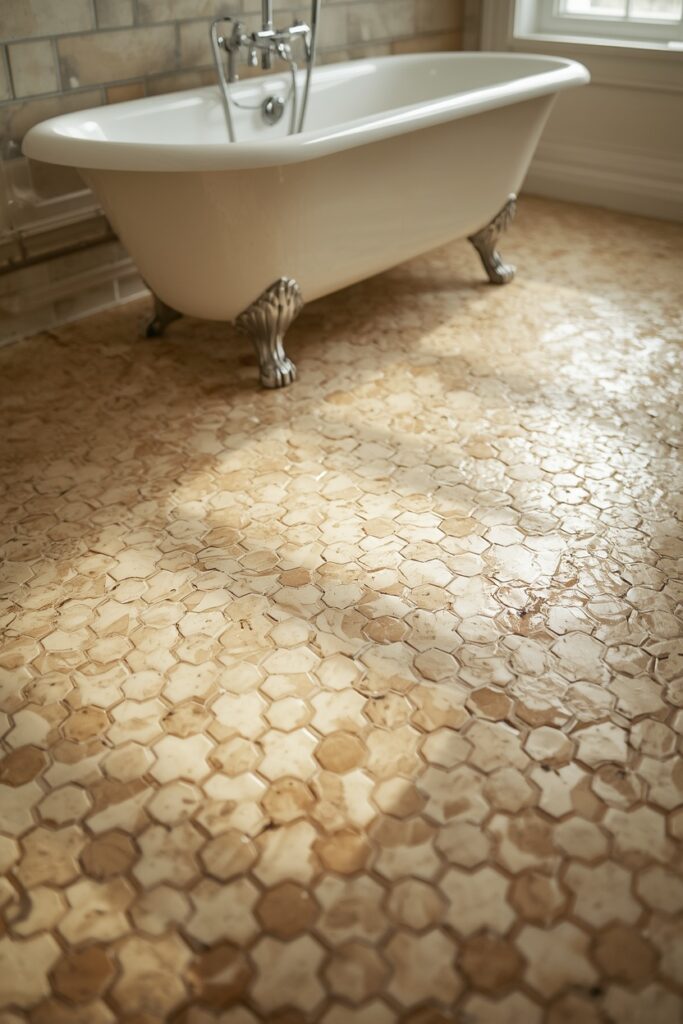
Idea 10: Hexagon Mosaic Floor
Small hexagonal tiles — 5cm or 7cm across — in a mosaic sheet format create one of the most tactile and most classically bathroom-specific floor patterns available. They are simultaneously historical (Victorian bathrooms used them extensively) and completely contemporary in the right colour combinations.
2026 hexagon colour directions: All-white hex with white grout for a minimal spa look. Black hex on white grout for a graphic Art Deco reference. Warm cream hex with warm beige grout for a contemporary traditional bathroom. And an emerging trend: sage green or warm terracotta hex on light grout.
Grout importance: The grout choice defines the hexagon pattern. Contrasting grout makes every hexagon visible. Matching grout creates a subtle texture. Dark grout with light tiles can become a dramatic statement.
Slip rating: Mosaic tiles have inherently good slip ratings due to the high proportion of grout (which provides grip) relative to the tile face area. Most mosaic hex formats achieve R11 or R12 wet slip ratings.
Idea 11: Terracotta and Handmade Floor Tile
Handmade terracotta tiles — each one slightly different in colour, thickness, and surface texture — create the warmest, most characterful bathroom floor available. Their earthy tones, imperfect surfaces, and organic warmth are impossible to replicate in manufactured tile.
Why terracotta is back: After a decade of dominance by cool grey and white tiles, the design world has comprehensively moved toward warmth. Handmade terracotta is the warmest floor material available.
Sealing: Terracotta is porous and must be sealed before grouting, before use, and annually thereafter. Use a penetrating terracotta sealer. A properly sealed terracotta floor is easy to clean and very durable.
Grout: A warm sand or pale terracotta grout that coordinates with the tile tone. Never white grout with terracotta — it creates a jarring contrast that makes the floor look incomplete.

Idea 12: Penny Round Tiles
Penny rounds — small circular tiles (approximately 2–3cm diameter) on mosaic sheets — are one of the few tile formats with an inherently playful, vintage quality that works beautifully in both small bathrooms and large wet rooms.
Visual effect: Penny rounds on a bathroom floor create a dense, texture-rich surface that changes colour slightly with the angle of view. The circular form against the rectangular room geometry creates a satisfying visual tension.
Colour options: Classic all-white for a vintage spa look. White with a dark grey grout for maximum graphic contrast. Warm sage green for a contemporary take. Mixed colour versions in terrazzo-like arrangements of 4–6 coordinating tones.
Application: Penny rounds work equally well on shower floors (excellent slip resistance due to high grout proportion) and bathroom floors.

Idea 13: Warm Wood-Effect Porcelain
A wood-look porcelain plank tile — long and narrow like a floorboard, with a realistic timber grain texture on the surface — creates the warmth of a timber floor in a wet environment where real timber cannot be used.
Why wood-effect porcelain works in bathrooms: Genuine timber swells, warps, and deteriorates in the humidity of a bathroom. Porcelain with a wood-effect surface provides the visual warmth of timber with full waterproof performance.
2026 direction: Moving away from the cool grey ‘driftwood’ tones of the 2018–2022 period. Warm oak tones, warm walnut, and honey-coloured ash effects are the current direction. The grain should look like a real timber species — not a generic light or dark wood.
Grout: Grout in a colour that matches the mid-tone of the tile. The grout joint simulates the gap between floorboards — for maximum realism, use a 2–3mm joint.

Idea 14: Striped Tile Pattern
A striped floor — created by alternating two tile colours in a linear pattern — is one of the most graphic and most spatially dynamic bathroom floor treatments. When the stripes run parallel to the longest dimension of the bathroom, they create a tunnel effect that makes the room feel longer. When they run perpendicular, they make it feel wider.
Stripe width options: Wide stripes (30cm per colour band) for a bold, high-contrast look. Narrow stripes (10cm per colour band) for a more subtle, textile-like effect.
Colour combinations: Navy and white for a classic maritime look. Warm cream and warm terracotta for an earthy Mediterranean feel. Charcoal and white for a graphic contemporary statement. Sage and cream for a gentle, contemporary approach.

Idea 15: Concrete-Effect Large Format
Concrete-effect porcelain — with its characteristic flat, matte, and almost featureless surface — creates the cleanest and most contemporary bathroom floor aesthetic. It reads as confident minimalism rather than an absence of material choice.
Why concrete-effect works: The almost-no-pattern of a concrete tile allows every other element in the bathroom — the fixture finishes, the vanity material, the planting — to read clearly without floor competition. It’s the visual equivalent of a neutral backdrop.
Colour range: Warm mid-grey is the classic concrete-effect. Light warm grey for smaller rooms. Deep anthracite for a more dramatic effect. And a warm beige-grey (the ‘greige concrete’) that suits warm-palette bathrooms without the coolness of standard grey concrete.
Grout: Matching grout only. The point of a concrete-effect floor is its seamless, monolithic quality. Contrasting grout defeats the entire aesthetic.

Idea 16: Mixed Material Inset Border
A main floor tile in one material with a contrasting inset border — a different colour, format, or material running around the perimeter — creates a bespoke, designed quality that makes the bathroom feel tailored rather than standard.
Classic combinations: White field tiles with a black border strip. Warm travertine field with a terracotta encaustic border. Large format grey porcelain with a brass strip inset at the perimeter.
The brass strip inset: A narrow (10–20mm) brass or stainless trim strip embedded in the grout at the perimeter of the bathroom floor where it meets the wall tiles is one of the most distinctive and most designer details in contemporary bathroom renovation.
Technical note: The inset border tile must be the same thickness as the field tile, or a recess must be created in the adhesive bed to accommodate a thinner border material.

| 📌 Important Note The grout colour decision affects the final appearance of any bathroom floor tile as much as the tile itself. A warm cream tile with charcoal grout creates a tile grid pattern that emphasises every joint. The same warm cream tile with a closely matched warm cream grout creates a nearly seamless surface. Both are correct — but they produce completely different visual results. Always order grout samples and test them dried (not wet — grout colour changes significantly as it dries) against your tile before committing to the full floor. |
Bathroom Floor Tile Planning Checklist
- Confirm R9 or above slip rating before purchasing any bathroom floor tile
- Order 15% more tiles than the floor measurement to allow for cuts and future repairs
- Order grout samples and test them dried against the tile before selecting
- For natural stone or encaustic cement: purchase penetrating sealer at the same time as the tiles
- Confirm tile thickness is consistent across field tiles and any border or feature tiles
- Choose grout width based on tile type: 2mm for rectified porcelain, 3–5mm for natural stone
- For large format tiles: ensure the subfloor is absolutely flat — any movement or undulation telegraphs through large tiles
- Consider underfloor heating from the start — retrofit is significantly more expensive than planning it in
FAQs
What is the most popular bathroom floor tile in 2026?
Warm terrazzo-effect porcelain in a large format and travertine-effect porcelain are the two dominant bathroom floor tile directions of 2026. Both reflect the broader shift from cool grey and bright white toward warm, earthy, natural-material aesthetics.
What tile makes a small bathroom look bigger?
Large format tiles (60x60cm or larger) with matched grout, laid in a straight brick or running bond pattern, make a small bathroom appear larger by minimising the number of grout lines. Running the tiles in the same direction as the longest wall dimension also elongates the space visually.
What slip rating do I need for a bathroom floor?
R9 is the minimum for a wet indoor floor. R10 or above is recommended for bathroom floors with significant water exposure. R11–R12 is the standard for shower floors. Always confirm the R rating with your tile supplier before purchasing.
Is real marble a good choice for a bathroom floor?
Real marble is beautiful but requires annual sealing, is prone to etching from acidic cleaning products, and can become slippery when wet without a textured or honed finish. High-quality marble-effect porcelain delivers 95% of the aesthetic with none of the maintenance requirements.
What grout colour should I use for bathroom floor tiles?
The safest choice for any bathroom floor tile is a grout colour that closely matches the tile background. This minimises the visible grid of grout lines and makes the floor read as a more continuous surface. Only use contrasting grout when you specifically want the grid pattern to be a design feature.
Final Thoughts
The bathroom floor is a significant renovation investment and a permanent design decision. Take the time to test tile and grout samples in the actual room, in the actual light, before committing.
The tile that looks perfect in the showroom under display lighting will look completely different in your bathroom under a combination of natural north light and warm artificial light. Test it properly before purchasing. Get the technical requirements right first — slip rating, porosity, thickness. Then make the aesthetic choice. In that order.
Leave a Reply