

Islamic interior design blends geometry, craftsmanship, and serenity into spaces that feel both richly decorative and deeply calming — and the bedroom is the perfect place to bring that heritage into a modern home. Drawing on arabesque patterns, elegant calligraphy, warm jewel tones, and beautiful brass and carved-wood details, an Islamic bedroom balances ornament with a peaceful, restful quality. These Islamic bedroom interior design ideas show how to weave that timeless aesthetic into a contemporary space, creating a room that honors tradition while feeling fresh, modern, and serene.
Each idea below is a complete room design, with honest notes on balancing pattern with calm, choosing halal-friendly art, and the practical realities of layering rich detail without clutter. Some lean ornate and jewel-toned; others are pared-back and minimal. Whether you want a lavish, palace-inspired retreat or a quiet modern room with subtle heritage touches, there is a direction here to create a beautiful, serene Islamic bedroom for a modern home.
1. An Arabesque Geometric Scheme
The foundation of many Islamic bedroom designs is arabesque geometry — the intricate, repeating star and lattice patterns that define Islamic art. Bringing this in through a patterned feature wall, a carved screen, or geometric bedding and rugs adds rich heritage and visual rhythm without any figurative imagery.

Keep the geometry to one or two surfaces so the room reads considered rather than busy, letting a single patterned wall lead against calmer solids. An arabesque geometric scheme is the most authentically Islamic bedroom design, grounding the room in centuries-old ornament while a restrained hand keeps it modern, balanced, and serene.
2. A Calligraphy Art Focal Room
Elegant Arabic calligraphy makes a beautiful, meaningful focal point in an Room, turning sacred verses or poetic script into striking wall art. A large framed calligraphy piece above the bed, or a run of coordinated prints, adds spiritual warmth and a graphic, gallery-like elegance that reads modern against neutral walls. Choose pieces with clean, contemporary lettering for a current look, and coordinate the frames. Calligraphy is a halal-friendly art form ideal for the bedroom. A calligraphy art focal room is one of the most personal designs, centering the space on beautiful script that brings both meaning and refined visual impact.

3. A Moroccan Jewel-Tone Room
For a lavish, sensory take, a Moroccan-influenced Design layers deep jewel tones — ruby, sapphire, emerald, and amethyst — with brass, carved wood, and richly patterned textiles. Saturated walls or bedding, a pile of embroidered cushions, and a hanging brass lantern create an opulent, enveloping retreat that feels like a riad. Ground the intensity with a neutral base and warm lighting so it reads rich rather than overwhelming.
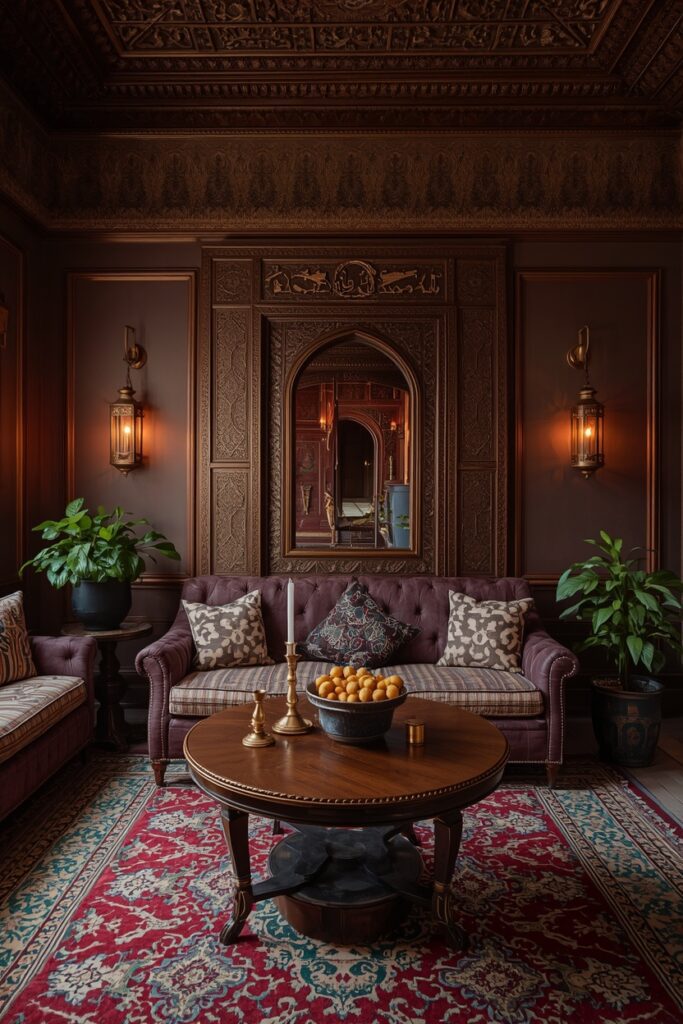
A Moroccan jewel-tone room is the most opulent heritage design, wrapping the space in warm, saturated color and ornate craftsmanship for a genuinely palace-like, transportive retreat.
4. A Modern Minimalist Islamic Room
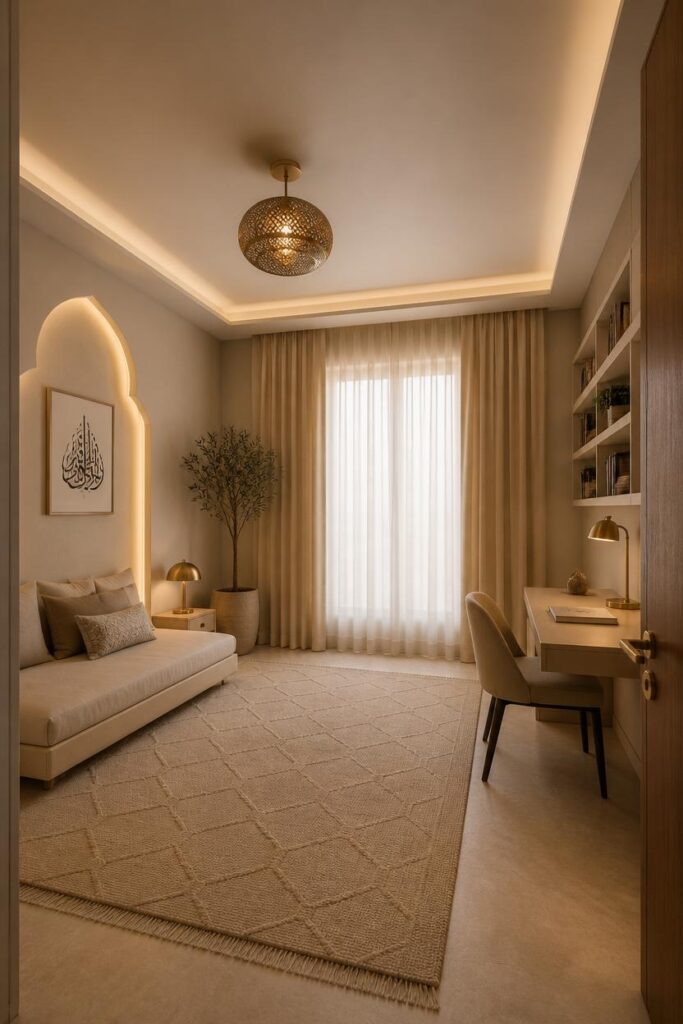
A pared-back, minimalist take proves Islamic design can read clean and contemporary. A calm room in warm neutrals — sand, cream, warm white — with just a single subtle geometric detail, a calligraphy print, and a brass accent captures the heritage quietly, letting negative space and craftsmanship speak. This restrained approach suits a modern home beautifully, offering serenity over ornament. Keep surfaces clear and let one or two considered pieces carry the aesthetic. A modern minimalist Islamic room is the most contemporary design, distilling the tradition down to warmth, geometry, and calm for a serene, understated, and thoroughly modern space.
5. A Mashrabiya Screen Feature
A mashrabiya — the intricately latticed wooden screen of traditional Islamic architecture — makes a stunning feature in a modern bedroom. Used as a headboard panel, a room divider, or a window screen, its carved geometric openwork casts beautiful patterned shadows and adds authentic craftsmanship and privacy. In a contemporary room, a single mashrabiya panel reads as sculptural art against plain walls.
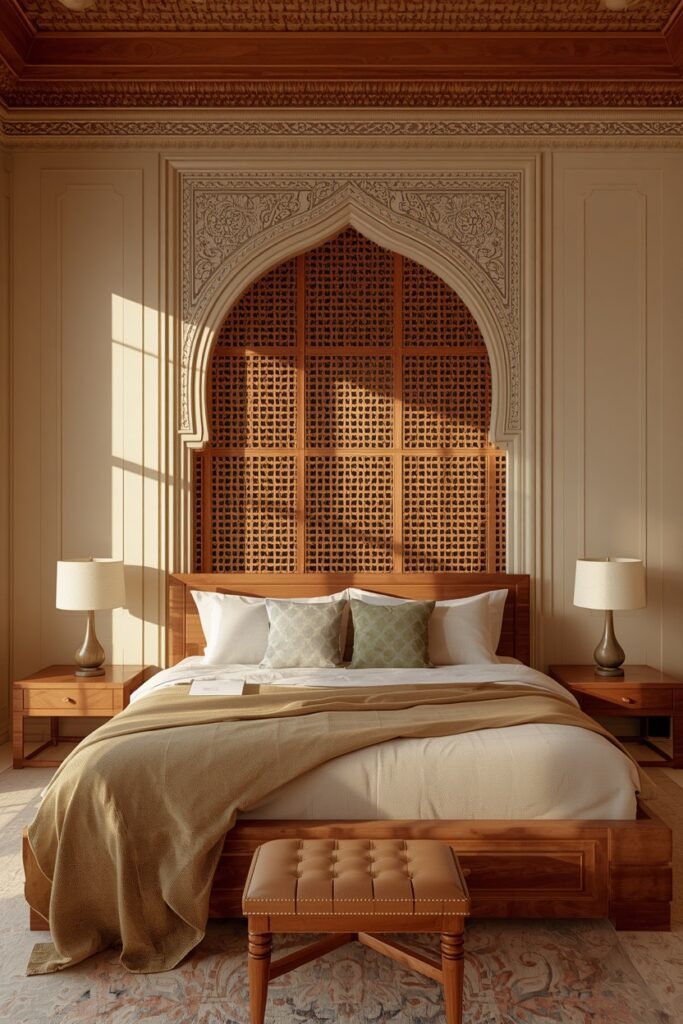
Choose a warm wood tone to anchor the space. A mashrabiya screen feature is one of the most architecturally authentic designs, bringing genuine heritage craft and gorgeous filtered light into a modern room through a single striking, functional element.
6. An Arched Niche Headboard
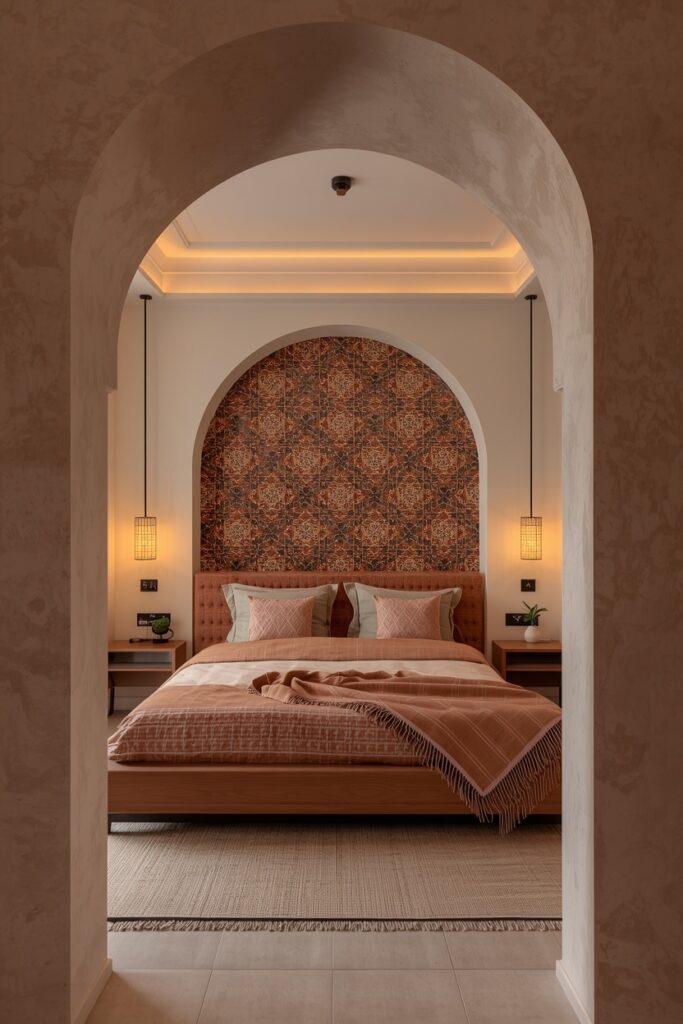
The arch is one of the most recognizable motifs in Islamic architecture, and building an arched niche or headboard behind the bed brings that graceful form into the bedroom. A plastered arch recess, an arched panel, or arched wall paneling frames the bed beautifully and adds soft, architectural elegance. Painted in a warm tone or clad in tadelakt plaster, the arch reads serene and sculptural.

Add a niche shelf within it for a lamp or book. An arched niche headboard is one of the most refined designs, using a single architectural gesture to bring authentic heritage form and quiet grandeur to the room.
7. A Brass Lantern Lighting Scheme
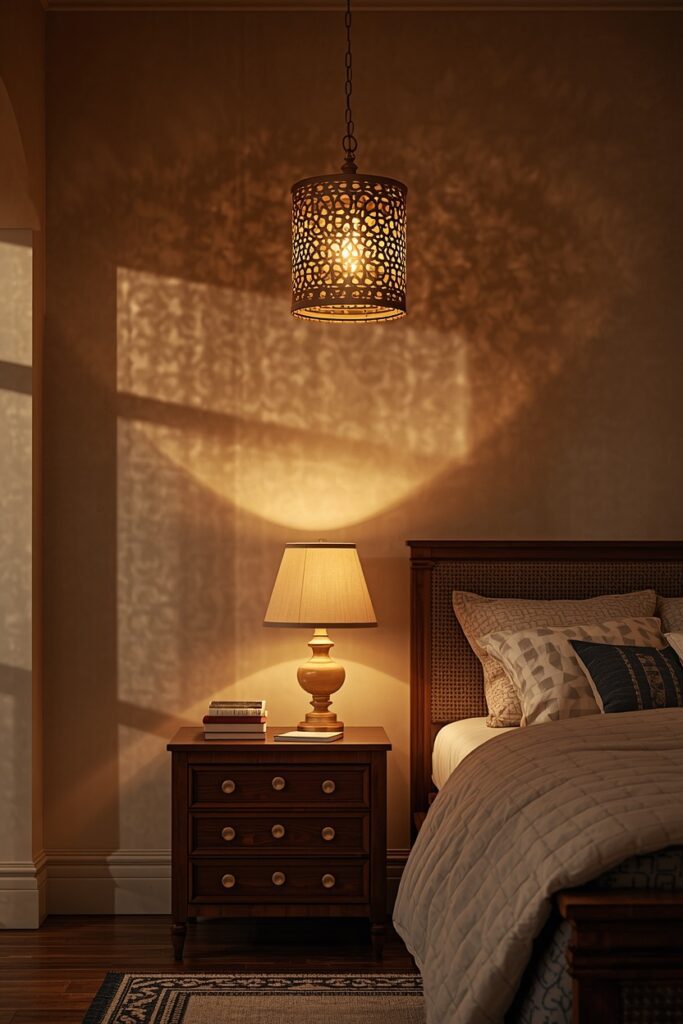
Lighting shapes the whole mood of an Islamic-inspired room, and pierced brass or filigree lanterns cast the warm, patterned glow that defines the aesthetic. A hanging pendant lantern, a pair of bedside lantern lamps, and a few candle lanterns throw intricate shadows across the walls, creating an intimate, atmospheric warmth after dark. Warm 2700K bulbs keep the glow golden and soft. Layer the lanterns with ambient light so the room is both practical and magical. A brass lantern lighting scheme is one of the most atmospheric designs, using pierced metalwork to fill the room with the warm, patterned light central to the tradition.
8. A Rich Textile-Layered Room
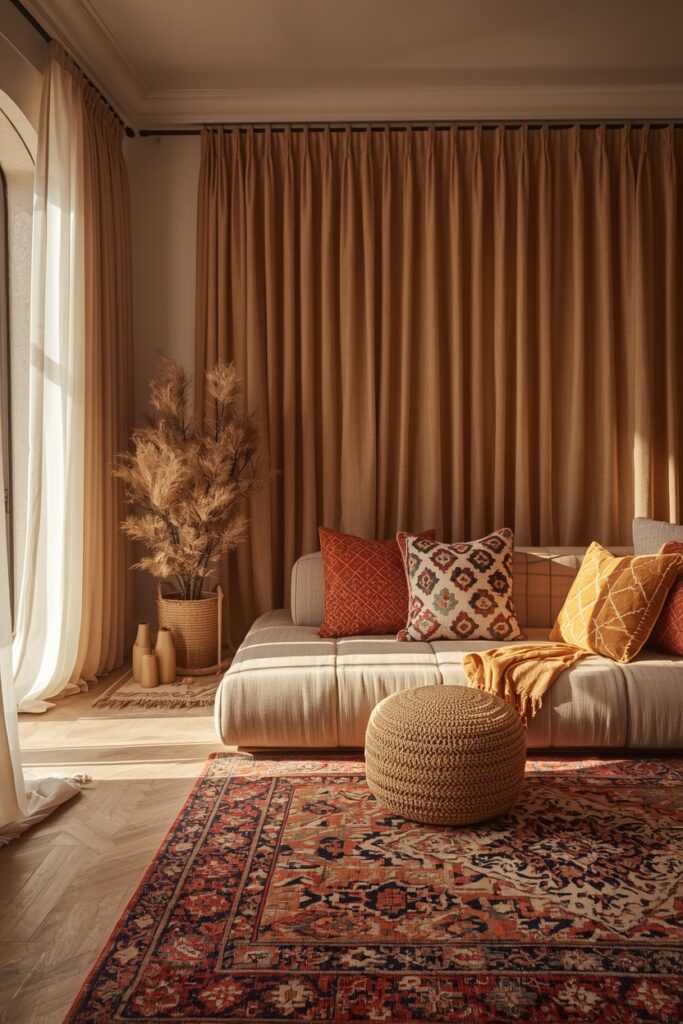
Sumptuous layered textiles are central to Islamic interiors, so building the room around embroidered, woven, and tasseled fabrics brings warmth and craft. A kilim or Persian-style rug, embroidered cushions, a richly patterned throw, and flowing drapes create a tactile, enveloping comfort steeped in heritage. Mix pattern and texture within a warm palette so the layers read cohesive rather than chaotic. Natural materials like wool, silk, and cotton keep it authentic. A rich textile-layered room is one of the coziest designs, using traditional woven and embroidered fabrics to wrap the space in warmth, color, and generations of craft.
9. A Green and Gold Serene Room
Green holds special significance in Islamic tradition, and a bedroom in soft sage or deep emerald paired with warm gold reads both meaningful and beautifully serene. Green walls or bedding create a calm, restful base, while gold or brass accents in lamps, frames, and hardware add a gentle, refined warmth. The pairing feels peaceful and quietly luxurious, ideal for a restful retreat.

Balance the gold to accents so it glints rather than gleams. A green and gold serene room is one of the most calming Islamic-inspired designs, drawing on a color rich with meaning for a peaceful, refined, and deeply restful space.
10. A Deep Teal and Brass Room
For a jewel-toned yet modern look, deep teal walls paired with warm brass create a rich, sophisticated Heritage room. The saturated blue-green reads calm and luxurious, making brass lanterns, frames, and geometric accents glow beautifully against it. Cream bedding and warm wood keep the depth from closing in, while a touch of arabesque pattern ties it to the tradition.
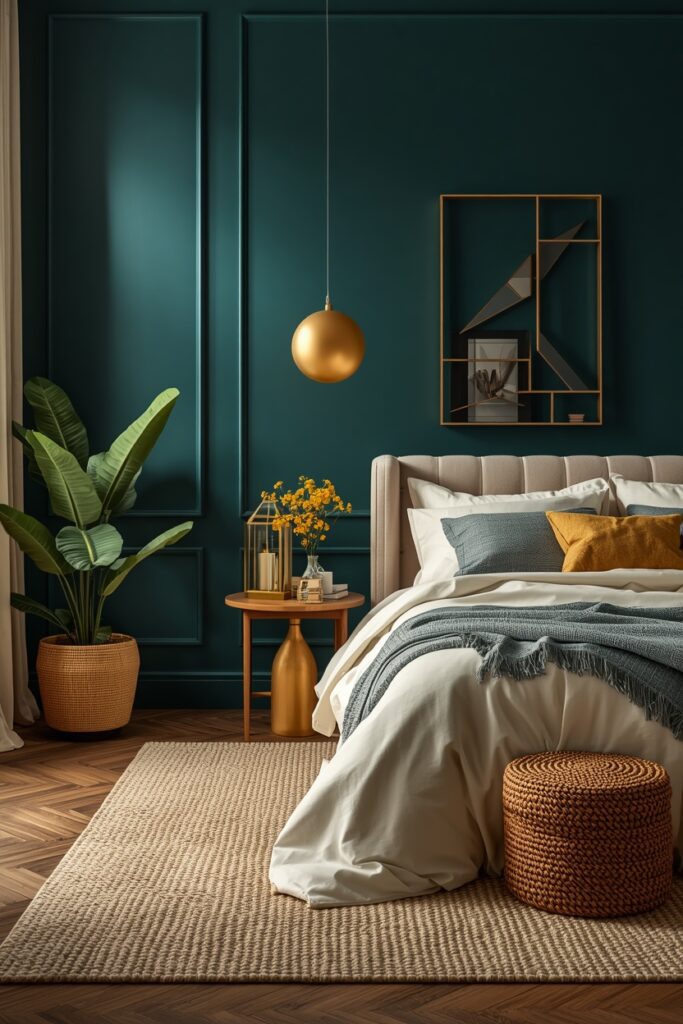
Warm lighting is essential to bring out the teal’s richness. A deep teal and brass room is one of the most striking designs, combining a restful jewel tone with warm metalwork for a space that reads both richly heritage and confidently modern.
11. A Warm Desert-Neutral Room
A palette drawn from the desert — warm sand, terracotta, clay, and cream — brings an earthy, grounded serenity to an Islamic-inspired room. These warm neutrals evoke traditional adobe and tadelakt architecture, reading calm, organic, and timeless, especially with textured plaster walls and natural materials. Layer subtle geometry and a brass accent for heritage without bold color. The soft, sun-baked tones create a restful, meditative space. A warm desert-neutral room is one of the most soothing designs, using earthy, architectural tones to create a grounded, serene retreat that reads both authentically rooted and easy to live with in a modern home.

12. An Ornate Carved-Wood Room
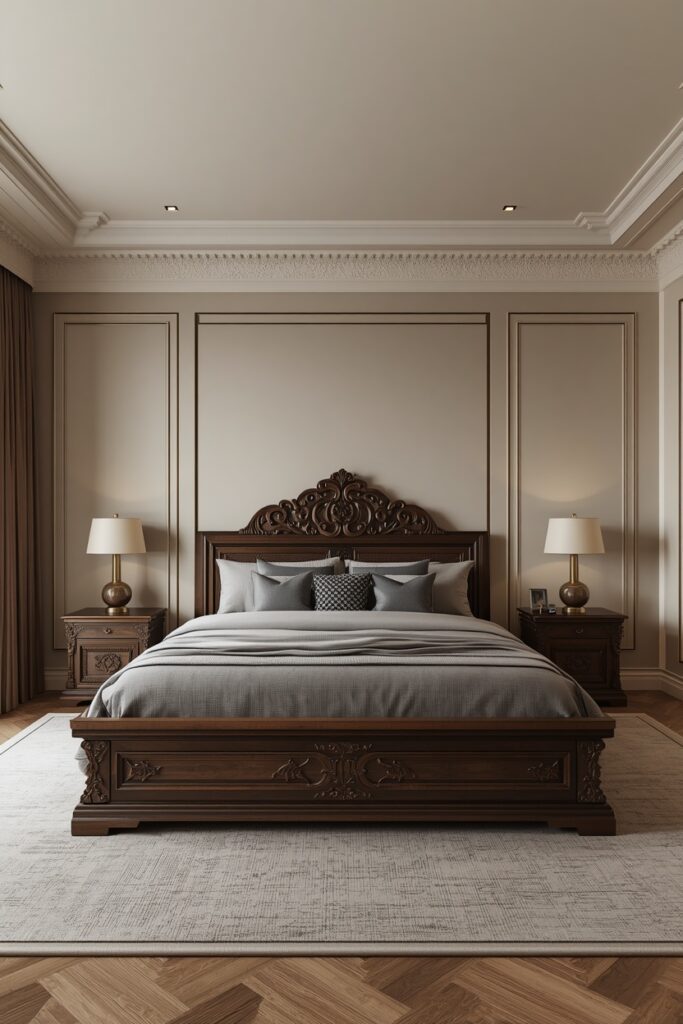
Intricately carved wood is a hallmark of Islamic craftsmanship, and building the room around a carved bed frame, side tables, or a chest brings that artistry front and center. Deep-toned hardwood with hand-carved geometric or floral detailing adds richness, texture, and heritage, reading as functional art. Set the carved pieces against calmer walls so their detail can breathe. Warm wood tones anchor the room beautifully. An ornate carved-wood room is one of the most craft-focused designs, celebrating the woodworking tradition through statement furniture that fills the space with warmth, detail, and a genuine sense of artisanal heritage.
13. An Arched-Detail Ceiling Room
Extending Islamic arch and dome motifs to the ceiling adds an unexpected, elevated grandeur to the bedroom. Arched cornicing, a shallow domed recess, or arched panels overhead draw the eye up and echo the architecture of traditional Islamic buildings, creating a sense of soaring calm. Paint it a soft tone and add a hanging brass lantern for atmosphere.

This works best in a room with reasonable height. An arched-detail ceiling room is one of the most architecturally ambitious Islamic-inspired designs, bringing the tradition’s love of the arch and dome overhead for a room that read genuinely elevated and serene.
14. A Bedroom with a Prayer Corner
Integrating a dedicated prayer corner, or musallah, gives an Heritage room genuine spiritual function alongside its beauty. A calm nook with a beautiful prayer rug, a small shelf for the Qur’an, soft lighting, and a clear space oriented toward the qibla creates a serene spot for daily prayer within the private retreat. Keep it uncluttered and peaceful, screened off with a curtain or mashrabiya if desired. Orient the space thoughtfully. A bedroom with a prayer corner is one of the most meaningful designs, weaving a place of worship into the room so that beauty and daily devotion sit gently side by side.

15. A Marble and Brass Luxe Room
For understated luxury, a bedroom pairing bright marble with warm brass reads polished, serene, and richly Islamic. Marble — in a feature wall, headboard, or side tables — brings the cool, luminous elegance of palace interiors, while brass lanterns, frames, and hardware add warmth and heritage. The combination looks refined and timeless, especially against soft neutral walls and layered textiles.

Use marble as an accent so it reads special rather than cold. A marble and brass luxe room is one of the most graceful Islamic-inspired designs, marrying luminous stone with warm metalwork for a serene, high-end space rooted in the tradition’s love of beautiful materials.
16. A Zellige Tile Accent Room
Zellige — the hand-cut, glazed terracotta tilework of Morocco and the wider Islamic world — brings gorgeous, jewel-like color and craft to a bedroom accent. A run of star-pattern or mosaic zellige behind the bed, on a niche, or around a fireplace adds authentic heritage and a beautiful, subtly uneven glazed shimmer. Its handmade variation catches the light beautifully. Keep it to one accent zone so it stays special. A zellige tile accent room is one of the most authentically crafted heritage designs, using traditional glazed tilework to add jewel-toned color, texture, and genuine artisanal heritage to a single striking surface.
17. The Complete Modern Space
Brought together, the best modern Islamic-inspired room balances ornament with calm — anchoring the room with warm color and one architectural gesture like an arch or mashrabiya, adding geometry and calligraphy with a restrained hand, and layering brass, carved wood, and rich textiles for warmth. The principles that make it work are balance and serenity: choose a warm or jewel-toned palette, let one or two heritage features lead against calmer surfaces, and keep the space uncluttered and peaceful. A prayer corner adds meaning.
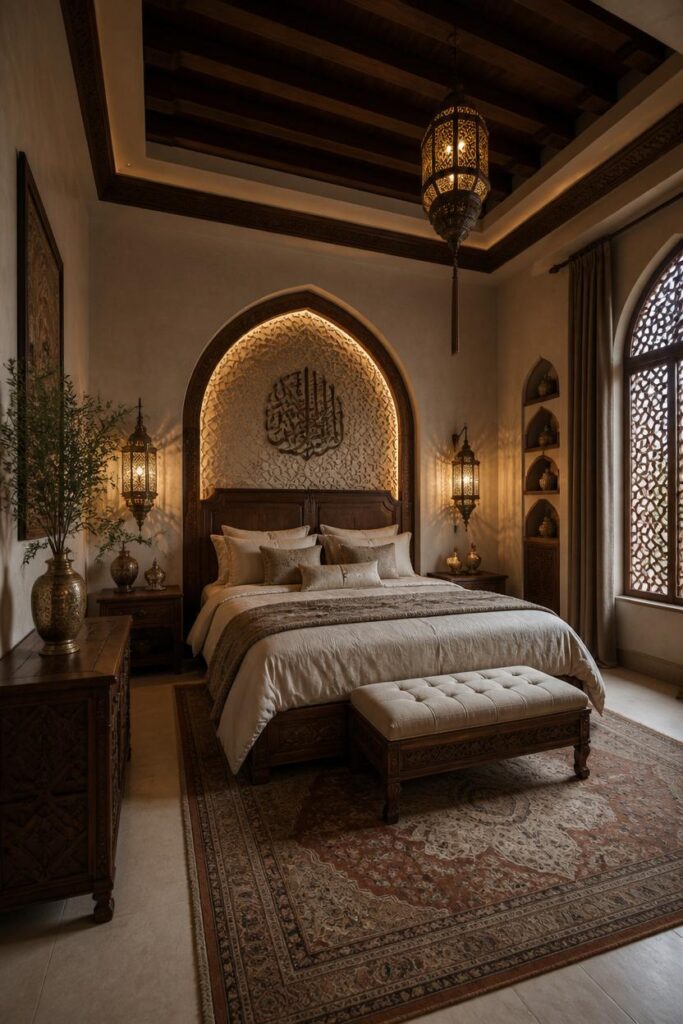
Combine the ideas that suit your home, and the room becomes a beautiful, serene Design that honors tradition while feeling fresh and modern.
Where I’d Start if I Only Did Three Things
If I only did three things to create an Islamic bedroom, I’d start with one architectural gesture — an arched niche headboard or a carved mashrabiya screen — since a single heritage form sets the whole tone without needing pattern everywhere. Next, I’d add warm brass lantern lighting, because the soft, patterned glow it casts is central to the aesthetic and instantly makes the room atmospheric. Third, I’d layer rich textiles and one calligraphy or geometric piece, keeping the rest calm so the detail can breathe. One architectural feature, warm lantern light, and a restrained layer of pattern do the most.
Frequently Asked Questions
What defines an Islamic bedroom interior design?
Islamic bedroom interior design draws on the traditions of Islamic art and architecture, centered on a few key elements. Geometric arabesque patterns — intricate repeating star and lattice motifs — feature on walls, screens, textiles, and rugs, alongside sophisticated Arabic calligraphy as meaningful, halal-friendly wall art rather than figurative imagery. Architectural forms like arches, domes, and carved mashrabiya screens bring authentic structure. The palette tends toward warm jewel tones — emerald, teal, ruby, gold — or earthy desert neutrals, layered with brass lanterns that cast a warm, patterned glow, richly woven textiles, and carved wood. Many include a dedicated prayer corner oriented to the qibla. Above all, the style balances rich ornament with a serene, restful calm, so the room has a both beautifully decorative and deeply peaceful.
How do I create a modern Islamic bedroom without it feeling too ornate?
The key to a modern Islamic bedroom is restraint — letting one or two heritage elements lead against calm, simple surfaces. Rather than covering every wall in pattern, choose a single feature: an arched niche headboard, one arabesque accent wall, a mashrabiya screen, or a run of zellige tile. Keep the other walls in warm neutrals so the detail can breathe. Use calligraphy or geometry as a focal art piece, not everywhere. Bring warmth through brass lighting and a few layered textiles rather than heavy, all-over ornament. Stick to a cohesive palette — warm neutrals with one jewel tone — so the room reads collected, not cluttered. This balance of a strong heritage feature with plenty of calm, negative space is exactly what makes the style sits as modern, serene, and livable.
What colors are best for an Islamic bedroom?
Islamic bedrooms work beautifully in two main directions. The first is warm jewel tones — deep emerald or sage green (a color of special significance in Islamic tradition), rich teal, ruby, sapphire, and amethyst — paired with warm gold or brass for an opulent, palace-inspired look. The second is earthy desert neutrals — sand, terracotta, clay, cream, and warm white — which evoke traditional adobe and tadelakt architecture for a grounded, serene, and very livable look. Both pair wonderfully with brass metalwork, warm wood, and cream textiles. Whichever you choose, keep the palette warm and cohesive, and balance any bold jewel tones with plenty of neutral so the room stays restful. Warm lighting is essential to bring out the richness of these colors after dark.
How do I add a prayer space to a bedroom?
A prayer corner, or musallah, can be integrated gracefully into a bedroom with a little planning. Choose a calm, uncluttered spot with enough clear floor space to pray comfortably, ideally oriented toward the qibla (the direction of the Kaaba in Mecca) — a qibla-finder app can confirm the direction for your location. Lay a beautiful prayer rug to define the space, and add a small shelf or niche for the Qur’an and any prayer items, keeping everything tidy and respectful. Soft, warm lighting helps create a peaceful atmosphere. If you’d like privacy or separation, screen the corner with a curtain, a mashrabiya panel, or a folding screen. The aim is a serene, dedicated spot for daily prayer that sits harmoniously within the restful, beautiful bedroom.
Final Thoughts
An Islamic bedroom brings together geometry, craftsmanship, warm color, and serenity into a space that reads both richly decorative and deeply restful. These Islamic bedroom interior design ideas span every direction — arabesque geometry, calligraphy art, jewel-tone and desert-neutral palettes, arches and mashrabiya screens, brass lanterns, carved wood, zellige tile, and a peaceful prayer corner. The principles that make the style work in a modern home are balance and serenity: let one or two heritage features lead against calm surfaces, keep the palette warm and cohesive, and layer craft and texture without clutter. Choose the ideas that suit your home, and the result is a beautiful, serene Islamic bedroom that honors a rich tradition while feeling fresh, modern, and utterly peaceful.