

Wabi sabi is the Japanese philosophy of finding beauty in imperfection and impermanence, and nowhere does it translate more naturally than the bedroom. These ideas are about choosing materials that age gracefully, embracing asymmetry, and resisting the urge to fill every surface, so the room settles into a calm that no perfectly polished scheme can replicate.
Each idea below is a complete, distinct design direction you can apply, with practical notes on materials and sourcing so you can build this aesthetic honestly rather than simply copying a look. Whether you layer in one idea or build a whole room around the philosophy, the result is a bedroom that reads genuinely still, warm, and deeply liveable.
1. Wabi Sabi Bedroom Interior Design Starts with Limewash Walls
Limewash paint — applied in thin, irregular washes rather than a smooth rolled coat — gives walls the soft, clouded, varied texture that is the most perfect expression of wabi sabi: beautiful precisely because it is not uniform. The matte, slightly chalky surface absorbs light rather than reflecting it, creating a warmth that no standard emulsion can match. Apply in two or three thin layers with a wide brush and deliberate variation, because fighting the irregularity defeats the point.
Pair with undyed linen, raw wood, and warm candlelight and the limewash walls create a room that reads like it has a quiet, unhurried history.

2. Undyed Natural Linen Bedding
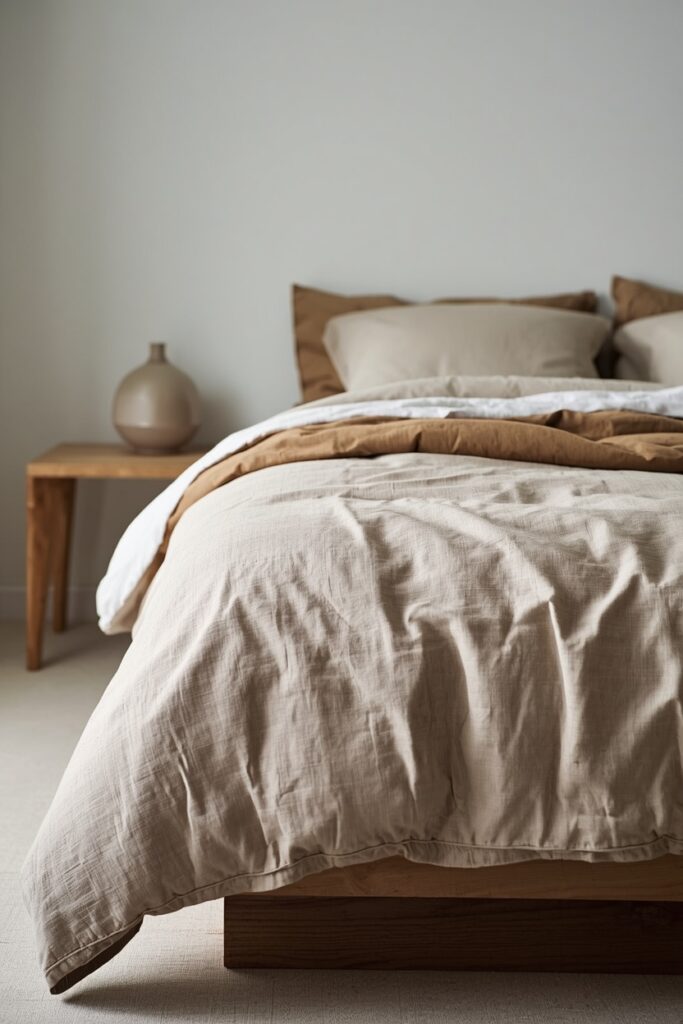
Undyed or lightly washed linen in oatmeal, warm greige, and soft grey is the bedding of choice for wabi sabi, its natural irregularities in weave and tone making each set slightly unique and its wrinkles reading warm and human rather than slovenly. The key to wabi sabi bedding is not pressing it smooth — the gentle crumple is part of the look.
Layer two or three linen pieces in tonal neutrals without matching them precisely, since an exactly matching set loses the relaxed, gathered quality that makes linen bedding look lived-in and considered at the same time.
3. A Low Platform Bed or Tatami Base
A low platform bed — a simple slab of timber or a slatted frame sitting close to the floor — grounds the room and gives it the quiet, floor-level calm that defines Japanese-inspired interiors. The low profile draws attention to the floor space and ceiling height, making both read more generous. Choose raw or lightly oiled timber in a warm blonde or walnut tone rather than a heavily lacquered one, since wabi sabi values the grain and natural variation of the wood rather than a polished surface that conceals them.

4. Handmade Ceramic Accents on the Bedside
A single handmade ceramic — a vase, a lamp base, a small bowl — on the bedside table brings the imperfection and warmth of human craft into the room in a way manufactured objects cannot. The slight wobble in a hand-thrown pot, the uneven glaze, the thumbprint in the clay: these are the details wabi sabi celebrates.

Choose ceramics in muted clay, ash white, or soft charcoal, and resist the impulse to display several — one or two carefully chosen pieces on a bare surface read far more purposefully than a crowded shelf of similar things.
5. A Dried Botanical Arrangement
Dried pampas grass, bleached branches, or a simple sprig of dried seed pods in a ceramic or woven vase brings natural impermanence into the room — things that have already changed and are at peace with it. The muted, papery tones of dried botanicals sit naturally in a wabi sabi palette without the maintenance of fresh flowers.
Choose a single, generous arrangement rather than several small ones, position it where it casts a shadow in morning or evening light, and let the slight asymmetry of the stems read as it naturally falls rather than forcing a symmetrical arrangement.

6. Aged or Knotted Wood Furniture
Furniture with visible grain, knots, checks, and natural colour variation reads most authentically wabi sabi, the marks of the tree’s growth accepted as character rather than corrected away. An aged oak bedside with a rough-sawn edge, a reclaimed timber shelf, or a raw-edge slab headboard all carry this quality.
Avoid furniture with a high-gloss lacquer that smooths and hides the wood’s nature; instead choose oil-finished, wax-finished, or lightly sanded pieces where the grain is tactile and visible, and the furniture reads as though it carries a quiet history.

7. Sheer Undyed Linen Curtains
Sheer or semi-sheer curtains in natural undyed linen let daylight filter through in a soft, diffused wash rather than flooding the room or blocking it entirely, and the slight translucency is one of the most beautiful qualities of linen at a window. The curtain should pool very slightly on the floor or just touch it rather than ending precisely at the sill, because the soft extra length reads relaxed and human rather than tailored. Choose a simple rod pocket or clip-ring heading so no heading tape interrupts the natural drape.

8. A Natural Fibre Floor Rug
A jute, seagrass, or handwoven cotton rug in a plain or simply banded pattern grounds a wabi sabi bedroom without adding colour or pattern that would compete with the calm palette. The natural texture of jute or sisal is tactile underfoot and reads warm even in a light neutral room.

Avoid perfectly uniform machine-made rugs: a handwoven rug with slight irregularities in the weave is the more fitting choice, and a rug with a minor variation in density or a natural banding adds visual depth without decorative noise.
9. A Rattan or Paper Lantern Bedside Light
A rattan, bamboo, or paper lantern shade beside the bed casts a warm, dappled, slightly imperfect glow that no standard lampshade can replicate, the woven gaps or paper panels breaking the light into a gentle, living pattern on the wall behind. Natural material shades are also among the simplest ways to bring texture into the room without adding colour.
Choose a bedside lamp with a simple clay or raw timber base beneath a natural-woven shade and a warm 2200–2700K bulb, since cooler bulbs flatten the organic quality of the materials and undo the calm the lamp is meant to build.

10. A Raw Plaster Feature Wall Behind the Bed
A raw or trowelled plaster wall behind the bed — left without a final smooth coat so the trowel marks and natural variations read as texture — is the most dramatic and authentic wabi sabi idea for transforming a flat room into one with real material depth. The plaster tone can be mixed to read warm off-white, soft clay, or pale charcoal depending on the palette.
Apply it in multiple passes with a steel trowel and leave the final texture rather than smoothing it out, and the result is a wall that reads different in every light and makes everything placed in front of it look curated.

11. A Stone or Clay Decorative Object
A single stone, a rough rock, or a shaped clay object placed on a shelf or nightstand with nothing beside it is a deeply wabi sabi act — it trusts the object itself to carry weight without props or context, and it always reads calm and grounded. River stones, raw obsidian, and hand-shaped clay pieces are all appropriate, and the object’s imperfect edges and natural colour variation are precisely its appeal. The restraint of one object on a clear surface is harder to achieve than a full shelf, and that restraint is the whole point.

12. Layered Neutral Bedding in Tonal Variations
Layering three or four different neutral textiles on the bed — a linen duvet, a woven cotton blanket, a rough-textured throw, and a muted pillow in a slightly different greige — builds depth and warmth through texture variation rather than colour or pattern. The tonal mixing means no two pieces need to match precisely; the family of warm neutrals ties them together.

Fold or drape the top layer casually rather than tucking it precisely, and the layered bed reads both deliberately styled and naturally settled into.
13. A Vintage or Patina-Rich Mirror
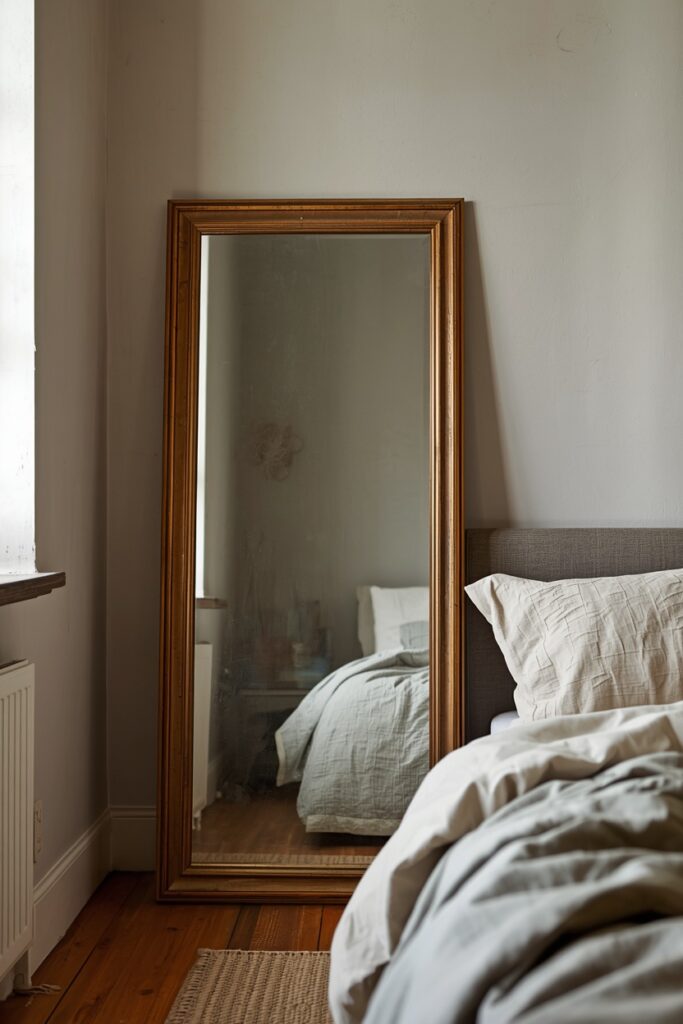
A mirror with an aged frame — a foxed gilt, a weathered timber, a raw iron — or a mirror with slight silvering imperfections carries the quality of something that has lived and changed, which is precisely the wabi sabi aesthetic. Avoid brand-new mirrors with flawless frames: find a second-hand or deliberately aged piece in a weekend market or an antique shop.
Lean it against a wall rather than hanging it centred and symmetrically, since the casual lean reads more in keeping with the wabi sabi refusal of studied arrangement.
14. A Minimal Ikebana-Inspired Branch Arrangement
A single dried branch or a sparse stem arrangement in the ikebana tradition — a Japanese floral art that values asymmetry, emptiness, and the beauty of a single line — brings nature into a wabi sabi bedroom in the most edited, thoughtful way possible. The arrangement should look as though the branch grew that way naturally: no forced symmetry, no excess material, just one or two lines that carry the shape of the original plant.
A tall narrow ceramic vessel on the floor beside the bed is the most wabi sabi presentation.

15. A Handwoven Textile as a Wall Piece
A handwoven textile — a rough linen panel, a simple woven wall hanging, or a section of hand-dyed fabric — hung directly on a raw nail or a simple timber dowel brings texture and craft to the wall above the bed without the visual heaviness of framed art. The weave irregularity and natural dye variation are the point, not a flaw. Choose a piece in warm neutral tones — undyed cream, warm grey, or a soft clay — and hang it off-centre rather than precisely centred, because the asymmetry aligns with the wabi sabi resistance to studied symmetry.

16. Natural Beeswax or Tallow Candles
A cluster of natural beeswax or unscented tallow candles on a ceramic dish or stone slab beside the bed adds the warmest, most organic light source of all, the slight honey colour of beeswax and the irregular drip of burning wax reading warmly imperfect and alive. Beeswax candles also burn cleaner than paraffin and have a naturally subtle scent.

Use them in the evening rather than leaving them burning unattended, and let the accumulated wax drips remain rather than scraping them off, since the build-up over time is one of the most quietly beautiful things wabi sabi makes possible.
17. The Wabi Sabi Colour Palette
The wabi sabi palette is a family of warm, muted, nature-derived neutrals: clay, greige, undyed linen, soft charcoal, warm white, ash, and weathered wood tone. No bright colours, no cool greys, no stark white. The tones come from earth, stone, sand, and dried plant matter. Keeping the whole room within this palette — walls, bedding, furniture, and objects — creates the sense of cohesion and stillness that is the defining quality of the wabi sabi aesthetic.
Introduce all tones from the same warm family and let texture rather than colour carry the variation.

18. The Complete Wabi Sabi Bedroom Interior Design
Brought together, a complete wabi sabi bedroom interior design layers limewash or raw plaster walls, a low platform bed in raw timber, undyed linen bedding in warm tonal neutrals, handmade ceramic accents, a dried botanical arrangement, natural fibre rugs, and a single aged mirror or branch arrangement — all within an earthy, muted palette and all chosen for their genuine material quality rather than their perfection. The wabi sabi bedroom interior design ideas on this list are not about recreating a magazine image; they are about choosing materials that age honestly, living with imperfection deliberately, and letting the room settle into a calm that only grows with time.

Where I’d Start if I Only Did Three Things
If I only did three things to build a wabi sabi bedroom, I’d start with the walls — limewash paint is the single biggest shift and costs very little compared to the impact it has on the whole room. Next, I’d replace the bedding with undyed natural linen in tonal neutrals and let it wrinkle rather than pressing it, because the linen drape sets the whole mood of the bed. Third, I’d clear every surface and return only one or two handmade ceramic or natural objects. Limewash walls, real linen bedding, and cleared surfaces — that trio delivers the wabi sabi calm immediately.
FAQs
What are the best wabi sabi bedroom interior design ideas?
The best wabi sabi approach starts with the materials: limewash or raw plaster walls, undyed natural linen bedding, aged or knotted wood furniture, handmade ceramics, and natural fibre rugs. The philosophy values imperfection, natural ageing, and restraint, so the design is as much about what you remove as what you add. Clear the surfaces, choose one or two objects of genuine craft, let the linen wrinkle, and leave negative space in the room. A low platform bed, warm candlelight, and dried botanicals complete the look without decorating against its spirit.
What colours work best in a wabi sabi bedroom?
The wabi sabi palette is strictly warm, muted, and nature-derived: undyed linen, clay, warm greige, soft charcoal, ash white, and weathered wood tone. No bright colours, no cool greys, no stark white. Every tone comes from the natural world — earth, stone, sand, and dried plant matter — and the palette should be entirely warm in undertone. Keeping all surfaces, textiles, and objects within this tonal family creates the cohesion and stillness that defines wabi sabi. Introduce variation through texture rather than colour, and the room will read deeply calm and completely unified.
What is the difference between wabi sabi and Japandi interior design?
Both wabi sabi and Japandi are Japanese-influenced aesthetics that favour natural materials, calm palettes, and minimal clutter, but they differ in character. Wabi sabi celebrates imperfection, asymmetry, and the beauty of things ageing and weathering over time — it is comfortable with rough edges, irregular textures, and visible wear. Japandi (a blend of Japanese and Scandinavian aesthetics) tends to be more precise and refined, with clean lines and carefully balanced compositions. A wabi sabi room might have a crumbling plaster wall and a rough-edged stone; a Japandi room would lean toward smooth surfaces and perfect proportions.
How do I make a bedroom look wabi sabi on a budget?
The most affordable wabi sabi changes are the most impactful ones. Limewash paint costs little but transforms the walls completely. Switching to undyed linen bedding is more affordable than it appears when bought in plain natural versions rather than brand-name ones. Decluttering costs nothing. Dried botanicals gathered from outdoors or bought cheaply at a market cost almost nothing. A second-hand wooden frame or a thrifted ceramics piece from a weekend market brings genuine wabi sabi character for a few pounds. The philosophy actively resists expensive newness, which makes it one of the most budget-friendly aesthetics to build honestly.
Final Thoughts
Wabi sabi is not a trend or a look to recreate from a mood board — it is a way of choosing materials that age honestly and a discipline of restraint that makes a room calm rather than merely tidy. These ideas give you the elements to build that calm: limewash walls, undyed linen, aged wood, handmade ceramics, natural textures, and dried botanicals within a muted earthy palette. Apply these wabi sabi bedroom interior design ideas gradually, leave space between objects, let things wrinkle and weather, and the wabi sabi bedroom interior design you build will grow more beautiful with time rather than dating with the next season.
Leave a Reply