

The reason bedroom couch aesthetic ideas matter more than most people realize is that a bedroom without seating defaults to the bed as the only place to sit, which blurs the line between sleeping and every other activity you do in the room. A dedicated couch, chair, or bench creates a second zone — a place to read, put on shoes, set out tomorrow’s clothes, or simply sit with a cup of coffee before the day starts. That separation between the sleeping surface and the sitting surface is what makes a bedroom read as a composed, intentional space rather than a room with a bed in it.
I have styled bedrooms where adding a single armchair in the right corner transformed the room from a place you passed through into a place you actually spent time in. The ideas below range from full loveseats for large primary suites down to compact window benches for tight secondary bedrooms, with specific dimensions, fabric suggestions, and placement notes for each.
1. Velvet Loveseat at the Foot of the Bed
A velvet loveseat positioned perpendicular to the foot of the bed anchors the sleeping zone and creates a natural boundary that defines the bedroom’s main area. Choose a loveseat no wider than 56 inches so it fits within the bed width and does not block the walking path on either side.
Velvet in a muted tone — dusty rose, slate blue, or sage — adds a rich tactile layer that contrasts with cotton bedding and wood furniture without overwhelming the room. Leave at least 18 inches of clearance between the foot of the bed and the front of the loveseat cushion so you can walk between them comfortably.
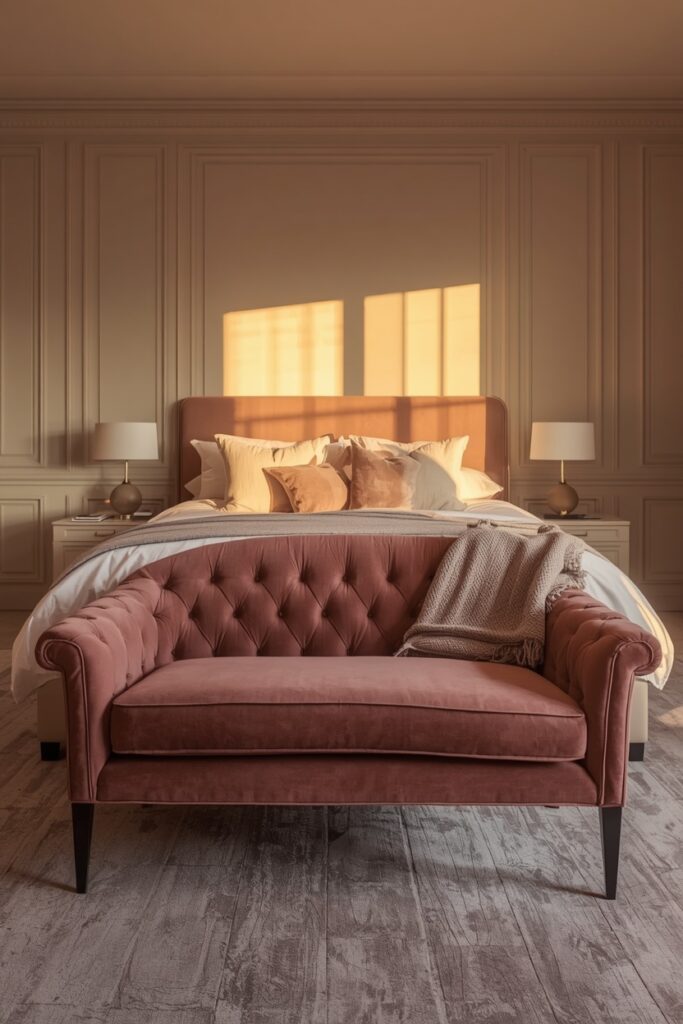
The loveseat doubles as a surface for laying out outfits, stacking pillows at night, and sitting to put on shoes in the morning — three daily functions that justify its floor space.
2. Tufted Chaise Longue by the Bedroom Window
A chaise longue placed beside the bedroom window turns a dead wall into a reading and lounging station that takes advantage of natural light. The elongated seat — typically 60 to 70 inches long and 28 to 32 inches deep — provides full-body recline that a standard chair cannot offer, making it ideal for afternoon reading or a quiet pre-sleep wind-down. Tufted upholstery in linen or cotton-blend fabric gives the chaise a structured, tailored look that reads as deliberately placed rather than leftover furniture from another room. Position it so the window light falls over your shoulder when you are lying down rather than directly in your eyes.
The chaise takes up roughly the same floor space as a twin bed, so reserve this option for primary bedrooms with at least 14 by 16 feet of floor area.

3. Low-Profile Modern Daybed Against the Side Wall
A low-profile daybed measuring roughly 75 by 30 inches and sitting no higher than 16 inches off the floor provides a lounge surface that reads more like a platform sofa than a bed. Position it against the side wall opposite the closet or bathroom door so it serves as a visual counterweight to the main bed without competing with it. Upholster the daybed in a neutral performance fabric — something that handles the occasional spill from a morning coffee without staining — and layer it with two or three bolster pillows along the back wall to create a sofa-like silhouette.
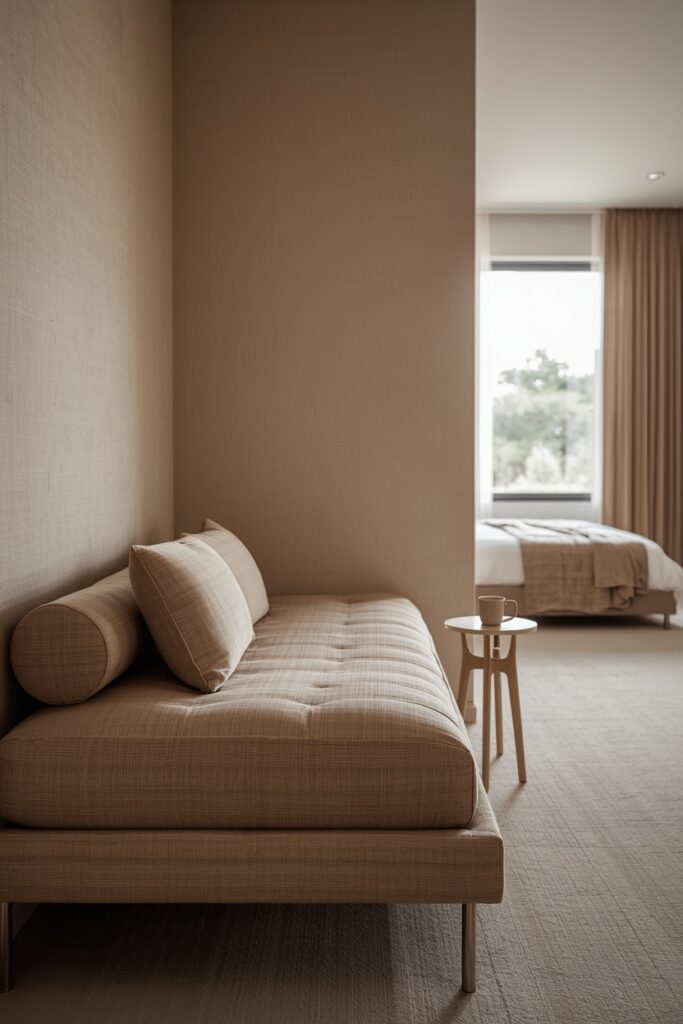
The low height is important: anything taller than 18 inches starts to read as a second bed rather than seating, which confuses the room’s function. This is a strong bedroom couch aesthetic choice for modern and Scandinavian interiors where clean horizontal lines define the style.
4. Bouclé Accent Chair Paired with a Round Ottoman
A bouclé-upholstered accent chair with a matching or coordinating round ottoman creates a self-contained reading nook that can tuck into almost any bedroom corner. Bouclé’s nubby looped texture adds visual warmth and tactile interest that smooth fabrics like leather or cotton cannot replicate, and its thick weave hides minor stains and wear remarkably well. Choose a chair width between 28 and 32 inches for comfort without bulk, and add the round ottoman — roughly 18 inches in diameter — as a footrest and an occasional side table with a tray on top. Position a slim floor lamp with an adjustable arm behind the chair so the light source directs downward for reading without flooding the rest of the bedroom. The chair-and-ottoman pairing takes up about six square feet of floor space, making it viable even in bedrooms as small as 12 by 12 feet.

5. Mid-Century Bench with Bolster Pillows at the Bed Foot
A slatted or upholstered mid-century bench in walnut or teak placed at the foot of the bed serves the same foot-of-bed anchoring role as a loveseat but in a slimmer profile that suits smaller rooms. Add two cylindrical bolster pillows in a complementary fabric to give the bench a more lounge-like presence and to provide back support when you sit facing away from the bed.
Choose a bench length that matches the bed width or sits slightly narrower — a 48-inch bench for a queen and a 56-inch bench for a king keeps proportions clean. Tapered legs in a warm wood tone connect the bench to mid-century nightstands or dressers elsewhere in the room for a cohesive style thread.

The bench doubles as a luggage rack for overnight guests, a function that no upholstered seating handles as gracefully.
6. Curved Bedroom Couch in a Spacious Primary Suite
A curved or crescent-shaped sofa in a large primary suite creates a conversation area that stands entirely apart from the sleeping zone, effectively giving you a living room within the bedroom. Place the sofa facing the window or a fireplace rather than the bed so the seating zone has its own focal point and does not default to staring at the headboard. A curved profile softens the rectangular geometry of most bedrooms and directs seated occupants toward each other, making the spot inviting for a morning coffee together or an evening conversation.
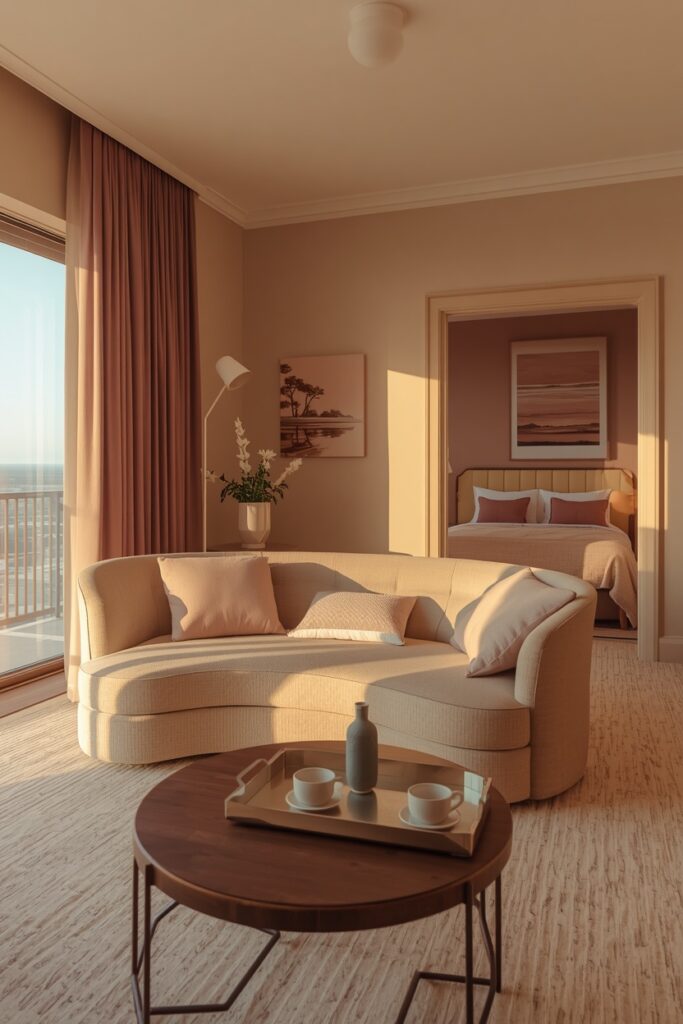
Choose a length between 72 and 84 inches and a depth of 34 to 36 inches for genuine comfort rather than a perch. This option requires a bedroom at least 16 by 18 feet to accommodate the sofa, a coffee table or side table, and adequate walkway clearance around the bed.
7. Linen Slipper Chair in a Reading Nook Corner
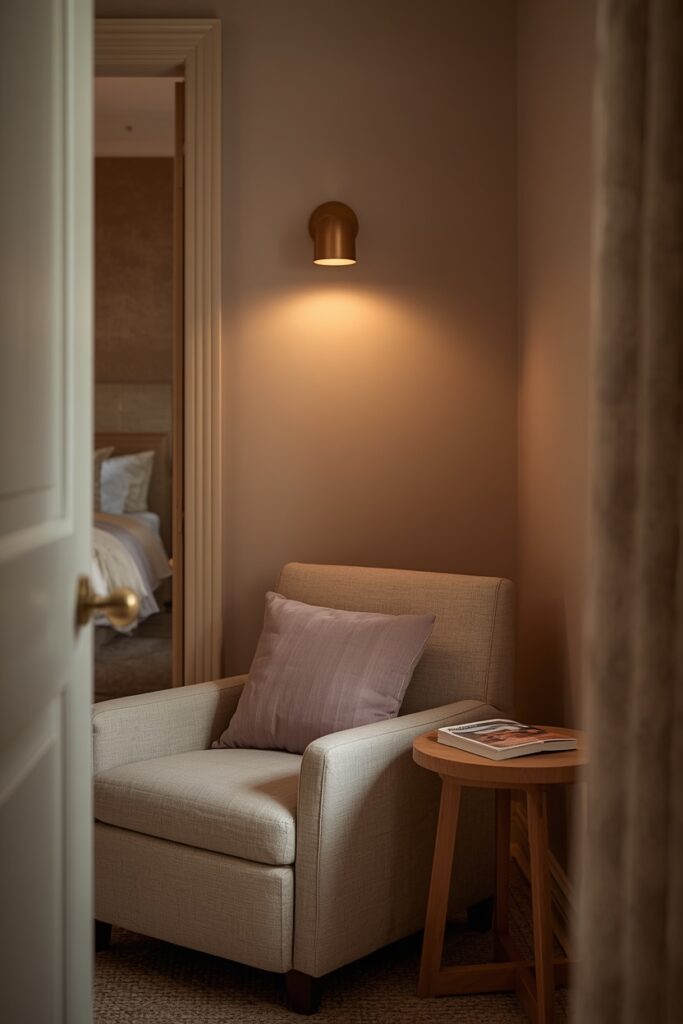
A slipper chair — an armless, low-backed seat that sits close to the ground — fits into bedroom corners that a standard armchair would overwhelm. The absence of arms keeps the profile narrow, typically 24 to 28 inches wide, while the low seat height of 15 to 17 inches creates a casual, relaxed posture that suits a bedroom’s wind-down mood. Linen upholstery in oatmeal, flax, or pale grey stays neutral while adding a textured surface that reads more considered than plain cotton. Pair it with a small round side table — 14 to 16 inches in diameter — to hold a book, a phone, and a glass of water, and position a wall-mounted reading light above to keep the floor clear of lamp stands.
This compact arrangement creates a complete reading station in under eight square feet.
8. Leather Club Chair with a Brass Floor Lamp
A leather club chair in cognac, tan, or dark brown brings a grounding masculine warmth to a bedroom that fabric seating alone cannot provide. The deep seat and rolled arms of a classic club silhouette invite sinking in, making it more of a relaxation piece than a decorative accent. Pair it with a brass floor lamp with an adjustable reading arm so the corner becomes a self-contained retreat for late-night reading or early-morning quiet time. Full-grain leather ages into a rich patina over years of use, which means the chair looks better at five years old than it did new — a genuine long-term investment in a room you use every day. Keep the surrounding accessories minimal: a small leather-topped side table and perhaps a single framed photograph, nothing more.

9. Window Seat Bench with Built-In Storage Below
Building a bench into a bedroom window bay or mounting one beneath a wide window adds seating, storage, and an architectural feature in a single move. The bench top lifts on hinges to reveal a deep storage cavity for extra blankets, pillows, and out-of-season clothing.
Add a two-inch-thick upholstered cushion and a pair of throw pillows against the window frame to transform the bench from a hard surface into a plush lounge spot. Keep the bench height at 18 inches for comfortable seated use and the depth at 18 to 22 inches so your back can rest against the wall when sitting perpendicular to the window.
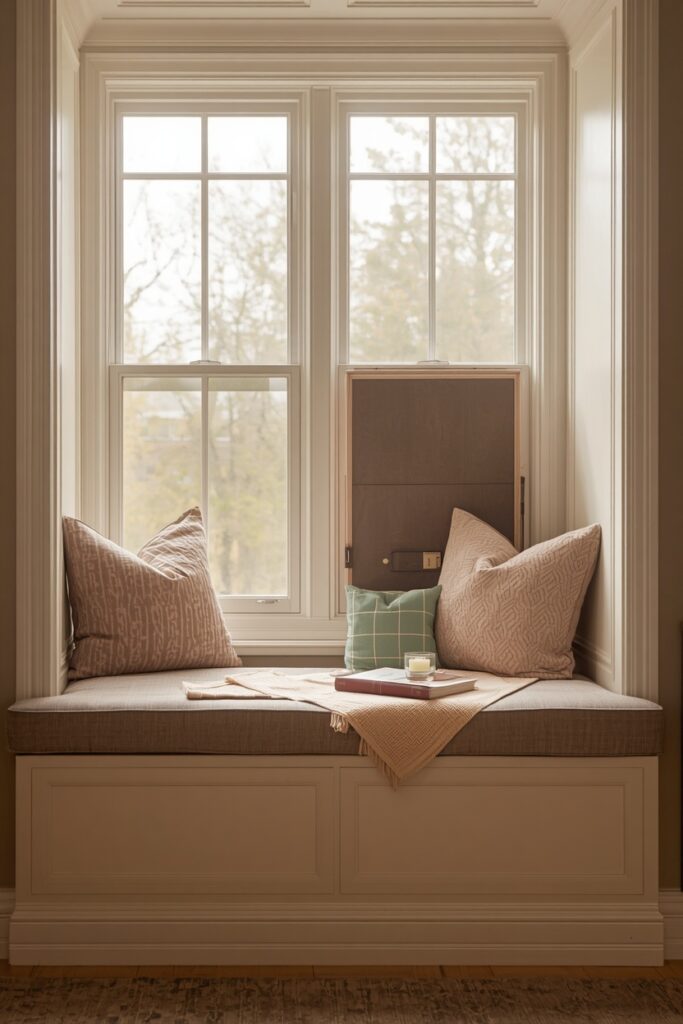
This is one of the most practical bedroom couch aesthetic ideas for rooms where floor space is limited but the window wall is underutilized.
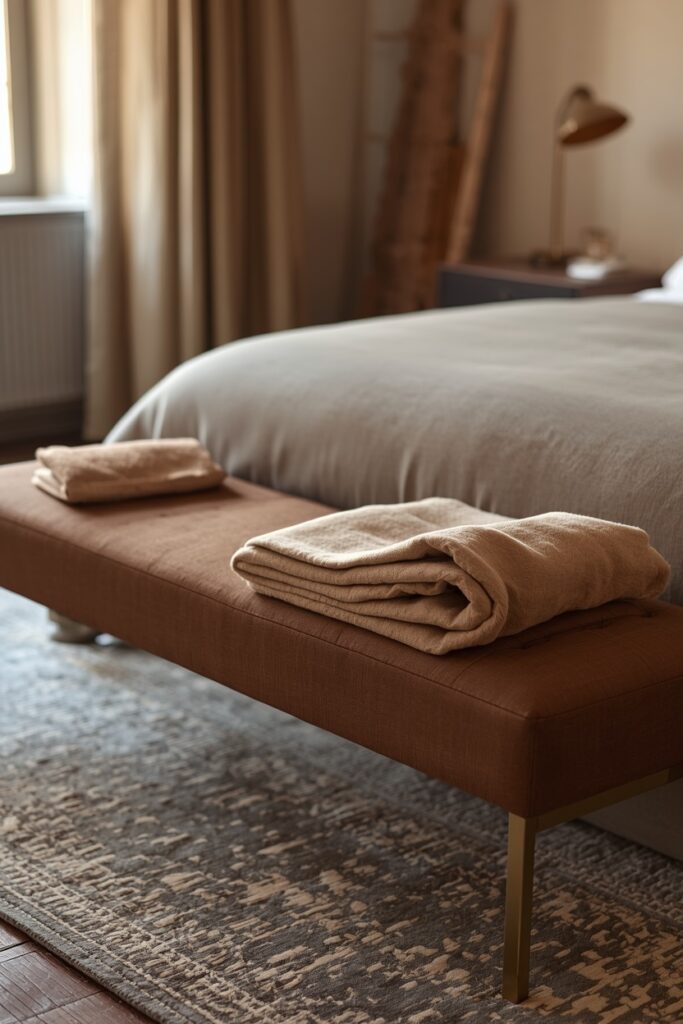
10. Minimalist Upholstered Bench in Neutral Performance Fabric
A simple rectangular bench upholstered in a durable performance fabric — the kind rated for 50,000-plus double rubs — handles daily sitting, occasional jumping by kids, and the inevitable coffee spill without showing wear. Choose a neutral tone like warm taupe, oatmeal, or stone that blends into the bedroom palette and does not call attention to itself. The bench should measure 48 to 56 inches wide and 18 inches deep with a seat height of 18 inches — standard dimensions that work at the foot of a queen or king bed. Skip the tufting and trim for a truly minimal profile — a clean box shape with slim metal or wood legs that lift the piece off the floor.
This is the workhorse seating option for bedrooms that need function without fuss.
11. Floor Cushion Arrangement for a Casual Lounge Zone
A cluster of oversized floor cushions — 30 by 30 inches or larger — arranged on a large rug beside the bed creates a relaxed, ground-level lounge zone that suits bohemian, Japanese-inspired, and casual modern bedrooms. Stack two cushions for a seat height of roughly 10 inches, which is low enough to read as intentionally floor-level rather than just lacking furniture. Choose covers in complementary earth tones with different textures — a linen cushion, a kilim-covered cushion, and a sheepskin pad — so the grouping looks collected over time.
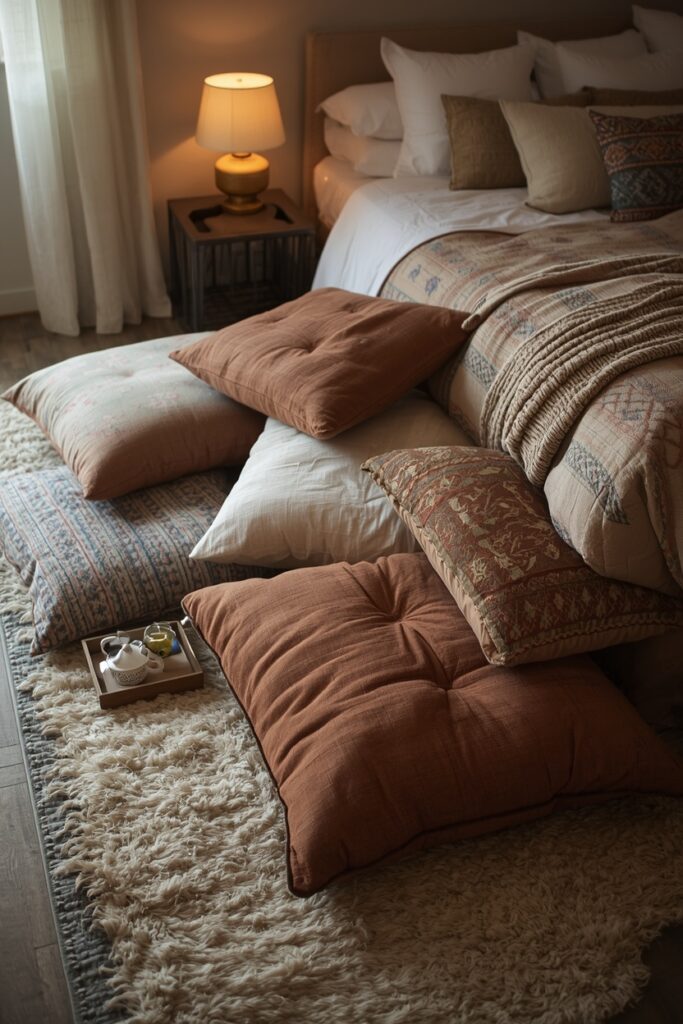
Position the cushions on a thick wool rug to separate the lounge area from the hard floor and to add insulation and softness underfoot. The major trade-off is accessibility: ground-level seating suits younger occupants but can be difficult for anyone with knee or hip mobility issues.
12. Cane-Back Settee for a Vintage Bedroom Aesthetic
A settee with a cane-woven back panel and an upholstered seat blends the airy transparency of rattan with the comfort of padded seating, creating a piece that suits vintage, coastal, and transitional bedrooms. The cane back lets light pass through rather than blocking it, which keeps the settee visually lighter than a fully upholstered equivalent. Choose a frame in natural rattan or a warm-toned wood and pair the seat cushion with a fabric that connects to the bedroom palette — a soft stripe, a solid linen, or a subtle botanical print for the vintage lane. Position the settee along the wall at the foot of the bed or perpendicular to the window as a bench-style accent. The typical settee width of 48 to 52 inches fits comfortably in bedrooms as small as 12 by 13 feet without crowding the floor plan.
13. Modular Corner Seat Filling an Awkward Alcove
Every bedroom has at least one awkward nook — the alcove beside the chimney breast, the recess next to a wardrobe, or the corner between two windows — that standard furniture cannot fill. A modular corner seat built to fit the exact dimensions of that nook turns dead space into usable seating without protruding into the room.
Order two armless modular sections that form an L-shape and specify the width of each section based on the alcove measurements, typically 30 to 40 inches per arm. Upholster in a durable fabric that complements the bedding, and add a few small pillows for back support.
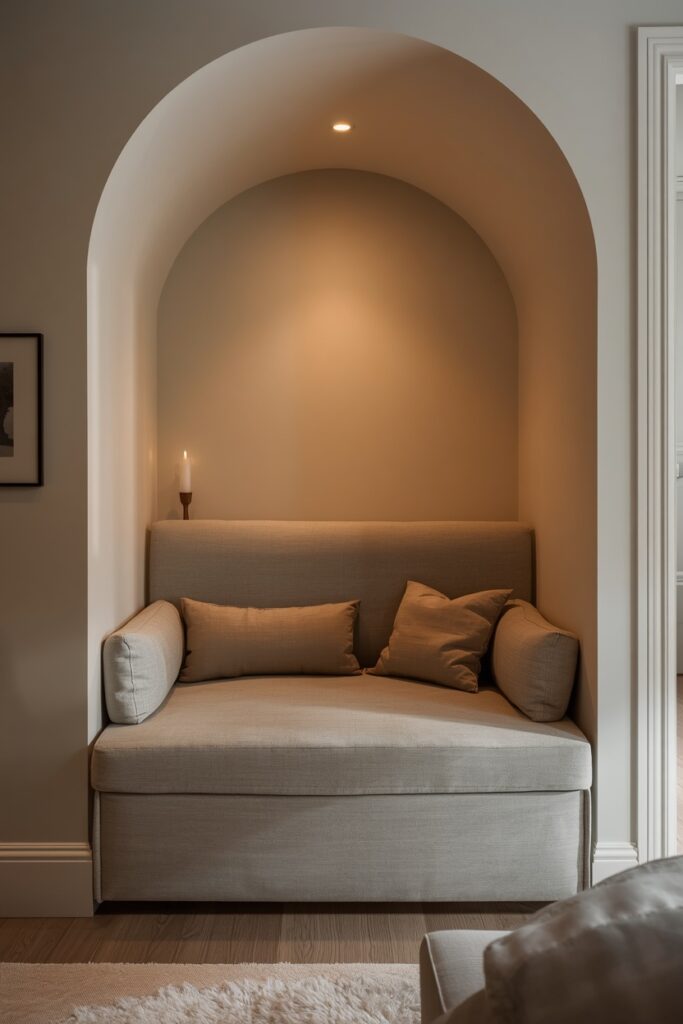
The custom-fit approach makes the alcove look like it was designed to hold seating all along rather than being an afterthought of the room’s architecture.
14. Sherpa-Covered Accent Chair for Layered Texture
A compact accent chair wrapped in sherpa or faux-shearling fabric brings a deep tactile warmth that photographs as softness and invites touch from across the room. The thick, looped pile surface reads as a textural counterpoint to smooth bedding, hard wood flooring, and flat-woven rugs, which is why it works so well in bedrooms that need a layering element. Choose an ivory or warm white sherpa for maximum visual softness or a light caramel tone for a warmer, more grounded presence. Keep the chair compact — 28 to 30 inches wide — so the heavy texture does not overwhelm the room and position it beside the bed or in a corner with a slim side table.
The practical caveat: sherpa attracts lint and pet hair aggressively, so keep a fabric shaver in the nightstand drawer for regular maintenance.

15. Woven Rattan Chair with a Draped Throw
A rattan armchair with a wide rounded back and an open weave pattern adds a natural, relaxed quality to a bedroom that upholstered seating alone cannot match. The woven texture casts intricate shadow patterns on the wall when hit by morning light, adding a layer of visual interest that changes throughout the day. Drape a knit or muslin throw over one arm so the chair reads as inviting and lived-in rather than staged.
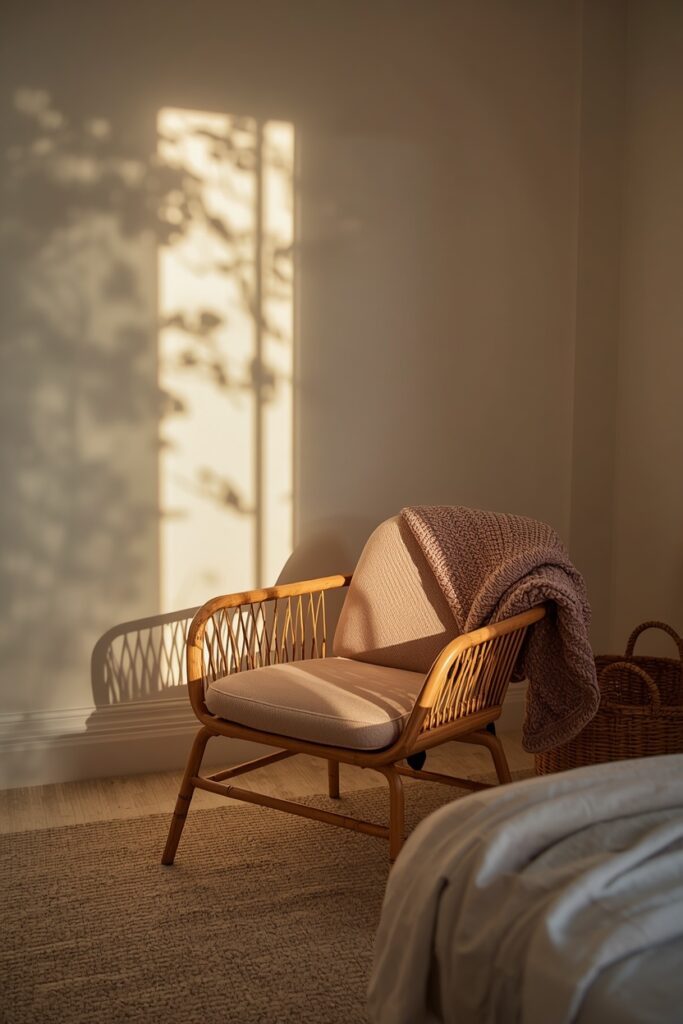
Choose a natural honey-toned rattan for warm interiors or a whitewashed version for coastal and Scandinavian bedrooms. Rattan is surprisingly durable indoors — it resists cracking for years in a climate-controlled room — but avoid placing it directly beneath a heating vent, which can dry and split the weave over time.
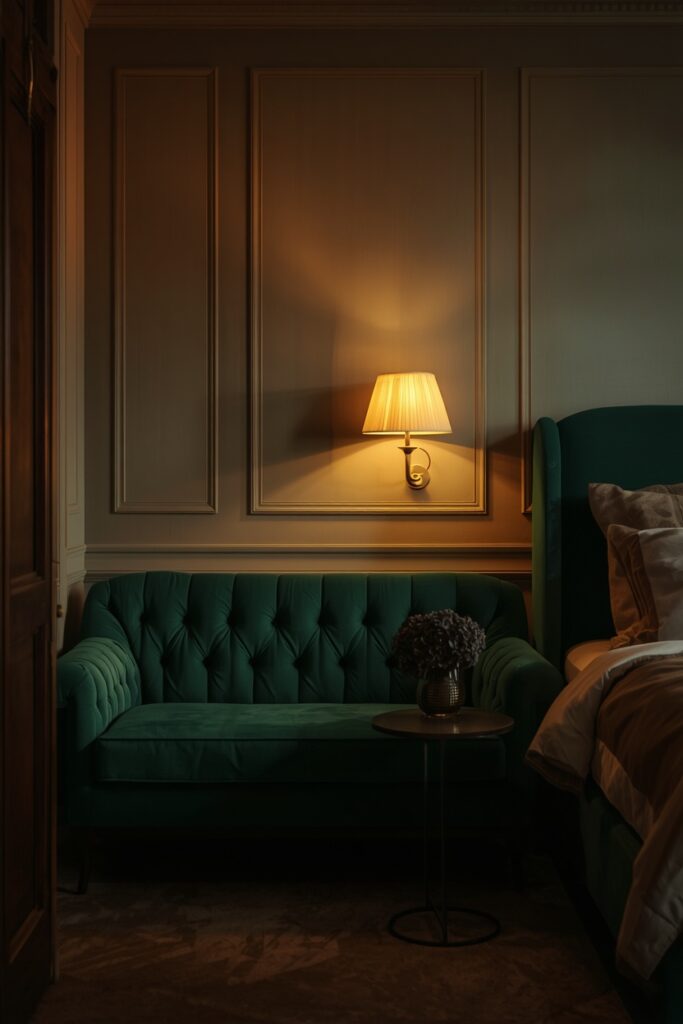
16. Tuxedo-Style Loveseat in a Jewel-Tone Bedroom Couch
A tuxedo loveseat — the style where the arms rise to the same height as the back, forming a clean rectangular silhouette — delivers a structured, architectural look that reads as intentionally designed rather than casually placed. Upholstering it in a jewel tone like emerald, sapphire, or deep plum turns the loveseat into the room’s color statement and pulls the eye toward the seating zone. The tuxedo profile works especially well in contemporary and Art Deco bedrooms where geometric shapes and bold color are part of the vocabulary. Position the loveseat along the wall opposite the bed or in a bay window alcove where it has room to stand as a feature piece. Pair it with metallic accents — a brass side table, a gold-framed mirror — so the jewel tone reads rich rather than heavy.
17. Sculptural Accent Chair as Bedroom Art
A single sculptural chair — an organic-shaped shell seat, a cantilevered form, or a wrapped wire frame — can function as functional art that gives the bedroom a design focal point beyond the bed. The chair does not need to be the most comfortable seat in the house; its primary role is visual, occupying a corner or a wall space the way a large artwork would.
Place it on its own rather than clustered with a side table or lamp so the silhouette reads clearly against the wall. Choose a chair in a material that contrasts with the bedroom’s dominant surfaces — a white molded shell against a dark wall, or a blackened steel frame against light bedding.
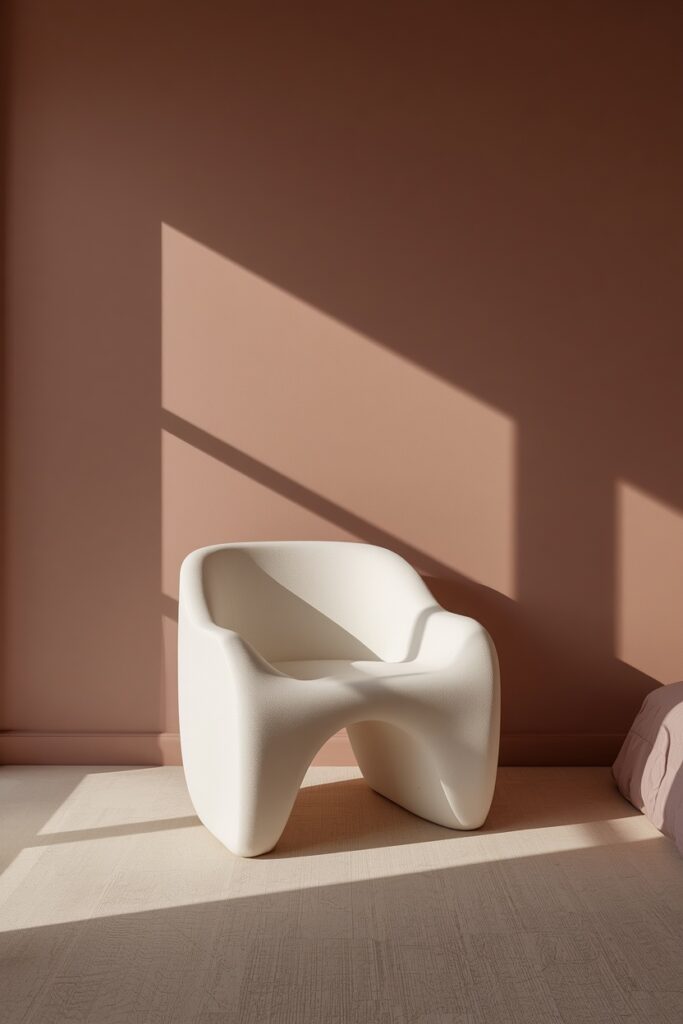
Even if you only sit in it occasionally, the chair anchors the room’s style direction and gives visitors a clear signal about your design taste.
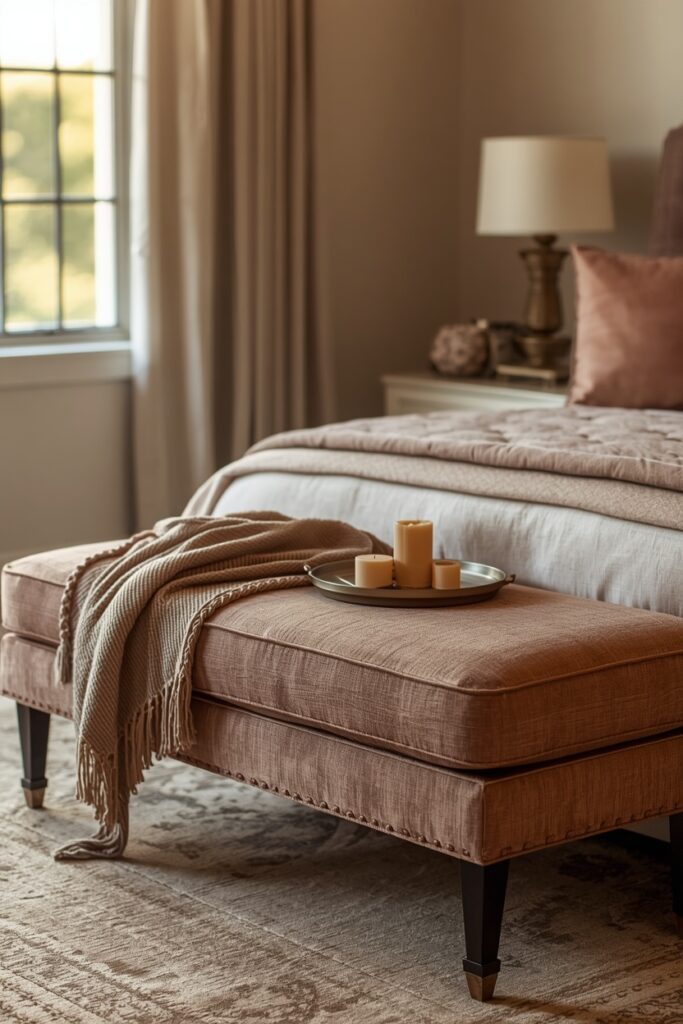
18. Upholstered End-of-Bed Bench with a Matching Throw
An upholstered bench in the same fabric family as the bed’s accent pillows or throw creates a coordinated look that ties the foot of the bed to the room’s broader palette. Choose a bench with clean lines and no visible frame so the upholstered surface is the only material on display. Match the throw to the bench fabric — either the same textile or a tonal variation — and drape it loosely across one end for a layered, styled appearance. Keep the bench the same width as the mattress or four to six inches narrower so it reads as an extension of the bed rather than an independent piece of furniture.
This coordinated approach is the most straightforward bedroom couch aesthetic strategy for creating a pulled-together look without hiring a decorator.
19. Convertible Sleeper Chair for Guest Bedrooms
A sleeper chair that unfolds into a single-width bed gives a guest bedroom dual functionality without the footprint of a full sleeper sofa. During the day it sits as a compact accent chair measuring roughly 32 by 34 inches; at night it unfolds to a 75-inch sleeping surface for an overnight guest. Choose a model with a foam or spring mattress insert rather than a bare cushion fold-out — the difference in sleep quality is significant and your guests will notice. Upholster it in a neutral performance fabric that handles regular folding without creasing permanently at the hinge points.

Position the chair so the unfolded bed direction has clear space — at least six feet of open floor — and does not block the door or the closet when extended. This dual-purpose piece justifies its place in a spare bedroom that sits empty most of the year.
Where I’d Start if I Only Did Three Things
If I only did three things, I would start by measuring the exact space between the foot of the bed and the facing wall — that single number determines whether you can fit a loveseat, a bench, or only a slim stool, and knowing it before you shop saves hours of browsing the wrong category. Second, I would choose a seating piece with legs visible underneath so the floor stays continuous and the room reads as larger than it is — skirted or platform seating eats visual space in a bedroom. Third, I would pick one piece of seating that contrasts in texture with the bed — a velvet chair against linen bedding, or a rattan chair against cotton — because the textural difference is what makes the seating zone register as its own area rather than an extension of the sleep surface.
Frequently Asked Questions
What are the best bedroom couch aesthetic ideas for small rooms?
A slipper chair measuring 24 to 28 inches wide, a window seat bench with storage underneath, or a compact ottoman that doubles as seating and a side table are the three best options for small bedrooms. All three provide a sitting surface without consuming more than six to eight square feet of floor space. Avoid full loveseats or chaises in rooms under 12 by 12 feet because the walkway around the bed will become too tight.
Should a bedroom bench match the bed frame or the nightstand?
The bench does not need to match either one exactly, but it should share a material or color thread with something else in the room — the same wood tone as the nightstand legs, the same fabric family as the accent pillows, or the same metal as the lamp hardware. A bench that connects to at least one other element in the room reads as considered, while a completely unrelated piece can look like it wandered in from another space.
How much space do I need between the bed and a bench?
A minimum of 18 inches between the foot of the mattress and the front edge of the bench cushion allows comfortable passage. If you plan to walk between them regularly or need to access drawers at the foot of the bed, 24 inches is the more practical clearance. In tight rooms, a backless bench that you can slide partially under the bed frame saves space.
What fabric is best for a bedroom accent chair?
Performance-rated linen and cotton blends handle daily use, resist staining, and stay soft after repeated cleaning. Velvet adds richness and hides minor wear in the pile texture. Bouclé provides deep tactile warmth but attracts lint. Leather ages gracefully and is the easiest to maintain long-term. Choose based on the bedroom’s style and how much maintenance you want to commit to — velvet and bouclé need more care than linen or leather.
Final Thoughts
Strong bedroom couch aesthetic ideas treat seating as a deliberate second zone in the room — a place with its own purpose, its own lighting, and its own material personality that complements rather than copies the bed. Whether you choose a full velvet loveseat, a compact slipper chair, or a built-in window bench, the same principles apply: measure the clearance before you shop, pick a texture that contrasts with the bedding, and position the piece so it faces its own focal point rather than staring at the mattress. One well-placed seat changes how the entire bedroom functions.
Leave a Reply