
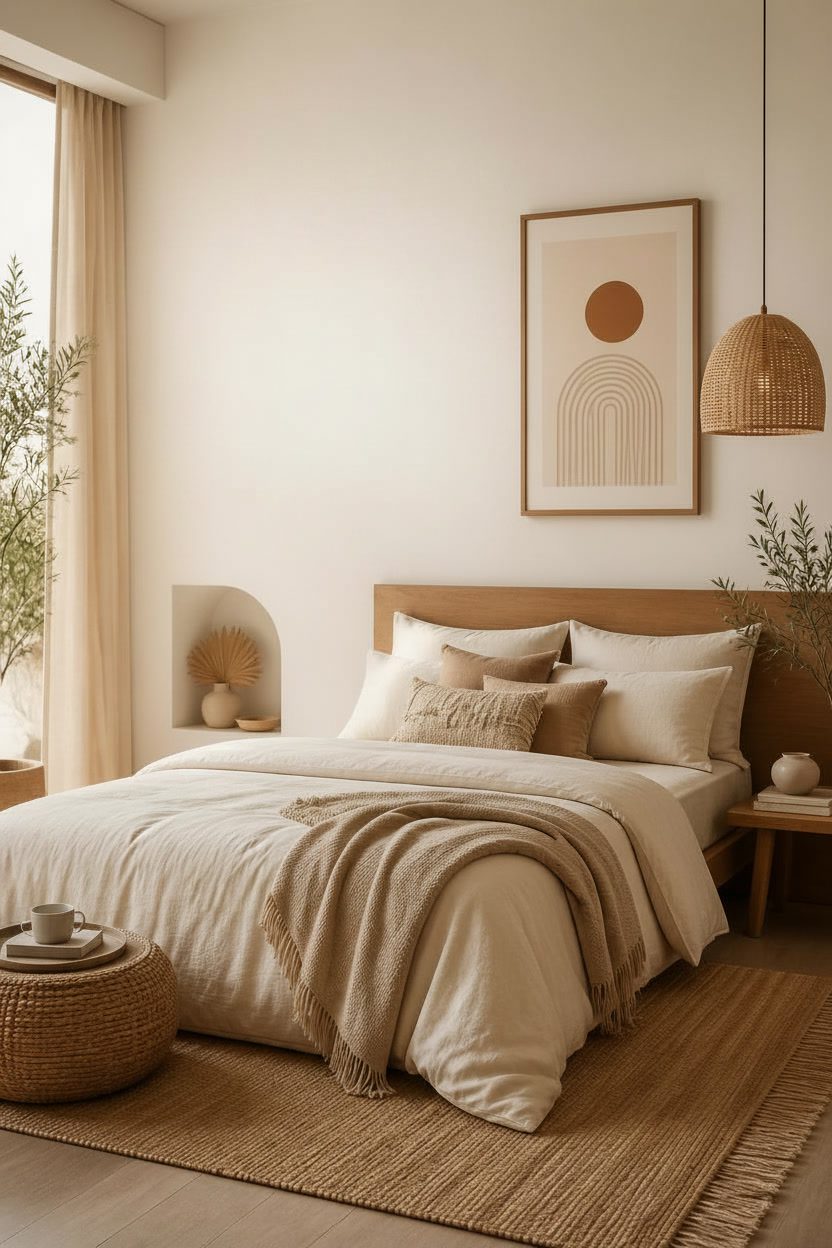
Most boho minimalist bedroom ideas fail because they lean too hard in one direction — either the room is so stripped back that it reads cold and impersonal, or the bohemian layers pile up until the minimalist restraint disappears entirely. The balance point is narrower than people expect. It lives in one woven texture against a white wall, one trailing plant instead of a jungle, one earth-toned throw on an otherwise clean bed. The style is about selecting fewer organic elements and giving each one enough breathing room to register on its own terms.
I have decorated bedrooms where removing a single basket from a shelf was the move that shifted the room from cluttered boho to composed boho minimalism. That kind of editing is the real skill here — knowing when you have enough warmth and stopping before you have too much. These eighteen ideas each add one specific layer of natural texture, warm color, or handmade character to a minimal foundation, and every one of them can be reversed in five minutes if it does not land right.
1. Layered Neutral Bedding for a Boho Minimalist Bedroom
Start with a white or off-white base layer — a fitted sheet and a flat sheet in washed cotton or linen — and add one textured throw across the lower third of the bed in a warm neutral like oat, sand, or biscuit. The throw is the bohemian element; the clean base layer is the minimalist foundation. Avoid stacking more than three visible layers on the bed because each additional textile adds visual noise that works against the minimal half of the equation. Choose bedding with natural slubs, subtle weave variations, or a raw selvedge edge so the texture reads as handmade without relying on prints or patterns. Pull the top sheet and duvet back in a relaxed fold rather than tucking everything tight — the slightly undone bed is a signature of the boho-minimal aesthetic and signals comfort without looking messy.
2. Rattan Headboard Against a Plain White Wall
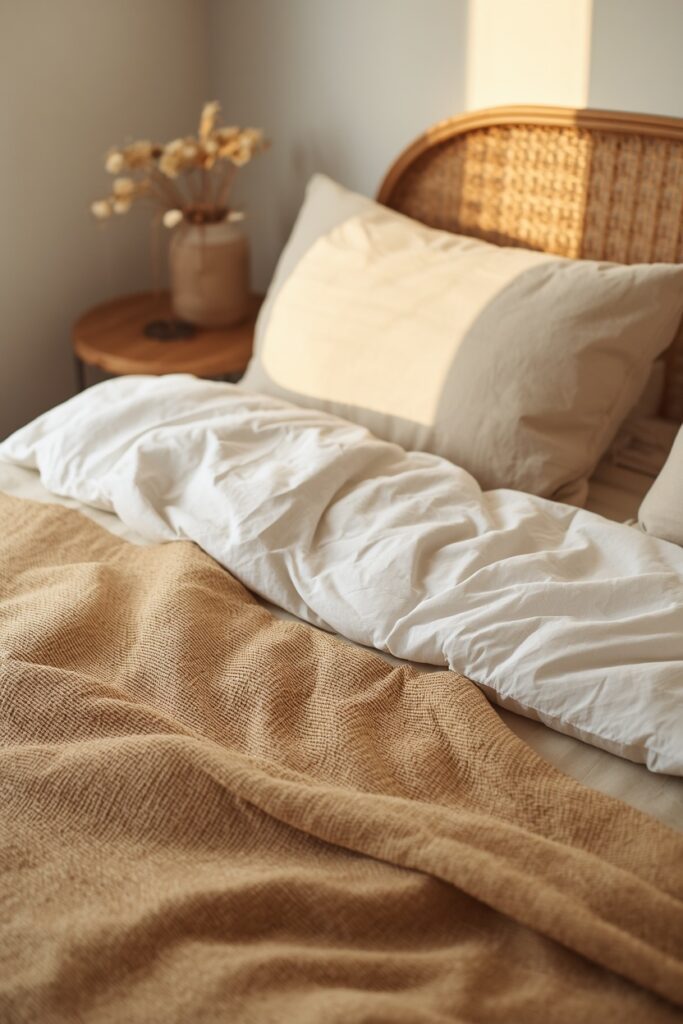
A rattan headboard introduces a bold organic texture that becomes the room’s focal point without adding color or visual clutter. The open weave pattern creates depth and shadow play on the white wall behind it, especially when morning light hits from the side and throws intricate geometric shadows across the surface. Choose a headboard that extends at least six inches beyond the mattress on each side so it frames the bed properly and does not look undersized.
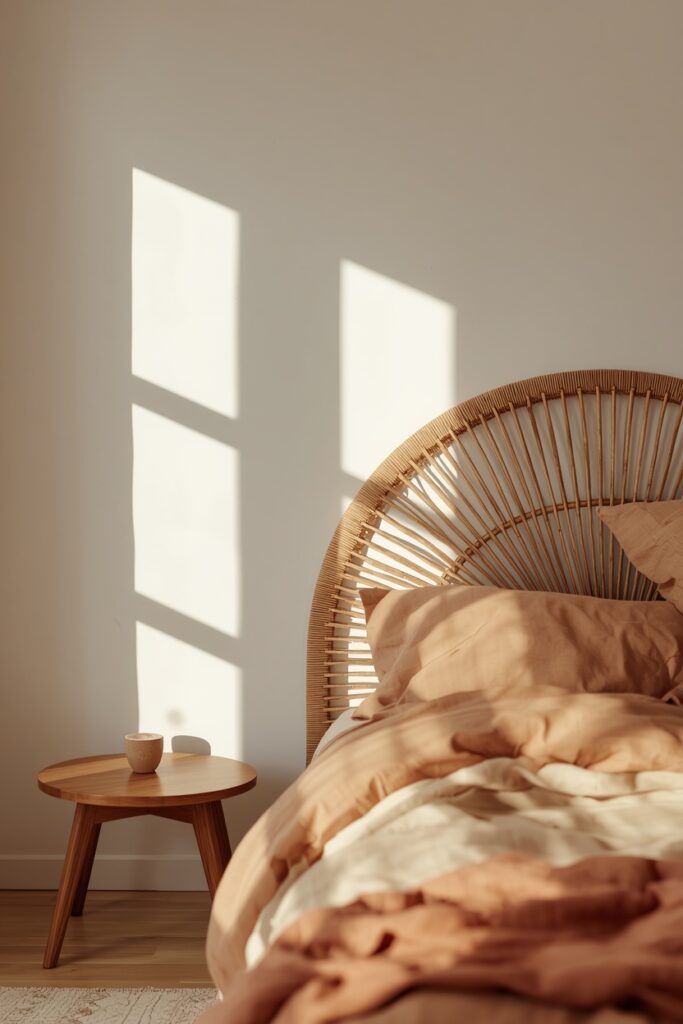
Natural honey-toned rattan works in warm palettes while whitewashed rattan suits cooler, Scandinavian-influenced rooms. Mount it directly to the wall behind the bed rather than attaching it to the frame so the headboard sits flat and does not wobble when you lean against it — two French cleats and four wall anchors handle the weight of most rattan panels comfortably.
3. Macramé Wall Hanging as the Single Art Piece
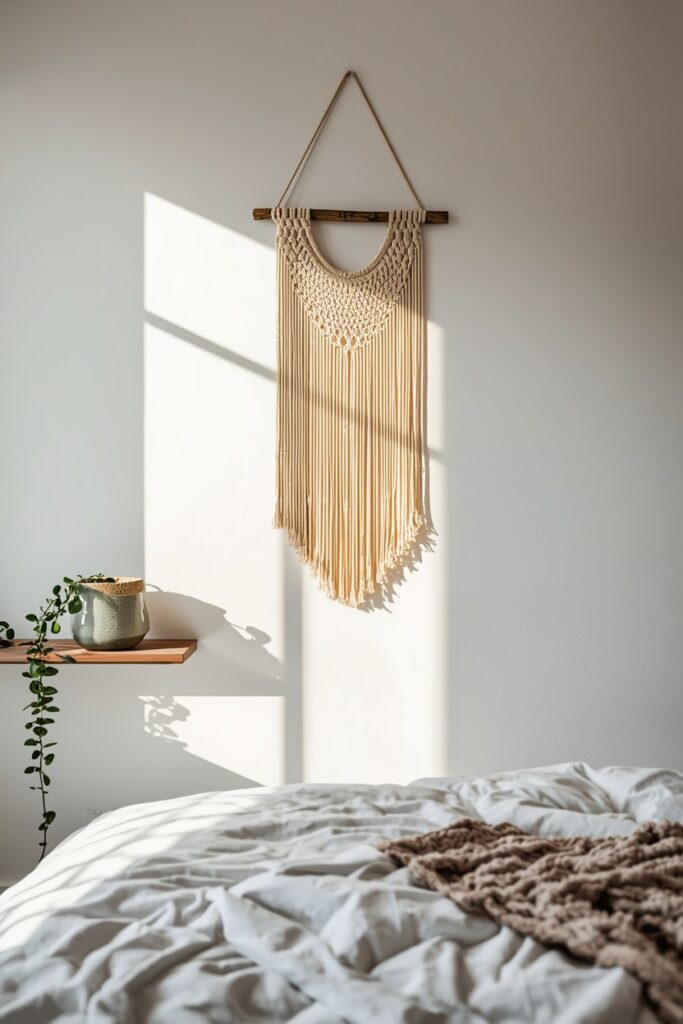
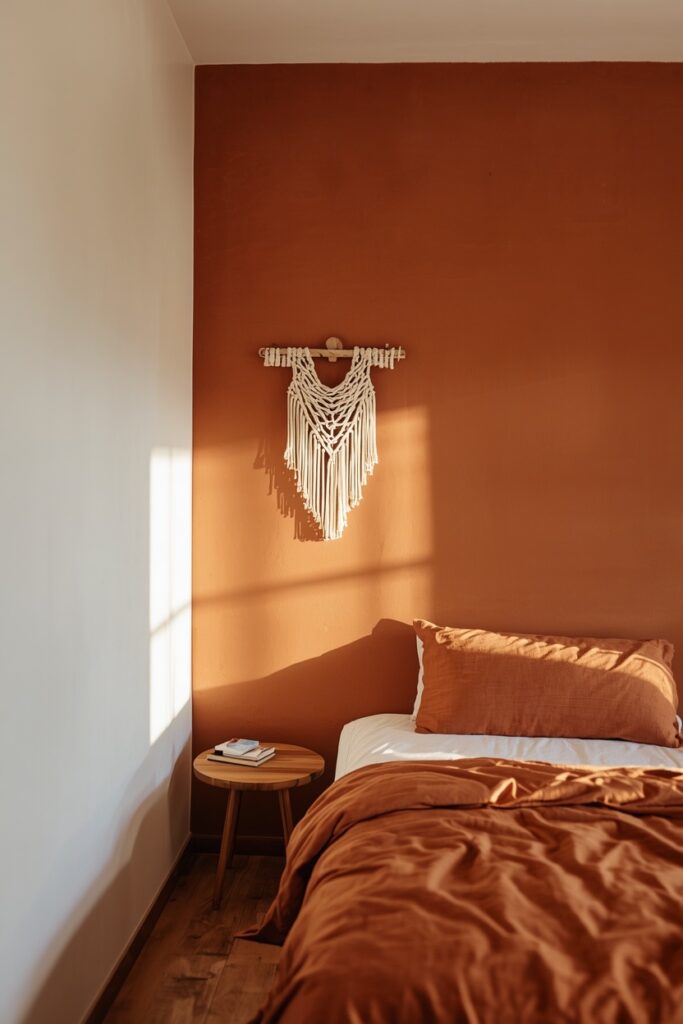
In a boho minimalist bedroom the wall art should be limited to one piece, and a hand-knotted macramé hanging fills that role with texture and dimension that a framed print cannot match. Choose a macramé piece no wider than the headboard — typically 36 to 48 inches — and hang it centered above the bed as the room’s sole decorative wall element. The knotted cotton cord adds a handcrafted quality that grounds the minimalist shell in warmth and human touch. Stick to natural undyed cotton or a soft ecru tone rather than colored cord so the piece reads as a texture element rather than a color statement.
Keep the tassel length moderate — fringe that drops below the headboard line can look heavy in a minimal setting, so trim or fold the ends to keep the silhouette clean.
4. Dried Pampas Grass Arrangement on a Simple Shelf
Three to five stems of dried pampas grass in a simple ceramic or stoneware vase on a floating shelf adds height, movement, and an organic quality that fresh flowers provide but without the weekly replacement cycle. The feathery plumes catch even the slightest air movement from a ceiling fan or open window, introducing a gentle kinetic element to a still room.
Position the arrangement on a shelf at roughly eye level on the wall opposite the bed so it serves as a secondary focal point when you are lying down. Choose natural cream-colored plumes rather than dyed versions to stay within the earth-tone palette, and trim the stems to staggered heights — the tallest at 30 to 36 inches — so the arrangement reads as a curated grouping.
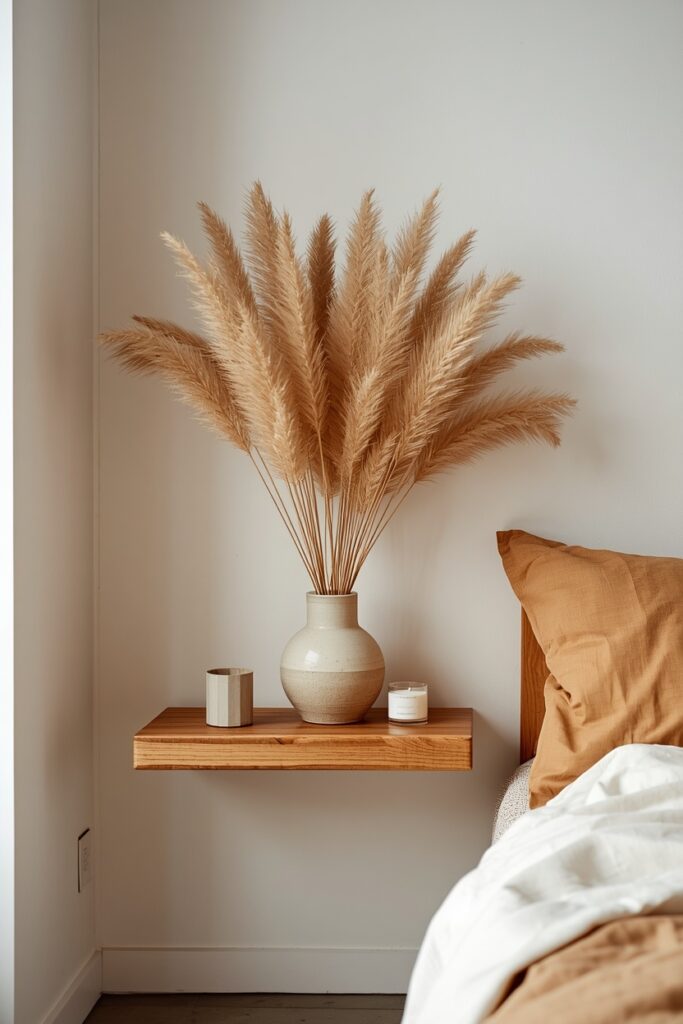
Pampas grass sheds slightly during the first few weeks after cutting, so give the plumes a gentle shake outdoors before bringing them inside.
5. Jute Rug Layered Over Bare Wood Floors
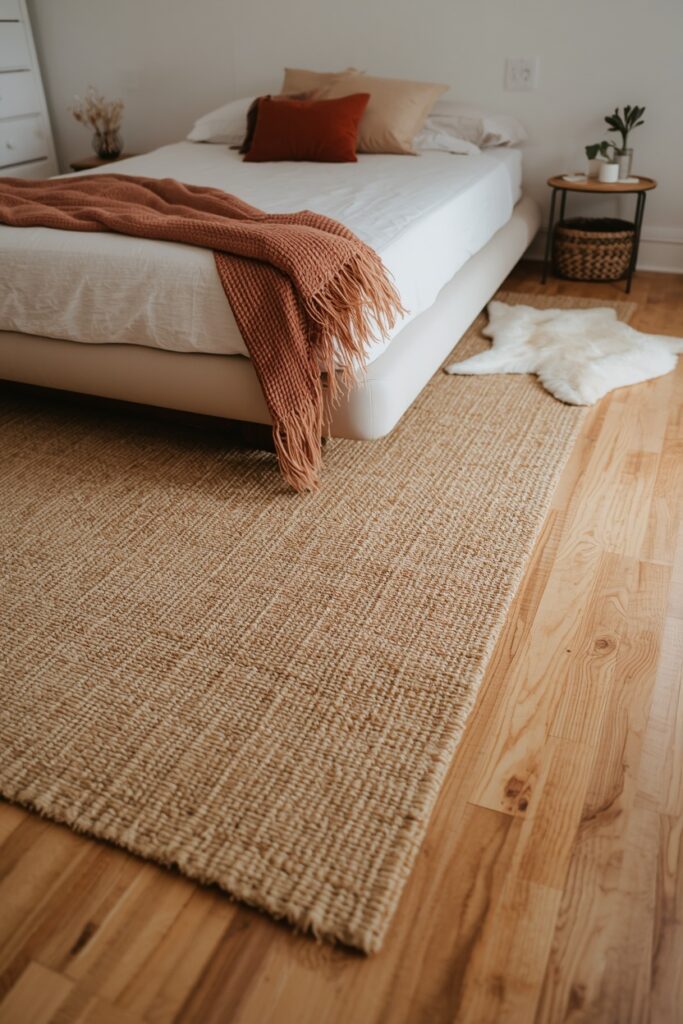
A hand-woven jute rug in a warm natural tone placed beneath and extending beyond the bed on three sides adds a grounding layer of earth-toned texture to bare hardwood or concrete floors. The coarse, irregular weave of jute creates a raw, handcrafted surface that contrasts with the smooth bedding above and reinforces the boho half of the equation. Choose a rug large enough that you step onto it on both sides and at the foot of the bed — a 9-by-12-foot rug works for a queen and a 10-by-14-foot for a king in most room configurations. Jute is firm underfoot, which some people find too rough for bare feet first thing in the morning, so placing a small sheepskin or cotton bath mat beside the bed on top of the jute gives you a soft landing zone without adding another full rug. Vacuum the jute regularly with a beater-bar attachment to pull out dust and fiber shedding.
6. Low Platform Bed for a Minimalist Boho Bedroom Foundation
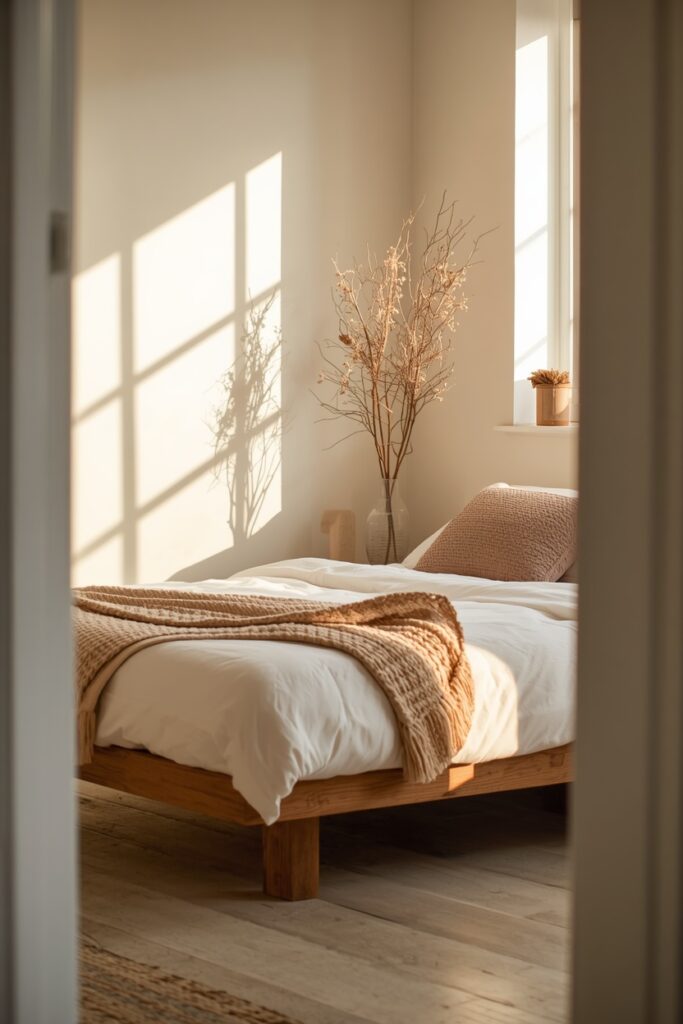
A low platform bed frame — sitting 8 to 12 inches off the floor without box springs — creates a grounded, Japanese-inspired base that defines the minimalist structure of the room. The low profile emphasizes the horizontal plane, making the ceiling appear taller and the room feel more spacious than a standard-height bed does. Choose a frame in natural wood — light oak for airy rooms or walnut for warmer, moodier spaces — with a simple slab headboard or no headboard at all. The absence of a traditional bed skirt, footboard, and decorative metalwork strips the bed down to its essentials, which is the minimalist contribution.
Layer the boho warmth on top through textured bedding, a woven throw, and a single accent pillow in a handmade fabric so the platform reads as a stage for organic textures rather than a bare surface.
7. Hanging Pendant Bedside Light Replacing a Table Lamp
Swapping a traditional table lamp for a single hanging pendant on each side of the bed frees the nightstand surface and introduces a sculptural light source that becomes part of the wall composition. Choose a pendant in a natural material — woven rattan, unglazed ceramic, or braided jute — to connect the lighting to the boho texture palette.
Hang each pendant 18 to 24 inches above the nightstand surface and 12 inches out from the wall so the light cone covers the reading area without hanging in your face when you sit up in bed. A warm LED bulb in the 2200K to 2700K range produces the amber glow that suits the earthy palette and supports the wind-down mood a bedroom needs in the evening.
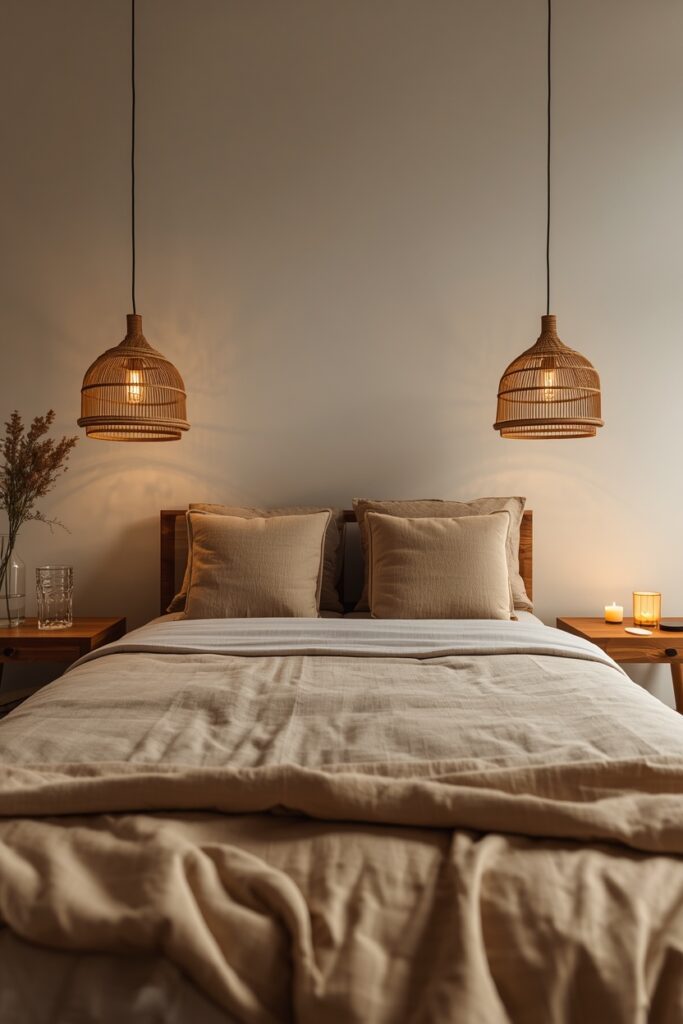
The pendants also clear the nightstand for just the essentials: a glass of water, a phone, and one small decorative object.
8. White Linen Curtains with a Raw-Edge Hem
Floor-length white linen curtains with an unfinished or raw-edge hem bring a softness and movement to the bedroom that no other window treatment can replicate at the same price point. The raw edge — where the fabric is cut cleanly but left without a folded hem — adds a subtle handcrafted detail that aligns with the boho sensibility while the monochrome white palette keeps the minimalist discipline intact. Mount the curtain rod at the ceiling line for maximum vertical drop, and choose a linen weight heavy enough to drape without billowing wildly — 6 to 8 ounces per square yard is the sweet spot.
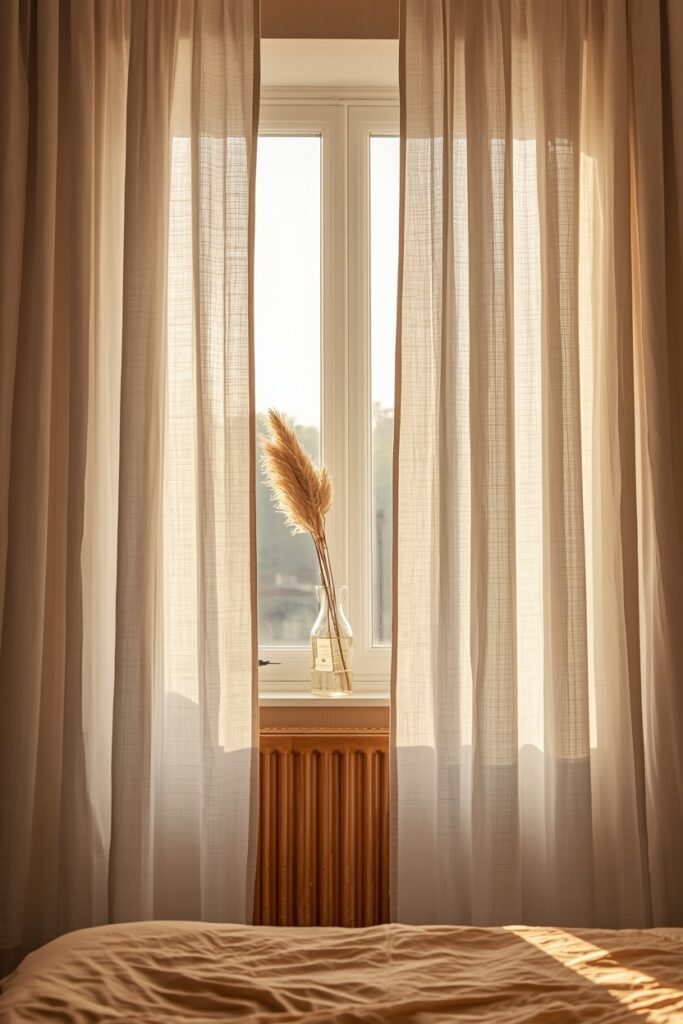
The curtains filter harsh morning light into a soft, diffused glow that warms the room without darkening it. Linen wrinkles by nature, and in this context those wrinkles are a feature, not a flaw — they reinforce the relaxed, organic character of the space.
9. Terracotta Accent Wall with Minimal Surrounding Decor
Painting the wall behind the bed in a warm terracotta tone and keeping the remaining three walls white creates a grounding earth-toned backdrop that anchors the boho palette without covering the room in color. The terracotta absorbs harsh daylight and radiates a warm undertone that shifts from a soft clay in the morning to a deep amber in the evening, making the room naturally responsive to the time of day. Keep the accent wall nearly bare — the macramé piece or a single shelf is enough — because the color itself carries the visual weight and additional decor would compete with it. Match the bedding and rug to the warm-neutral family so everything connects to the terracotta without repeating it. This is one of the most impactful boho minimalist bedroom ideas you can execute in a single afternoon with a gallon of paint.
Paint Picks: Benjamin Moore Cinnamon 2174-20, Sherwin-Williams Cavern Clay SW 7701, Farrow & Ball Red Earth No.64, Benjamin Moore Simply White OC-117 (for the three remaining walls).
10. Open Wood Shelf Nightstand Replacing a Closed Cabinet
Replacing a traditional nightstand with a simple open wood shelf — either wall-mounted or a slim two-tier stand with no drawers — keeps the bedside area visually light and forces you to curate what sits there rather than stuffing a drawer with miscellaneous items. The open design exposes the wall and floor beneath, which maintains the airy quality that minimalism demands. Choose a shelf in a natural wood tone that matches or complements the bed frame — raw oak, light birch, or warm ash — and limit the surface to three or fewer items: a lamp or candle, a glass of water, and one personal object like a small ceramic dish or a book.
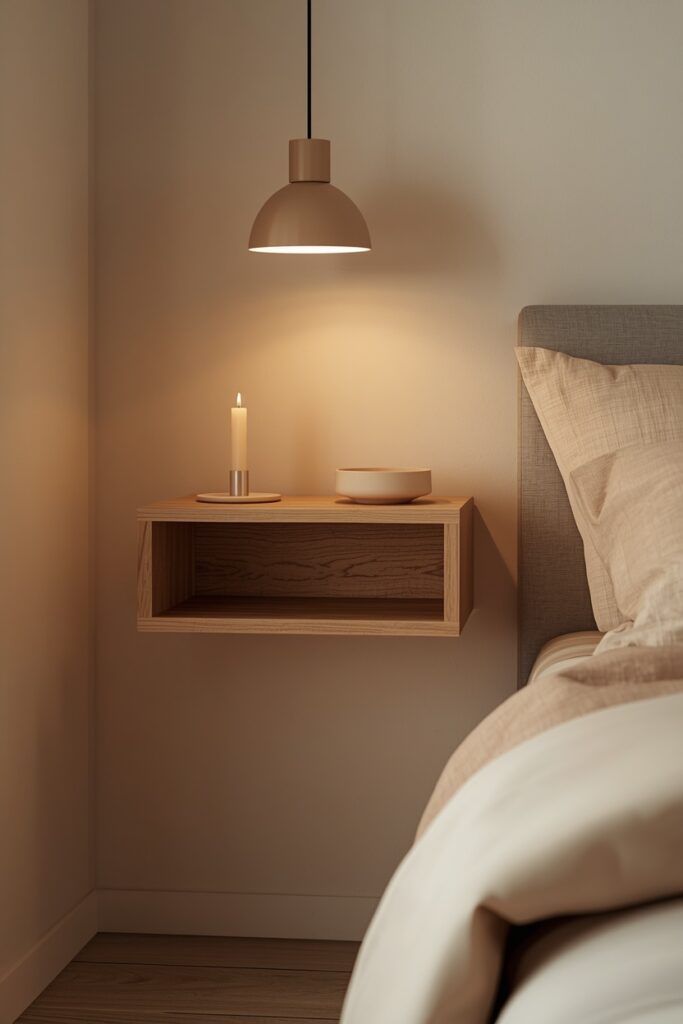
The constraint sounds limiting but it is actually freeing: when the nightstand is always tidy by design, the entire bedroom reads as more ordered.
11. Woven Basket Collection for Visible Organized Storage
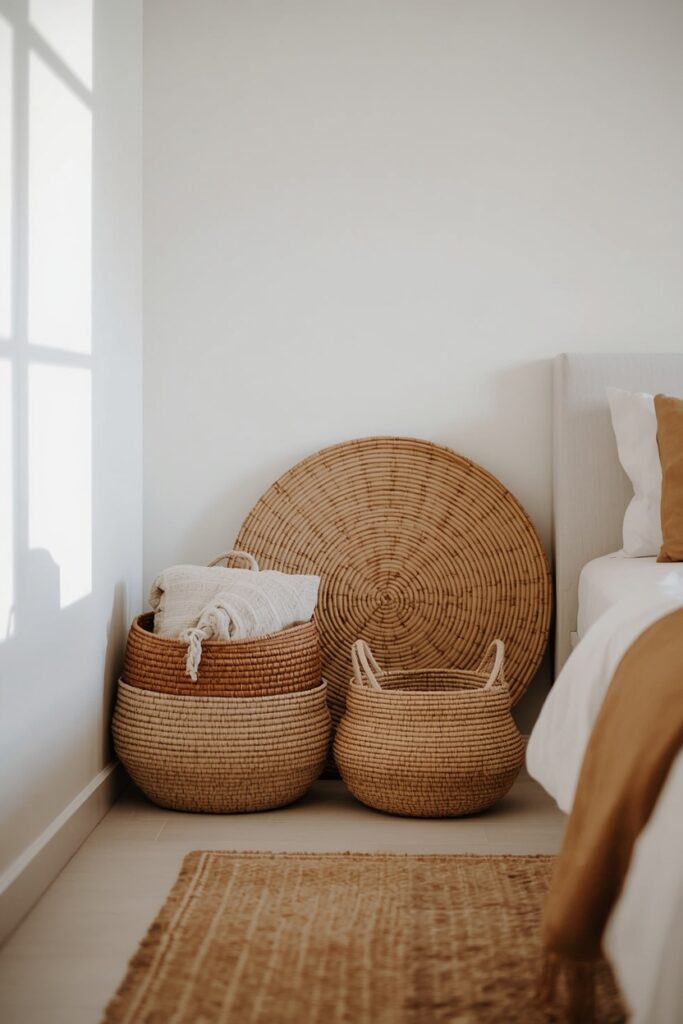
A grouping of two or three woven baskets in graduated sizes placed along one wall or beneath a bench provides visible storage that doubles as decor. Use the baskets for throw blankets, extra pillows, magazines, or yoga equipment — items that would otherwise end up on the floor or crammed into a closet. Choose baskets in natural seagrass, water hyacinth, or palm leaf so the material connects to the organic texture palette of the room. Vary the shapes — a tall cylindrical basket, a wide low basket, and a round lidded basket — so the grouping reads as collected rather than bought as a matching set.
Position them against the wall rather than in the center of the room so they act as a border element and do not obstruct the clean floor space that the minimalist side of the equation requires.
12. Cotton Gauze Canopy Draped Over the Bed Frame
A single panel of cotton gauze or muslin draped from two ceiling hooks directly above the bed and flowing down both sides creates a soft canopy that envelops the sleeping area without the structure of a full four-poster frame. The sheer, almost weightless fabric billows gently in any air current and adds a layered, dreamy quality that is pure bohemian warmth.
Choose undyed or natural-white gauze so the canopy blends into the white ceiling and walls rather than introducing a new color. Mount the hooks 24 inches apart above the head of the bed and let the fabric drape outward in a relaxed V-shape — pulling the fabric too tight kills the flowing softness that makes the canopy work.
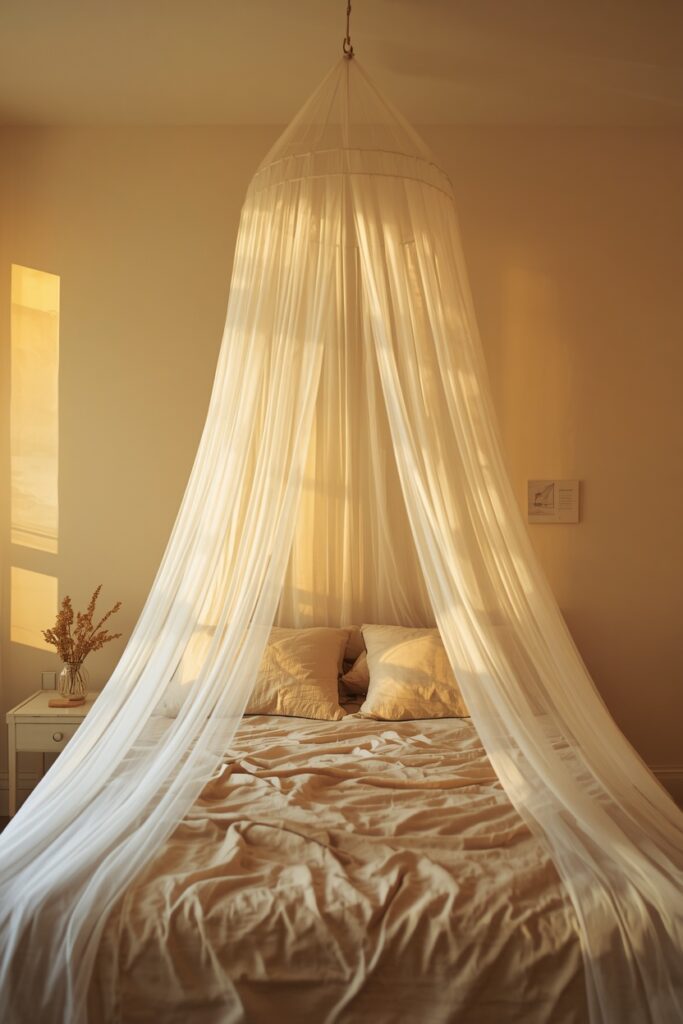
This addition takes ten minutes to install and can be removed without patching by filling the two small hook holes with a dab of spackling paste.
13. Earthy Clay Vases Grouped on a Floating Shelf
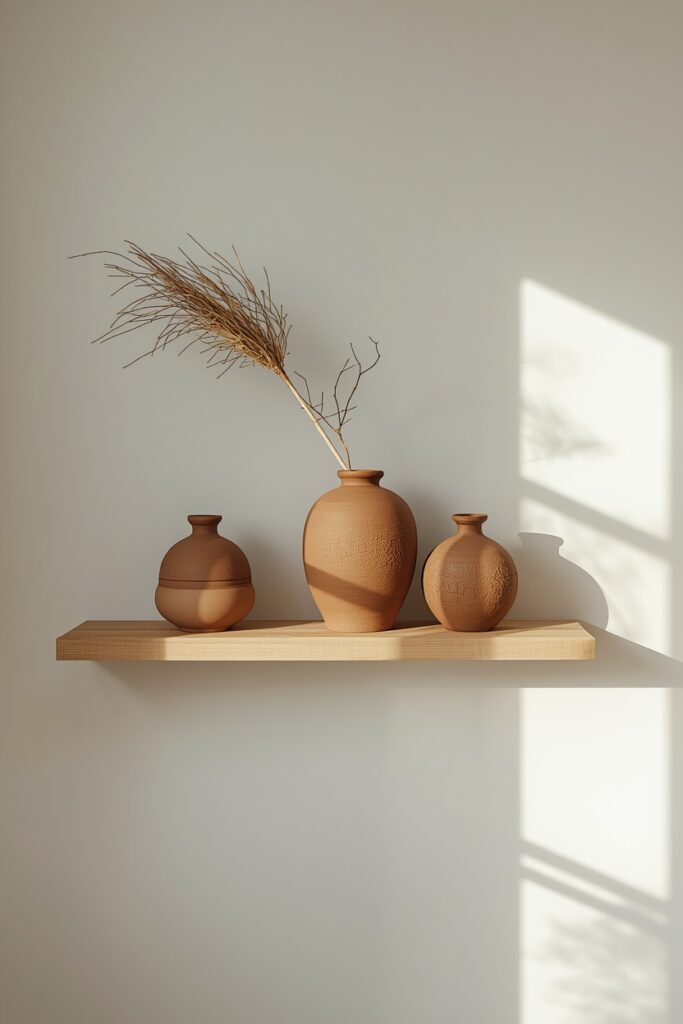
A cluster of three to five handmade clay vases in varying heights and earth tones — burnt sienna, ochre, terracotta, and warm grey — placed on a single floating shelf creates a still-life composition that brings sculptural warmth to a bare wall. The imperfect surfaces and irregular shapes of hand-thrown or hand-built ceramics convey the artisan quality central to bohemian style while the restrained grouping on one shelf maintains the minimalist boundary. Leave most of the vases empty and add a single dried stem or branch to one — the negative space around each piece is as important as the piece itself. Position the shelf at eye level on the wall opposite the bed or beside the window so it catches natural light that emphasizes the matte clay surfaces and subtle color variations.
14. Natural Wood Ceiling Beams Left Exposed
If your home has structural ceiling beams hidden above drywall or if you are building new, exposing or adding decorative wood beams across the bedroom ceiling introduces a strong horizontal line of natural material overhead that grounds the entire room. The beams bring warmth and architectural weight to a white ceiling without adding anything to the wall or floor surfaces, which keeps the room’s vertical planes clean and minimal. Choose a beam tone that matches the floor or the bed frame — light oak for bright rooms, reclaimed barnwood for rustic warmth, or dark walnut for a moodier palette.
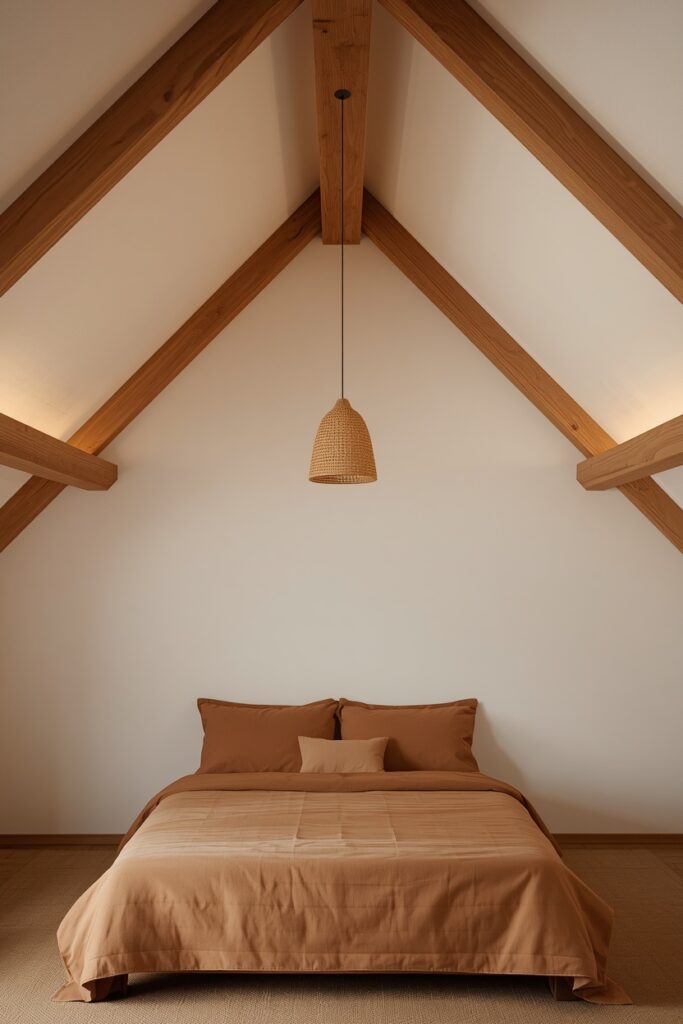
Space the beams 36 to 48 inches apart for visual balance; too many beams crowd a standard-height ceiling and too few look random. Decorative faux beams made from lightweight polyurethane or hollow wood boxes are a budget-friendly alternative to solid timber and mount to the ceiling with adhesive and screws.
15. Oversized Floor Mirror Leaning Against the Wall
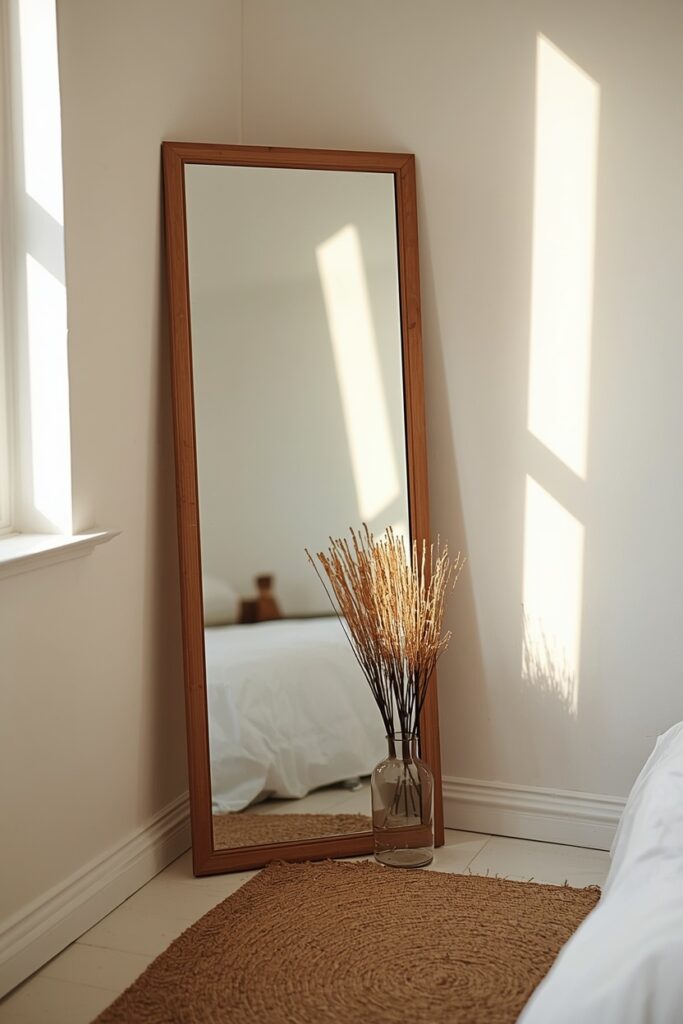
A large floor mirror — at least 60 inches tall and 20 inches wide — leaned against the wall opposite the window doubles the light in the room and creates a sense of depth that small bedrooms desperately need. The leaning posture is key to the boho-minimal look: a wall-mounted mirror reads as formal, but a mirror that leans against the baseboard reads as relaxed and collected. Choose a frame in natural wood, raw metal, or a slim black profile depending on the room’s hardware palette. Position the mirror so it reflects the window or the brightest corner rather than a dark wall or a cluttered surface, because whatever the mirror catches becomes a repeated element in the room.
Secure it to the wall with a safety strap near the top to prevent tipping, especially in homes with children or pets.
16. Mixed-Texture Pillow Arrangement in a Boho Bedroom
Three to four accent pillows in different textures — a chunky knit, a flat-weave kilim, a raw linen, and a tufted cotton — arranged asymmetrically against the headboard bring layered bohemian warmth to the bed without relying on multiple colors or prints. Keep the entire pillow collection within the same earth-toned palette — cream, sand, terracotta, and warm grey — so the texture differences register clearly without creating a busy visual pattern.
Odd numbers of pillows look more natural than even numbers, and staggering sizes from large at the back to small at the front creates depth. Avoid matching sets of identical pillows, which read as store-bought and uniform; the mix-and-match approach is the bohemian contribution, while the restricted palette and restrained count maintain the minimalist discipline.
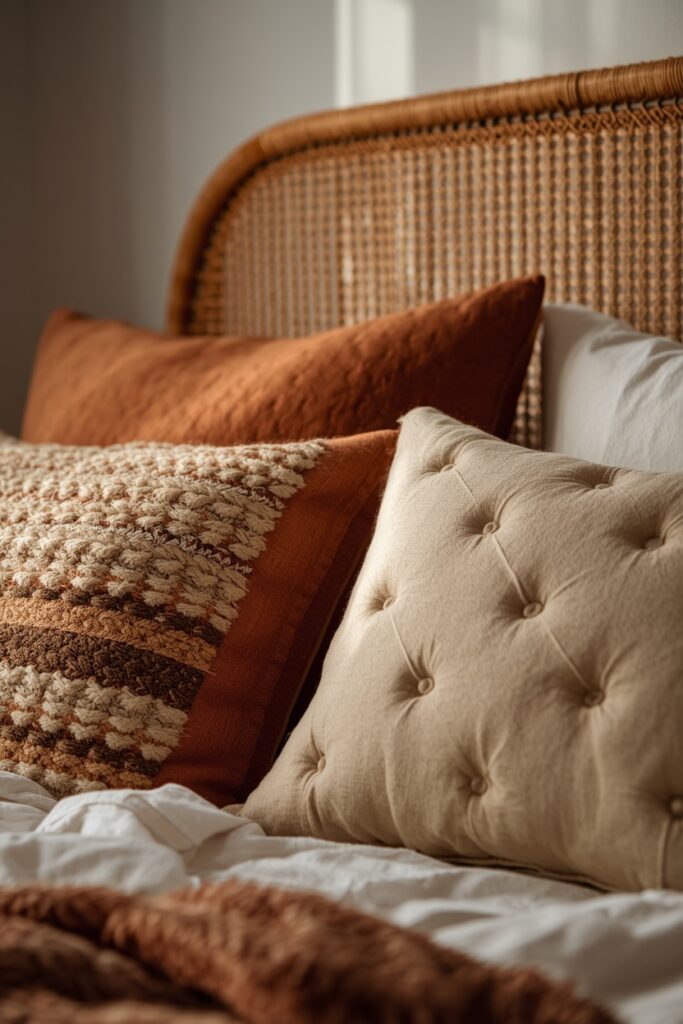
This pillow strategy is one of the fastest boho minimalist bedroom ideas to test because you can swap and rearrange until the balance lands.
17. Indoor Trailing Plant in a Hanging Ceramic Planter
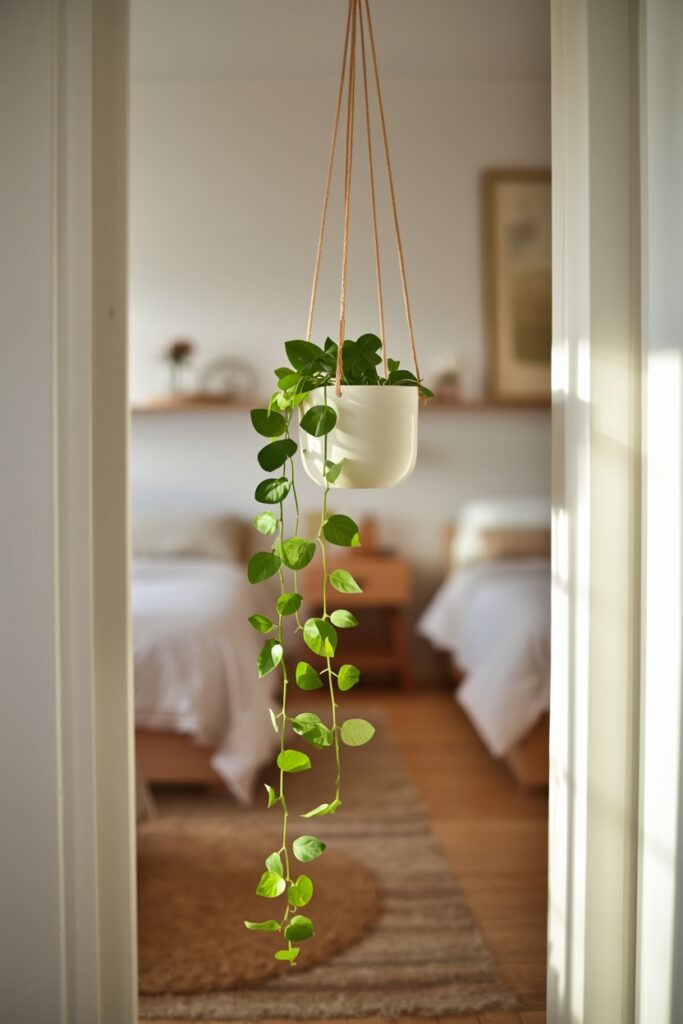
One hanging planter with a trailing plant — pothos, string of pearls, or a small philodendron — introduces living green into the bedroom without consuming any floor or surface space. The trailing vines create a soft vertical cascade that adds movement and life to a corner that would otherwise be empty air. Choose a ceramic planter in a matte white or warm clay tone to connect with the room’s earth palette, and hang it from a ceiling hook near the window where the plant gets adequate indirect light. Keep it to a single planter rather than clustering several; the restraint is what separates boho minimalism from full bohemian maximalism. Water the plant on a consistent weekly schedule and place a small saucer or drip tray inside the planter to prevent water drips on the floor beneath.
18. Warm-Tone LED String Lights Along the Ceiling Line
A single strand of warm-tone LED fairy lights — 2200K to 2700K — pinned along the ceiling-wall junction creates a soft ambient glow that wraps the room in warmth without the brightness of overhead fixtures. Run the strand along one or two walls rather than the full perimeter to keep the effect understated rather than festive. Use clear mini-clips or adhesive hooks painted to match the wall color so the mounting hardware disappears and the lights appear to float against the ceiling line.
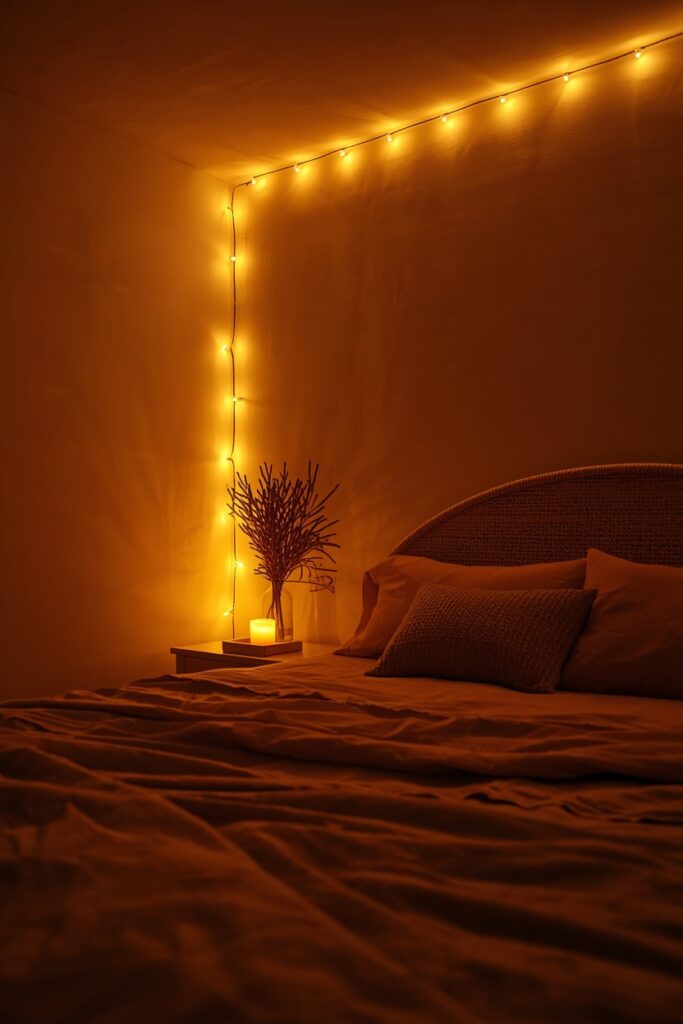
Choose LEDs on a thin copper or clear wire rather than the chunky green-wire holiday type, and connect them to a dimmer plug or a timer so they turn on automatically at sunset and off at bedtime. This is the gentlest way to close the gap between the overhead light being on and the room being dark — the string lights provide just enough glow for winding down, reading a few pages, or navigating to the bathroom without fully waking up.
Where I’d Start if I Only Did Three Things
If I only did three things, I would start by painting one wall behind the bed in a warm terracotta or clay tone and leaving the other three walls white — that single contrast creates the earthy anchor the room needs without any furniture changes. Second, I would replace the overhead bedroom light with two hanging rattan or ceramic pendants on either side of the bed, because the material and the warm glow set the boho-minimal mood more than any other single swap. Third, I would lay a large jute rug under the bed and add one woven throw across the foot, so the texture story is present from the moment you walk into the room without needing to decorate a single wall.
FAQs
What are the best boho minimalist bedroom ideas for renters?
Layered neutral bedding with a woven throw, a leaning floor mirror, hanging pendant bedside lights on ceiling hooks, and a cluster of woven baskets for storage are all renter-friendly because they require no permanent modification to the space. Tension-rod curtains, adhesive LED string lights, and removable wall hooks for a macramé piece round out the toolkit. Everything installs without drilling and removes cleanly when you move out.
How do I keep a boho bedroom from looking cluttered?
Limit each surface — nightstand, shelf, dresser top — to three or fewer objects and choose a single consistent material palette for decor items such as wood, clay, and woven fiber. Leave at least one wall completely bare and keep the floor clear except for one rug. The minimalist discipline is the editing: if adding one more item makes the room look busy rather than layered, remove the last thing you placed.
What colors work best for a boho minimalist bedroom?
A warm white base on walls and bedding paired with earth tones as accents — terracotta, ochre, sand, warm grey, and olive — creates the palette that bridges both styles. Avoid bright or saturated colors like hot pink or electric blue, which pull the room toward maximalist boho. Keep the palette to four or fewer accent tones drawn from natural materials: clay, stone, dried grass, and raw wood.
Can I mix boho minimalism with Scandinavian style?
The two styles share a love of natural materials, neutral palettes, and functional simplicity, so they blend easily. Use the Scandinavian foundation — white walls, pale wood, and clean lines — and layer in boho textures like rattan, jute, and macramé. The key is restraint: stick to one or two boho accent textures per room rather than layering five or six, and let the Scandinavian simplicity remain the dominant framework.
Final Thoughts
The best boho minimalist bedroom ideas add warmth without adding weight. Every element on this list — from the rattan headboard to the terracotta accent wall to the single trailing plant in a ceramic planter — brings organic texture and earth-toned character to a clean foundation without tipping the room into clutter. The editing is the craft: add one woven layer, one handmade vase, one natural material at a time, and stop as soon as the room has enough personality that you want to spend time in it rather than just sleep in it.
Leave a Reply