

The reason a hotel room feels instantly more restful than most people’s own bedroom has less to do with expensive materials and more to do with a handful of specific, repeatable techniques — symmetry, layering, and a level of restraint most home bedrooms skip entirely in favor of more personal clutter. None of it requires an actual hotel budget to recreate.
These fourteen luxury hotel bedroom suite interior design ideas break down exactly what hotels do differently: how pillows actually get stacked, why the curtains are layered the way they are, and the small functional touches that make a suite feel considered down to the last detail rather than just expensively furnished.
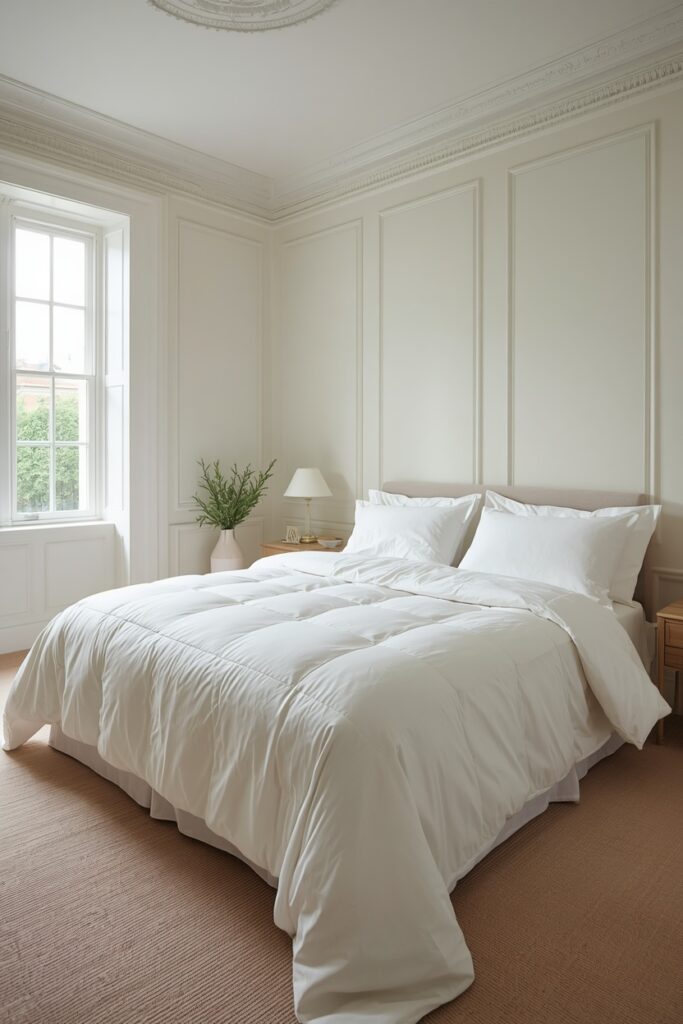
1. Crisp White Bedding, Genuinely High Thread Count
Hotels lean on white specifically because it reads as clean and fresh in a way no other color can fake, and it hides nothing — a hotel bed has to look flawless every single day. A cotton sateen sheet in the 300 to 400 thread count range gets the same soft, slightly lustrous feel most luxury hotels use, without needing to chase inflated thread count numbers that don’t actually correlate with quality much past that point.
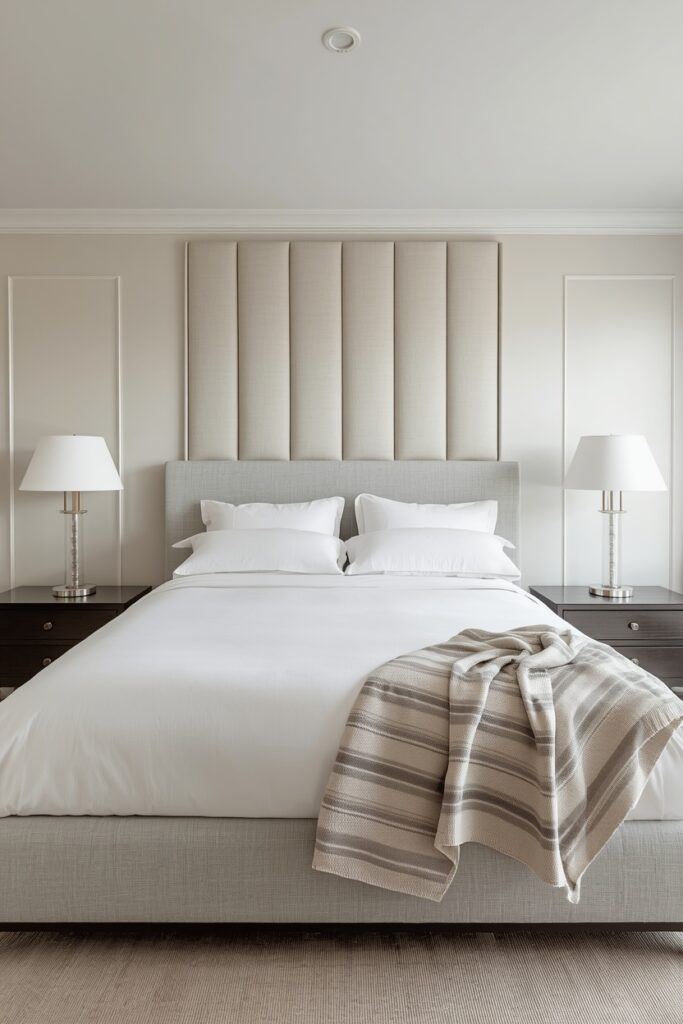
2. An Upholstered Headboard Spanning the Full Wall
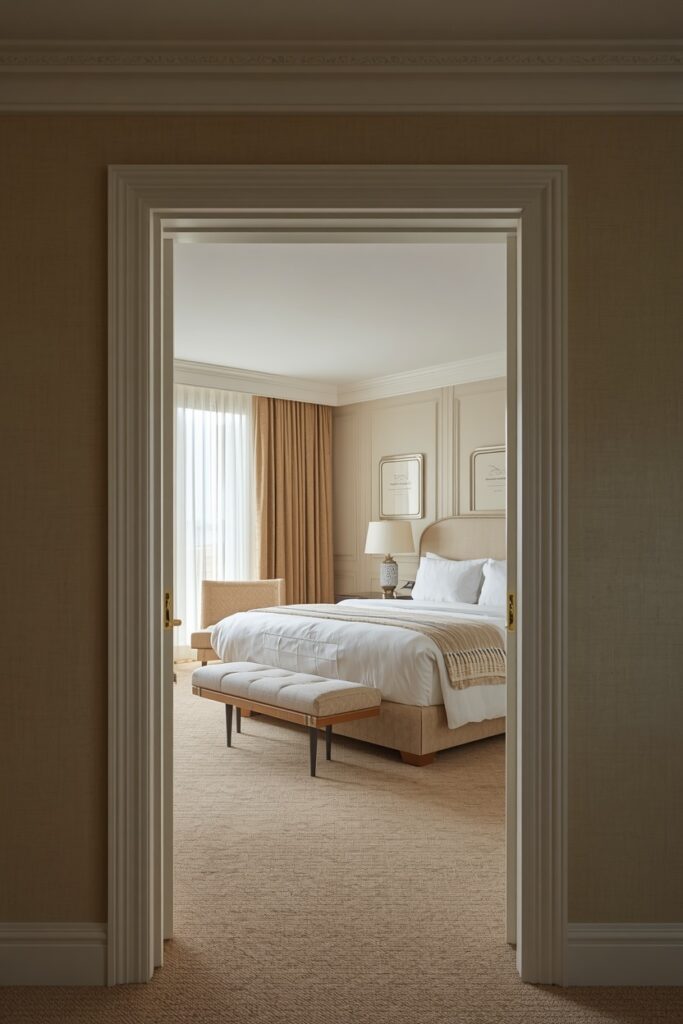
Hotels rarely use a standard-width headboard sized to just the mattress — instead, a fully upholstered wall panel spans well beyond the bed’s edges, sometimes the entire wall. It reads as far more considered than a bed-width headboard, and it has the practical benefit of doubling as sound dampening in a room that otherwise has a lot of hard, reflective surfaces.
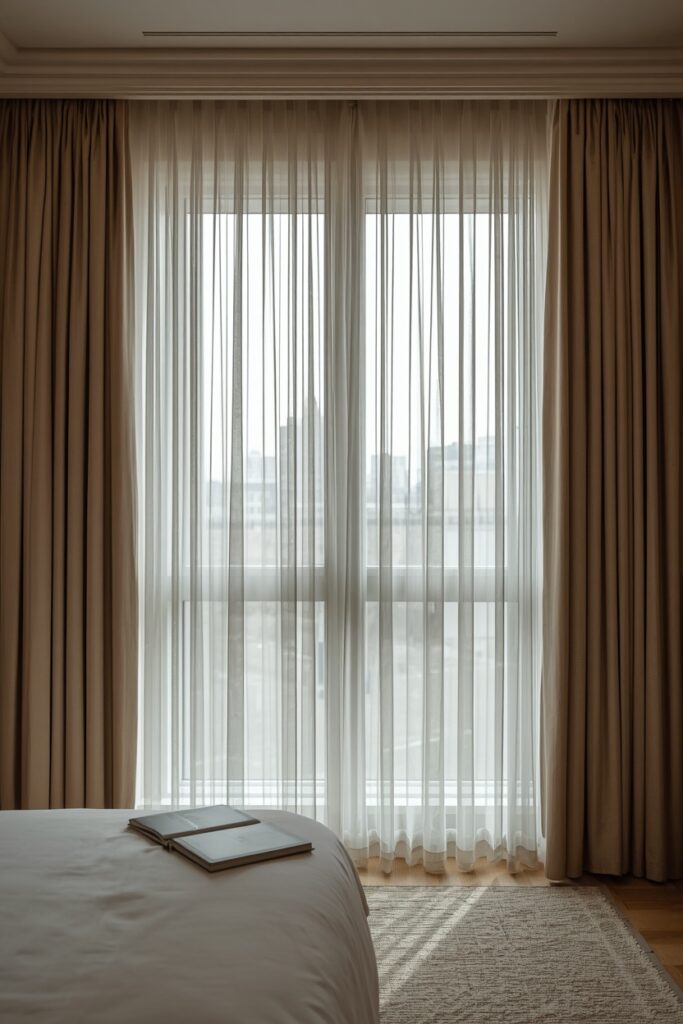
3. Layer Blackout Drapes Behind Sheer Curtains
The two-layer curtain system is standard in nearly every hotel for a reason: sheers filter and soften daylight while staying closed, and a separate blackout layer behind them can close fully for actual sleep without touching the sheers at all. Mount both on a double track or two separate rods so they operate independently rather than bunching together as one thick panel.
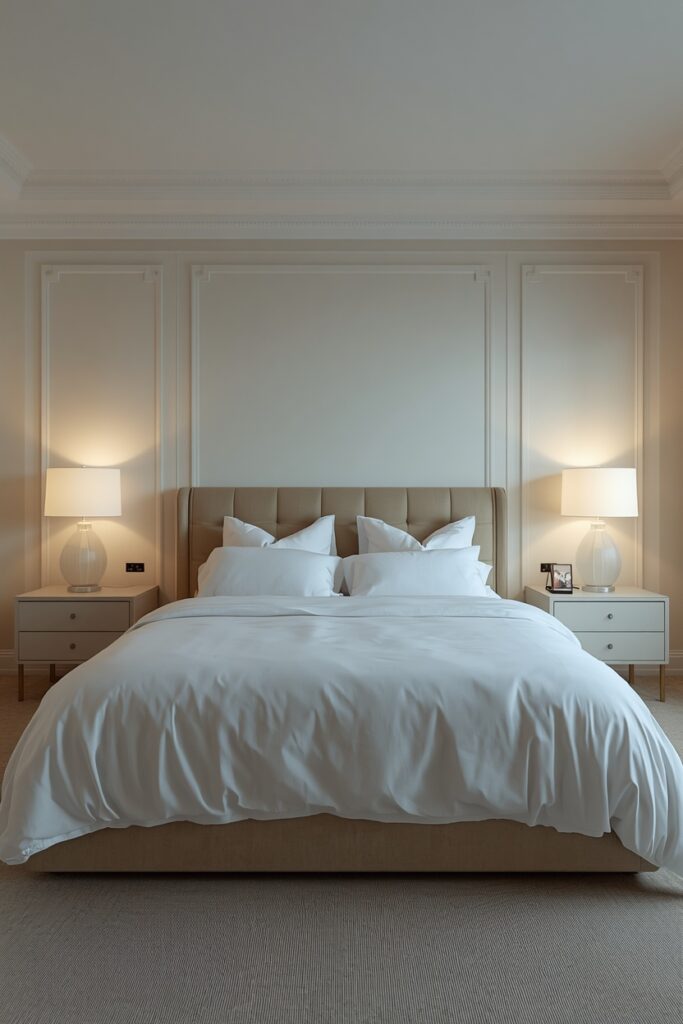
4. Perfect Symmetry on Both Sides of the Bed
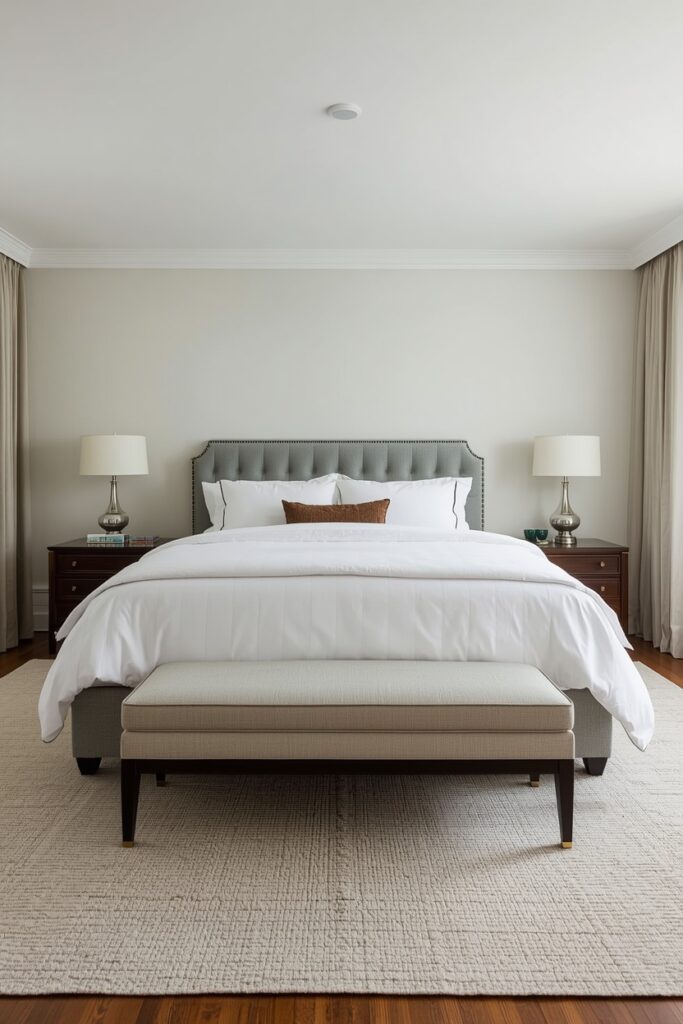
Matching nightstands, matching lamps, matching artwork or sconces on either side of the bed — hotel suites almost never break this symmetry, and it’s a big part of why the room reads as calm rather than busy. This is one of the easiest luxury hotel bedroom suite interior design ideas to copy exactly, since it’s really just a rule about what you buy in pairs rather than a specific product.
5. A Luggage Bench at the Foot of the Bed
A simple upholstered bench, sized to the bed’s width and placed at its foot, is one of the most recognizable hotel furniture pieces and one of the most functional — somewhere to set a bag or fold clothes that isn’t the bed itself. In a home bedroom it doubles as a spot to sit while putting on shoes, which most bedrooms otherwise lack entirely.
6. One Oversized Piece of Art Above the Bed
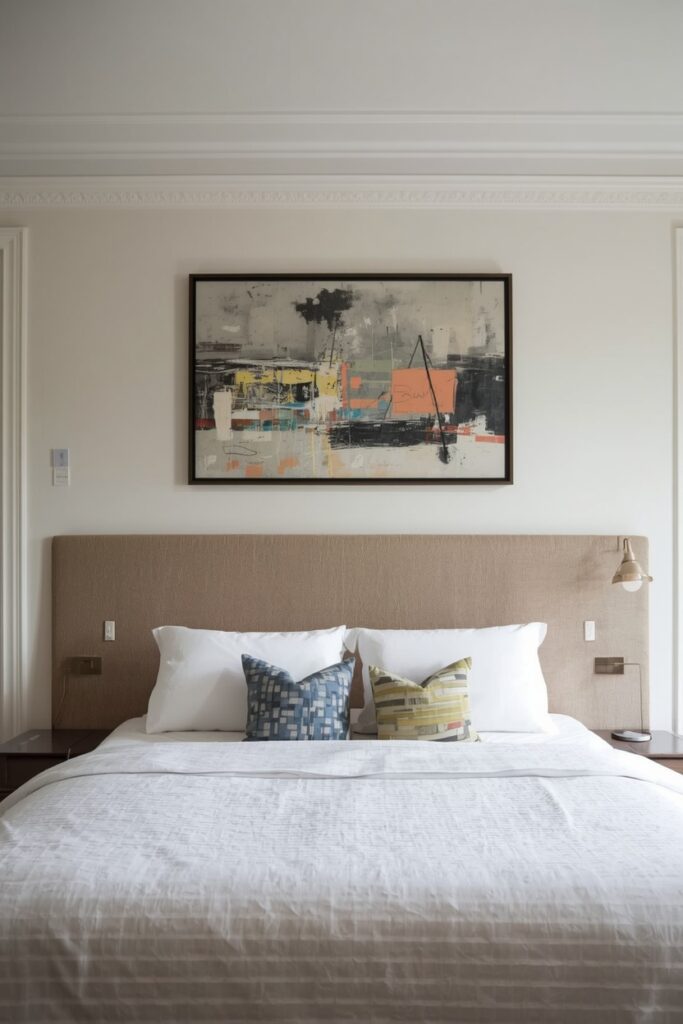
Hotels almost never hang a small, modest piece of art above the headboard — it’s typically one large-scale piece, sized to roughly two-thirds the headboard’s width, rather than a gallery cluster of smaller frames. The single large statement reads as more deliberate and higher-end than several smaller pieces would in the same space.
7. Master the Hotel Pillow Stack
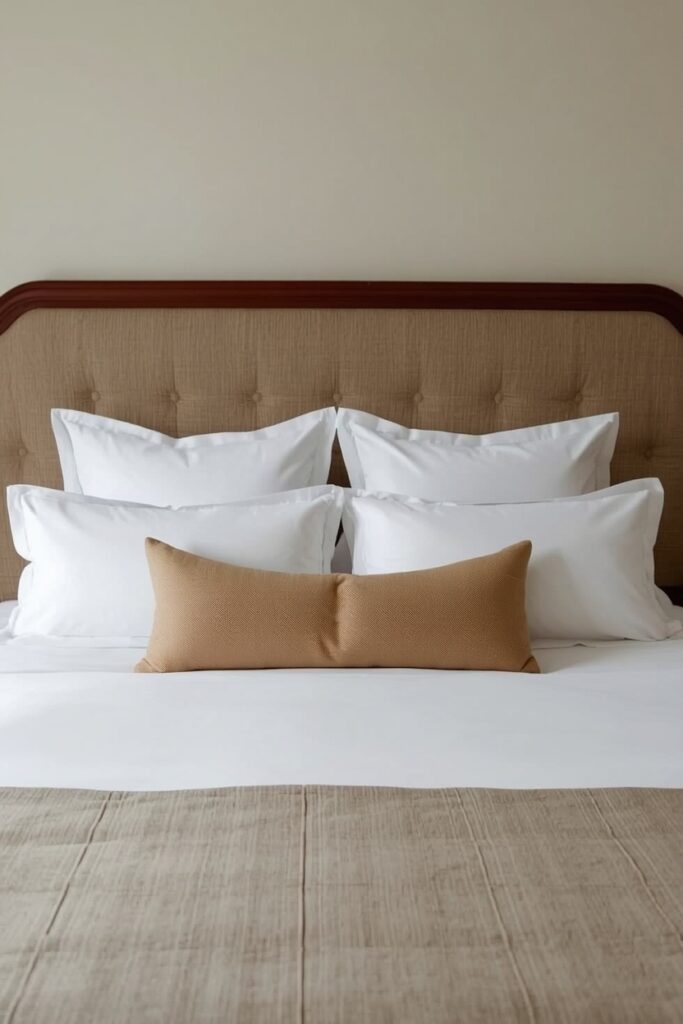
The classic hotel pillow arrangement runs, from back to front: two Euro shams (26-inch square) against the headboard, two standard or king sleeping pillows in front of those, and one or two smaller decorative lumbar pillows at the very front. That layered height progression, not the pillow count itself, is what makes the bed read as styled rather than just piled with pillows.
8. A Welcome Tray With a Water Carafe
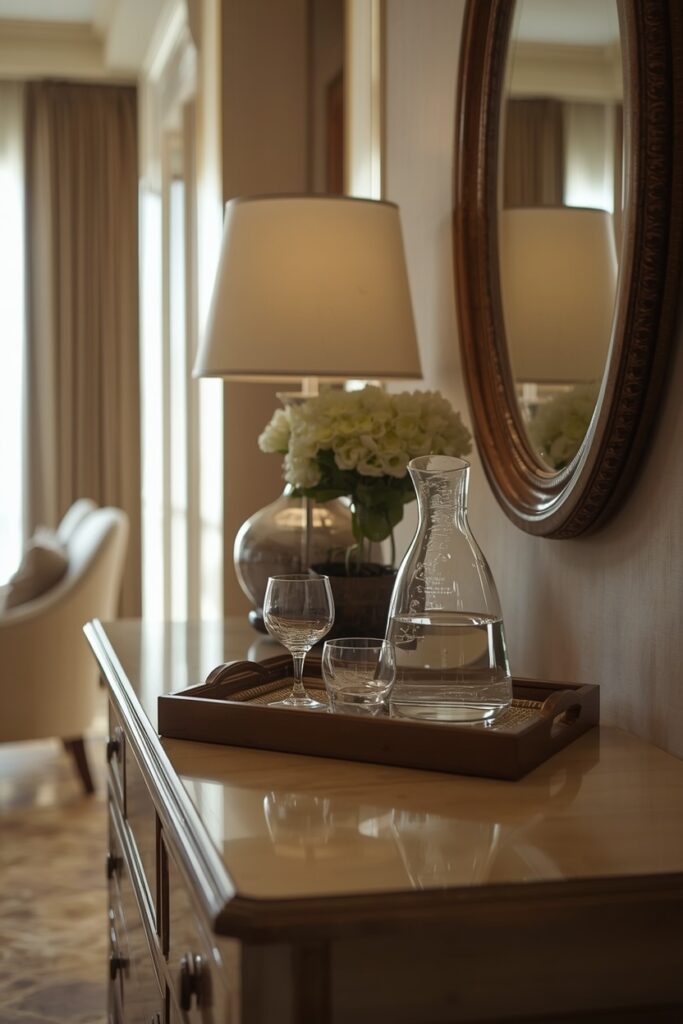
A small tray on the dresser or desk, holding a glass water carafe and two glasses, is a simple, recognizable hotel touch that costs very little to recreate. Refill the carafe fresh each evening rather than leaving stagnant water sitting out, since the whole point of the tray is that it always looks freshly set, not like an afterthought.
9. Individually Controlled Bedside Reading Lights
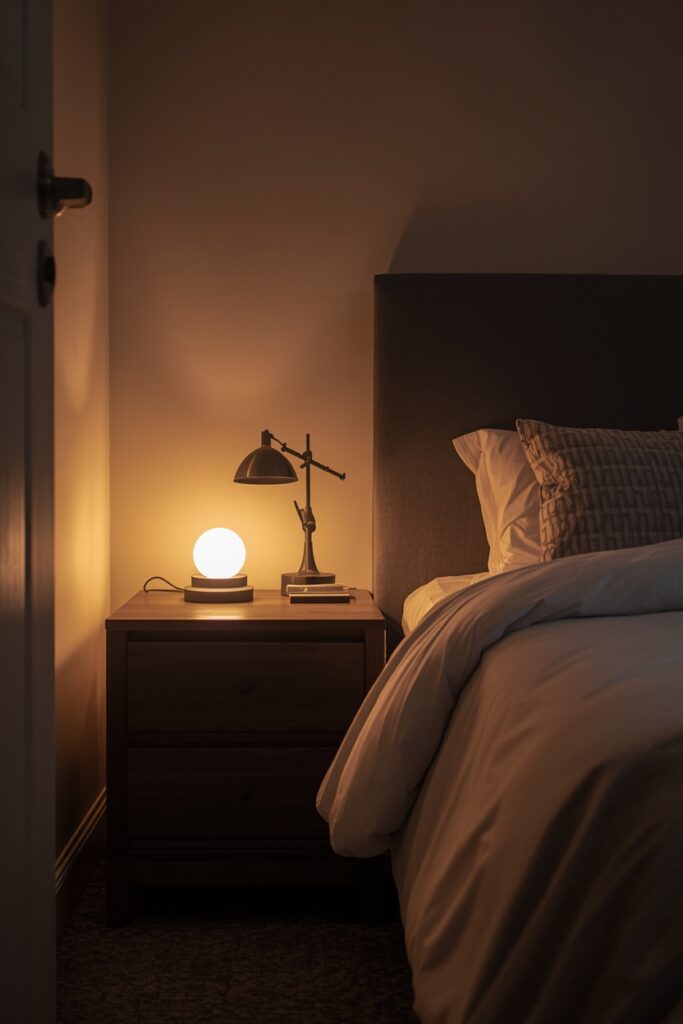
Two separate reading lamps, each with its own switch reachable from the bed, let one person read while the other sleeps without anyone needing to get up. Choose a lamp with a focused, directional shade rather than one that floods the whole room, which is the detail that actually makes a hotel reading light functional rather than just decorative.
10. A Small Seating Nook With One Comfortable Chair
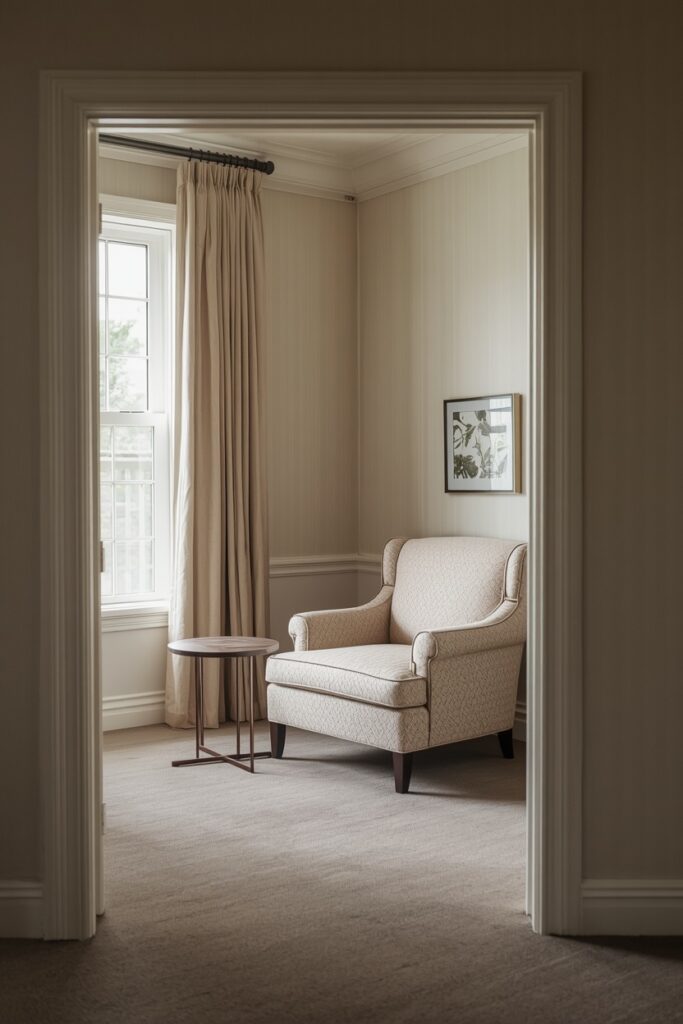
If the room has the space, a single well-chosen armchair near the window, with a small side table, gives the suite a spot to sit that isn’t the bed — a genuine hotel suite touch that most standard hotel rooms skip but true suites always include. It doesn’t need to be large; one chair and a place to set down a coffee is enough to change how the room functions.
11. A Signature Scent, Diffused Consistently
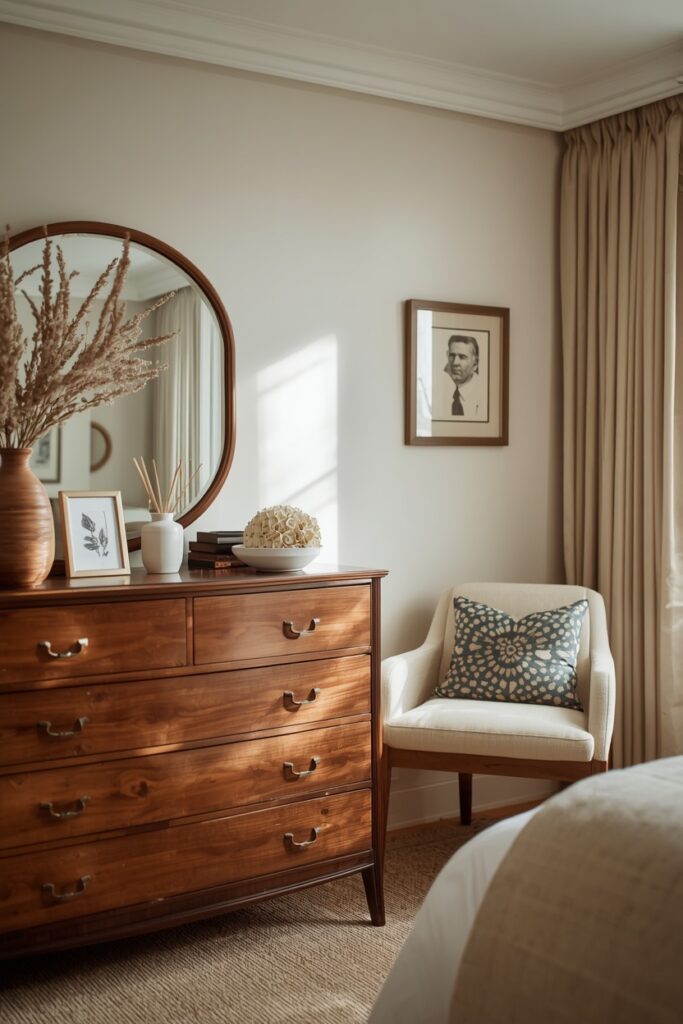
Luxury hotels are known for a specific, consistent scent that becomes part of the brand experience, piped in low and steady rather than through anything overpowering. A quality reed diffuser or a plug-in on a timer, using one scent consistently rather than switching between several, gets close to that same effect in a home bedroom.
12. Style the Closet Like a Hotel Wardrobe
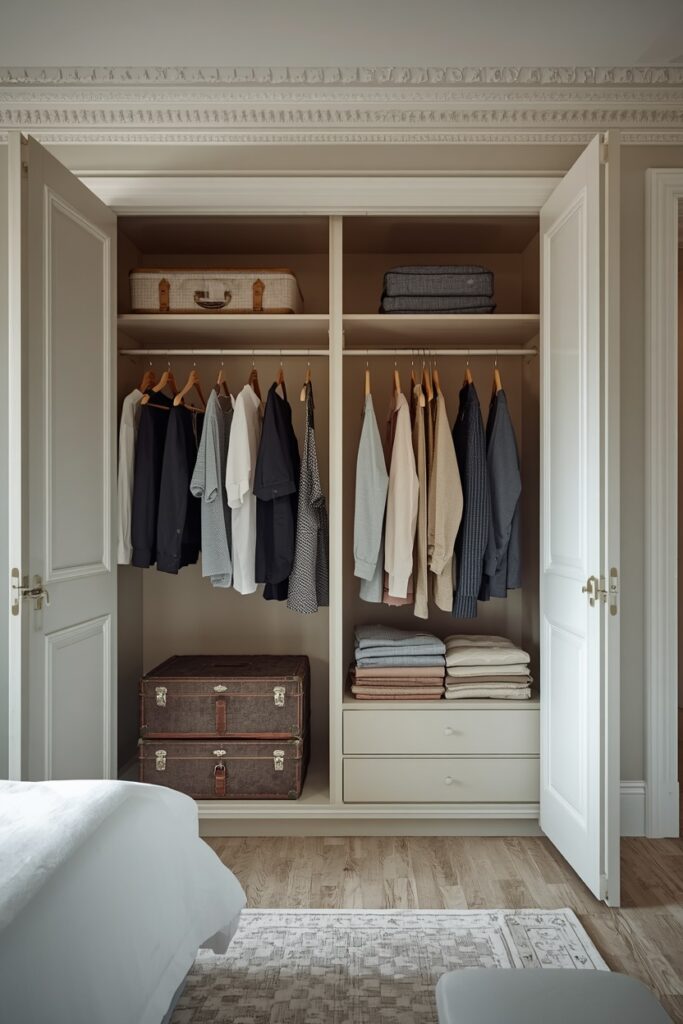
An open or glass-front wardrobe with matching wooden hangers, all facing the same direction, and a small luggage rack folded against the wall brings the same considered feeling to the closet that the bed gets. It’s one of the more overlooked luxury hotel bedroom suite interior design ideas, since most people never think to extend the styling past the bed and dresser.
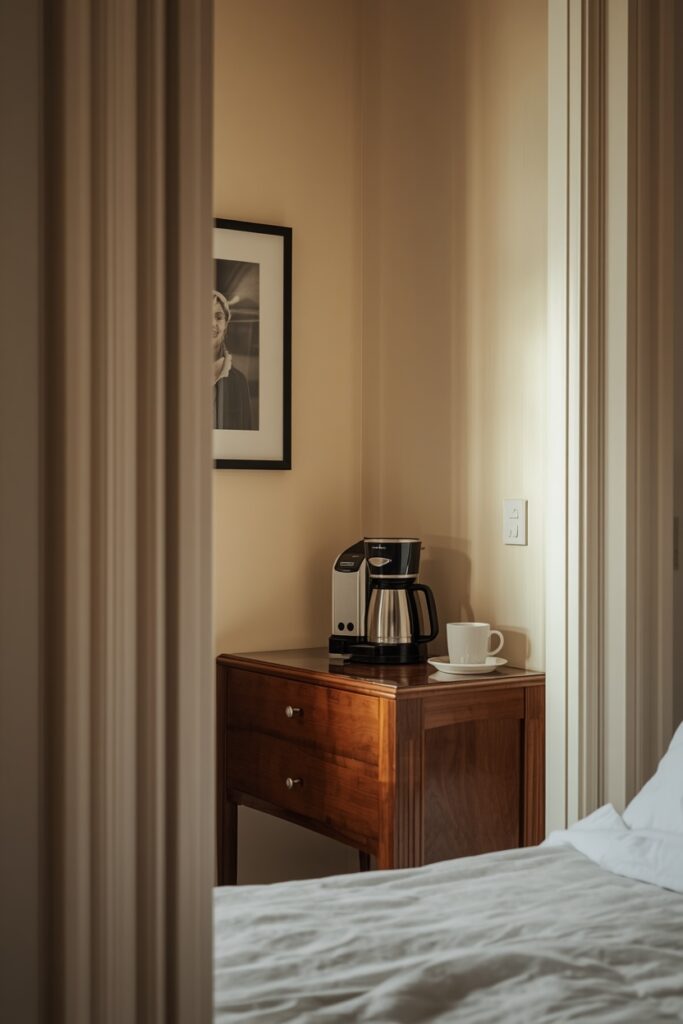
13. A Small Coffee or Minibar Nook
A compact console or shelf with a coffee maker, two mugs, and a few glasses gives the suite its own small self-sufficient corner, the same way a hotel minibar does. Keep it genuinely small and tidy — a crowded coffee station undoes the same restraint that makes the rest of the room feel like a suite rather than a kitchenette.
14. Keep Personal Clutter Entirely Out of Sight
The single biggest difference between a home bedroom and a hotel suite isn’t any object on this list — it’s the complete absence of daily clutter. Closed storage for chargers, laundry, and everyday items is what actually lets every other idea here read the way it’s meant to. A hotel room never looks styled around clutter; it looks styled because there isn’t any visible.
Where I’d Start If I Only Did Three Things
If I only had a weekend, I’d fix the bed first — the pillow stack from idea seven and genuinely crisp white bedding from idea one do more to shift the room’s whole feeling than any furniture change. Second, I’d add the layered curtain system from idea three, since blackout-quality sleep is as much a part of the hotel feeling as anything visual. Third, I’d clear every surface of daily clutter, because idea fourteen is really the foundation every other idea on this list depends on to actually read as a suite.
FAQ
Do I need to buy all-new furniture to get a hotel bedroom suite look?
No — symmetry, bedding, and decluttering account for most of the visual shift, and none of those require new furniture. Matching what’s already on each nightstand and clearing visible clutter often does more than any single new piece would.
What thread count actually matters for hotel-quality sheets?
Somewhere in the 300 to 400 range for cotton sateen gets you the soft, slightly lustrous feel most hotels use. Above that range, the difference becomes harder to feel, and very high advertised thread counts sometimes use thread-counting methods that inflate the number without a real quality difference.
How many pillows does a hotel-style bed actually need?
Four to six total works for most beds: two Euro shams against the headboard, two sleeping pillows in front, and one or two smaller decorative pillows at the front. More than that starts to look excessive rather than styled, and fewer loses the layered height that makes the stack read as intentional.
Is a two-layer curtain system worth it if I already have blackout curtains?
If the blackout curtains are the only window treatment, adding a sheer layer in front changes the room significantly during the day — full blackout curtains left permanently closed can feel more like a hotel hallway than a suite. The sheer layer lets the room feel bright and open by day while the blackout layer stays ready for actual sleep.
Conclusion
A luxury hotel bedroom suite feels the way it does because of specific, repeatable techniques — symmetry, layered bedding, and a level of restraint most home bedrooms never quite commit to — not because of an unreachable budget. Choose four or five of these fourteen luxury hotel bedroom suite interior design ideas that fit the room you have, clear the visible clutter, and the space will read as genuinely considered rather than simply furnished.