
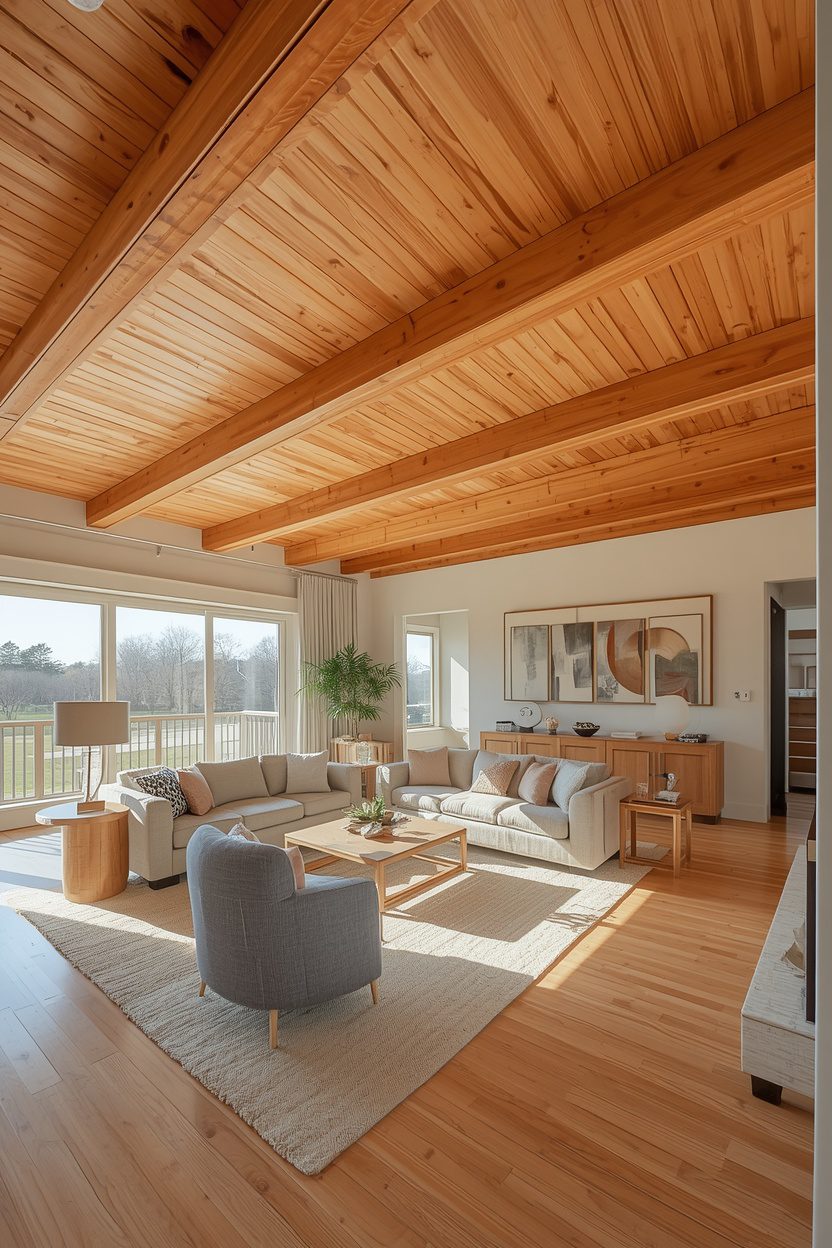
Wood beams paired with a plank ceiling is one of the most enduring, universally cozy design combinations available, since the beams add architectural structure while the planks fill the space between with warm, textured material. Whether the beams are genuinely structural or a lightweight faux version, the pairing consistently delivers a room that feels grounded and inviting.
These fifteen ideas cover the specific beam styles, layouts, and finishes that build on this classic pairing. Before the full list, here are five quick highlights worth keeping in mind as you plan a beam-and-plank ceiling.
| 5 Quick Highlights for a Cozy Beam and Plank Ceiling |
| 1. Faux beams paired with a real plank ceiling deliver most of the visual warmth of structural beams at a fraction of the cost and complexity. |
| 2. Keep beam and plank tones consistent with each other, or use intentional contrast (like whitewashed beams against darker planks) rather than an accidental mismatch. |
| 3. A single statement beam or a half-ceiling treatment is a lower-commitment way to introduce this pairing before a full-room installation. |
| 4. Integrated lighting, whether rope lighting along the beams or fixtures between them, extends the cozy feeling into the evening hours. |
| 5. Reclaimed material sourced together for both beams and planks creates the most authentically cohesive, weathered result. |
1. Exposed Structural Beams With Plank Infill
Genuine structural beams left exposed, with wood plank installed in the sections between them, creates the most authentic version of this classic pairing, since the beams are functionally load-bearing rather than purely decorative. This requires the home’s existing structure to accommodate exposed beams. It’s the gold standard for anyone renovating a home with true timber-frame construction.
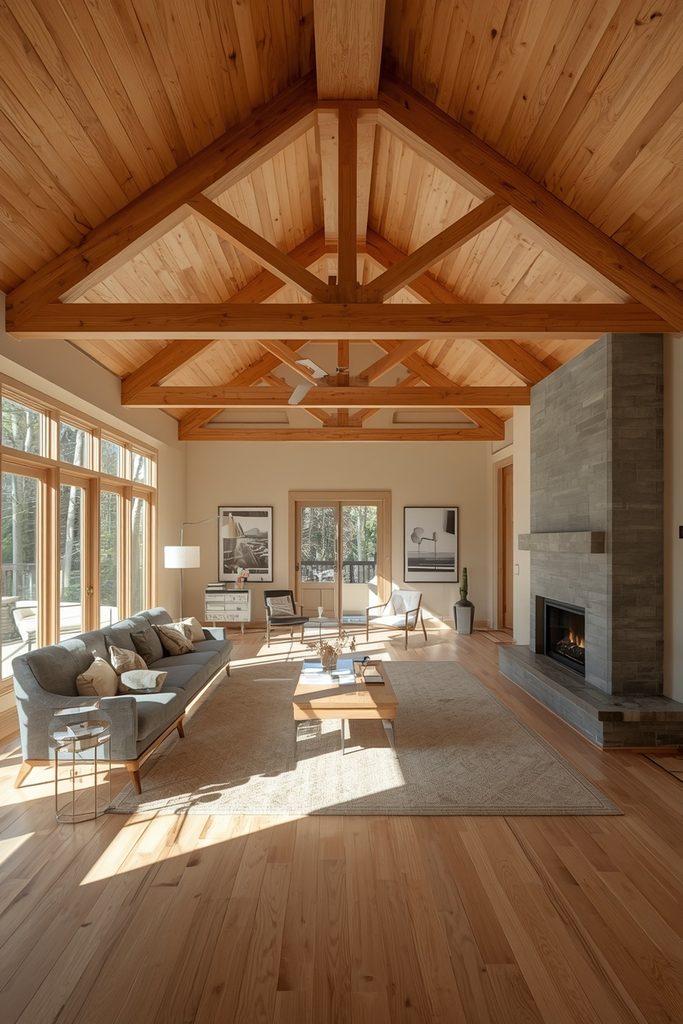
2. Faux Beams Paired With Real Plank Ceiling
Lightweight faux beams, made from polyurethane or hollow wood box construction, achieve the same visual warmth as structural beams at a fraction of the cost and installation complexity, paired with a genuine wood plank ceiling for real texture overhead. Choose a faux beam finish that closely matches the plank tone for a cohesive look. This combination makes the beam-and-plank aesthetic accessible to almost any home.
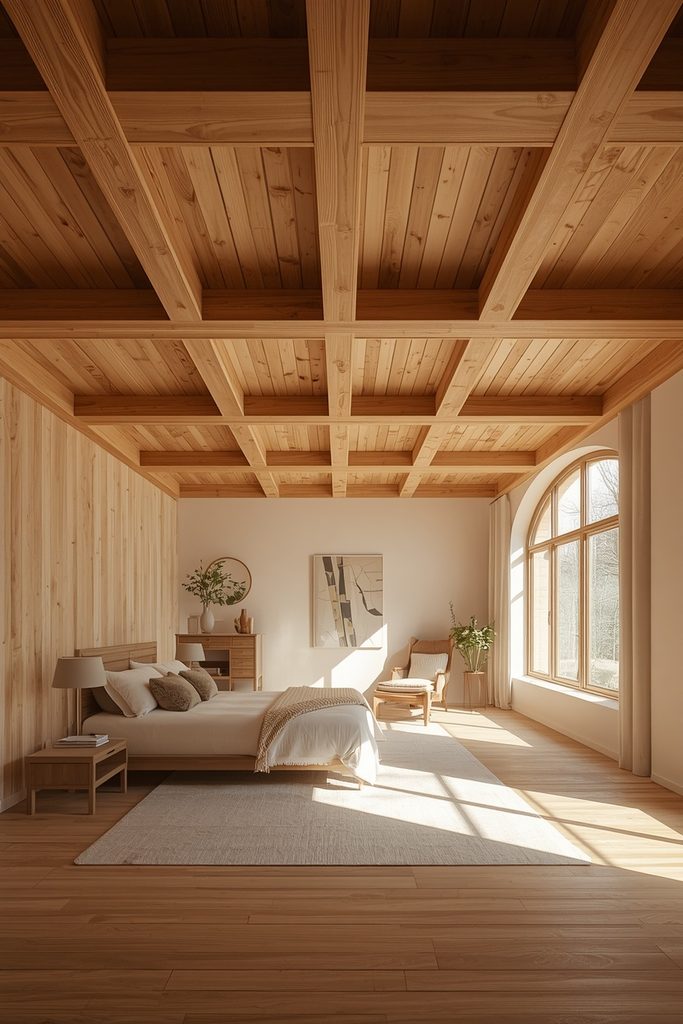
3. Cross Beams in a Grid Pattern Above the Bed
Beams arranged in a simple crossing grid pattern above the bed, with plank ceiling filling the sections between, bring architectural structure and coziness to the bedroom’s most important sightline. Keep the grid spacing proportional to the bed size below it. This detail turns an ordinary bedroom ceiling into a genuine design feature.
4. A Single Statement Beam Running the Room’s Length
One substantial beam running the full length of the room, rather than a full grid, brings a strong architectural line without the cost or complexity of multiple beams. Center it along the room’s main axis for the most balanced effect. This is a lower-commitment way to bring beam character into a plank ceiling treatment.
5. Whitewashed Beams With a Contrasting Dark Plank Ceiling
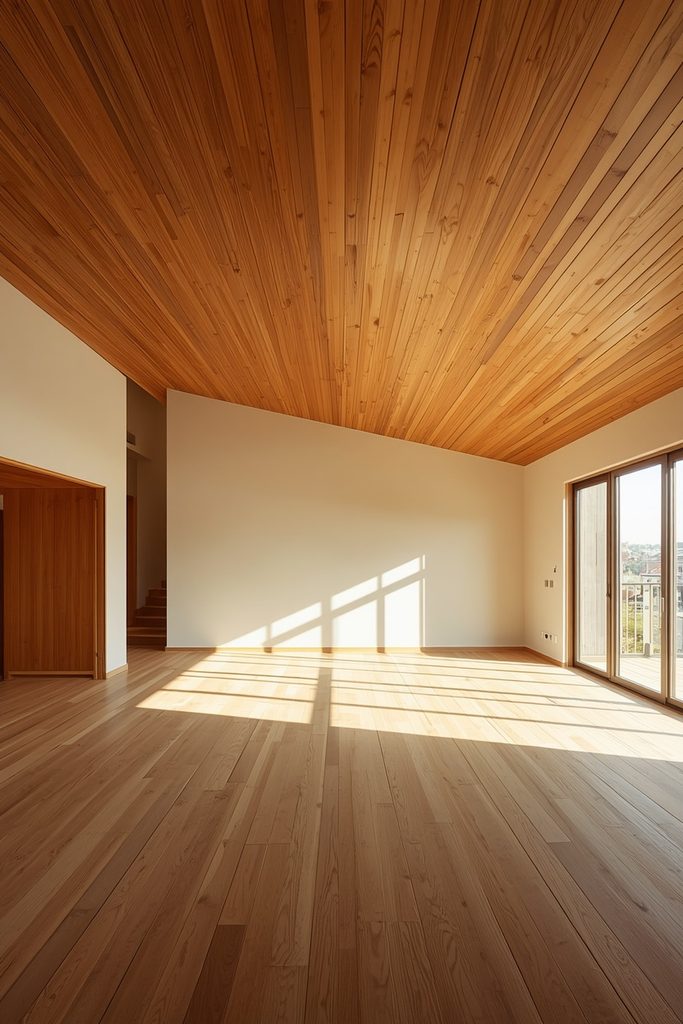
Whitewashing the beams while leaving the surrounding plank ceiling a darker, richer tone creates striking visual contrast and depth beyond what a matching beam-and-plank treatment achieves. This works especially well in a coastal or modern farmhouse aesthetic. Test the contrast on a small section first to confirm the balance feels intentional rather than mismatched.
6. Reclaimed Barn Beams With Matching Reclaimed Plank Ceiling
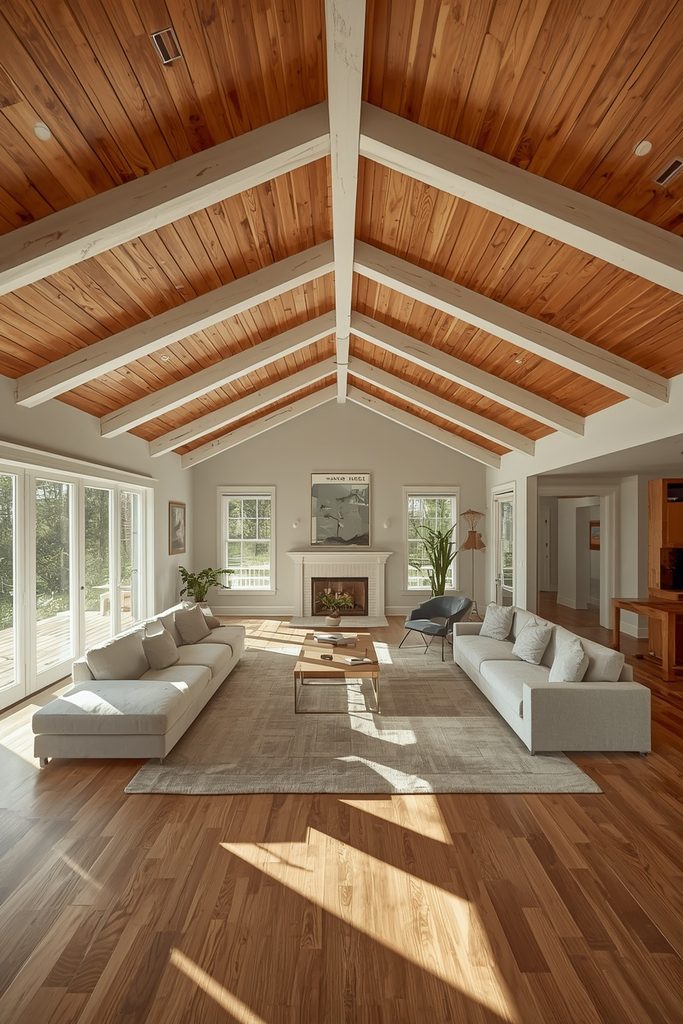
Sourcing both the beams and the plank material from the same reclaimed barn wood supply creates a fully cohesive, authentically weathered look with consistent grain, tone, and history throughout. This requires sourcing enough matching material for both elements at once. It’s one of the most genuinely rustic, cozy combinations achievable with this technique.
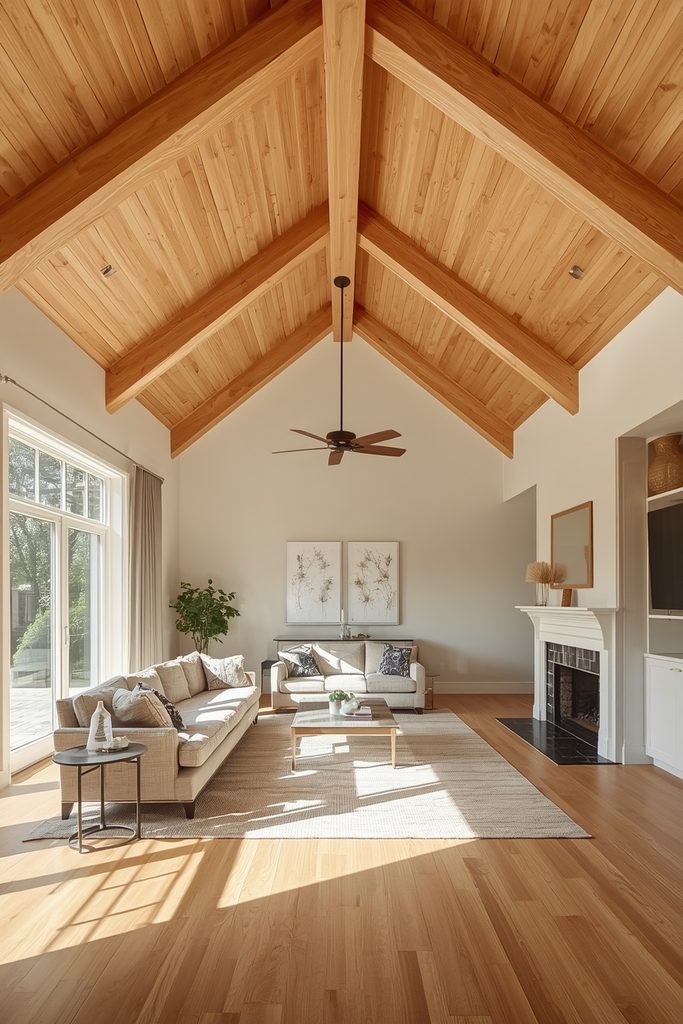
7. A Vaulted Ceiling With Beams Following the Roof Pitch
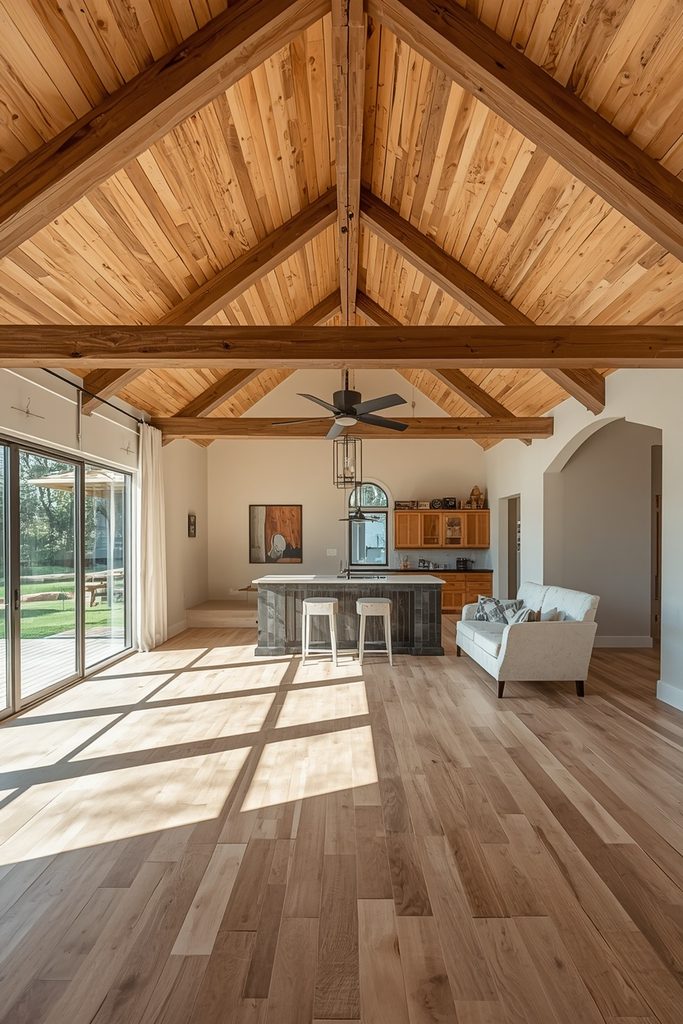
In a room with a vaulted or sloped ceiling, running beams along the natural angle of the roofline, with plank filling the spaces between, emphasizes the architecture in the most dramatic way this pairing offers. This requires precise angled cutting and fitting at the ridge and eaves. The result is one of the coziest, most visually striking ceiling treatments available.
8. Box Beams Around a Recessed Plank Ceiling Panel
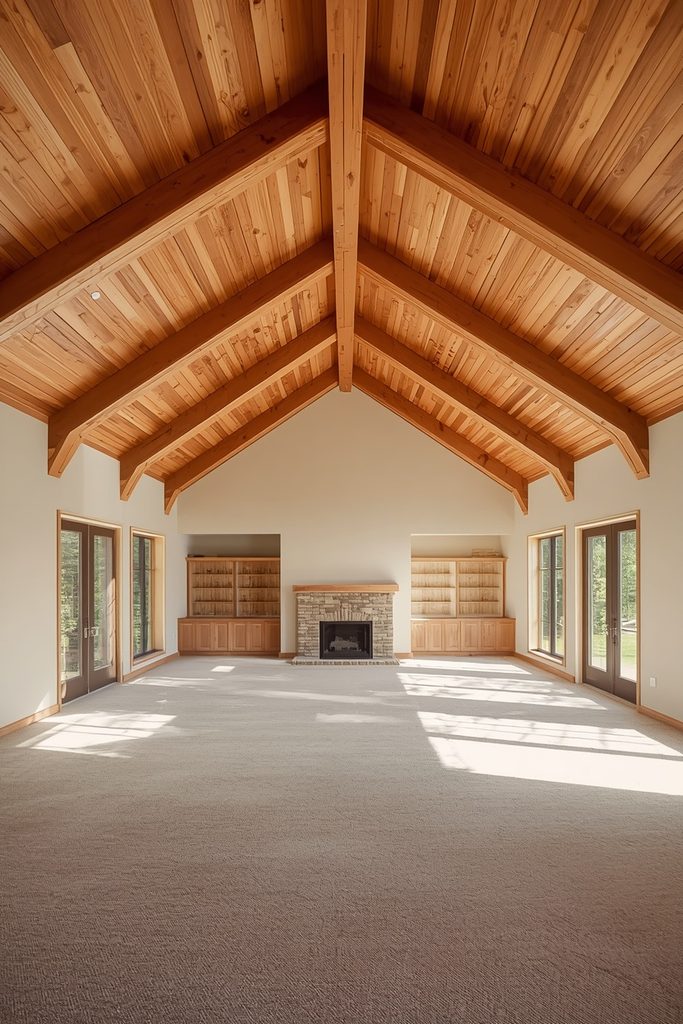
Hollow box beams framing a recessed, defined section of plank ceiling, rather than covering the full room, creates a considered focal point above a dining table or seating area. Size the recessed panel proportionally to the furniture below it. This contained application is more approachable than a full-room beam treatment.
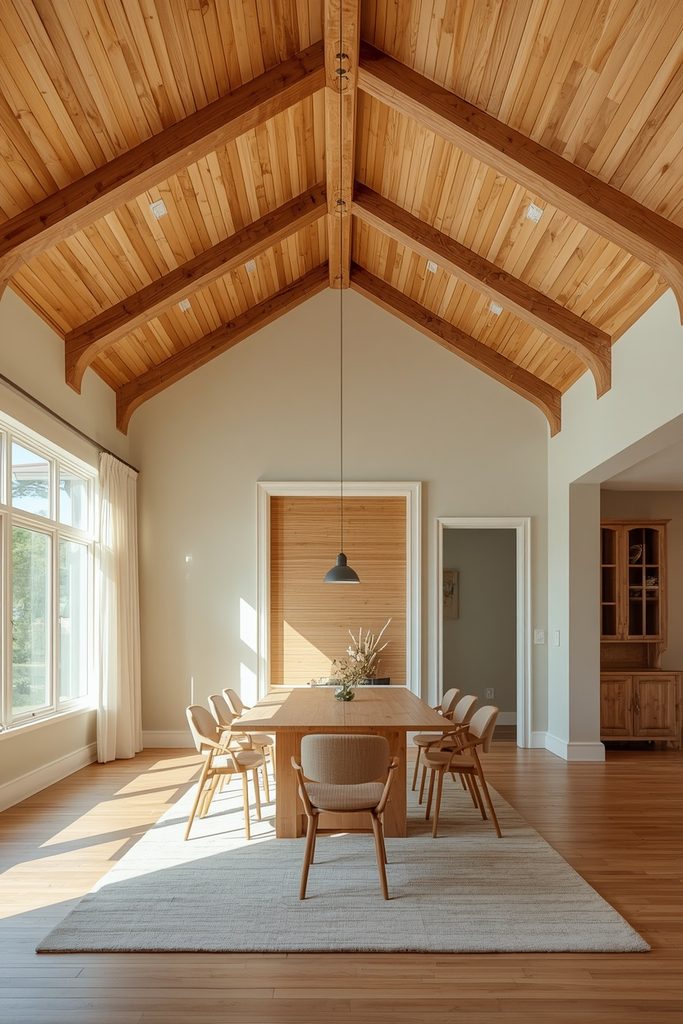
9. Beams and Planks in a Kitchen Above an Island
Wood beams paired with plank ceiling coverage above a kitchen island bring warmth to a room typically dominated by hard, cool surfaces like stone and stainless steel. Integrate pendant lighting between the beams for a fully considered, functional look. This pairing is a favorite in farmhouse and transitional kitchen design specifically for its cozy contrast against sleek cabinetry.
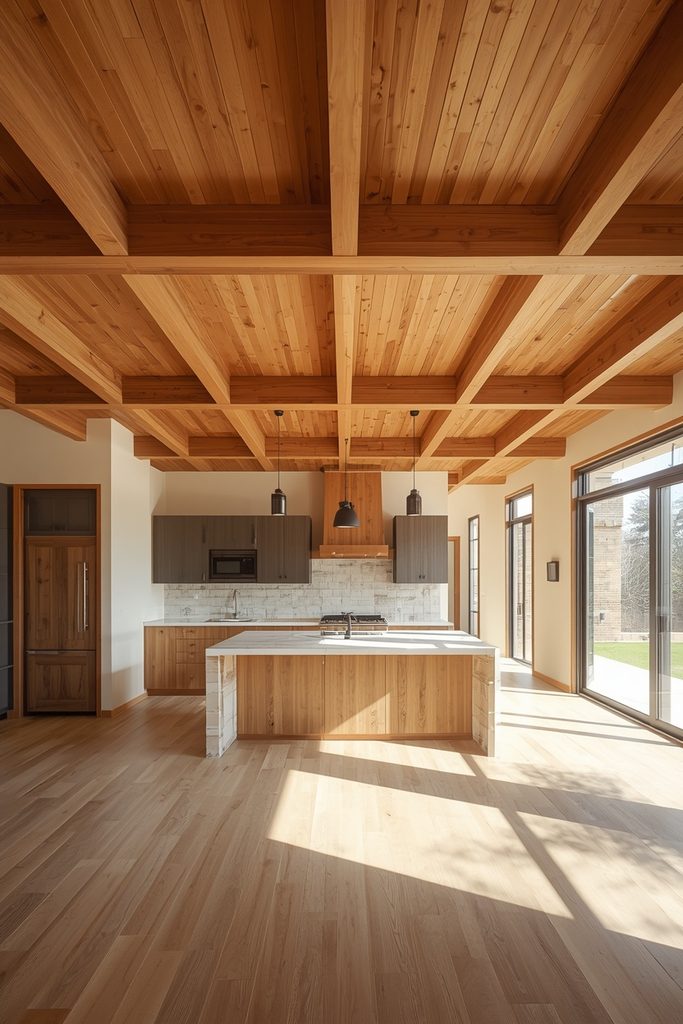
10. Beams Painted a Deep Contrasting Color
Painting the beams a deep charcoal, navy, or forest green, while leaving the plank ceiling in a natural or lightly finished wood tone, brings a bold, current design choice to the classic beam-and-plank pairing. Choose a paint finish with a bit of sheen to catch light along the beam’s edges. This is a more design-forward variation on a traditionally neutral treatment.
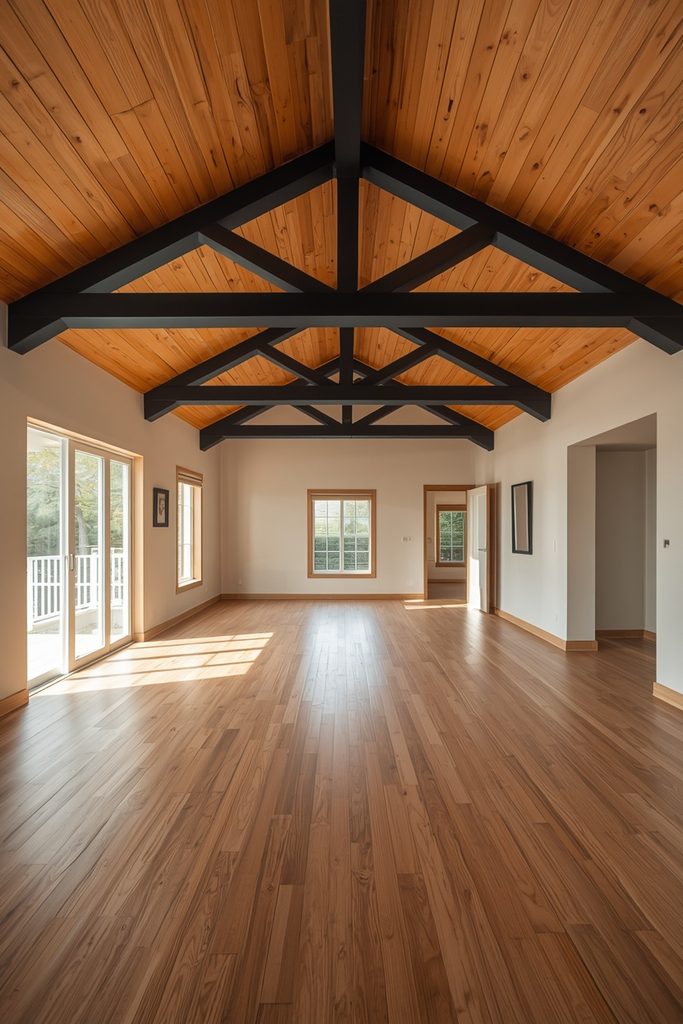
11. A Cozy Reading Nook Framed by a Single Beam
A single beam positioned above a built-in or freestanding reading nook, with a small section of plank ceiling beneath it, frames that cozy corner as a considered, intentional feature of the room. Pair it with warm lighting and soft cushions for the coziest effect. This smaller-scale application is a good entry point for anyone hesitant to commit to a full-room beam treatment.
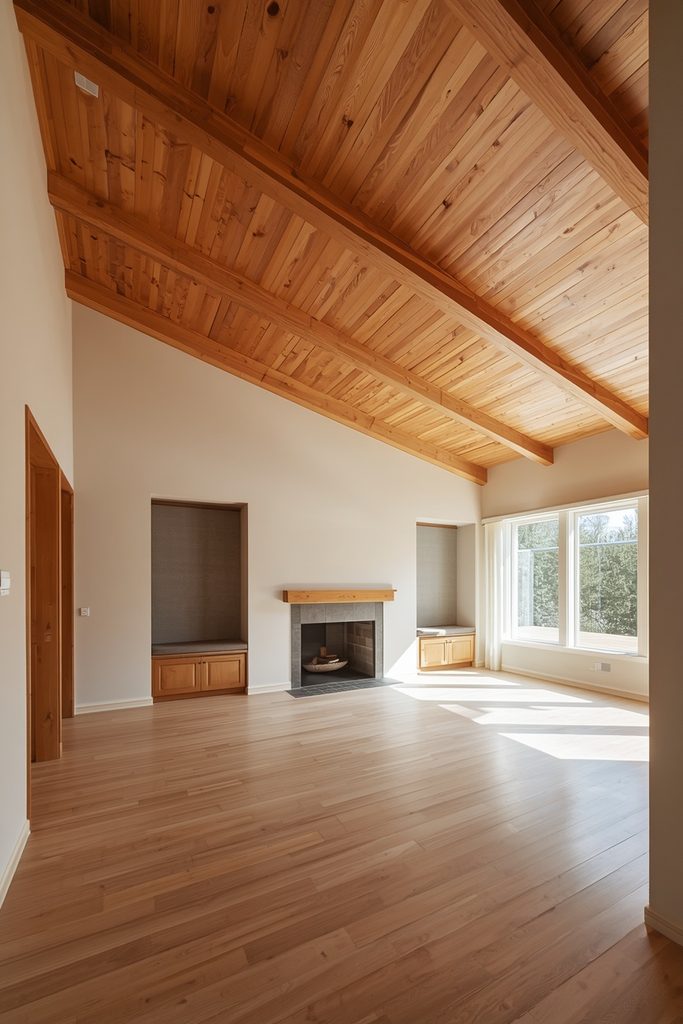
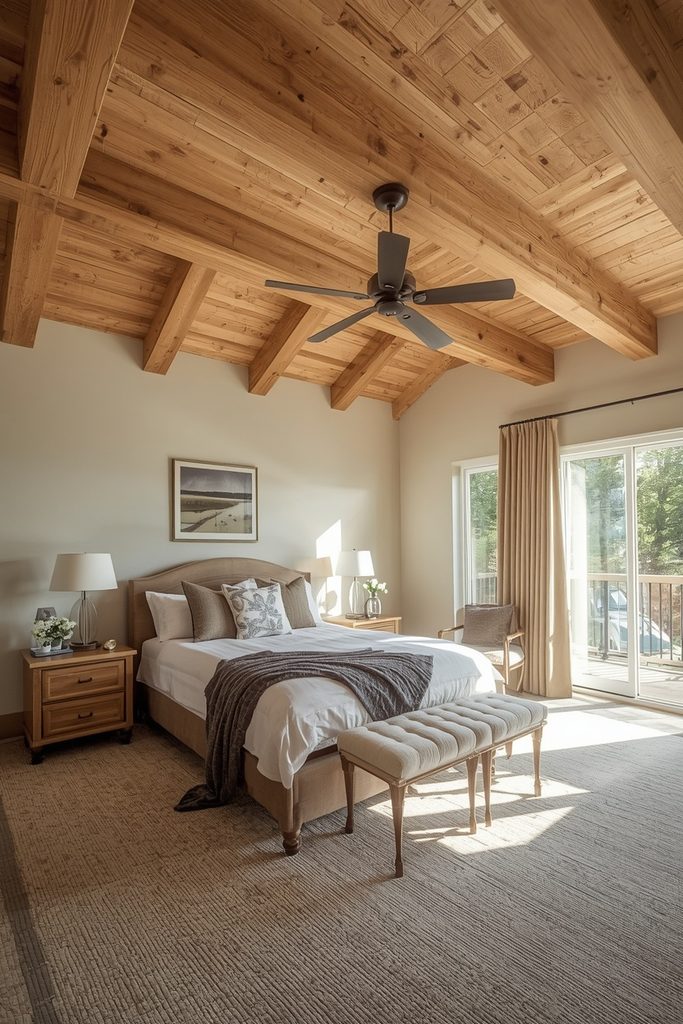
12. Beams and Plank Ceiling in a Primary Bedroom Retreat
A full beam-and-plank ceiling treatment above the bed transforms an ordinary primary bedroom into a genuine cabin-like retreat, especially paired with warm bedding and soft, layered lighting. Keep the beam and plank tones consistent with any existing wood furniture in the room. This combination is increasingly popular in primary suite renovations for its cozy, escape-like quality.
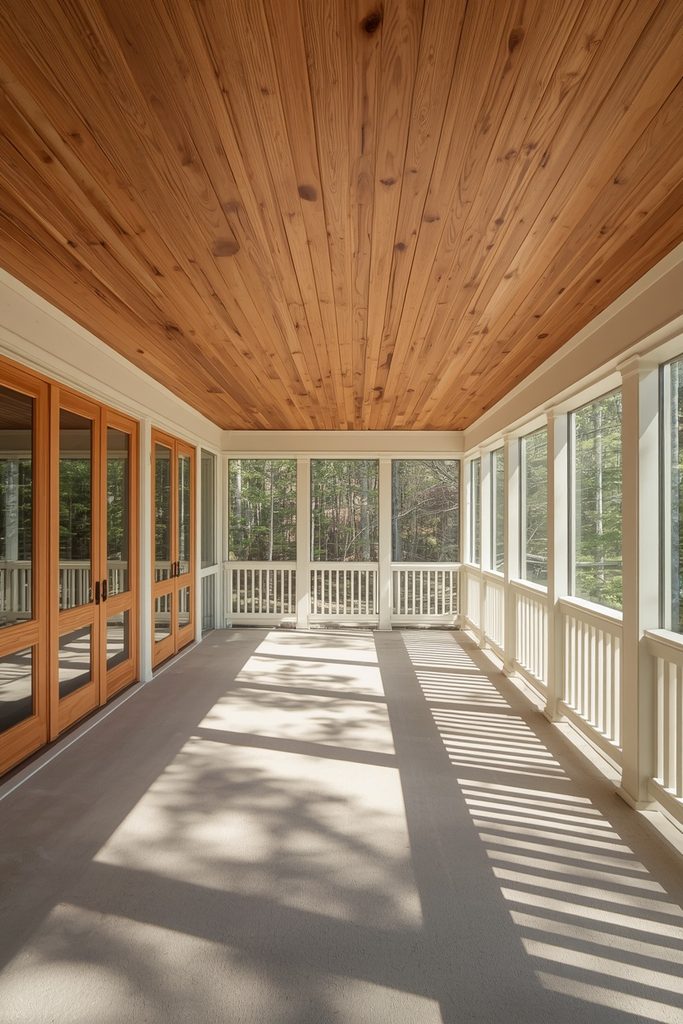
13. A Rustic Beam and Plank Combination in a Screened Porch
Weather-treated beams paired with plank ceiling coverage on a screened porch extend the same cozy, structured warmth from indoor rooms out into a covered outdoor living space. Choose a wood species and sealant rated specifically for outdoor exposure. This detail treats an outdoor room with the same design intention as an interior space.
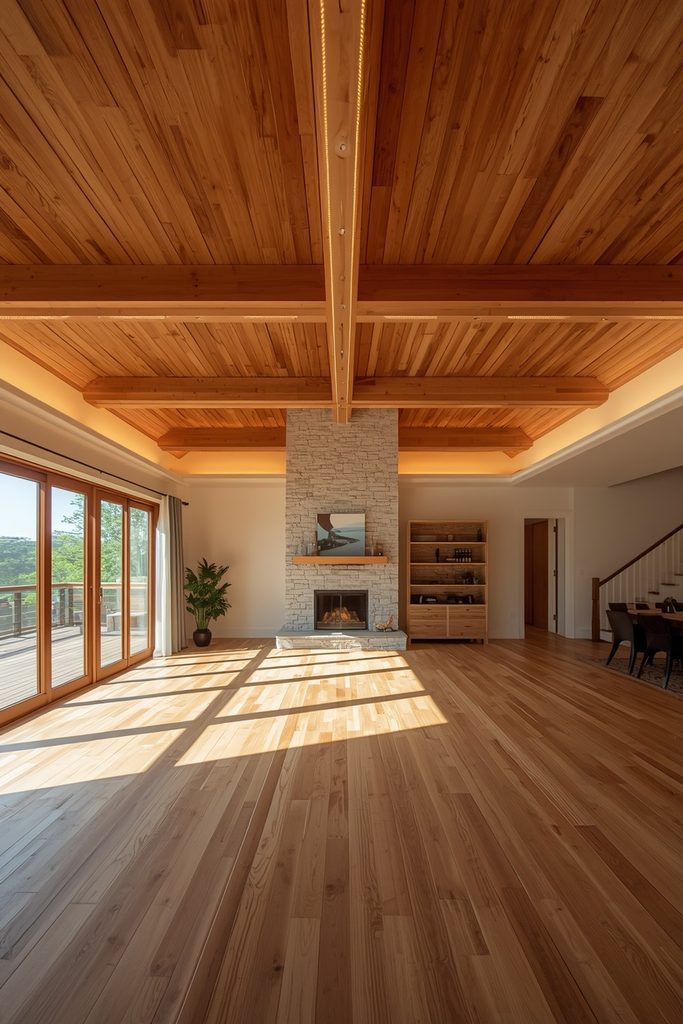
14. Beams With Integrated Rope Lighting for Ambient Glow
Running warm rope or LED strip lighting along the underside of exposed beams adds a soft, ambient glow that highlights the beam structure itself after dark. Choose a warm color temperature and a dimmable option for the most flexible ambiance. This detail brings the coziness of the beam-and-plank pairing into the evening hours, not just during the day.
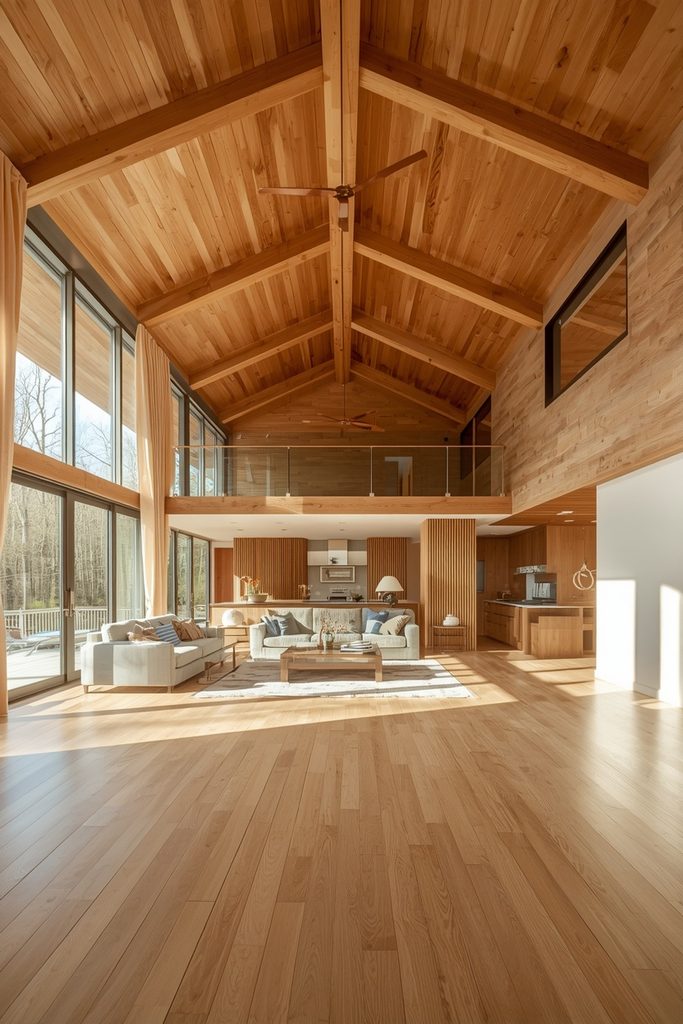
15. A Small Half-Ceiling Beam and Plank Accent
Limiting the beam-and-plank treatment to just half the ceiling, perhaps above a seating area while leaving the rest of the room’s ceiling plain, creates a defined cozy zone within a larger open space. This works particularly well in an open-plan living area where a full-room treatment would feel too heavy. It’s a lower-commitment way to introduce this classic pairing into a modern, open floor plan.
Where I’d Start If I Only Did Three Things
If I only had one room to start with, I’d choose faux beams paired with a real plank ceiling from idea two, since it delivers most of the visual warmth of the full structural treatment at a considerably more accessible cost. Second, I’d add integrated rope lighting along the beams from idea fourteen, because it extends the cozy feeling into the evening rather than only during daylight hours. Third, if the budget allows for just one room, I’d choose the primary bedroom application from idea twelve, since it brings a genuinely retreat-like quality to the space used most intimately every day.
FAQ
Are faux beams as convincing as real structural beams?
Quality faux beams, especially those made from polyurethane with a realistic wood-grain texture, are genuinely difficult to distinguish from real wood once installed and finished, particularly from normal viewing distance. The main difference is weight and structural function, not visual appearance, making faux beams a practical choice for most residential applications.
Do I need high ceilings for a beam and plank treatment?
At least eight feet of ceiling height is generally recommended, since both the beams and the plank material add some depth that can make a lower ceiling feel cramped. Rooms with nine feet or more handle the more dramatic applications, like a full vaulted treatment, considerably better.
Should the beams and planks match in tone, or is contrast better?
Both approaches work well, and the choice comes down to personal preference and the room’s overall style. A matching tone creates a more traditional, cohesive look, while an intentional contrast, like whitewashed beams against darker planks, brings a more current, design-forward result.
Is a beam and plank ceiling a good DIY project, or does it need a professional?
Faux beams paired with a straightforward plank installation are genuinely achievable for a confident DIYer, especially when limited to a single accent section rather than a full room. Genuine structural beam work, or a complex vaulted ceiling application, is best left to a professional given the structural and safety considerations involved.
Conclusion
A beam and plank ceiling combination brings both architectural structure and warm, textured material together into one of the coziest ceiling treatments available, whether achieved through genuine timber framing or an accessible faux beam approach. Choose the style, tone, and room application that fits your space and budget from this list, and the ceiling will become one of the most inviting features in the entire home.