
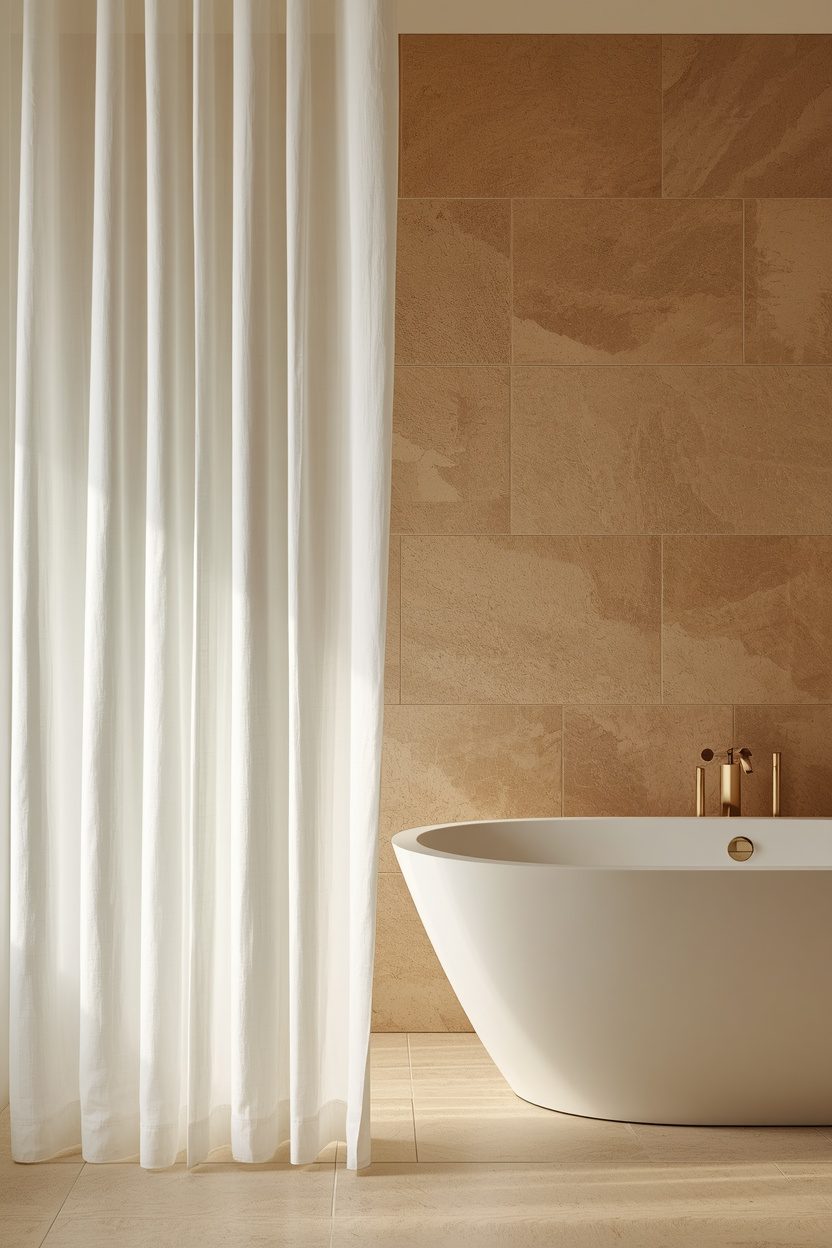
A minimalist bathroom lives or dies on the details you choose to keep visible, and curtains are one of the few soft elements in a room dominated by hard surfaces. The right minimalist bathroom curtain ideas replace visual clutter with clean vertical lines, filtered light, and texture that softens tile and stone without competing with them. Whether you need a shower curtain that does not scream for attention, a window treatment that preserves privacy while letting in daylight, or a fabric partition that defines a zone in an open-plan bath, the curtain has to earn its place by looking deliberate rather than default.
I have styled bathrooms where the curtain was the single detail that made the difference between a room that read as complete and one that still looked like a construction site with fixtures installed. The options below cover shower curtains, window panels, and hybrid solutions — each chosen for clean lines, honest materials, and a palette that stays within the minimalist lane without making the room look sterile.
1. Sheer White Linen Panel from Ceiling to Floor
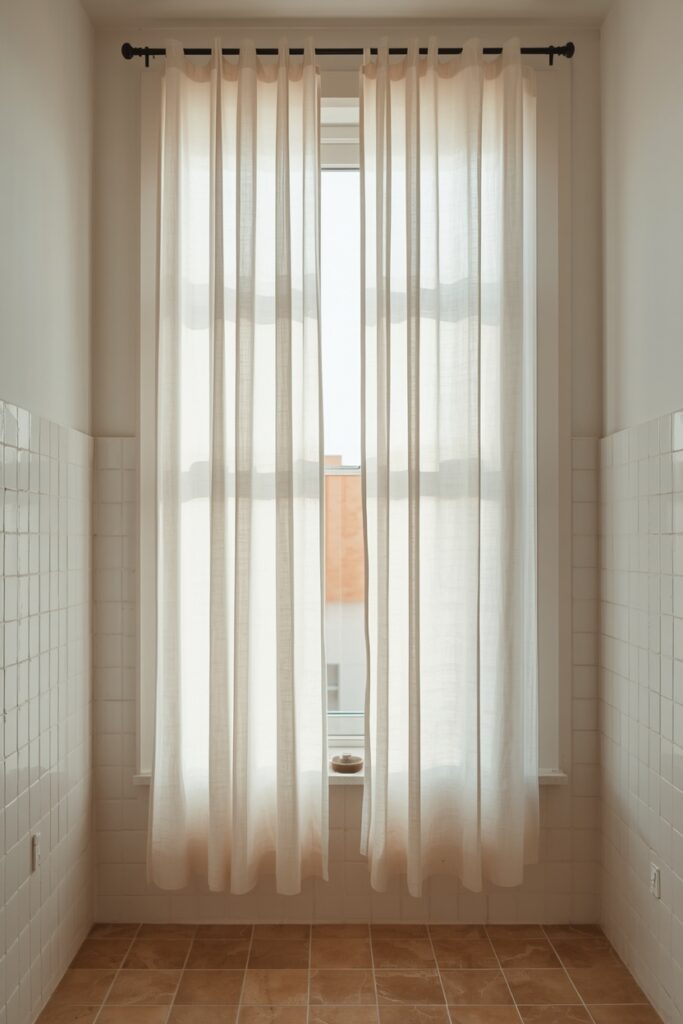
Hanging a single sheer linen panel from the ceiling line all the way to the floor transforms a bathroom window into a soft light filter rather than a hard architectural edge. The linen diffuses daylight into an even glow that fills the room without casting harsh shadows across the tile. Mount a slim matte-white ceiling track or a tension rod at the very top of the wall so the fabric drops in one unbroken vertical line — that continuous drop is what reads as minimal rather than fussy. Choose a fabric weight around 4 to 5 ounces per square yard so it hangs straight without billowing wildly when the exhaust fan runs.
Linen naturally resists mildew better than cotton, but in a high-humidity bathroom you should still wash it monthly on a gentle cycle to prevent any buildup at the hem.
2. Japanese Noren-Style Half Curtain for a Doorway
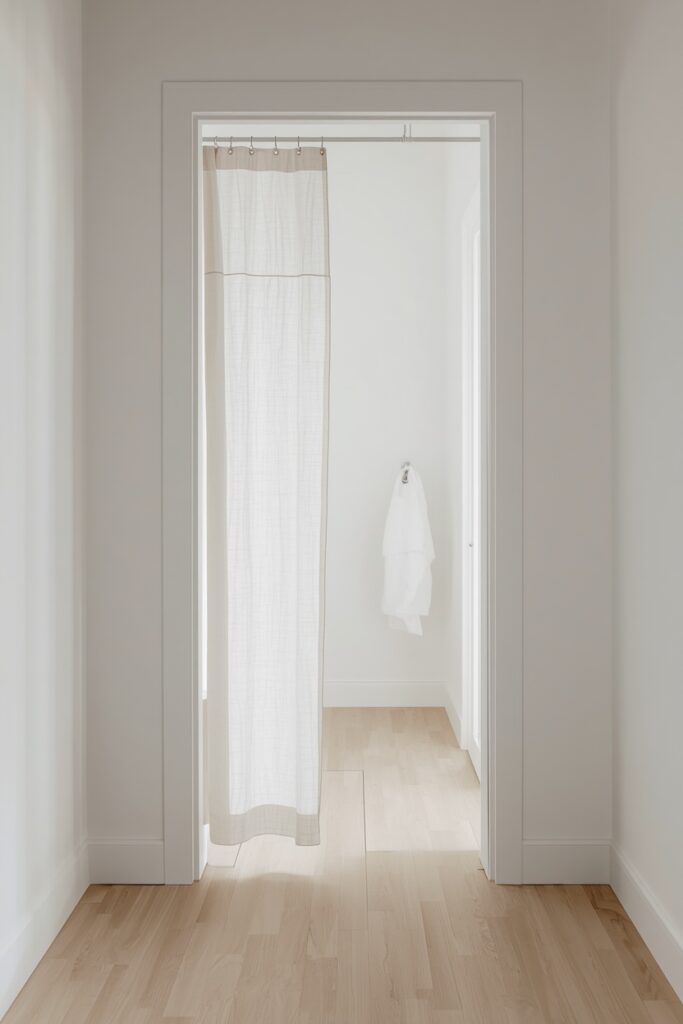
A noren — the split fabric panel traditionally hung in Japanese doorways — performs perfectly as a minimalist room divider between the bathroom and a connected closet or bedroom. The curtain typically hangs from a slim tension rod and drops to waist or mid-thigh height, providing a visual boundary without blocking airflow or sightlines entirely. Choose a single-color linen or cotton noren in white, oatmeal, or pale grey to stay within a minimal palette. The split in the center allows you to pass through without lifting the fabric, which keeps the daily interaction effortless. This is one of those minimalist bathroom curtain ideas that brings architectural quality to a space without any permanent modification — you can remove the tension rod and the noren in under a minute when you move.
3. Waffle-Weave Bathroom Curtain in Off-White Cotton
A waffle-weave cotton shower curtain adds subtle surface texture without introducing any pattern, color, or decorative trim that competes with the rest of a minimalist bathroom. The waffle grid catches light at different angles depending on the time of day, giving the curtain a quiet dimensionality that flat fabric lacks.
Choose a medium-weight cotton waffle in off-white or natural rather than bright white so it blends with warm-toned tile and wood accents without looking clinical. Pair it with a separate waterproof liner hung on the inside of the rod — the cotton outer panel handles the aesthetics while the liner handles the moisture.

Machine wash the cotton panel every two to three weeks in warm water with a cup of white vinegar to keep it fresh and prevent yellowing at the bottom edge.
4. Linen-Blend Curtain with Concealed Tab Tops
Visible curtain rings and grommets add hardware clutter to the top of a curtain that minimalist bathrooms do better without. A concealed-tab or back-tab curtain hides the hanging mechanism behind a folded header, so the fabric appears to float directly against the rod in a clean unbroken line. Choose a linen-cotton blend — roughly 55 percent linen and 45 percent cotton — for a fabric that has linen’s natural texture and drape but resists wrinkling slightly better than pure linen does in humid air.
A neutral tone like warm grey, sand, or pale oat keeps the panel from becoming a focal point while still softening the hard edges of the window or shower enclosure. Hem the bottom so it barely grazes the floor rather than pooling — puddles of fabric on a bathroom floor collect water and look the opposite of minimal.
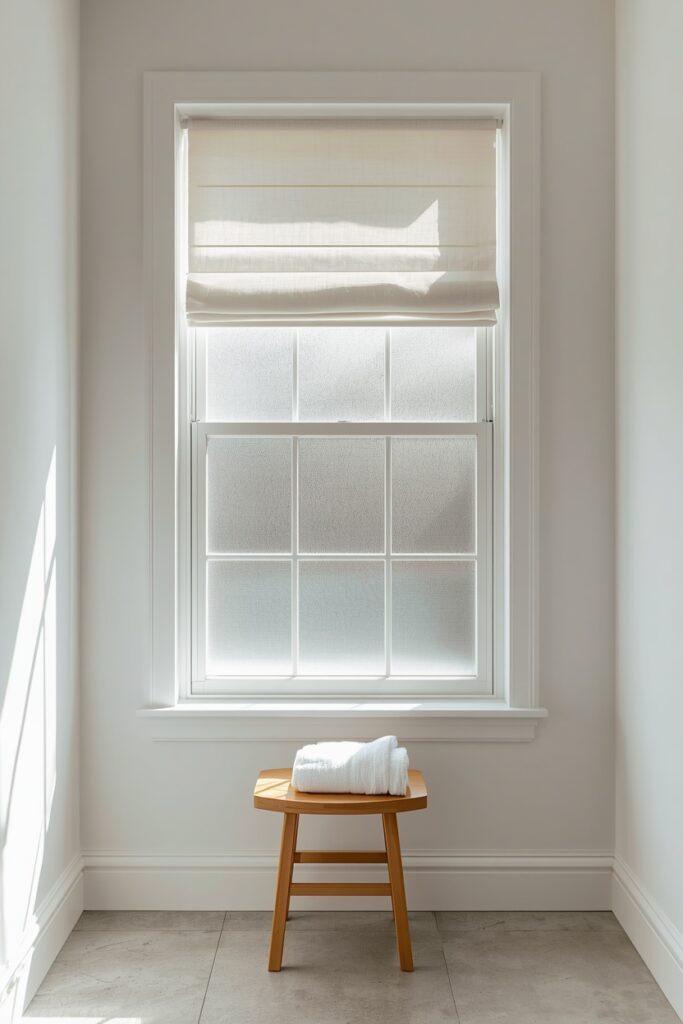
5. Frosted Window Film Paired with a Simple Roman Shade
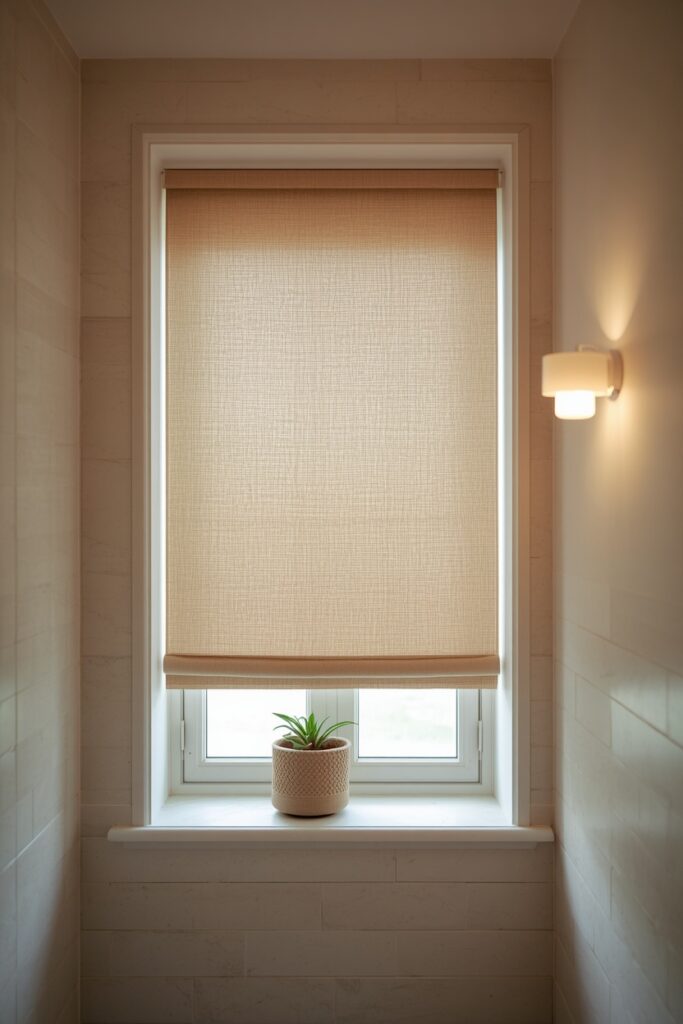
Frosted adhesive window film handles the privacy problem permanently while a simple Roman shade in matching white or off-white linen provides the option to block light completely when needed. This dual-layer approach means you never have to choose between privacy and daylight — the film diffuses incoming light throughout the day while the shade pulls down only for nighttime bathing or when the window faces a close neighbor. Apply the film to the lower two-thirds of the glass and leave the top third clear so overhead sunlight still enters at full strength. Choose a flat Roman shade rather than a hobbled or ballooned version — the flat fold stacks into a tight, clean block at the top of the window when raised, which is the profile that reads most minimal.
This combination is one of the most practical window solutions for bathrooms that face a sidewalk or a neighboring building.
6. Single Neutral Panel on a Slim Tension Rod
Sometimes the most minimal solution is the simplest one: a single fabric panel hung on a slim tension rod that fits inside the window frame with no visible brackets, screws, or mounting hardware. The rod sits under compression between the two side jambs and the curtain slides freely along it.
Choose a lightweight cotton voile or a sheer linen in a warm neutral so the panel softens the window opening without darkening the room. Keep the panel width at 1.5 times the window width for a gentle fullness that drapes naturally without looking skimpy or bunched.
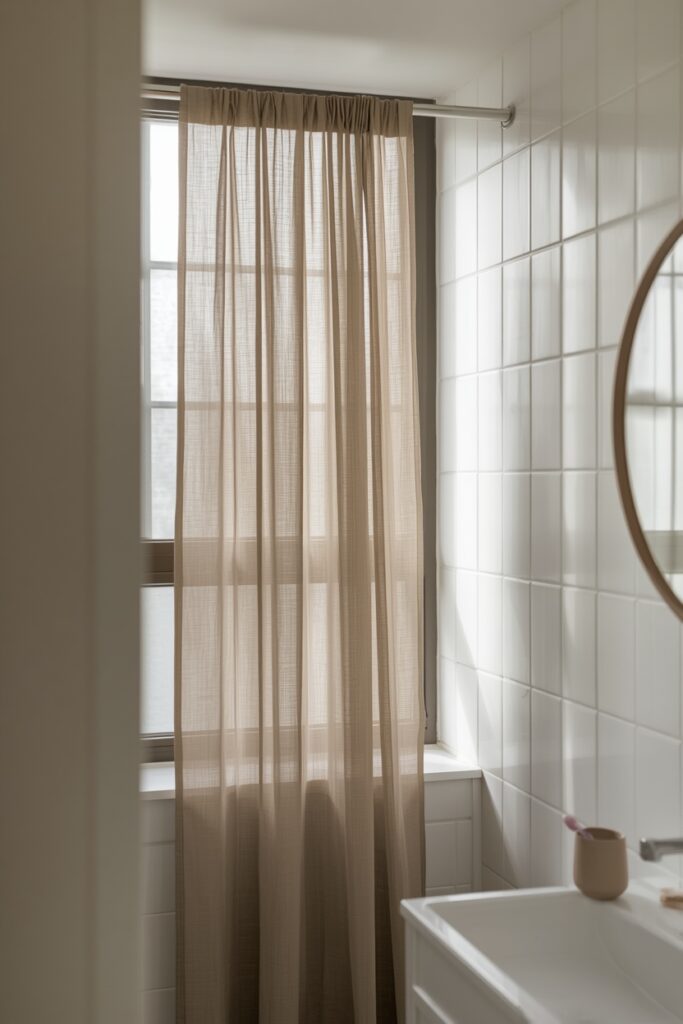
This approach is ideal for renters who cannot drill into tile or window frames and want a bathroom curtain that installs in three minutes and disappears just as fast when the lease ends.
7. Organic Cotton Canvas Curtain in a Muted Spa Tone
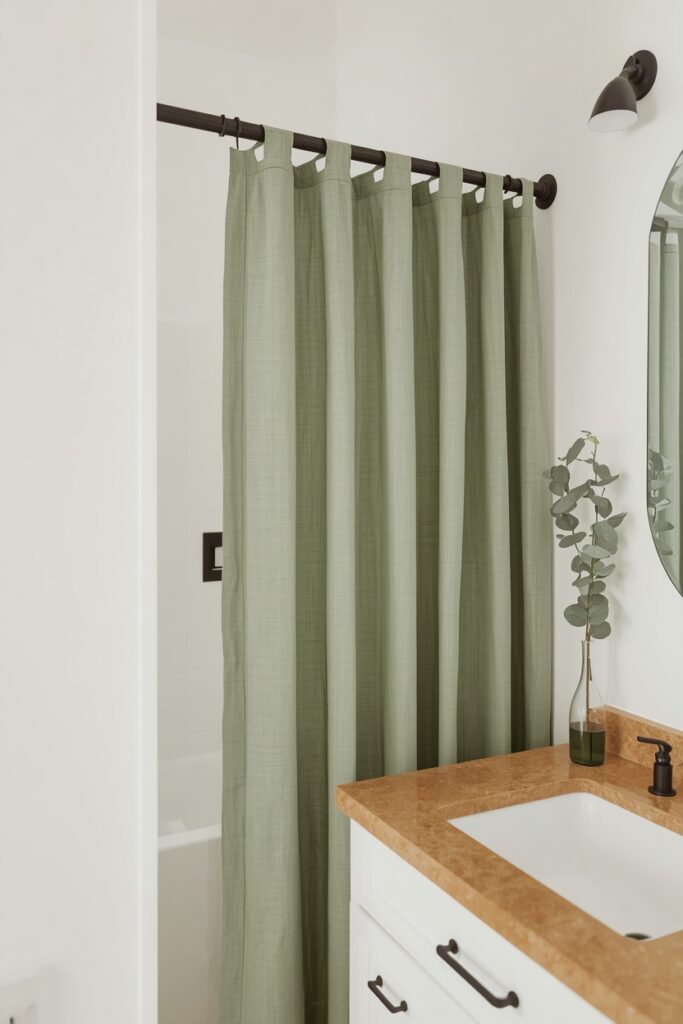
A medium-weight organic cotton canvas panel in a muted spa tone — think sage, stone, or pale eucalyptus — introduces a whisper of color without breaking the minimalist discipline. Canvas has enough body to hang straight on its own weight, which means no additional liner or stiffener is needed for a window panel. The thicker weave also blocks more light than sheer alternatives, making it a better choice for bathrooms where the window faces east and the morning sun hits at full intensity during a shower. Choose certified organic cotton if you want to avoid the chemical sizing and dye treatments that conventional canvas carries, which can off-gas in a small humid room. Hang the panel with simple S-hooks on a matte black rod for a hardware detail that stays within the minimalist vocabulary.
8. Minimalist Cafe Curtain in Natural Linen for Privacy
A cafe curtain — a short panel covering only the lower half of the window — delivers privacy at eye level while leaving the top of the glass open for full overhead light and airflow. This is among the most practical minimalist bathroom curtain ideas for ground-floor bathrooms where passersby can see in but you do not want to block all the natural light. Hang the rod at the midpoint of the window and let the panel drop just below the sill.
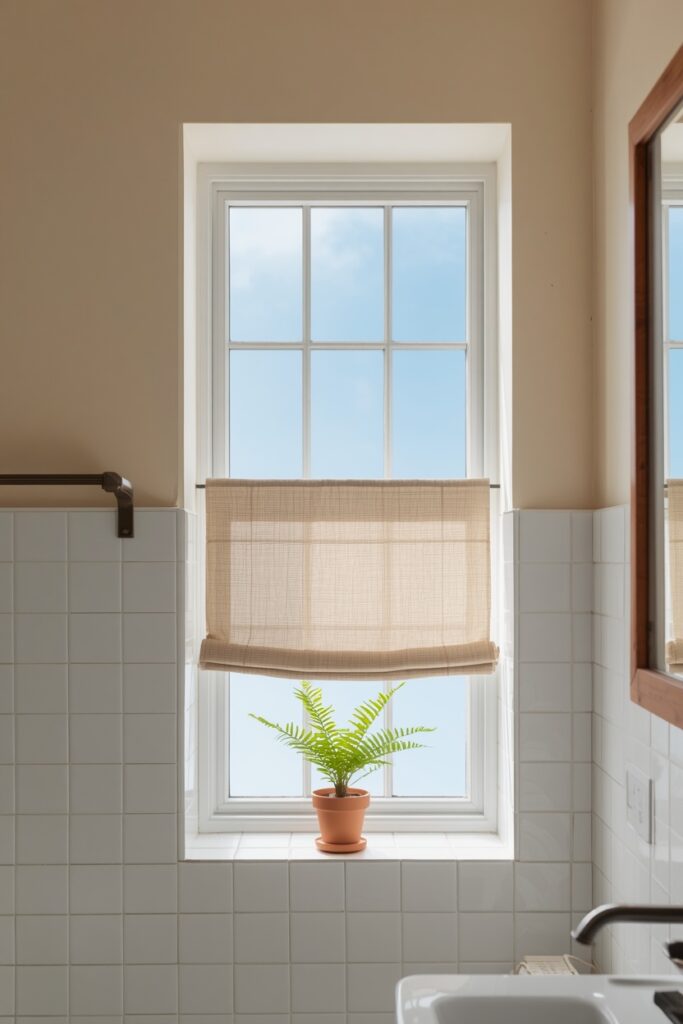
Natural undyed linen is the ideal fabric because its raw, unbleached tone stays neutral in any palette and the material dries quickly after absorbing bathroom moisture. Keep the curtain unhemmed with a raw selvedge edge if you want the most pared-back, artisan look, or fold a simple single-turn hem for a slightly cleaner line.
9. Floor-Length Belgian Linen Panel with a Relaxed Drape
Belgian linen has a distinctive weight and slubby texture that gives it a relaxed, lived-in drape without any ironing or steaming required — which is a real advantage in a room full of humidity. A floor-length panel in washed Belgian linen falls in soft irregular folds that look deliberately imperfect rather than rumpled, hitting the exact tone that modern minimalism aims for. Hang it from a simple brushed-nickel rod with clip rings for easy removal when the fabric needs a wash. The natural grey-beige of undyed Belgian linen reads warm against white walls and cool stone, and the fabric softens further with each wash cycle rather than deteriorating.
Budget around 40 to 60 dollars per panel for mid-range Belgian linen — it costs more than cotton but the drape quality and longevity justify the difference in a room where the curtain is one of the only soft surfaces.
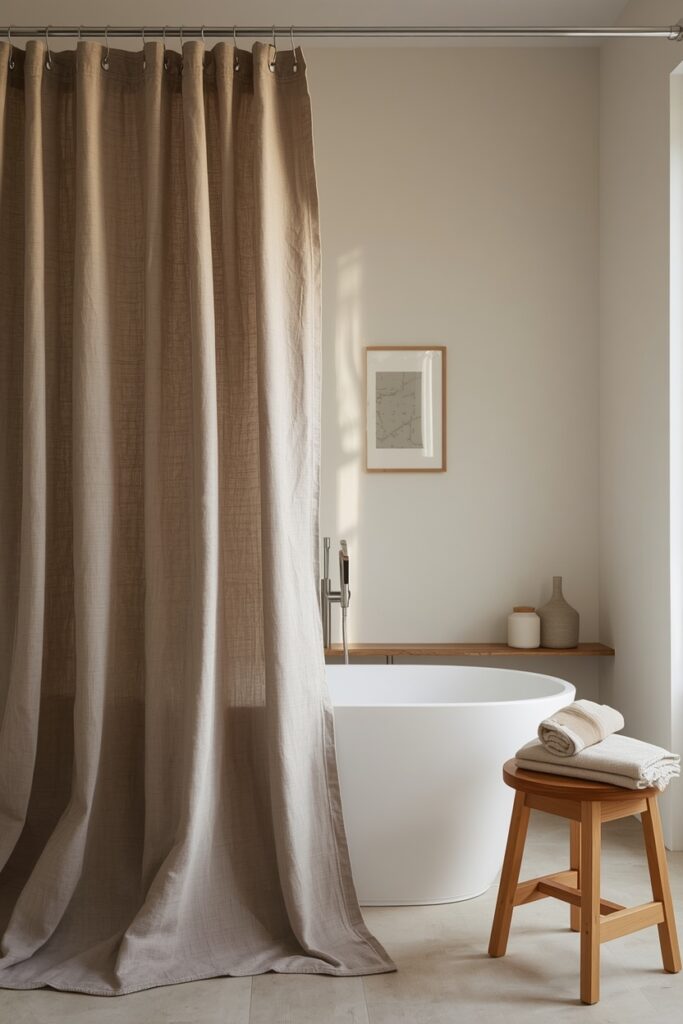
10. Micro-Pleat Sheer Panel for the Shower Zone
Micro-pleated sheer panels — the kind with narrow permanent creases running vertically through the fabric — add a refined linear texture to a shower curtain that flat panels cannot match. The pleats create a rhythm of fine shadow lines that shift as the fabric moves in the air, turning the curtain into a subtle visual element rather than just a moisture barrier. Choose a polyester-blend sheer rated for wet zones so the pleats hold their shape after repeated exposure to steam and splash. White or ivory keeps the palette clean, and the semi-transparent fabric lets light pass through into the shower while still providing adequate coverage. Mount the panel on a ceiling track rather than a rod if possible — the track allows the micro-pleated curtain to glide in a straight line rather than bunching unevenly on rings.

11. Washed Cotton Shower Curtain with a Subtle Tonal Stripe
A single tonal stripe — a band of slightly darker or lighter shade woven into the same base color — gives a cotton shower curtain visual interest without introducing a contrasting pattern. The stripe reads as a shadow or a fold rather than a deliberate design element, which is what keeps it within the minimalist lane.
Look for a pre-washed cotton that has already gone through its shrinkage cycle so the curtain hangs at the correct length after the first laundry day. A wide stripe three to four inches across running horizontally near the bottom third of the curtain anchors the visual weight and makes the panel read grounded.

This is an ideal pick for anyone who finds a completely solid shower curtain too flat but does not want anything that registers as a pattern from across the room.
12. Flat Roller Blind Paired with a Soft Linen Valance
A flat roller blind handles light control and privacy with maximum efficiency — it rolls up into a tight cylinder at the top of the window and nearly disappears when open. Adding a short linen valance in front of the roller mechanism hides the housing and softens the hard edge of the blind with a few inches of draped fabric. Keep the valance no longer than eight inches so it reads as a subtle accent rather than a fussy window treatment.
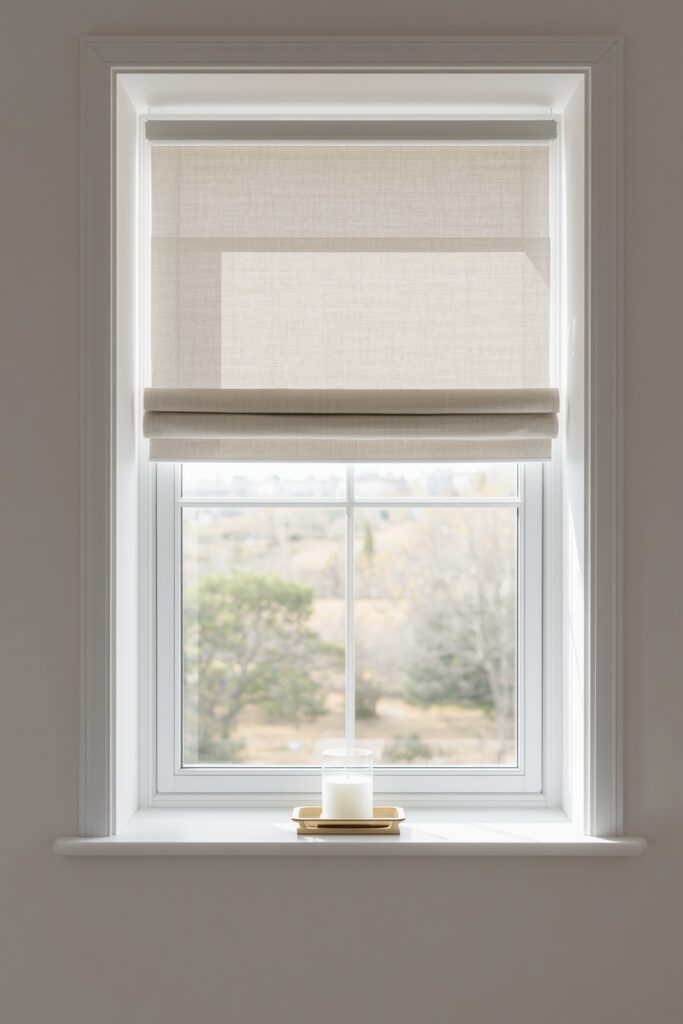
Mount both on the same bracket system or layer the valance on a separate rod placed one inch in front of the blind housing. This layered approach gives you the precise light control of a roller blind and the soft textile quality that a minimalist bathroom needs without adding a full curtain panel to the room.
13. Matte-Finish PVC-Free Vinyl Curtain for Wet Zones
In a shower stall where fabric is not practical because of constant direct water contact, a matte-finish PEVA or EVA vinyl curtain provides the clean look of a solid panel without the glossy plastic sheen of cheap PVC liners. The matte surface absorbs light rather than reflecting it, which keeps the bathroom from developing that shiny, clinical look that budget vinyl creates. Choose a curtain rated as PVC-free and phthalate-free so you avoid the chemical off-gassing that low-grade shower curtains produce in warm humid air. White or translucent matte vinyl lets light through to the shower interior and maintains the open-air sensation even with the curtain closed.
Replace the curtain every six to eight months when the bottom edge shows discoloration, because vinyl is not washable the way cotton and linen are — the trade-off for a fully waterproof material.

14. Double-Layer Bathroom Curtain for Adjustable Privacy
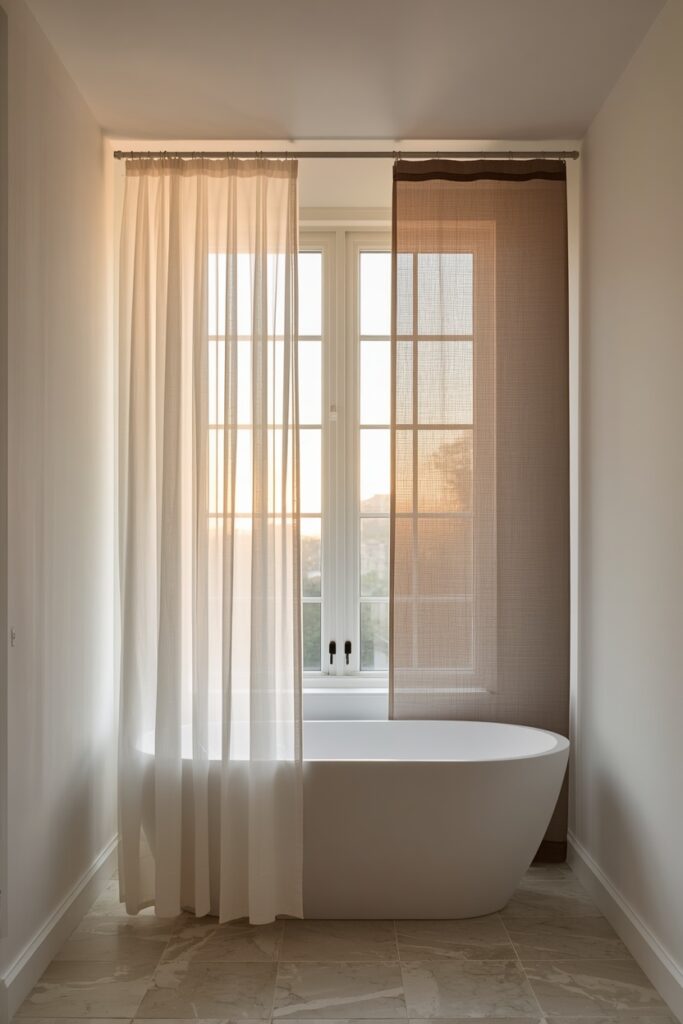
Hanging a sheer panel in front of a solid-color opaque panel on a double-track system gives you three privacy levels from one window: sheer only for diffused daylight, solid only for full blackout, or both layered for a softened dim light. This double-track approach is the most versatile minimalist bathroom curtain solution for bathrooms that serve different needs at different times — bright morning light during a quick wash and full privacy during an evening soak. Mount two slim ceiling tracks side by side, each carrying its own panel, so both layers glide independently. Choose the sheer in white and the solid in a tone one shade darker than the wall color so the two layers blend into a coherent visual plane when closed together. The double track adds about half an inch of depth to the ceiling profile, which is barely noticeable in a room with standard eight-foot ceilings.
Where I’d Start if I Only Did Three Things
If I only did three things, I would start by replacing whatever plastic shower curtain came with the apartment with a waffle-weave cotton panel and a separate waterproof liner — that single swap changes the entire texture of the room for under 40 dollars. Next, I would mount the curtain rod as close to the ceiling as possible rather than at the standard shower-rod height, because the extra inches of vertical fabric make the bathroom look taller and more considered. Third, I would swap any visible curtain rings for concealed tabs or simple clip rings in a matte metal so the hardware disappears and the fabric stays the focus.
FAQs
What are the best minimalist bathroom curtain ideas for small bathrooms?
A sheer white linen panel hung from the ceiling or a cafe curtain covering just the lower half of the window are the two strongest options for small bathrooms. Both allow maximum daylight to enter while maintaining privacy, and neither adds visual weight to a tight room. For the shower, a matte PVC-free vinyl curtain or a waffle-weave cotton panel in off-white keeps the enclosure clean and uncluttered.
Can I use linen curtains in a bathroom with high humidity?
Linen handles humidity better than most people expect because the fibers absorb and release moisture quickly, which discourages mold growth. The key is ensuring adequate ventilation — run the exhaust fan during and after showering, and wash the linen panel monthly in warm water with white vinegar. Avoid placing linen directly in the shower splash zone; use it as a window panel or an outer decorative shower curtain with a waterproof liner behind it.
What shower curtain material looks the most minimalist?
Waffle-weave cotton in off-white or natural and matte-surface PEVA vinyl in white or translucent are the two materials that read cleanest in a minimalist bathroom. Both have subdued surface textures that avoid the glossy, synthetic appearance of cheap PVC. Cotton needs a separate waterproof liner while the vinyl stands alone, so the choice depends on whether you prefer fabric aesthetics or lower maintenance.
Should I use a curtain or a glass panel for a minimalist shower?
A frameless glass panel looks cleaner and requires no fabric maintenance, but it costs significantly more and demands regular squeegee wiping to avoid water spots. A well-chosen fabric or matte vinyl curtain costs a fraction of glass and can be replaced seasonally. In a rental or a budget renovation, a quality curtain on a slim rod delivers a minimalist look that is practical and flexible, while glass is the better investment in an owned home where you want a permanent solution.
Final Thoughts
The strongest minimalist bathroom curtain ideas treat the curtain as a calibrated design choice — not a leftover decision you make after the tile, vanity, and fixtures are done. Whether it is a sheer linen panel filtering window light, a waffle-weave cotton shower curtain adding quiet texture, or a double-layer privacy system on a ceiling track, every option on this list earns its place by adding function and softness without adding visual noise. Start with the one curtain you look at every single day — the shower curtain — and upgrade from there.