

Picture a 60s bedroom at dusk: a globe pendant glowing overhead, walnut furniture catching the last of the light, and a deep velvet headboard soaking up the warmth of a brass lamp. The sixties gave us two of the most enduring looks in design history — high-shine Hollywood glamour and warm mid-century modern — and both still read wonderfully today when handled with a little restraint.
This guide walks through 17 complete bedroom designs, each a full room built around a specific slice of the decade — from jewel-tone glam and mod op-art to earthy avocado-and-orange schemes and space-age white. For every one you will find the palette, the key pieces, and honest notes on what to lean into and what to leave behind.
1. Hollywood Regency Glam Bedroom
Hollywood Regency is the most glamorous corner of sixties style, all high contrast, mirrored surfaces, and unapologetic shine. Build the room around a tufted velvet headboard in emerald or sapphire, a lacquered nightstand, and a gilded starburst mirror above the bed. Keep walls soft — a warm ivory or pale gray — so the metallics and jewel tones pop without the room turning garish.

Layer in a mirrored dresser and a faux-fur throw for that old-movie-star glamour. The trap here is going all-in on shine, so ground the room with one matte texture like a wool rug, and it reads luxurious rather than like a stage set.
2. Mid-Century Walnut and Teal Bedroom
Walnut and teal is the quintessential mid-century pairing, and it gives a sixties bedroom warmth that the all-glam schemes sometimes miss. Anchor the room with a low walnut platform bed and matching tapered-leg nightstands, then bring teal in through the bedding and a single accent wall. Add a globe pendant, a ceramic table lamp, and a geometric rug to complete the era without tipping into theme-park territory. Real teak and walnut furniture from the period turns up secondhand and often costs less than new reproductions. Keep the walls warm white so the wood tones stay the focus.

3. Mod Op-Art Black-and-White Bedroom
Op-art turns a bedroom into a graphic statement with nothing more than black, white, and bold geometry. Paper or paint one wall in a strong pattern — chevrons, circles, or a hand-painted stripe — then keep the rest crisp white so the room does not vibrate.
A white platform bed, black-and-white bedding, and a single red or yellow accent chair keep it mod rather than dizzying. The caveat: op-art walls are polarizing and tiring to sleep opposite, so I put the pattern behind the bed where you do not stare at it.
Paint Picks: For the graphic wall, try Benjamin Moore Simply White OC-117 with Sherwin-Williams Tricorn Black SW 6258, or Benjamin Moore White Dove OC-17 paired with Behr Cracked Pepper PPU18-01.

Chrome and glass accessories complete the look.
4. Emerald and Brass: A Jewel-Tone Retro Glam Bedroom
Emerald green and brass is the jewel-tone combination that makes a retro glam bedroom read rich and grown-up. Paint the walls a deep emerald, then let brass do the lifting through the bed frame, lamp bases, and picture rails. A blush or champagne velvet headboard softens all that saturation, while cream bedding keeps the scheme from going too dark. Dark jewel walls need layered lighting — a pair of brass bedside lamps plus a dimmable overhead — or the room reads cave-like at night.
Handled with restraint, it is the most sophisticated look in this whole list.
Paint Picks: Go deep with Benjamin Moore Hunter Green 2041-10, Sherwin-Williams Jasper SW 6216, or Benjamin Moore Forest Green 2047-10 against cream trim like White Dove OC-17.

5. Palm Springs Desert Modern Bedroom
Palm Springs style takes sixties modernism and floods it with sunshine — think white walls, walnut furniture, and hits of turquoise, tangerine, and pink. Keep the architecture clean and low, then bring the desert palette in through cushions, art, and a graphic rug. A butterfly chair in the corner, a rattan pendant, and a big leafy plant nail the indoor-outdoor mood.

This scheme loves light, so it shines in a bright room with large windows and struggles in a north-facing box. Keep the base neutral and let the accents carry the color so you can swap them with the seasons.
6. Pink and Gold Powder-Room Glam Bedroom
Blush pink and gold give a sixties glam bedroom a soft, feminine glamour without tipping into cliche. Set a pale pink on the walls, then layer warmer blush textiles, a brass or gold bed frame, and a velvet bench at the foot of the bed.
A scalloped headboard and a kidney-shaped vanity table nod to the era’s love of curves. Keep metals consistently gold and add one grounding tone — caramel, walnut, or charcoal — so the room does not read like a dessert.
Paint Picks: Try Benjamin Moore Pink Bliss 2093-70, Sherwin-Williams Intimate White SW 6322, or Benjamin Moore Love and Happiness 1191 for a soft blush wall.

It is a romantic scheme that still photographs as grown-up.
7. Executive Walnut Mad Men Bedroom
For a more masculine sixties bedroom, channel the Mad Men executive suite: rich walnut, leather, and a restrained palette of camel, charcoal, and cream. A low walnut bed, a leather lounge chair, and a sleek dresser with recessed pulls set the tone. Keep pattern minimal — a single geometric rug or a textured throw — and let the materials carry the room. Genuine mid-century walnut has real weight and dovetailed drawers, worth hunting for over flimsy reproductions. Warm brass task lighting and a decanter tray complete the after-hours mood.

8. Restrained Psychedelic Accent Bedroom
Psychedelic pattern defined the late sixties, but a whole room of swirls is exhausting — the trick is one bold moment against calm. Choose a single graphic element, like a paisley or op-swirl headboard wall or a pair of curtains, and keep everything else solid and muted. A warm cream base with olive, mustard, and rust accents references the era without the sensory overload. This restraint is what separates a stylish nod from a costume.
Add a bubble lamp and a shag cushion or two and stop there.

9. A Brass and Lucite 1960s Bedroom
Brass and lucite is the glossy, jet-set side of sixties design, and it keeps a 1960s bedroom looking light rather than heavy. Pair a brass four-poster or a lucite-legged bench with a soft neutral palette — ivory, dove gray, and warm gold. The clear acrylic pieces almost disappear, which keeps a smaller room open while still reading luxe.

Mirror and glass surfaces bounce light beautifully but show every fingerprint, so this look rewards someone who likes to keep surfaces clear. A single sculptural pendant overhead is the finishing move.
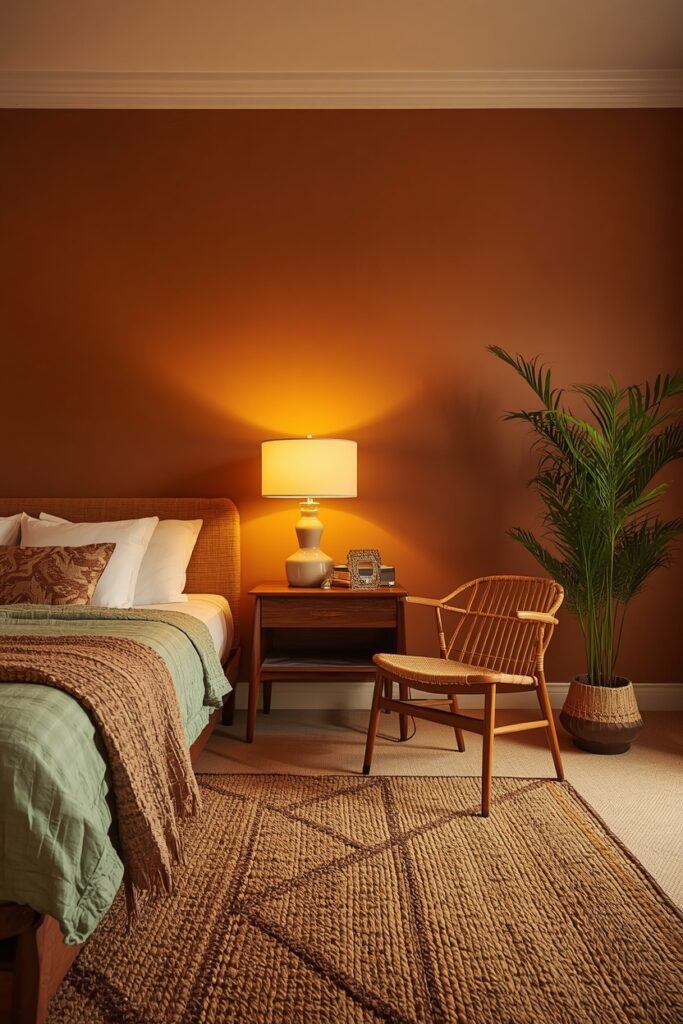
10. Burnt Orange and Avocado Retro Bedroom
Burnt orange and avocado green are the colors everyone pictures when they think sixties, and used with confidence they read warm and characterful rather than dated. Ground the room with a warm cream or tobacco wall, then layer the orange and green through bedding, a shag rug, and ceramic lamps. A teak headboard and a rattan chair keep the palette earthy. The risk is going too matchy — pick one hero color and let the other play support rather than a fifty-fifty split. Muted, dustier versions of these tones age far better than bright primary hits.
Paint Picks: Set the scene with Sherwin-Williams Cavern Clay SW 7701, Benjamin Moore Georgian Brick HC-50, or a warm tobacco like Benjamin Moore Rich Chestnut 2091-30 behind avocado accents.
11. Space-Age White Pod Bedroom
Space-age sixties design was all curves, gloss, and optimism, and it makes a striking, minimalist bedroom. Keep the shell almost entirely white — walls, bedding, a curved platform bed — then add one or two molded plastic accent pieces in red or orange.
A tulip side table, a globe pendant, and a molded egg chair carry the futurism. This look is clean and calming but can read clinical, so bring in one warm texture like a boucle throw or a shag rug.

Less is genuinely more here.
12. Velvet Tufted Headboard Glam Bedroom
A deep velvet tufted headboard is the single most glamorous thing you can add to a sixties bedroom. Choose a saturated jewel tone — sapphire, emerald, or aubergine — in a channel- or diamond-tufted design and let it fill the wall behind the bed. Surround it with soft neutrals so the headboard stays the star: cream walls, tonal bedding, and brass lamps. Velvet reads rich but shows dust and crushes over time, so a tight weave in a mid tone wears better than a pale one.
This is the one-piece upgrade I recommend when someone wants glam on a budget.

13. Sunburst Mirror and Chartreuse Bedroom
Built around a gilded sunburst mirror — the definitive sixties accessory — a whole cheerful room comes together. Set the mirror above the bed against a chartreuse or acid-yellow-green wall for a properly period jolt of color. Balance the brightness with plenty of white and walnut so the green energizes rather than overwhelms.
Paint Picks: For the period green, try Benjamin Moore Dark Celery 2146-30, Sherwin-Williams Anjou Pear SW 6379, or Benjamin Moore Guacamole 2144-10.

Chartreuse is a demanding color that shifts under artificial light, so test a large swatch at night before committing a whole wall. Keep textiles simple and let the mirror and the wall do the talking.
14. Peacock Blue and Gold Retro Glam Bedroom Boudoir
Peacock blue and gold make a retro glam bedroom read like a jewel box after dark. Take a rich teal-blue across the walls, then layer gold through the mirror frame, lamp bases, and a metallic-threaded cushion or two. A velvet headboard in the same blue family adds depth, while cream bedding stops the scheme going too moody. As with any dark wall, lighting is everything — warm, layered, and dimmable keeps it flattering. This is a bold, decisive scheme, so commit to the drama rather than diluting it.
Paint Picks: Reach for Benjamin Moore Newburg Green HC-158, Sherwin-Williams Oceanside SW 6496, or Benjamin Moore Gentleman’s Gray 2062-20.

15. Terrazzo and Teak Mid-Century Bedroom
Terrazzo made a huge comeback but it never really left the sixties, and paired with teak it grounds a bedroom in period authenticity. Bring terrazzo in through a bedside table top, a lamp base, or a feature nook rather than a whole floor, then match it with warm teak furniture.
A palette of speckled neutrals, warm wood, and a single bright accent — mustard or coral — keeps it playful. Terrazzo’s flecks pick up whatever colors you scatter around the room, so choose your accent first.

It is a subtle, textural way to reference the decade.
16. Monochrome Charcoal Mod Bedroom
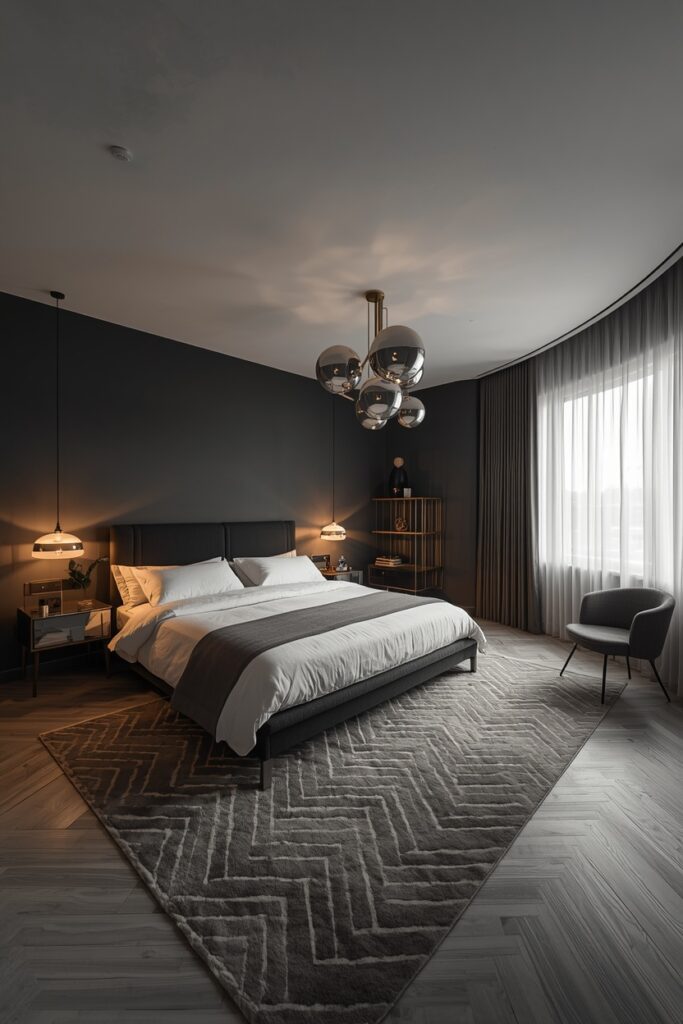
For a moodier take on mod, a monochrome charcoal bedroom trades color for graphic confidence. Paint the walls a deep charcoal, then work in white, black, and chrome through the bed, lighting, and a bold geometric rug. The darkness makes a great backdrop for sculptural sixties lighting — an arc lamp or a cluster of globe pendants really glows against it. Dark walls shrink a room visually, so this suits a bedroom you want to read intimate rather than airy.
One metallic accent, silver or chrome, keeps it firmly mid-century.
Paint Picks: Try Benjamin Moore Kendall Charcoal HC-166, Sherwin-Williams Peppercorn SW 7674, or Behr Cracked Pepper PPU18-01 with crisp white trim.
17. Retro Floral Wallpaper Glam Bedroom
A big, blowsy retro floral wallpaper is the fastest way to give a sixties bedroom instant personality. Choose an oversized print in warm era colors — mustard, olive, and burnt orange on cream — and paper a single wall behind the bed rather than the whole room. Keep furniture simple and solid so the paper stays the hero, and pull one color from the print for the bedding.
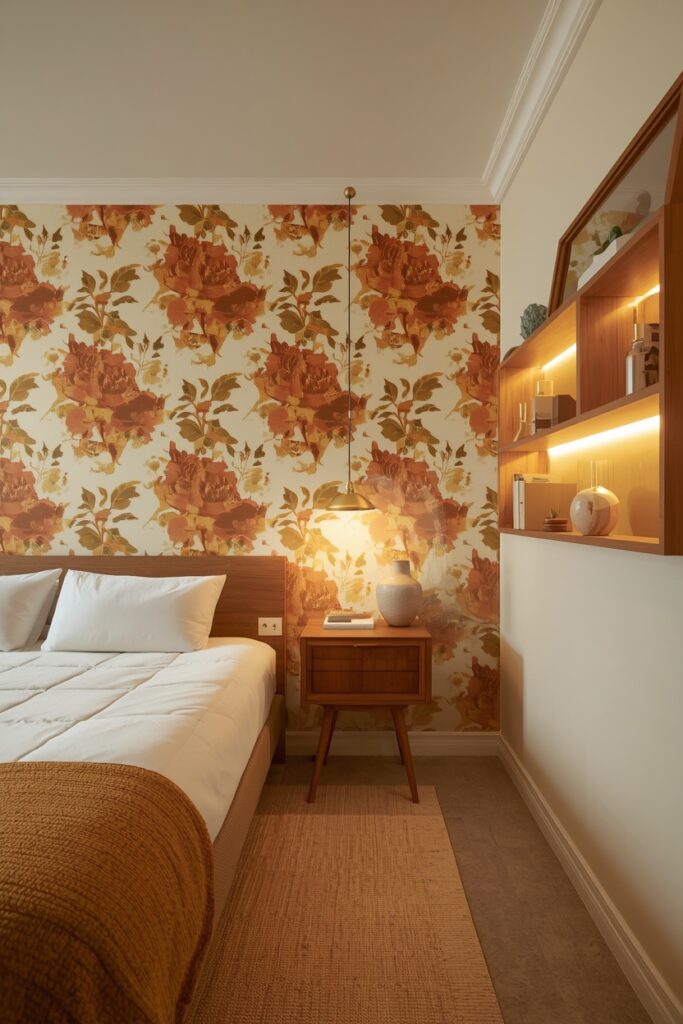
Large-scale patterns can overwhelm a small room, so a feature wall is the safer play than four walls. A brass pendant and a walnut nightstand tie it back to the decade.
Where I’d Start if I Only Did Three Things
If I only did three things, I would start with a deep velvet tufted headboard in a jewel tone, because a single glamorous piece does more era-setting work than any amount of small accessories. Next, I would add one authentic walnut or teak piece — a nightstand or a low dresser with tapered legs — since real mid-century wood grounds the whole scheme. Finally, I would hang a gilded sunburst mirror and lock my metals to warm brass or gold, which instantly reads sixties without costing much.
Frequently Asked Questions
How do I decorate a 60s bedroom without it looking dated?
The secret is editing. Pick one or two era signatures — a tufted velvet headboard, a walnut dresser, a sunburst mirror — and surround them with calm, current neutrals. Use muted, dustier versions of period colors rather than bright primaries, and keep pattern to a single feature wall. Referencing the decade beats recreating it wholesale.
What colors are typical of 1960s interiors?
The sixties spanned two palettes: early-decade glamour in jewel tones, gold, and black-and-white mod graphics, and late-decade earthiness in avocado, burnt orange, mustard, and olive. Both read authentic today when used with restraint. Choose the mood you want — glam or earthy — and build the room from one of those two families rather than mixing them.
Where can I find genuine mid-century furniture for the look?
Estate sales, vintage dealers, and online resale platforms are full of solid teak and walnut pieces that often cost less than new reproductions and wear far better. Look for dovetailed drawers, tapered legs, and real wood veneer over particleboard. One or two authentic anchor pieces do more for a room than a set of look-alikes.
Can retro glam style work in a small bedroom?
Absolutely — in fact glam thrives in small rooms because a jewel-box mood suits intimacy. Use lucite and mirrored pieces that visually recede, keep the palette tight, and let one statement — a headboard or a papered wall — carry the drama. Layered warm lighting matters more than square footage.
Final Thoughts
A great 60s bedroom is a balancing act between nostalgia and livability — enough walnut, velvet, and brass to summon the decade, but edited through a modern, restrained lens so you actually want to sleep there. Choose your lane, glam or earthy, commit to one or two hero pieces, and let calm neutrals carry the rest. Get that balance right and the room reads timeless rather than like a film set.