
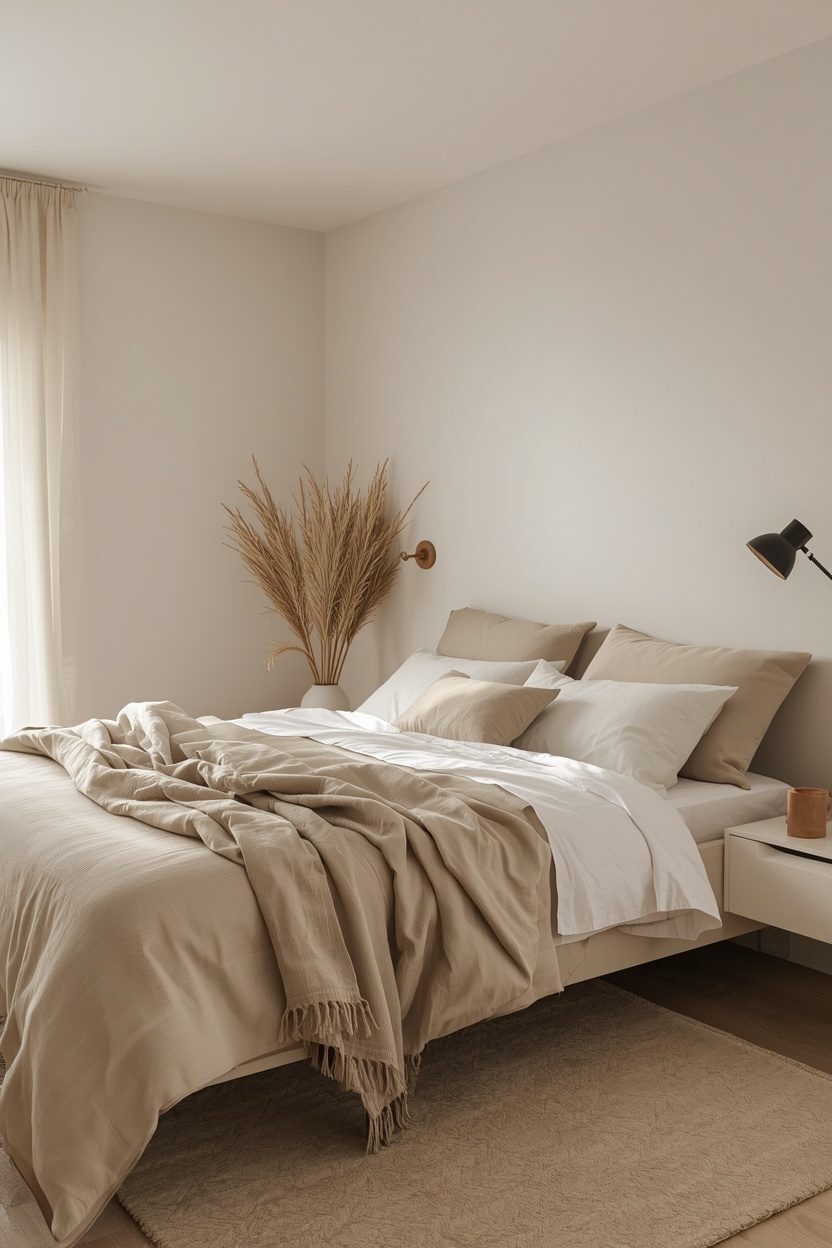
A small bedroom can feel surprisingly spacious when designed with a minimalist approach. Rather than filling the room with unnecessary furniture and accessories, minimalist decor focuses on simplicity, functionality, and intentional design choices that maximize every available inch.
Furthermore, minimalism does not mean sacrificing comfort or personality. The best minimalist bedrooms combine thoughtful storage, calming color palettes, and cozy textures to create spaces that feel both practical and inviting.
If you want your bedroom to feel larger, brighter, and more organized, these minimalist small bedroom decor ideas will help you create a beautiful space that works smarter, not harder.
1. Choose a Simple Platform Bed
A low-profile platform bed creates a clean and streamlined appearance that instantly makes a small bedroom feel more open. Its simple design reduces visual clutter while maintaining comfort and style.
Furthermore, platform beds often pair beautifully with minimalist interiors because they emphasize clean lines and functional design. The lower height also helps ceilings appear taller.
This foundation sets the tone for the entire room.

As a result, the room feels more spacious and visually balanced. The simple furniture design allows other elements to breathe.
This is one of the easiest ways to embrace minimalist style successfully.
2. Stick to a Neutral Color Palette
Neutral colors help create a calm atmosphere while making a small bedroom feel brighter and larger. Shades of white, beige, cream, and soft gray reflect light beautifully throughout the space.
Moreover, a cohesive color palette reduces visual distractions and creates a sense of continuity. The room feels more harmonious and relaxing.
Minimalist interiors thrive on simplicity and balance.
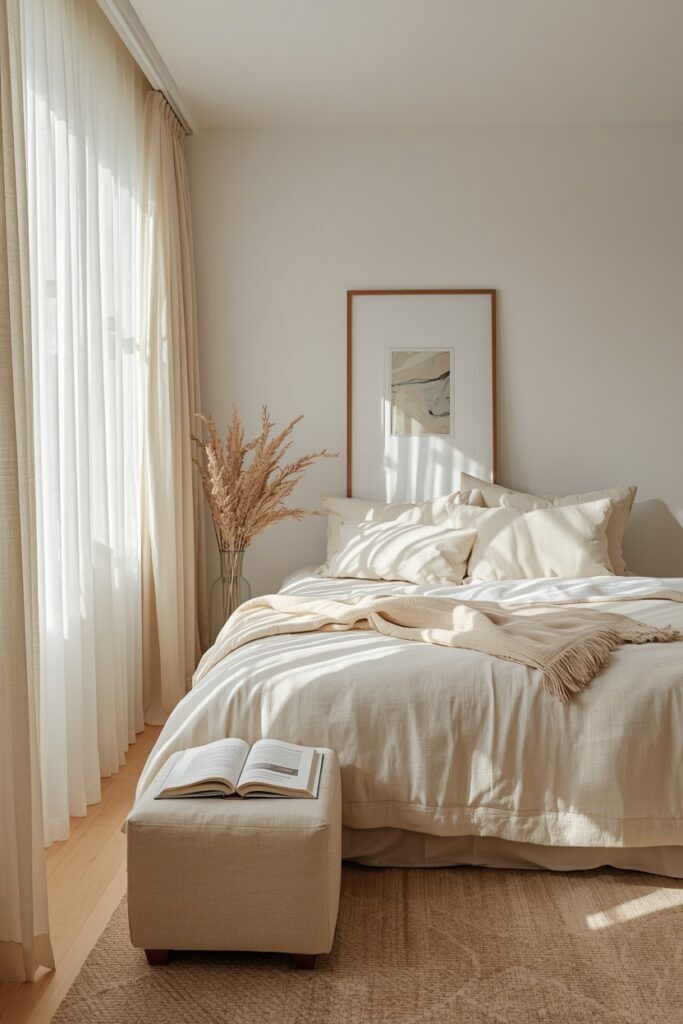
Consequently, the bedroom feels airy and welcoming. The neutral backdrop creates flexibility for subtle decorative accents.
This timeless palette never goes out of style.
3. Use Floating Nightstands
Floating nightstands provide functionality without taking up valuable floor space. Their wall-mounted design helps create a lighter and more open appearance.
Additionally, the visible floor underneath contributes to the illusion of a larger room. Floating furniture aligns perfectly with minimalist principles.
The streamlined look feels clean and modern.

Therefore, the bedroom gains practical storage without feeling crowded. Every element serves a purpose while maintaining visual simplicity.
This smart solution is ideal for compact bedrooms.
4. Keep Decor Intentional and Minimal
Minimalist bedrooms benefit from carefully selected decorative pieces rather than numerous accessories. A few meaningful items often create greater impact than excessive decor.
Furthermore, intentional decorating helps maintain a calm and uncluttered atmosphere. Every piece contributes to the overall design.
The result feels sophisticated and balanced.

As a result, the room feels more organized and visually restful. The carefully chosen decor enhances rather than overwhelms the space.
This approach supports both style and functionality.
5. Maximize Natural Light
Natural light is one of the most powerful tools for making a small bedroom feel larger. Bright spaces appear more open and inviting throughout the day.
Moreover, minimizing heavy window treatments allows sunlight to flow freely into the room. Light-filled interiors naturally feel more expansive.
The effect enhances every design choice.

Consequently, the bedroom feels fresher and more spacious. Natural light creates a welcoming atmosphere without any added clutter.
This feature should always be prioritized when possible.
6. Incorporate Under-Bed Storage
Storage is essential in small bedrooms, and under-bed solutions help maximize unused space. Hidden storage keeps belongings organized while preserving a clean appearance.
Furthermore, concealed storage supports minimalist living by reducing visible clutter. The room feels calmer and more functional.
Smart organization improves both aesthetics and practicality.

Therefore, the room remains tidy without sacrificing valuable floor space. Efficient storage contributes significantly to minimalist success.
This idea is especially useful for smaller homes and apartments.
7. Add a Large Mirror
Mirrors reflect light and create the illusion of additional space, making them perfect for compact bedrooms. Their reflective surfaces visually expand the room.
Additionally, minimalist mirrors with simple frames maintain the clean aesthetic while adding elegance.
The effect is both practical and beautiful.

As a result, the bedroom feels brighter and more open. The mirror enhances natural light while supporting the minimalist design.
This timeless feature works in nearly every bedroom.
8. Use Vertical Storage Solutions
When floor space is limited, vertical storage becomes incredibly valuable. Wall-mounted shelves and tall storage units maximize available space efficiently.
Furthermore, utilizing wall space helps keep surfaces clear and organized. This strategy supports a clean and uncluttered appearance.
Every inch of the room works harder.

Consequently, storage capacity increases without making the room feel crowded. The vertical emphasis also helps ceilings appear taller.
This solution combines practicality with modern design.
9. Choose Multifunctional Furniture
Furniture that serves multiple purposes helps maximize functionality in small bedrooms. Storage benches, beds with drawers, and compact desks provide added value.
Moreover, multifunctional pieces reduce the need for extra furniture. This keeps the room feeling open and uncluttered.
Efficiency is a key principle of minimalist design.
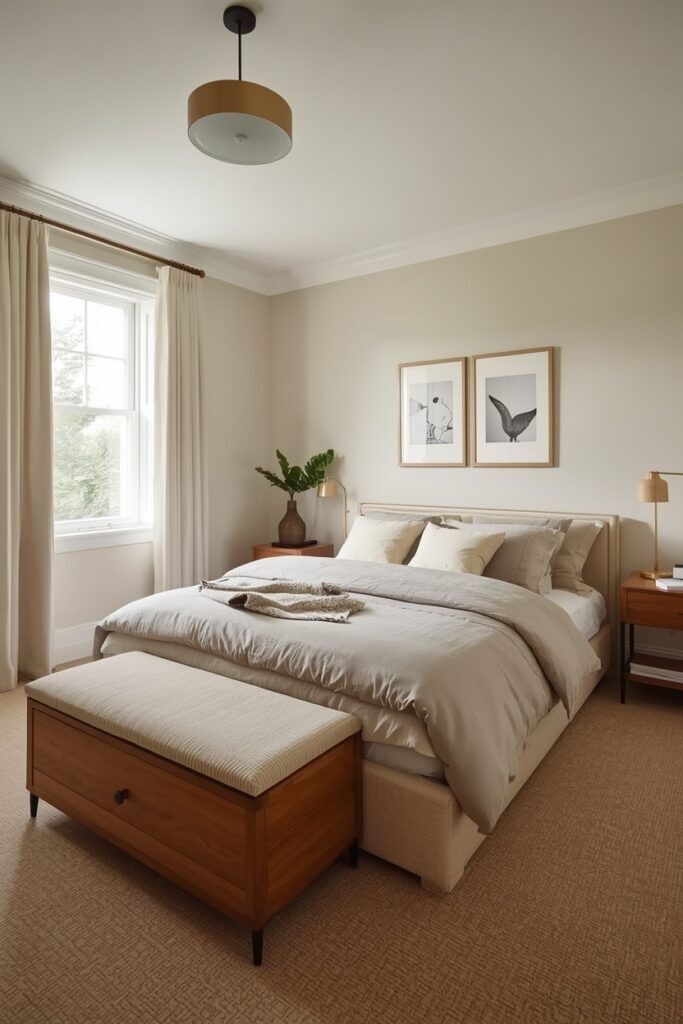
As a result, the bedroom remains highly functional despite its smaller footprint. Every furniture piece contributes meaningfully to the space.
This strategy is ideal for modern living.
10. Add Texture Through Fabrics
Minimalist interiors can still feel warm and inviting through the use of layered textures. Linen bedding, knit throws, and soft rugs create comfort without clutter.
Furthermore, texture adds visual interest while maintaining a simple color palette. The room feels richer and more welcoming.
Subtle layers enhance the overall atmosphere.

Consequently, the bedroom feels cozy while remaining true to minimalist principles. The textures provide depth and warmth.
This balance is essential for successful minimalist design.
11. Keep Surfaces Clear
Clear surfaces instantly make a room feel larger and more organized. Limiting visible objects helps reduce visual noise and create a peaceful environment.
Additionally, organized surfaces allow architectural features and quality furnishings to stand out more effectively.
Less truly becomes more.
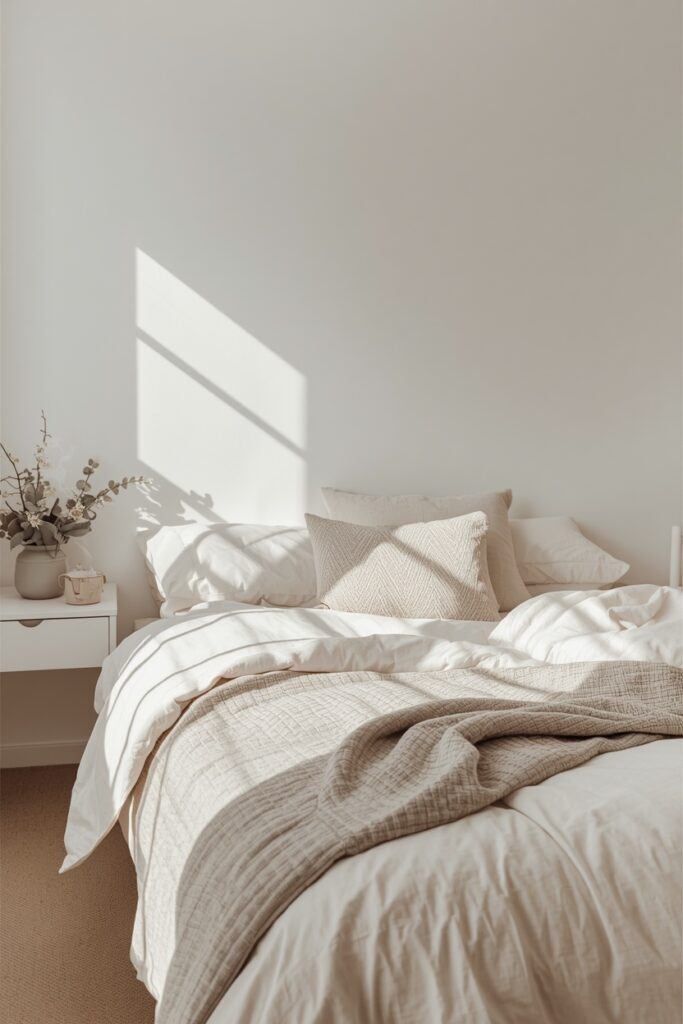
As a result, the room feels calm and spacious. Maintaining clear surfaces supports both functionality and aesthetics.
This habit reinforces the minimalist lifestyle.
12. Introduce One Statement Piece
A minimalist bedroom does not have to feel boring. One carefully chosen statement piece can add personality while preserving simplicity.
Furthermore, a standout artwork, light fixture, or headboard creates visual interest without overwhelming the room.
The focus remains intentional and refined.

Consequently, the bedroom feels unique while maintaining a clean appearance. The statement piece becomes a defining design feature.
This approach adds character without creating clutter.
13. Prioritize Function and Comfort
The most successful minimalist bedrooms focus on how the space feels and functions every day. Practical design choices should always support comfort and relaxation.
Additionally, thoughtful organization, cozy textiles, and smart furniture arrangements help create a bedroom that truly works for your lifestyle.
A well-designed room feels effortless and welcoming.

As a result, the bedroom feels organized, comfortable, and beautifully balanced. Every design decision contributes to a better living experience.
Ultimately, minimalist decor allows even the smallest bedroom to feel spacious, calm, and highly functional.
FAQ
1. How do I make a small bedroom look bigger?
Use light colors, mirrors, minimal furniture, and smart storage solutions to maximize visual space.
2. What colors are best for a minimalist bedroom?
Warm white, cream, beige, soft gray, and light greige are excellent choices.
3. Is minimalist design good for small bedrooms?
Yes, minimalist design reduces clutter and helps small spaces feel larger and more organized.
4. What furniture works best in a small minimalist bedroom?
Platform beds, floating nightstands, multifunctional furniture, and streamlined storage solutions work best.
5. How can I keep a minimalist bedroom cozy?
Add texture through bedding, rugs, throws, and warm lighting while maintaining a simple layout.
Conclusion
A minimalist approach can completely transform a small bedroom by making it feel larger, brighter, and more functional. Through intentional furniture choices, thoughtful storage solutions, neutral color palettes, and carefully selected decor, you can create a space that feels both stylish and comfortable. These ideas prove that simplicity often delivers the most beautiful and practical results.