

Cork boards get dismissed as a dorm-room leftover, but the material itself isn’t the problem — it’s usually how it’s framed, colored, and styled. A cork board that’s painted, bordered, or built into the room’s existing design disappears into the decor when empty and becomes a genuine personality piece once it’s filled, which is more than most static wall art can do.
These eighteen ideas cover everything from a single framed board to a full accent wall, along with smaller styling tricks like trims and lighting that make the material feel intentional rather than accidental. Use the table below to quickly compare which idea fits the personality and wall spot you have in mind.
Quick Reference: Cork Board Ideas by Personality and Placement
| Cork Board Idea | Personality It Shows Off | Best Wall Spot | Upkeep |
| Full cork accent wall | Bold, ever-changing | Behind the headboard | Ongoing |
| Framed cork board | Organized, put-together | Above desk or dresser | Low |
| Cork-bordered mirror | Subtle, sentimental | Around an existing mirror | Low |
| Scattered cork discs | Playful, modern | Above a nightstand or desk | Low |
| Fabric-covered cork board | Soft, coordinated | Above desk or vanity | Low |
| Wall-matched painted cork | Understated, blended-in | Any low-traffic wall | Low |
| Cork runner strip | Collected, chronological | Above headboard or shelf | Low |
| Shaped silhouette cork board | Fun, whimsical | Above a desk or play area | Low |
| Cork tile grid | Structured, gallery-like | Above desk or dresser | Low |
| Hidden sliding-panel cork board | Private, tidy | Above desk or closet wall | Medium |
| Color-blocked cork board | Organized, graphic | Above desk | Low |
| Map or fabric-backed cork | Nostalgic, layered | Above desk or reading nook | Low |
| Rope or ribbon-trimmed cork board | Polished, finished | Above desk or vanity | Low |
| Themed collection cork board | Story-driven, personal | Above desk or bed | Low |
| Closet-door cork panel | Private, space-saving | Inside or outside closet door | Low |
| Cork board with woven lights | Warm, ambient | Above desk or bed | Low |
| Vision / goal board | Ambitious, motivating | Near mirror or closet | Ongoing |
| Matching cork nightstand/tray | Cohesive, deliberate | Nightstand near the board | Low |
1. A Giant Statement Cork Wall Behind the Bed
Covering an entire accent wall in cork tiles turns the material itself into the room’s main feature, functioning as a giant pinboard for photos, art, and notes without a single extra nail. Choose thin cork tile panels rather than a single sheet, since they’re easier to install and to replace individually if one section wears out. This is a bold move best suited to someone who genuinely wants to change the display often.

2. A Framed Cork Board as Traditional Wall Art
A cork board mounted inside a real picture frame instantly looks more like intentional decor than a bare board pinned to the wall, and it still gives full pinning function. Choose a frame finish that matches your other room hardware so it reads as coordinated. This is the easiest entry point for anyone who wants the function of cork without it looking like a leftover school-supply item.

3. A Cork Strip Border Around a Mirror
Thin strips of cork applied as a border around an existing mirror give you a small, ready-made spot for a few photos or ticket stubs without needing a whole separate board. Cut the strips cleanly with a utility knife and attach with strong adhesive tabs so they sit flush against the mirror’s edge. This is a subtle way to add function to a wall that already has decor rather than adding an entirely new piece.

4. A Cluster of Small Round Cork Discs
Instead of one large board, a scattered cluster of small round cork discs — six to ten of them at varying heights — creates a playful, modern take on the pinboard concept. Group them slightly overlapping in places for visual interest rather than in a strict grid. This idea works especially well for someone who wants small, changeable pinning spots in more than one part of the room.

5. A Cork Board Covered in Fabric for a Softer Look
Stretching a thin layer of fabric over a cork board before mounting it — secured on the back with staples or glue — hides the raw cork color entirely while keeping full pinning function underneath. Choose a fabric in a color or pattern that ties into your existing decor rather than a plain burlap look. This solves the biggest complaint people have about cork boards, which is that the natural tan color can clash with a finished room.

6. A Cork Board Painted to Match the Wall Color
Painting a cork board the same color as the wall behind it lets the board disappear visually when empty and only draw attention once it’s filled with pinned items. Use a thin foam roller for even coverage without clogging the cork’s texture too heavily, and let it dry fully before pinning anything. This is one of the lowest-cost ways to make a cork board feel like it was designed into the room rather than added on top of it.

7. A Cork Runner Along a Shelf or Headboard Ledge
A long, narrow strip of cork mounted along the top edge of a headboard or shelf gives you a horizontal pinning zone that runs the width of the furniture below it. This is a good option for displaying a running collection, like postcards or event tickets, in a line rather than a cluster. Keep the strip narrow — three to four inches — so it doesn’t compete visually with the furniture it sits above.

8. A Cork Board Shaped Like a Fun Silhouette
Cutting a cork sheet into a custom shape — a cloud, a heart, a simple geometric outline — before mounting it turns a functional board into a piece of wall art in its own right, even before anything is pinned to it. Use a sharp utility knife and a printed template for clean edges, and finish raw edges with a thin binding tape if you want a more polished look. This idea suits a playful or younger bedroom particularly well.

9. A Cork Wall Grid for a Structured Photo Display
Arranging several small square cork tiles in a precise grid pattern gives the pinboard concept a much more structured, gallery-like feel than one large uneven sheet. Use a level and a bit of painter’s tape to keep spacing exact before committing to adhesive. This suits someone who wants the function of cork but with a cleaner, more architectural look than a single organic board provides.
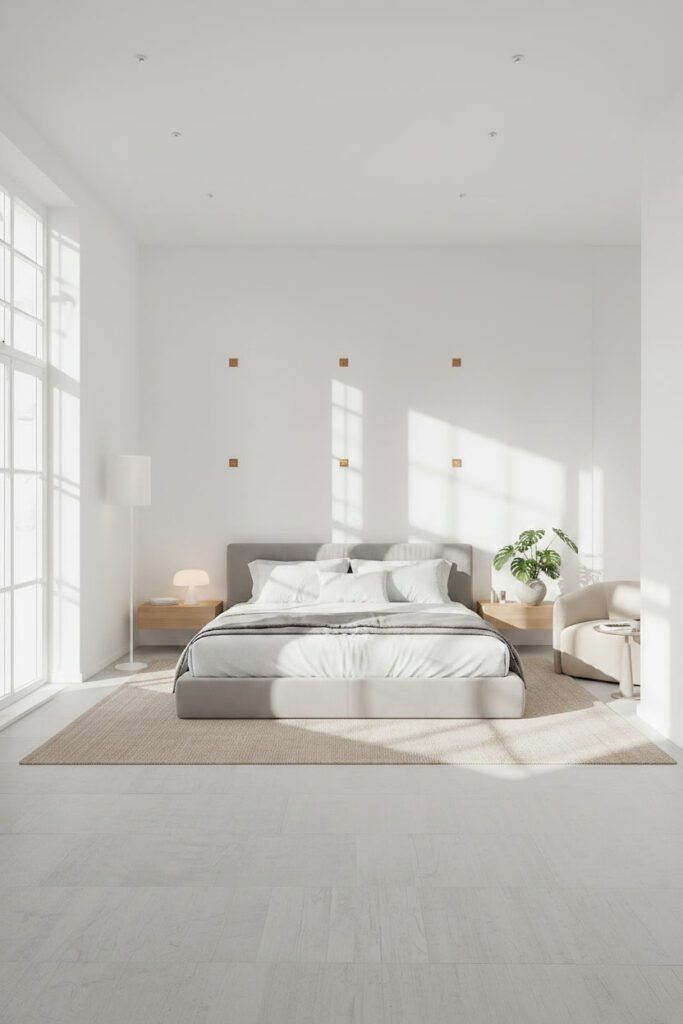
10. A Cork Board Behind a Sliding Barn-Style Panel
Mounting a cork board behind a small sliding wood or fabric panel lets you hide the pinned contents when you want a clean look and reveal them when you actually need the board. This works well for anyone who likes the function of cork but doesn’t want it visible at all times, such as in a more formal or minimal bedroom. A simple track and a lightweight panel keep the mechanism easy to install without any structural work.

11. A Color-Blocked Cork Board With Painted Sections
Dividing one cork board into two or three painted color-block sections — using painter’s tape to keep the lines crisp — gives you built-in categories, like one section for photos and another for notes, while adding a graphic design element. Choose colors already present in your bedding or curtains so the board feels tied into the room. This idea is especially useful for anyone using the board functionally, like students or planners.

12. A Vintage Map or Fabric Backing Under the Cork
Layering a thin vintage-style map or patterned fabric behind a cork board with an open lattice or exposed-edge design lets the backing show through in the gaps between pinned items. This adds visual interest even when the board is sparsely pinned, unlike plain cork which can look empty and dull with few items on it. Choose a backing pattern subtle enough not to clash with whatever ends up pinned on top.

13. A Cork Board Trimmed With Rope or Ribbon
Wrapping the outer edge of a plain cork board in thick rope or ribbon, glued down neatly at the seams, gives it a finished, boutique look for very little added cost. Choose jute rope for a coastal or natural feel, or a satin ribbon for something more polished and feminine. This small detail is often the difference between a board that looks like a school supply and one that looks like an intentional design choice.

14. A Cork Board Dedicated to a Single Collection Theme
Rather than a catch-all pinboard, dedicating one board entirely to a single theme — concert tickets, postcards from one specific trip, a single year of Polaroids — gives the display a stronger visual story and more personality than a mixed, general board. Curate what goes up rather than pinning everything you own, since restraint is what makes a themed board feel special. Swap the theme entirely once a year to keep the display feeling fresh.

15. A Cork Board Integrated Into a Closet Door
Mounting a cork panel directly onto the inside or outside of a closet door puts the display in a spot that doesn’t take up any dedicated wall space at all. The inside of the door works especially well for a more private display only you see when the closet is open. This is a smart option for a smaller bedroom that’s already tight on usable wall real estate.

16. A Cork Board With Built-In LED String Lights
Weaving a strand of warm string lights through the pinned items on a cork board, secured at a few points with small clips or pins, gives the display a soft glow after dark in addition to its daytime function. Route the cord discreetly along one edge to the nearest outlet, and use battery-powered lights if there’s no nearby plug. This turns a purely functional item into something that also contributes ambient light to the room.

17. A Cork Board Used as a Vision or Goal Board
Dedicating a cork board specifically to goals, vision images, or motivational notes rather than purely sentimental photos gives the display a clear, functional purpose that some people find more useful than a memory-focused board. Update it regularly rather than letting old goals sit indefinitely, since a stale vision board loses its motivational effect. Position it somewhere you’ll actually see it each morning, like near a mirror or closet.

18. A Cork Board Paired With a Matching Cork Nightstand Top or Tray
Extending the cork material off the wall and onto a nightstand top or a small tray ties the wall display into the room’s furniture, creating a cohesive material story rather than one isolated decor piece. A thin cork adhesive sheet applied to an existing tray or tabletop is enough to achieve the look without buying new furniture. This is a subtle finishing touch that makes the whole cork concept feel deliberate rather than like a single leftover item from a dorm room.

Where I’d Start If I Only Did Three Things
If I only had a weekend, I’d start with the framed cork board from idea two, since a real frame is the single change that makes a cork board look like decor instead of a leftover school supply. Second, I’d paint or fabric-cover it using ideas five or six, so it ties into the room’s existing colors rather than standing out as a raw tan rectangle. Third, I’d weave in warm string lights from idea sixteen, since that one addition turns a purely functional board into something that also adds ambiance after dark.
FAQ
What’s the easiest way to make a cork board look less like a school supply?
A real frame, a coat of paint matched to the wall, or a fabric covering are the three fastest fixes, and any one of them alone makes a noticeable difference. The raw tan cork color is usually what reads as “dorm room,” so changing that is the highest-impact, lowest-effort move.
How do I keep a cork board from looking cluttered once it fills up?
Dedicating the board to one theme, like a single trip or a single collection type, naturally limits what goes up and keeps the display cohesive. Also try layering pinned items at slightly different angles rather than perfectly straight, which paradoxically looks more organized than a rigid grid once the board has more than a handful of items.
Is a cork board a good idea for a small bedroom with limited wall space?
Yes, especially the closet-door panel or a small framed board, both of which use space that would otherwise sit unused. A cork runner along an existing shelf edge is another good option that adds no new footprint at all.
Can I remove a cork board without damaging a rented wall?
Command-style adhesive strips or hooks rated for the board’s weight allow a full cork board to come down cleanly, and most manufacturers list a specific weight limit on the packaging. For smaller cork tiles or discs, removable adhesive tabs are similarly damage-free as long as you follow the listed weight guidance.
Conclusion
A cork board earns its spot on a bedroom wall the moment it’s styled with the same intention as any other piece of decor — a frame, a color, a theme, or a bit of trim is usually all it takes. Pick the idea from this list that matches the personality you want the wall to show, and it’ll do more to make the room feel like yours than almost anything you could buy pre-made.