
A wood plank ceiling doesn’t have to mean an expensive material or a professional installation, whether the project is an indoor bedroom accent or an outdoor covered patio. Inexpensive pine, repurposed fence pickets, and smart techniques like a single accent section or a whitewash finish all deliver much of the same warmth and texture for a fraction of the typical cost.
These fifteen ideas cover both indoor and outdoor applications, material swaps, and shopping strategies that keep a plank ceiling project affordable. Below are a few tips worth keeping in mind as you plan your project.
| Tips for a Budget-Friendly Plank Ceiling |
| ★ Tip: Start with a small accent section rather than a full ceiling to keep both material cost and the learning curve manageable. |
| ★ Tip: Choose paint over stain for a faster, cheaper finish that still delivers the plank texture and shadow lines that make the ceiling interesting. |
| ★ Tip: For outdoor projects, pressure-treated lumber or cedar fence pickets deliver weather resistance at a fraction of premium wood costs. |
| ★ Tip: Rent specialized tools like a nail gun for a single weekend rather than purchasing them outright for a one-time project. |
| ★ Tip: A whitewash finish evens out color variation in budget or reclaimed lumber, making mismatched boards look intentional rather than inconsistent. |
1. Inexpensive Pine Boards From Any Hardware Store
Standard, widely available pine boards are one of the most affordable plank materials for a DIY ceiling, costing considerably less than specialty hardwoods like oak or cedar. Sand and finish the boards yourself to keep costs down further. This is the most accessible starting material for a first indoor plank ceiling project.
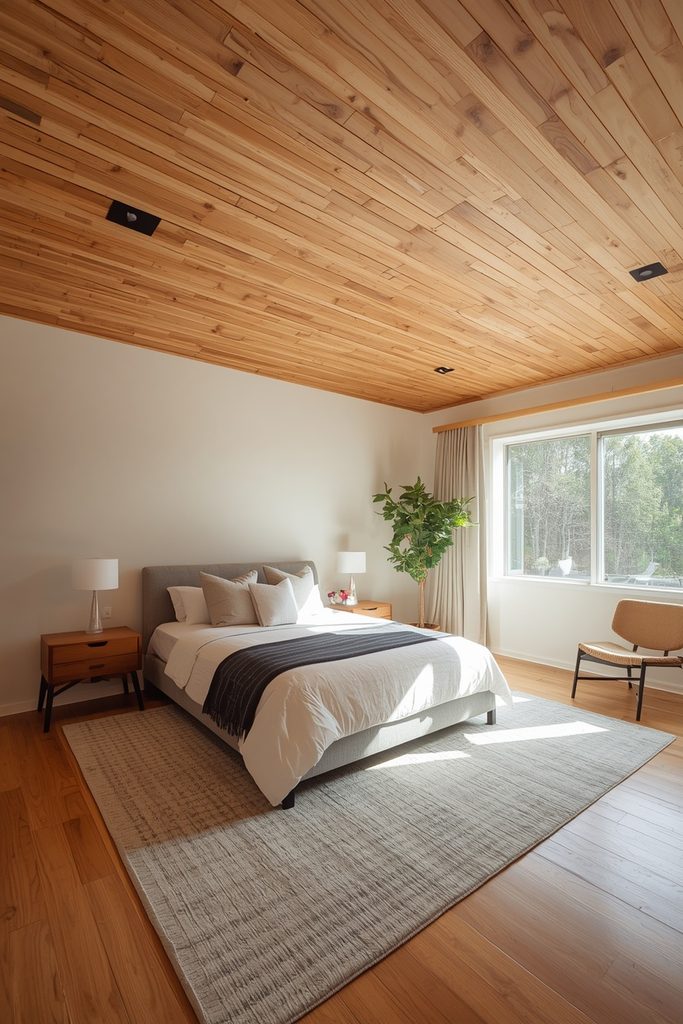
2. Peel-and-Stick Wood Plank Panels for an Indoor Accent
Peel-and-stick plank panels, made from a thin wood veneer or a convincing wood-look material, apply directly to a clean ceiling without nails or specialized tools. This is one of the fastest and most beginner-accessible options on this list. Choose a quality brand for the most convincing texture and easiest eventual removal.
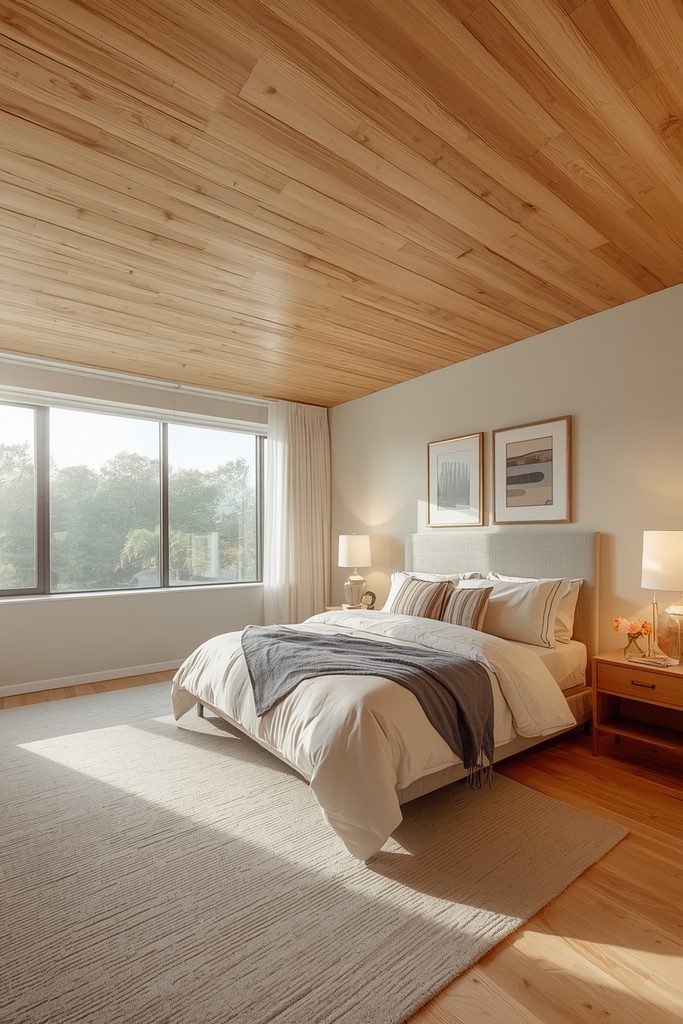
3. Cedar Fence Pickets Repurposed as Ceiling Planks
Inexpensive cedar fence pickets, sold cheaply at any hardware store, can be ripped down and sanded into convincing ceiling planks at a fraction of the cost of purpose-made cedar plank products. This requires some extra preparation time compared to purchasing pre-finished material. It’s a favorite budget hack among experienced DIY renovators specifically for outdoor and rustic indoor applications.
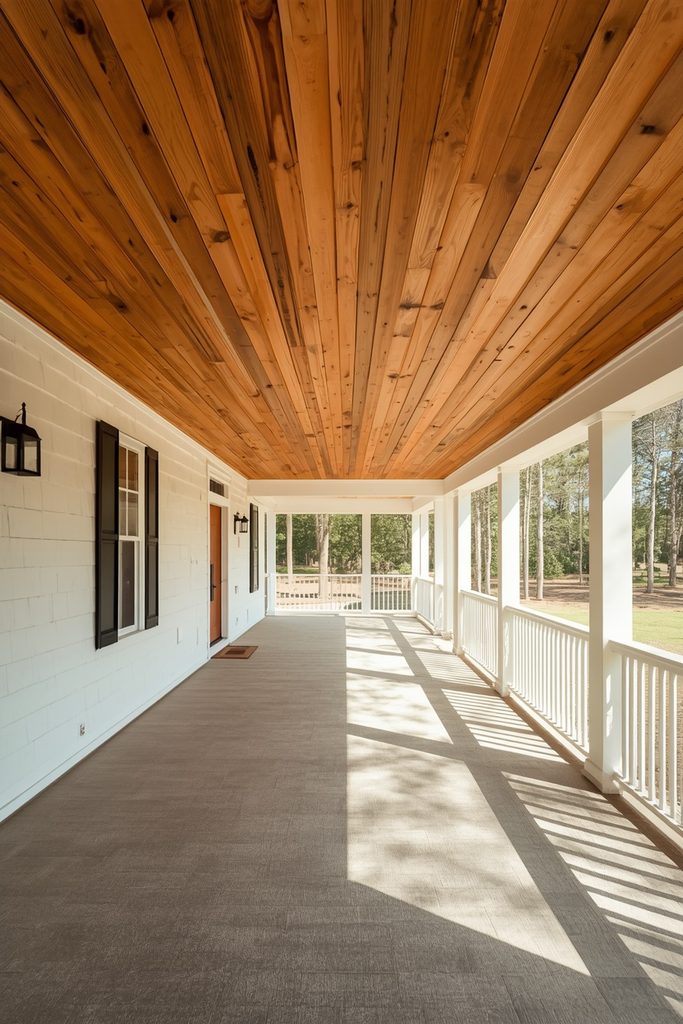
4. A Single Small Accent Section Instead of the Full Ceiling
Limiting the project to one defined section, like above a bed or a small reading nook, rather than the entire ceiling, dramatically reduces material and installation time while still delivering strong visual impact. Choose the area most visible from the room’s main sightline for the best return on a smaller investment. This is the most approachable starting point for a first DIY ceiling project.
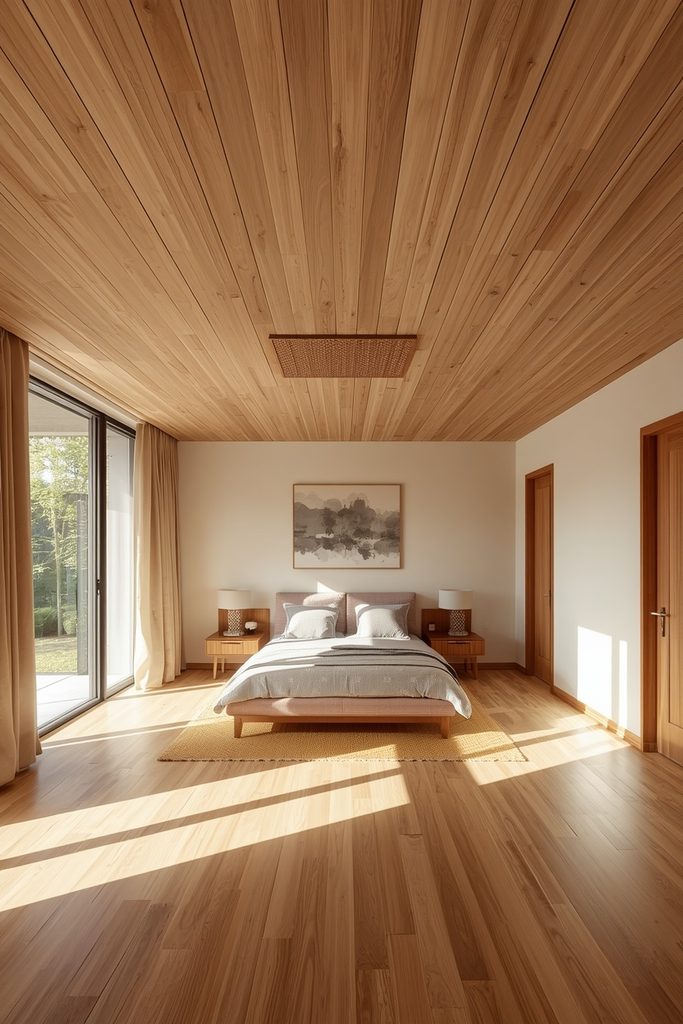
5. Painting Planks Instead of Staining to Save Cost and Time
A simple coat of paint, rather than a multi-step staining and sealing process, is both cheaper and faster, while still delivering the plank texture and shadow lines that make the ceiling visually interesting. Choose a warm neutral paint color for the coziest result. This approach works especially well for a budget indoor bedroom or bathroom project.
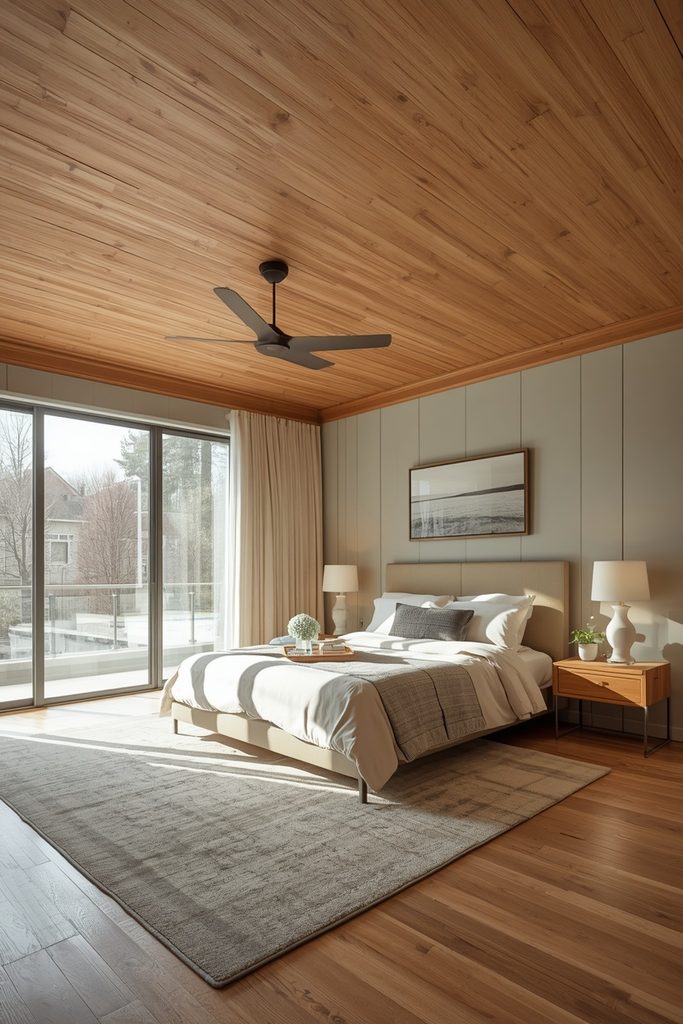
6. A Covered Patio Ceiling Using Pressure-Treated Lumber
Pressure-treated lumber, widely available and relatively inexpensive, provides a weather-resistant material for an outdoor covered patio ceiling without the cost of premium cedar or redwood. Seal the wood properly for the specific climate and exposure level. This is one of the most budget-friendly ways to bring a plank ceiling outdoors.
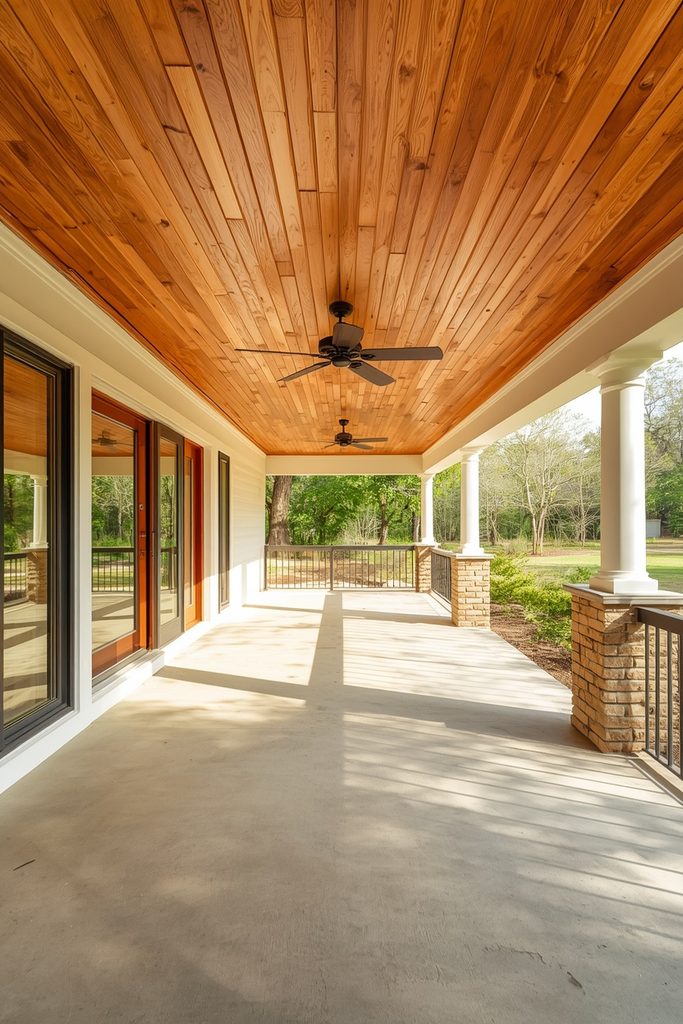
7. Shopping Clearance and Discontinued Lumber Stock
Home improvement stores frequently discount discontinued or end-of-season lumber and panel stock significantly, making it worth checking clearance sections before purchasing at full price. This requires some flexibility on the exact style or finish available. Patient shoppers can find substantial savings this way for both indoor and outdoor projects.
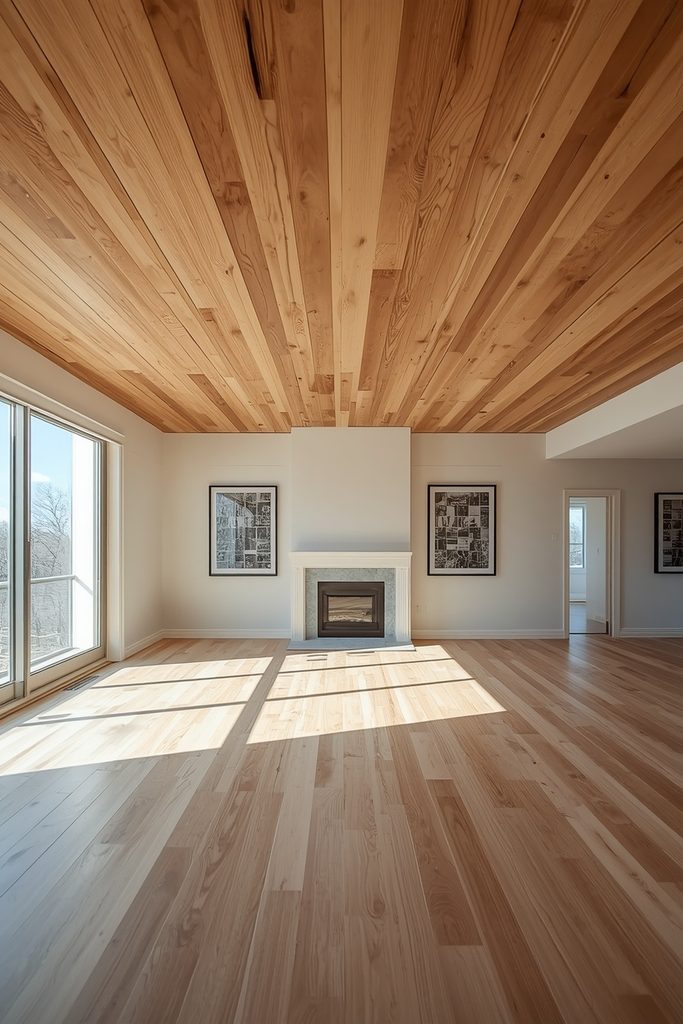
8. A DIY Outdoor Pergola Ceiling Using Basic Lumber
Simple, inexpensive lumber slats installed across the top of a pergola create a partial-shade ceiling effect for an outdoor living space at a fraction of the cost of a fully covered structure. This is a manageable weekend project for most basic DIY skill levels. It brings the warmth of a plank ceiling to an outdoor space without a full roof structure.
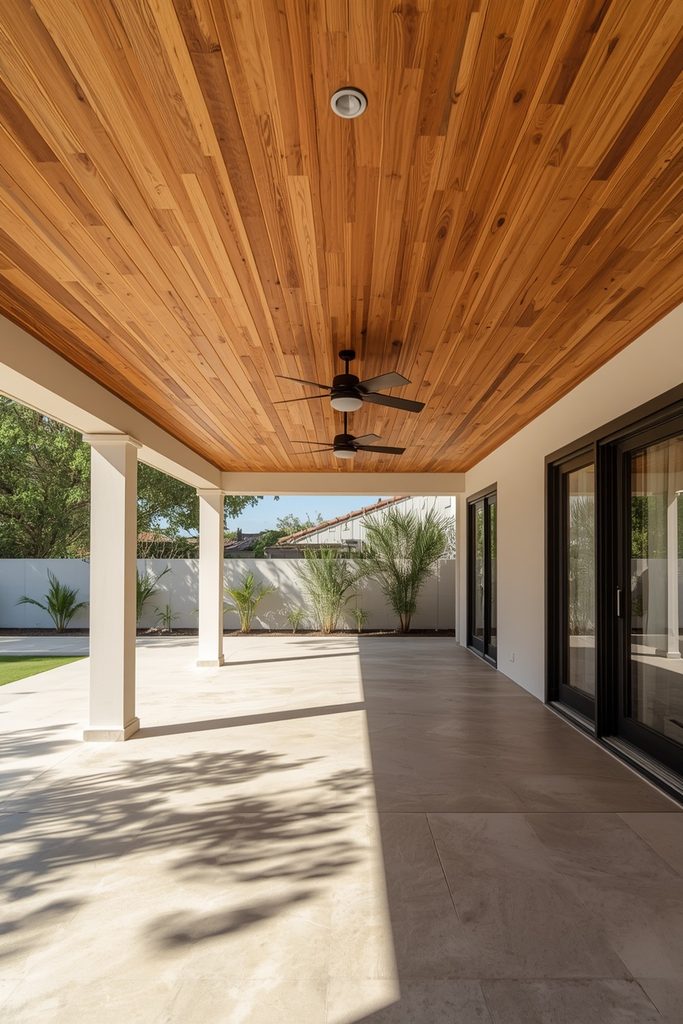
9. Using a Nail Gun Rental Instead of Buying One
Renting a nail gun for a single weekend project, rather than purchasing one outright, removes a meaningful tool cost from a budget ceiling project. Most hardware stores offer daily or weekend rental rates. This is a smart way to access professional-grade tools without the ongoing cost of ownership for a one-time project.
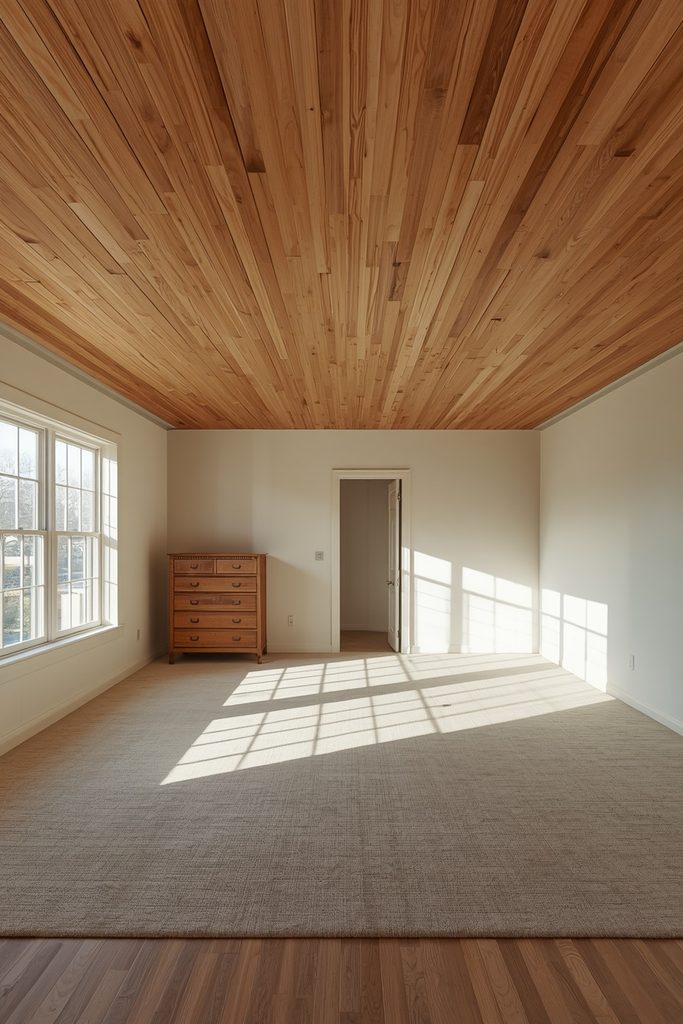
10. A Bathroom Ceiling Using Affordable Vinyl Plank Material
PVC or vinyl plank material printed with a convincing wood grain finish costs less than real wood while offering genuine water resistance, making it a smart, affordable choice for a bathroom ceiling. Choose a textured rather than flat-printed version for the most realistic look. This material trade-off makes sense specifically in a room where real wood would need extra sealing and maintenance anyway.
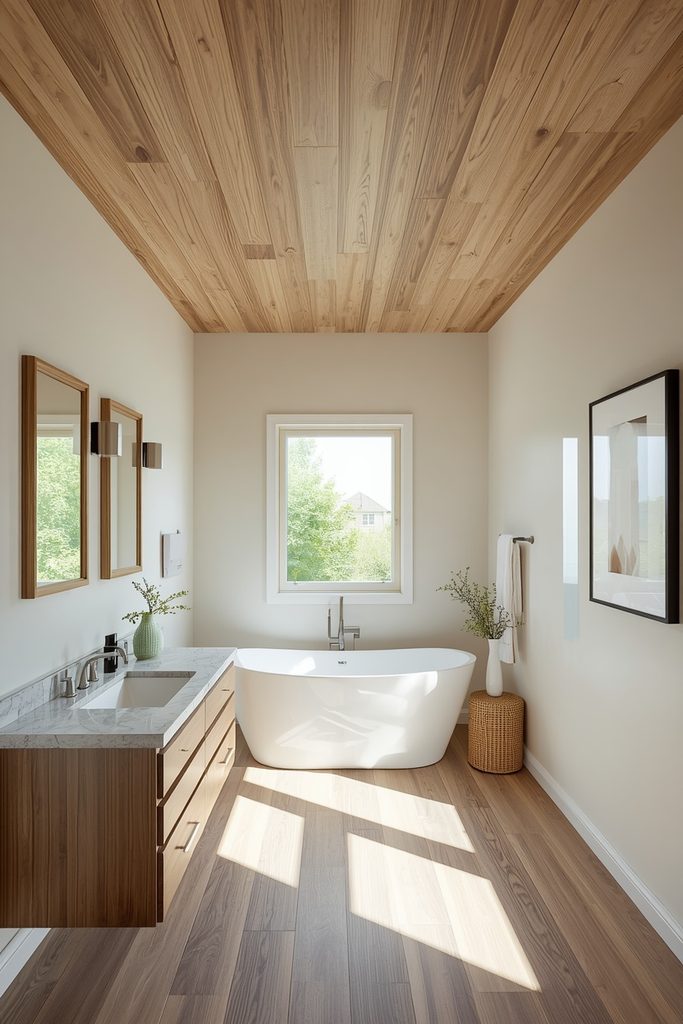
11. Reclaimed Pallet Wood for a Free or Nearly Free Ceiling
Deconstructed shipping pallets, sanded and cleaned, provide free or very low-cost wood boards for a ceiling section, provided the pallets are sourced safely and aren’t chemically treated. This requires more labor to prepare the wood than purchasing pre-cut planks. It’s one of the most affordable options available for anyone willing to put in the extra preparation time.
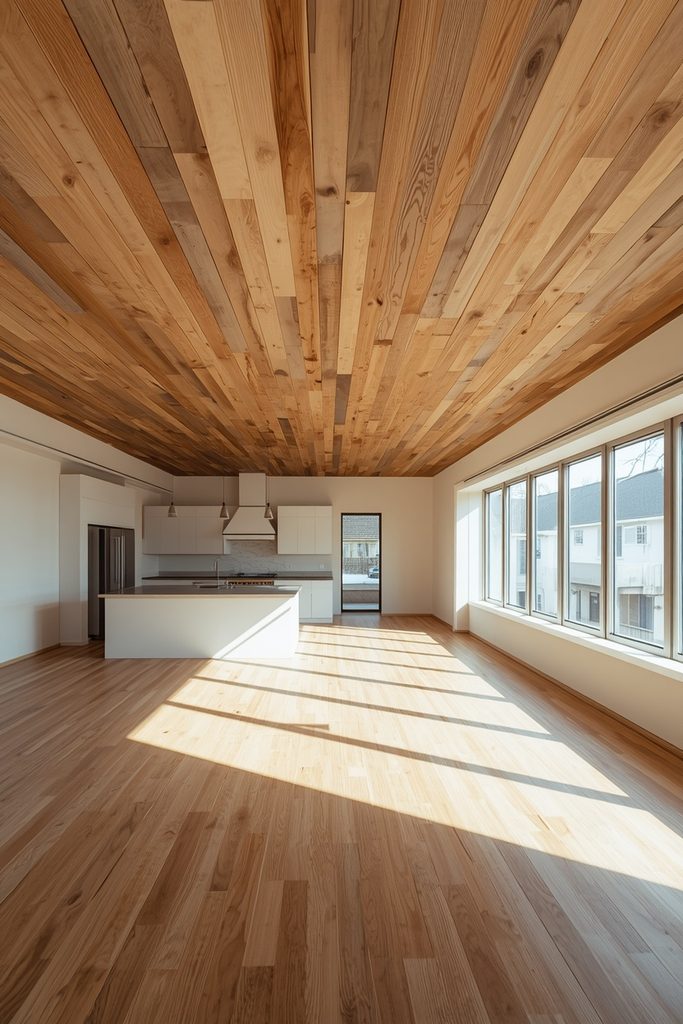
12. An Outdoor Gazebo Ceiling on a Modest Budget
Basic cedar or pine boards installed across a backyard gazebo’s ceiling bring warmth and a finished look to an outdoor structure for a relatively modest material cost. Choose a wood species suited to your climate’s typical weather exposure. This upgrade turns a purely functional outdoor structure into a genuinely inviting warm-weather retreat.
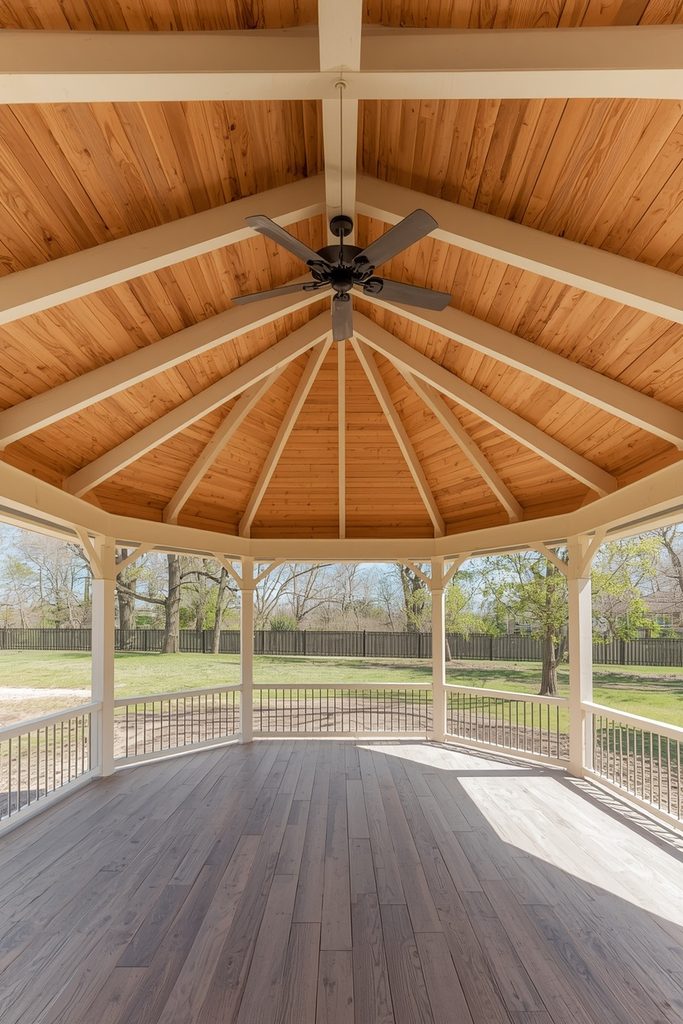
13. Bulk-Buying Material for Multiple Small Projects at Once
Purchasing enough plank material for several planned smaller projects in one bulk order often qualifies for a quantity discount unavailable when buying smaller amounts separately. This requires having multiple ceiling projects planned in advance, whether indoor accents or outdoor structures. It’s a smart strategy for anyone tackling more than one space over a season.
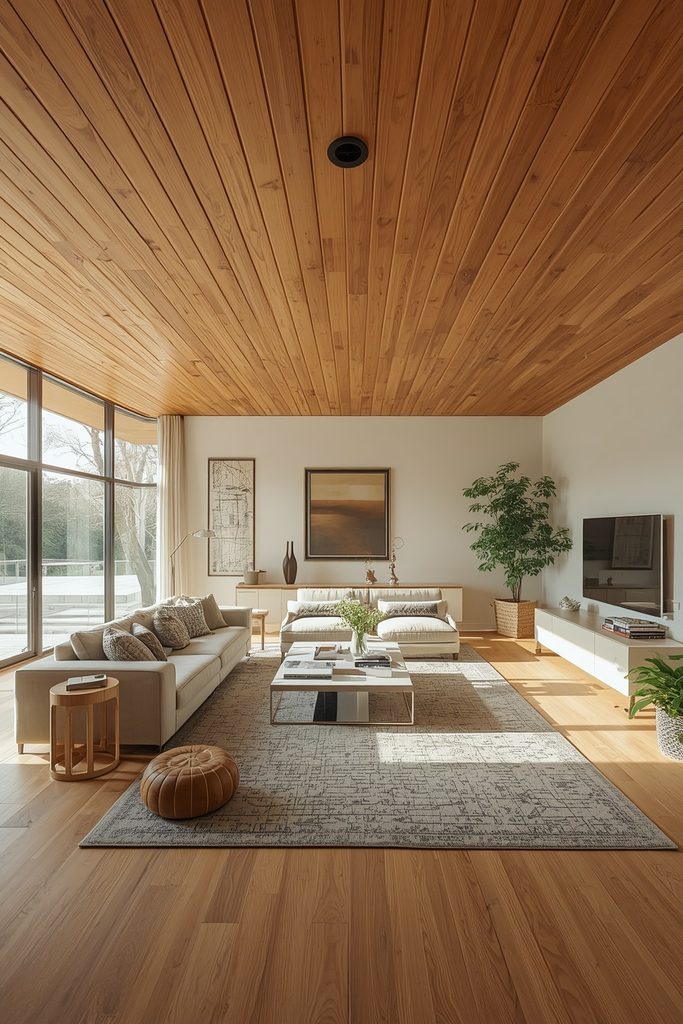
14. A Simple Whitewash Finish to Stretch a Small Material Budget
A light whitewash finish lets even inexpensive, lower-grade lumber look intentional and cohesive, since the translucent finish evens out minor color variation between individual boards. This is a smart technique when working with budget material that might otherwise look mismatched. It works well for both an indoor accent ceiling and a covered outdoor space.
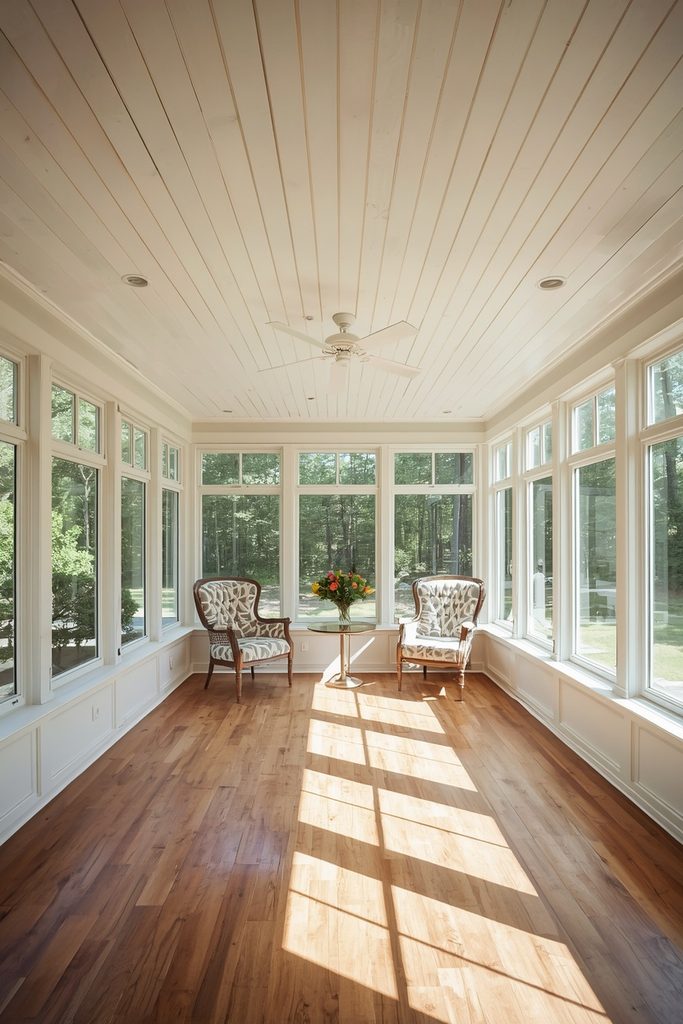
15. A DIY Outdoor Cabana Ceiling Using Leftover Deck Boards
Leftover composite or wood deck boards from a previous outdoor project, cut down to fit a small cabana or outdoor bar ceiling, bring material cost close to zero for anyone with genuine leftover stock. This works best for a smaller structure given the limited quantity typically available. It’s a resourceful way to finish an outdoor structure using material that would otherwise go to waste.
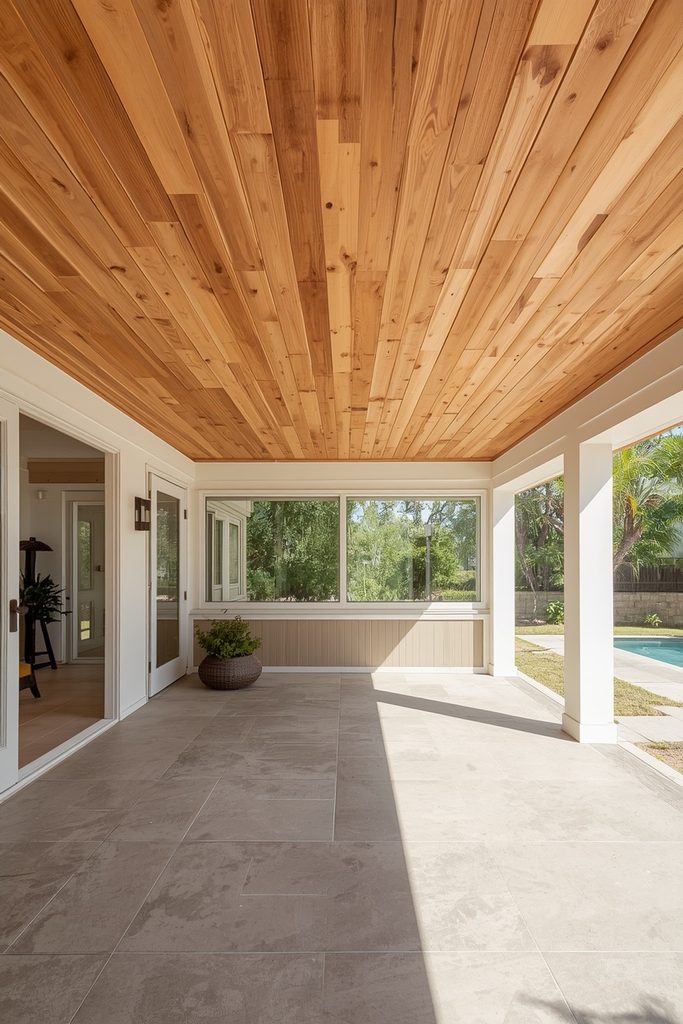
Where I’d Start If I Only Did Three Things
If I only had a tight budget, I’d start with a single small accent section from idea four, since limiting the scope immediately controls material cost while still delivering strong visual impact. Second, I’d choose inexpensive pine boards from idea one for an indoor project, or cedar fence pickets from idea three for an outdoor one, since both are among the most budget-friendly materials available. Third, I’d finish with paint rather than stain from idea five, because it’s faster and cheaper while still delivering the plank texture that makes the ceiling visually interesting.
FAQ
What’s the cheapest material for an outdoor wood plank ceiling?
Pressure-treated lumber and repurposed cedar fence pickets are both among the most affordable weather-resistant options for an outdoor covered space. Both require proper sealing for outdoor exposure, but the base material cost is considerably lower than premium cedar or redwood boards sold specifically for ceiling applications.
Can I really achieve a nice-looking result with cheap materials?
Yes, especially with techniques like a whitewash or paint finish, which even out minor imperfections and color variation in budget lumber. The overall installation quality, consistent spacing and a level, straight pattern, matters more to the finished look than the price of the wood itself.
Is it cheaper to do an indoor or outdoor plank ceiling project?
Indoor projects are often slightly more affordable overall, since outdoor applications require weather-rated material and sealants that add to the cost. That said, both types of projects can be kept budget-friendly using the material swaps and techniques covered in this list.
Do I need special tools for a budget DIY plank ceiling?
A basic saw, a level, and some way to attach the planks (a nail gun, screws, or construction adhesive) cover most of what’s needed for a straightforward installation. Renting rather than buying any specialized tools, like a nail gun, for a single project is a smart way to keep overall costs down.
Conclusion
A budget-friendly wood plank ceiling is achievable both indoors and outdoors, whether through inexpensive pine, repurposed fence pickets, or a smaller accent section instead of a full room. Choose the material and technique from this list that fits your specific project and space, and a genuinely warm, textured ceiling is within reach at nearly any budget.