
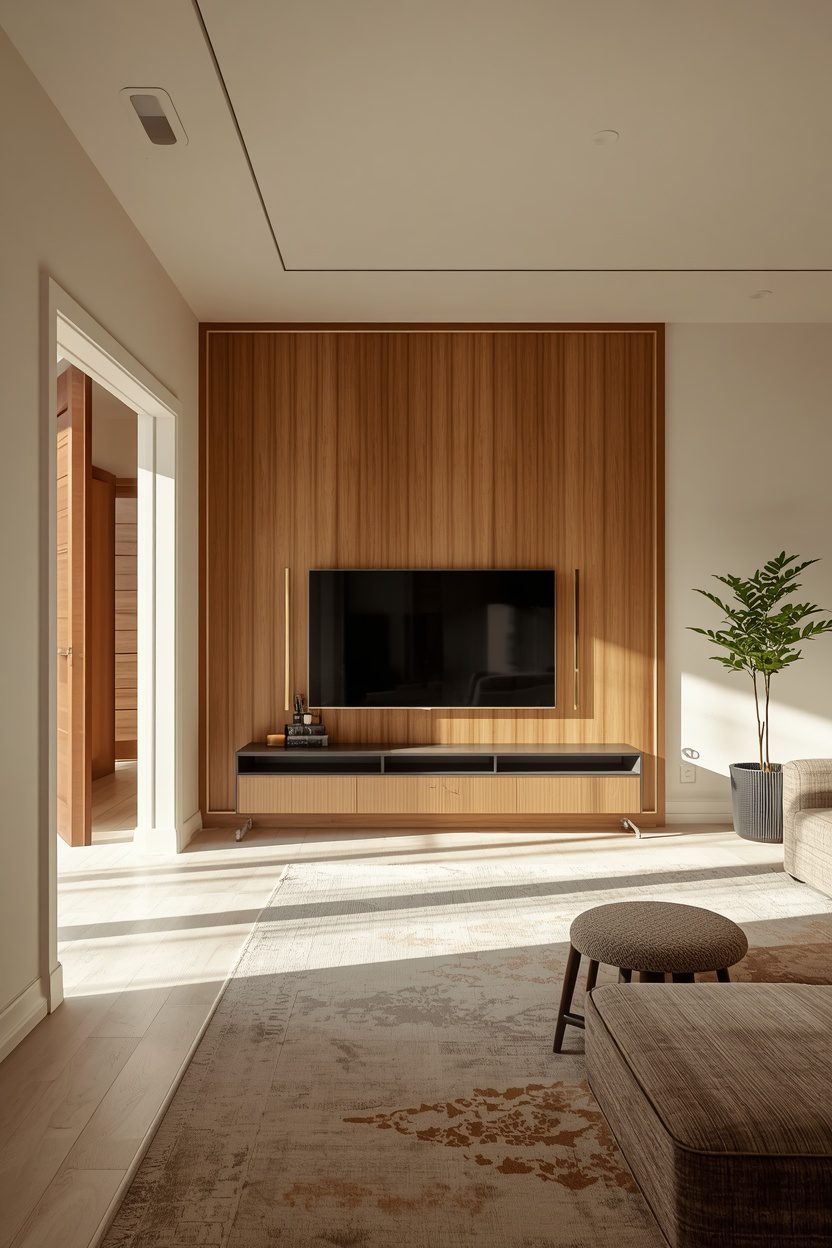
Elevating the wall behind a television goes beyond simply adding wood paneling, since the specific material, texture, and finishing details are what separate a genuinely sophisticated accent wall from a standard one. A book-matched veneer, a fluted texture, or a single oversized panel treated as art all bring a level of refinement that a basic flat panel treatment doesn’t achieve on its own.
These fifteen ideas focus specifically on the techniques and material choices that elevate a wood accent wall beyond the ordinary. Before the full list, here are five quick highlights worth keeping in mind as you plan a genuinely elevated design.
| 5 Quick Highlights for an Elevated Wood Accent Wall |
| 1. Material quality matters more than pattern complexity — book-matched veneer or a single striking panel often elevates a wall more than an intricate design. |
| 2. Mixed materials, like brass trim or fluted texture, introduce sophistication that a single flat wood surface doesn’t achieve on its own. |
| 3. Backlighting extends the elevated feeling into the evening, turning the wall into an atmospheric feature rather than only a daytime design element. |
| 4. Keep styling on or near the wall minimal — restraint lets the material and craftsmanship be the visual focus rather than competing decor. |
| 5. Echo the accent wall’s wood tone in at least one other piece of furniture to make the design feel cohesive rather than an isolated feature. |
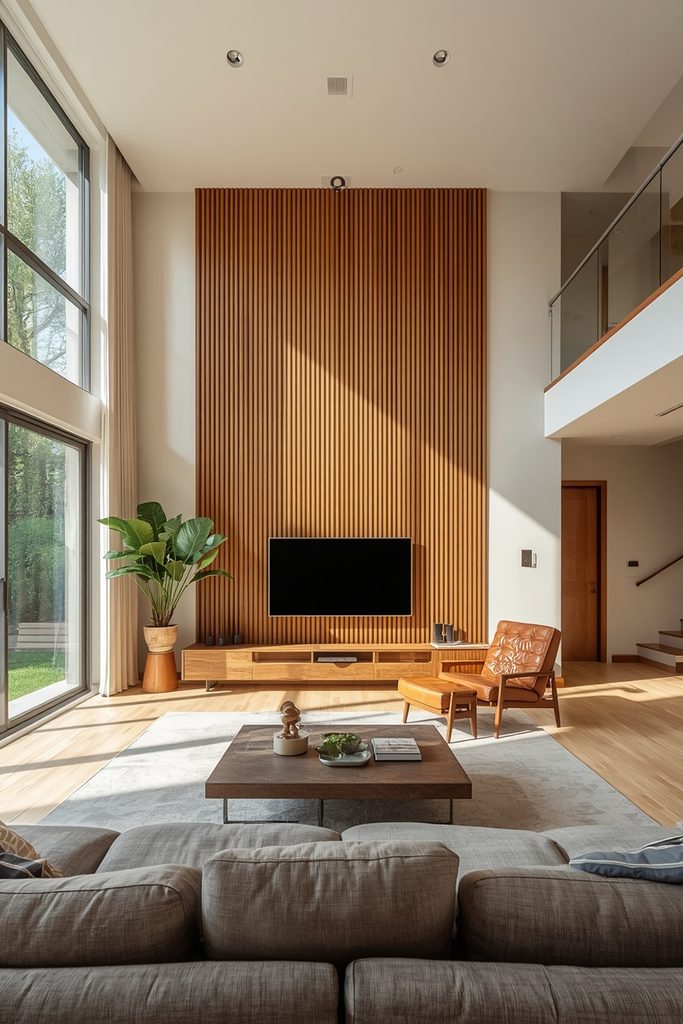
1. A Full-Height Slat Wall for Maximum Elevation
Extending vertical slats fully from floor to ceiling behind the television creates the most elevated, architectural version of this accent wall concept, since the height draws the eye upward and makes the whole room feel taller. Choose a slat spacing between two and four inches for the most refined, current proportion. This is the single highest-impact choice for anyone wanting the most dramatic transformation.
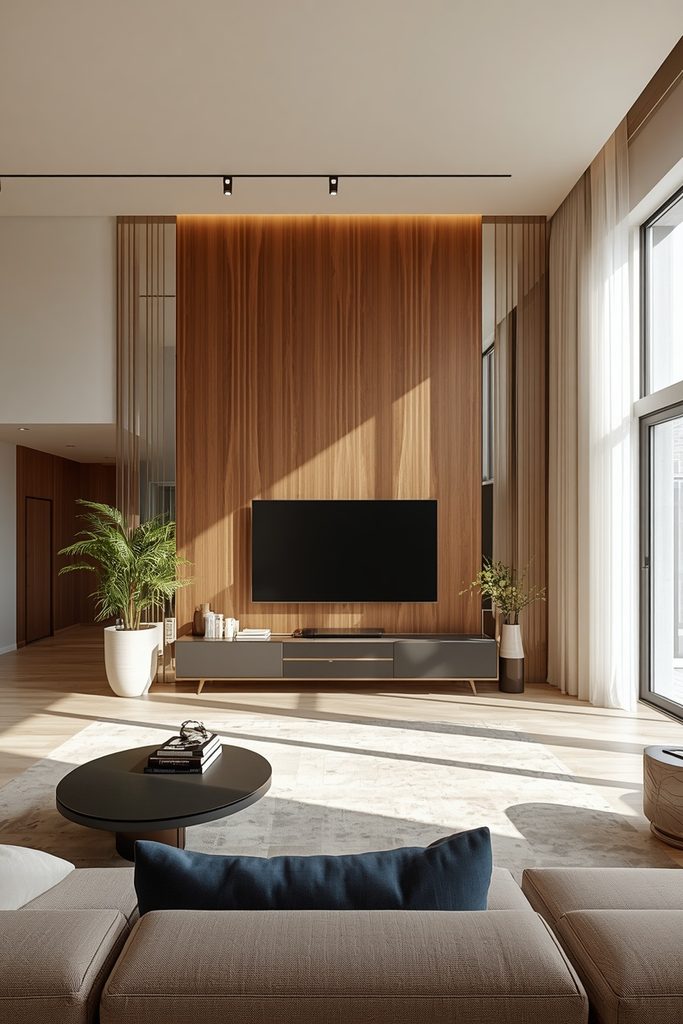
2. Book-Matched Wood Veneer for a Luxury Finish
Book-matched wood veneer panels, where the grain mirrors symmetrically across a central seam, bring a genuinely luxury, art-like quality to the wall behind the TV that standard uniform panels don’t achieve. Choose a veneer with dramatic, flowing grain as the wall’s hero material. This is a higher-cost option that delivers one of the most elevated results on this entire list.
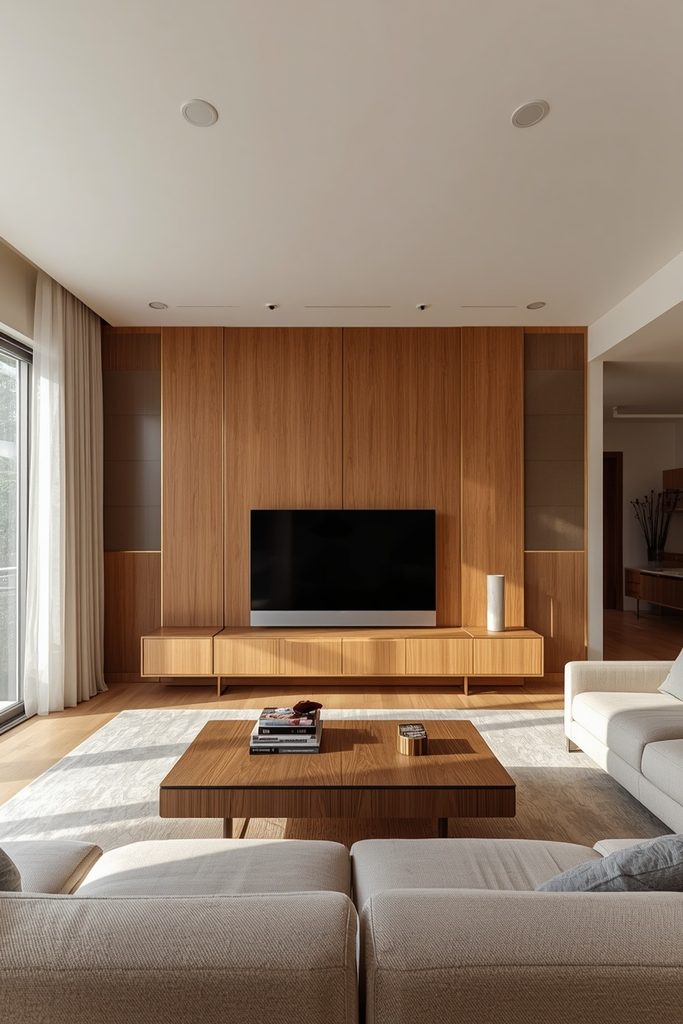
3. Mixed Wood and Brass Trim for an Elevated Contrast
Thin strips of brass trim placed between sections of wood paneling introduce a mixed-material sophistication that a single-material wall doesn’t achieve on its own. Keep the brass accents minimal and evenly spaced rather than overusing them. This combination is a favorite in high-end residential design specifically for its elevated, considered quality.
4. A Backlit Wall That Glows Around the Screen
Soft, warm LED lighting integrated behind the wood panels, glowing gently around the edges of the television, elevates the accent wall into a genuinely atmospheric, cinematic feature rather than a purely daytime design element. Choose a dimmable, warm color temperature for the most flexible ambiance. This detail transforms movie nights into a considerably more elevated experience.
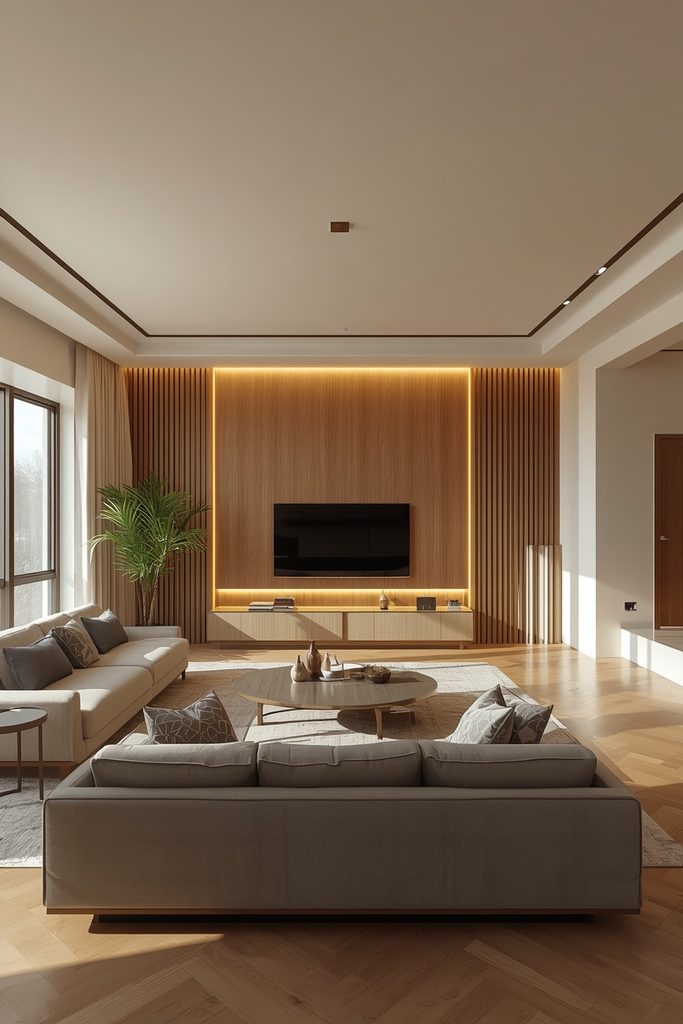
5. A Monochrome Textural Wall for Quiet Sophistication
Painting slim wood panels the exact same tone as the surrounding wall relies entirely on shadow and texture rather than color contrast, creating a quiet, sophisticated elevation that doesn’t rely on anything bold or obvious. This approach suits a minimalist, design-forward living room particularly well. It requires confidence in restraint, since the effect is subtle rather than dramatic.
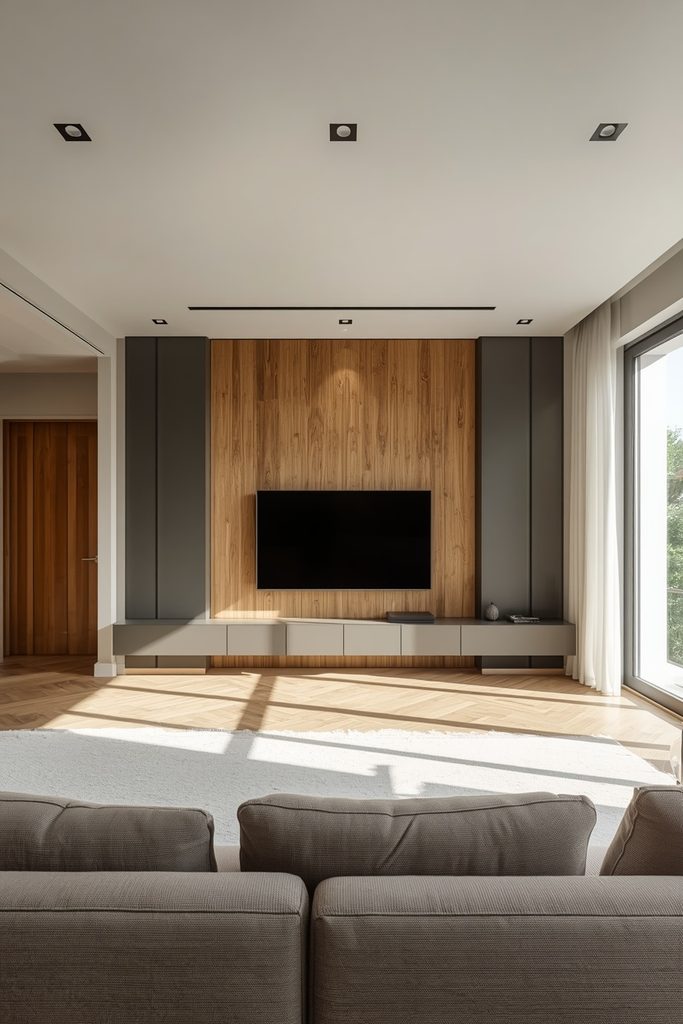
6. Reclaimed Wood With a Clear Sealed Finish
Reclaimed wood, sealed with a clear finish that preserves and highlights its natural weathering and history, elevates a living room with genuine material character that new lumber can’t replicate. Source material from a reputable salvage supplier for the most authentic texture. This option brings elevated warmth through authenticity rather than polish.
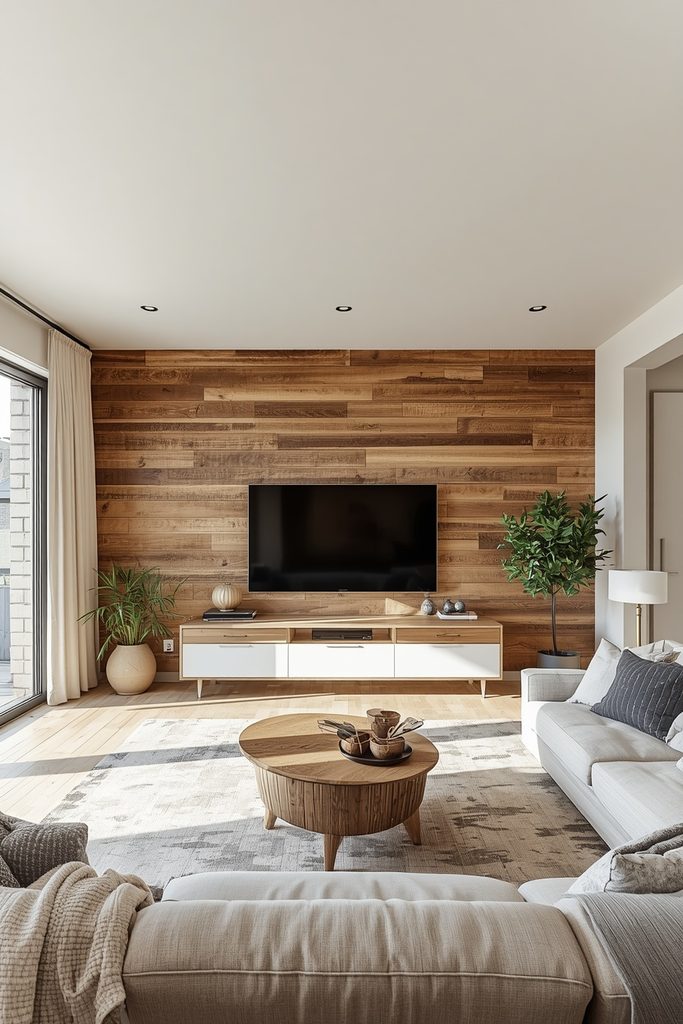
7. A Floor-to-Ceiling Wall That Wraps a Corner
Continuing the wood accent treatment seamlessly around an interior corner, rather than stopping at a single flat wall, creates a genuinely immersive, elevated architectural moment. This requires careful planning to maintain consistent spacing as the pattern turns. It’s a technique that signals a considerably higher level of design intention than a standard flat wall.
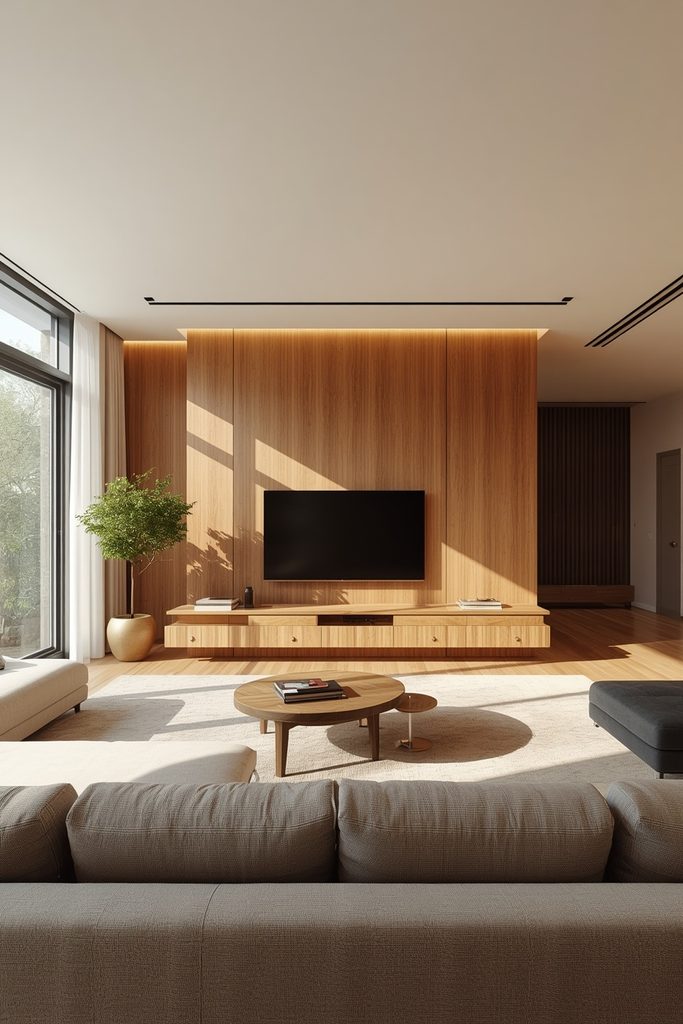
8. A Single Oversized Panel Treated as Art
Rather than multiple slats or a repeated pattern, one single, oversized wood panel with beautiful, visible grain, treated almost like a piece of art, brings an elevated, minimalist statement that relies on material quality rather than pattern complexity. Choose a panel with striking, natural grain as the focal point. This is a distinctly elevated, less-is-more approach.
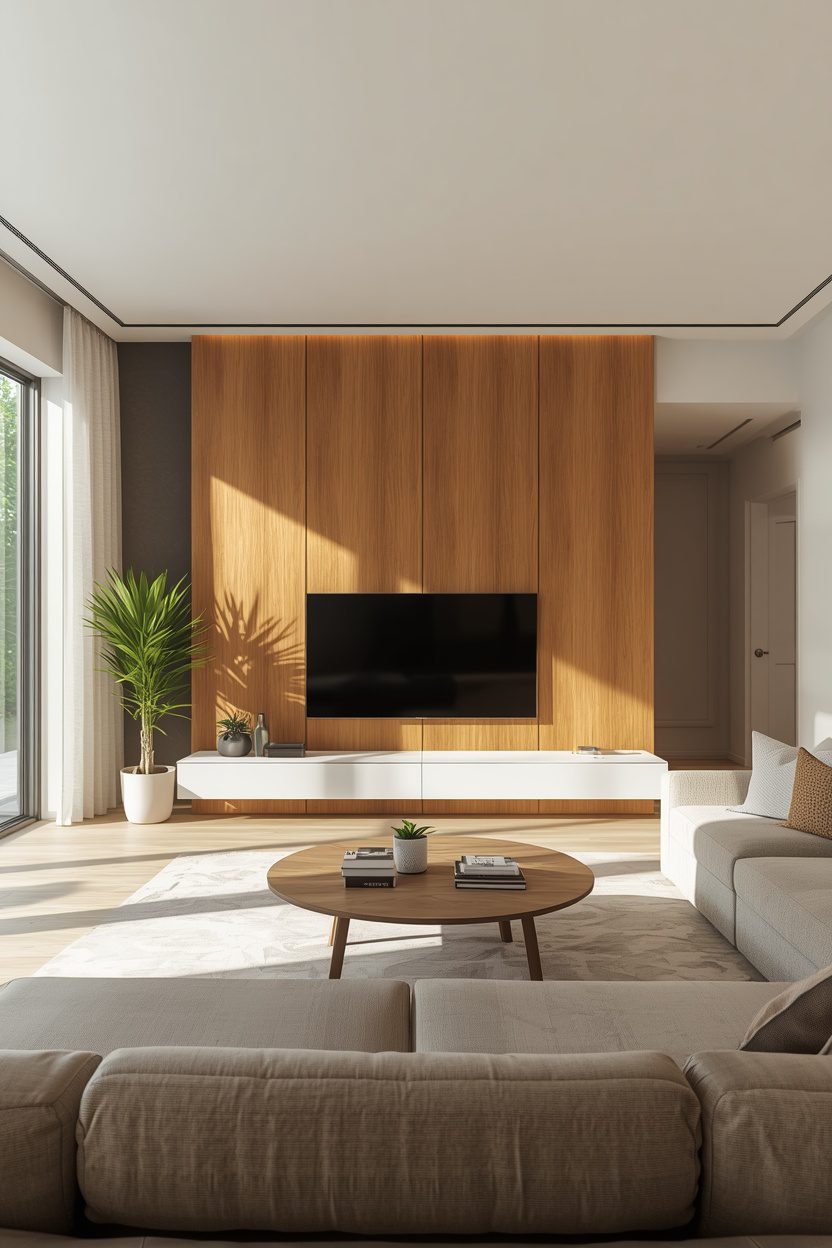
9. A Fluted Wood Panel Texture for Subtle Dimension
Fluted or reeded wood panels, with their soft, rounded grooves, bring a refined, dimensional texture behind the TV that’s gentler than a sharp-edged slat but still considerably more elevated than a flat surface. Choose a fluting depth proportional to the wall’s overall scale. This texture has become increasingly popular in current high-end interior design.
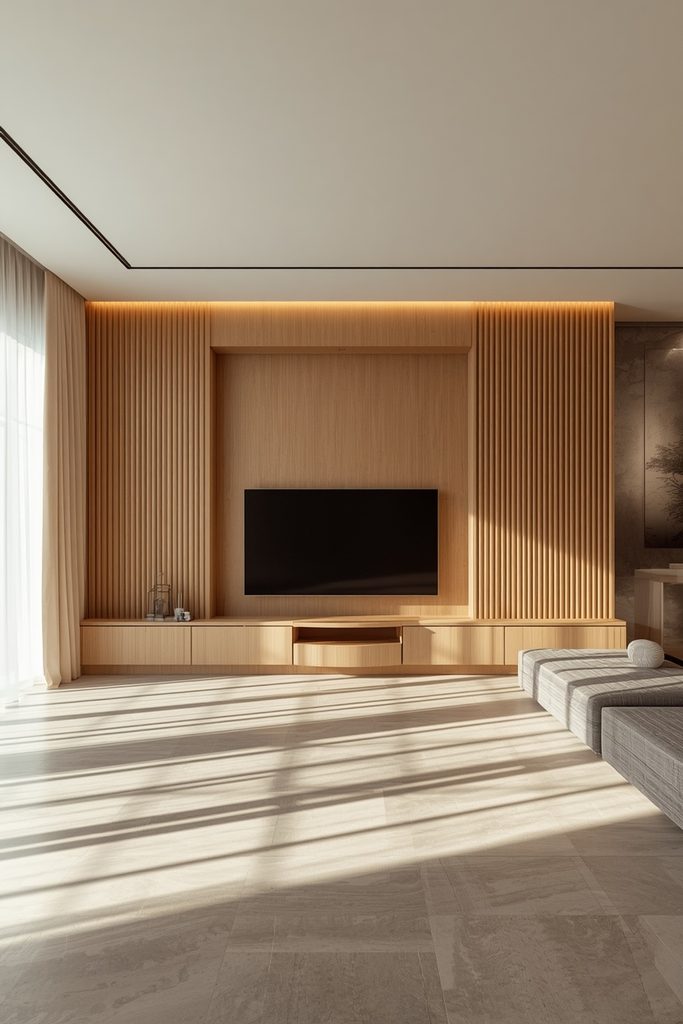
10. A Wood Accent Wall Paired With a Minimalist Floating Console
A slim, minimalist floating console beneath the wood accent wall, rather than a bulky traditional media cabinet, keeps the overall look elevated and visually light. Choose a console finish that complements rather than exactly matches the wall behind it. This pairing avoids a heavy, cluttered feeling at the base of an otherwise elevated design.
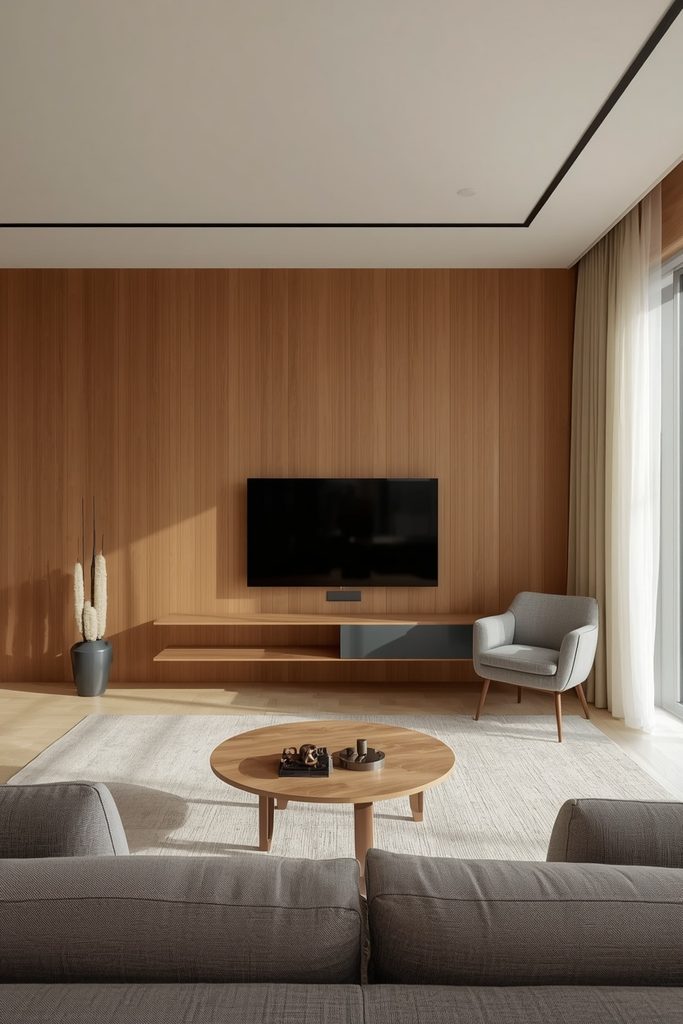
11. A Wood Wall With Integrated, Invisible Storage
A section of the wood accent wall designed with a concealed, push-to-open compartment hides media equipment completely out of sight, keeping the wall’s surface visually seamless and elevated. This requires more advanced custom carpentry than a standard panel installation. It delivers one of the cleanest, most high-end results achievable with this technique.
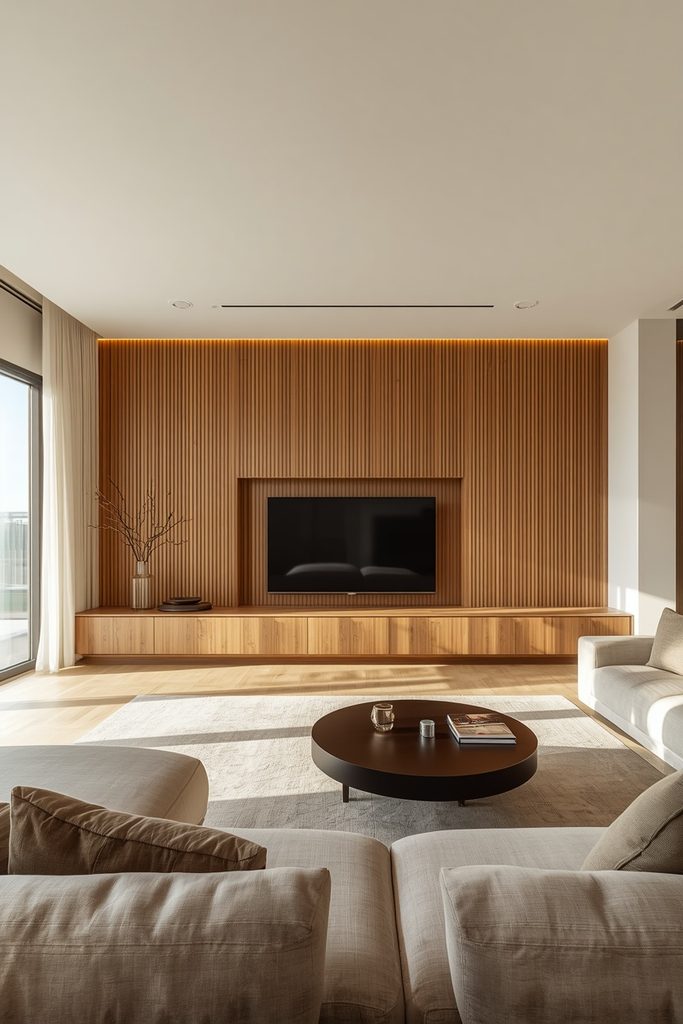
12. A Two-Tone Wood Wall Using Light and Dark Boards
Alternating between a lighter and a darker wood tone across the accent wall introduces visual rhythm and depth that a single uniform tone doesn’t achieve, elevating the design beyond a basic single-material treatment. Keep the ratio weighted toward one dominant tone with the second as an accent. This is a more advanced technique for anyone wanting a wall with more visual complexity.
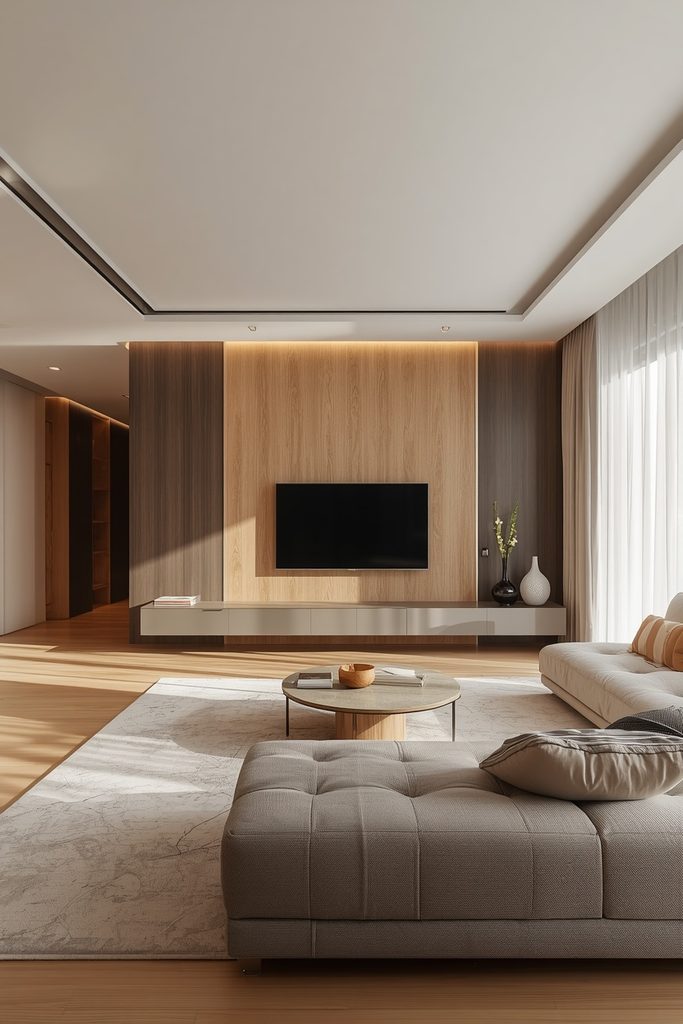
13. A Curved Wood Accent Wall for an Organic, Elevated Shape
Wood paneling bent or cut to follow a gentle curve, rather than a flat rectangular wall, brings a soft, organic quality increasingly associated with current elevated residential design. This is one of the more technically demanding installations on this list, often requiring a specialized flexible panel product. It delivers a genuinely distinctive, high-end result found in very few homes.
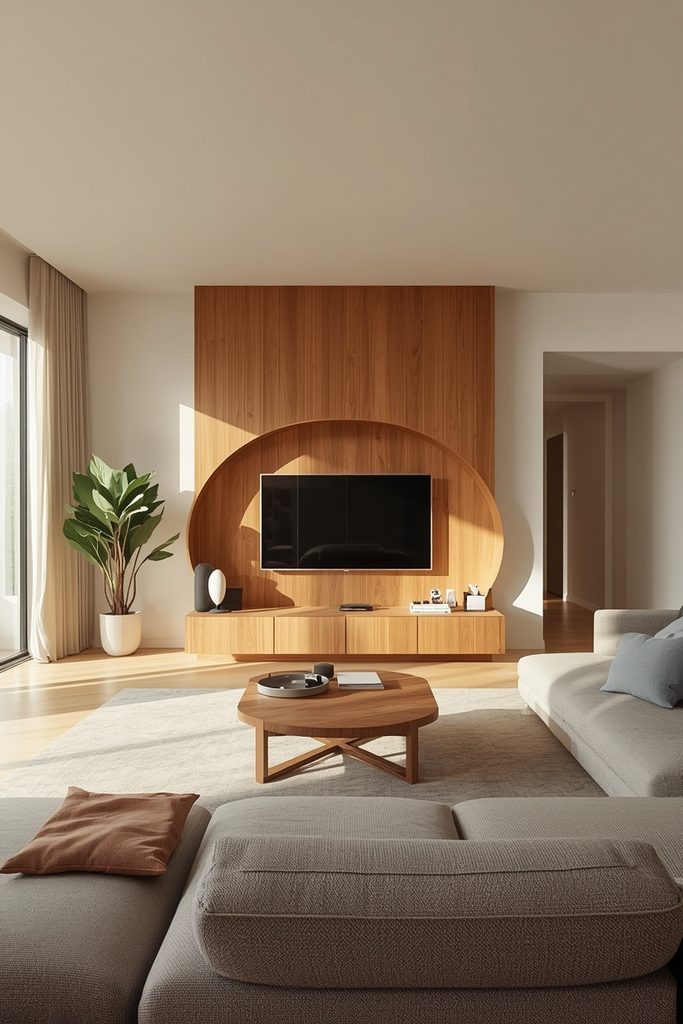
14. A Wood Wall With a Considered, Minimal Styling Approach
Keeping any shelving or styled objects on or near the wood accent wall extremely minimal, just one or two considered pieces rather than a cluttered display, elevates the overall design by letting the material and craftsmanship speak for themselves. This restraint requires more editing discipline than filling every available surface. It’s a styling principle as much as a material choice.
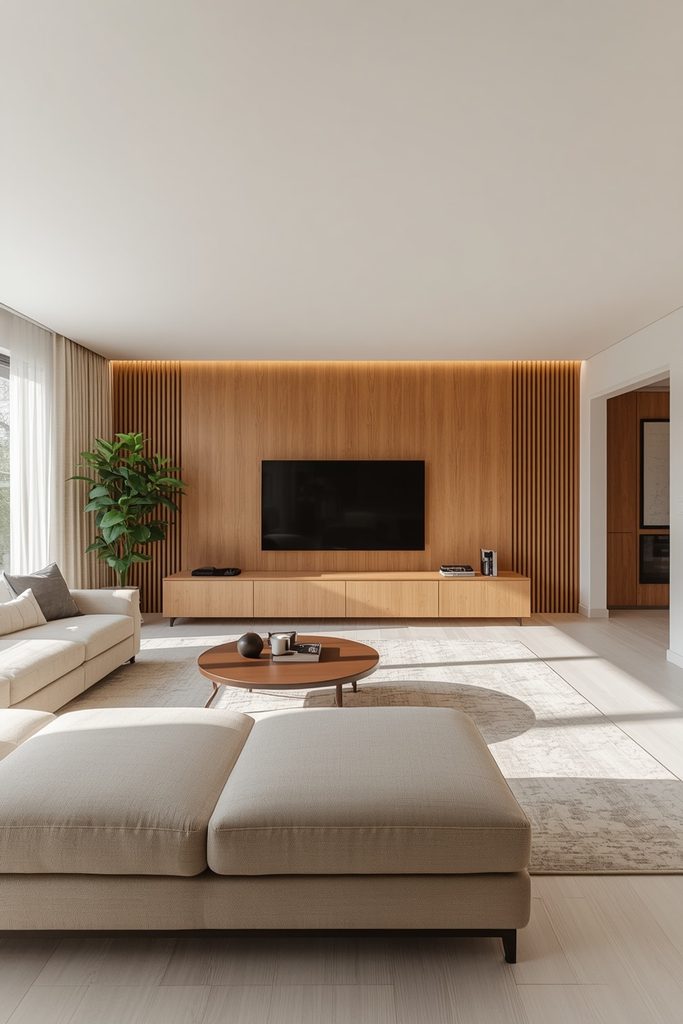
15. A Consistent Material Story Extending Beyond the TV Wall
Carrying the same wood tone or material language from the TV accent wall into other elements of the room, like a coffee table or shelving unit, elevates the design by making the accent wall feel like part of a cohesive whole rather than an isolated feature. Choose at least one other piece of furniture in a complementary wood tone. This consistency is often what separates a genuinely elevated room from one with just a single standout feature.
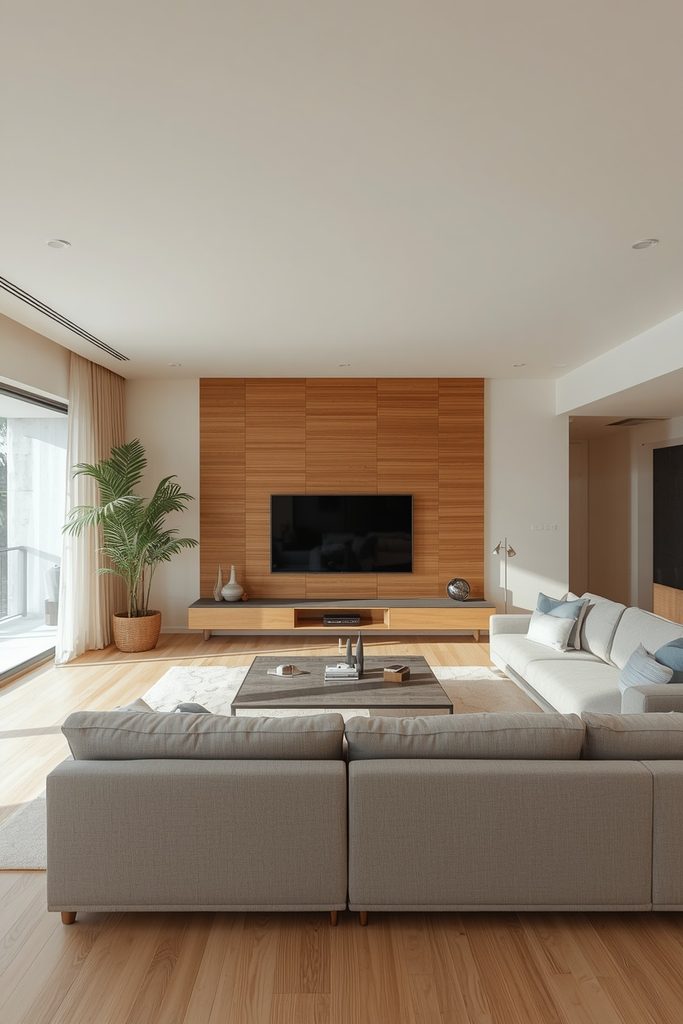
Where I’d Start If I Only Did Three Things
If I only had one design decision to prioritize, I’d choose a full-height slat wall from idea one, since the floor-to-ceiling scale delivers the single highest-impact elevation available. Second, I’d add backlighting from idea four, because it extends the elevated feeling into the evening and transforms movie nights into something considerably more atmospheric. Third, I’d practice restraint in styling from idea fourteen, since letting the material and craftsmanship speak for themselves is what ultimately separates an elevated design from a merely decorated one.
FAQ
What’s the single most elevating choice for a wood accent wall?
Material quality, whether that’s book-matched veneer, reclaimed wood with genuine character, or a single striking panel, generally elevates a wall more reliably than pattern complexity alone. A simple, well-executed design in a beautiful material consistently outperforms an intricate pattern in a mediocre one.
Does an elevated wood accent wall need to be expensive?
Not necessarily, since restraint and good proportions, both free design decisions, do a lot of the elevating work. That said, premium materials like book-matched veneer or genuine brass trim do carry a higher cost than standard slat panels, so budget and desired elevation level should be considered together.
How do I keep an elevated accent wall from feeling cold or sterile?
Choosing a warm wood tone, adding soft backlighting, and including at least one or two considered styled objects, rather than leaving the wall completely bare, keeps an elevated design feeling warm and inviting rather than overly minimal or sterile. The goal is sophisticated restraint, not an empty, unused feeling.
Can I elevate an existing, more basic wood accent wall without starting over?
Yes, adding backlighting, a brass trim accent, or simply decluttering the surrounding styling to a more minimal approach can meaningfully elevate an existing wall without a full renovation. Echoing the wall’s wood tone in one other piece of furniture is also a relatively simple way to make an existing wall feel more cohesively elevated.
Conclusion
Elevating a wood accent wall behind the television comes down to material quality, thoughtful texture choices, and restraint in styling, more than any single dramatic design gesture. Choose one or two ideas from this list that fit your room and budget, and the wall will read as genuinely sophisticated rather than simply decorated.