
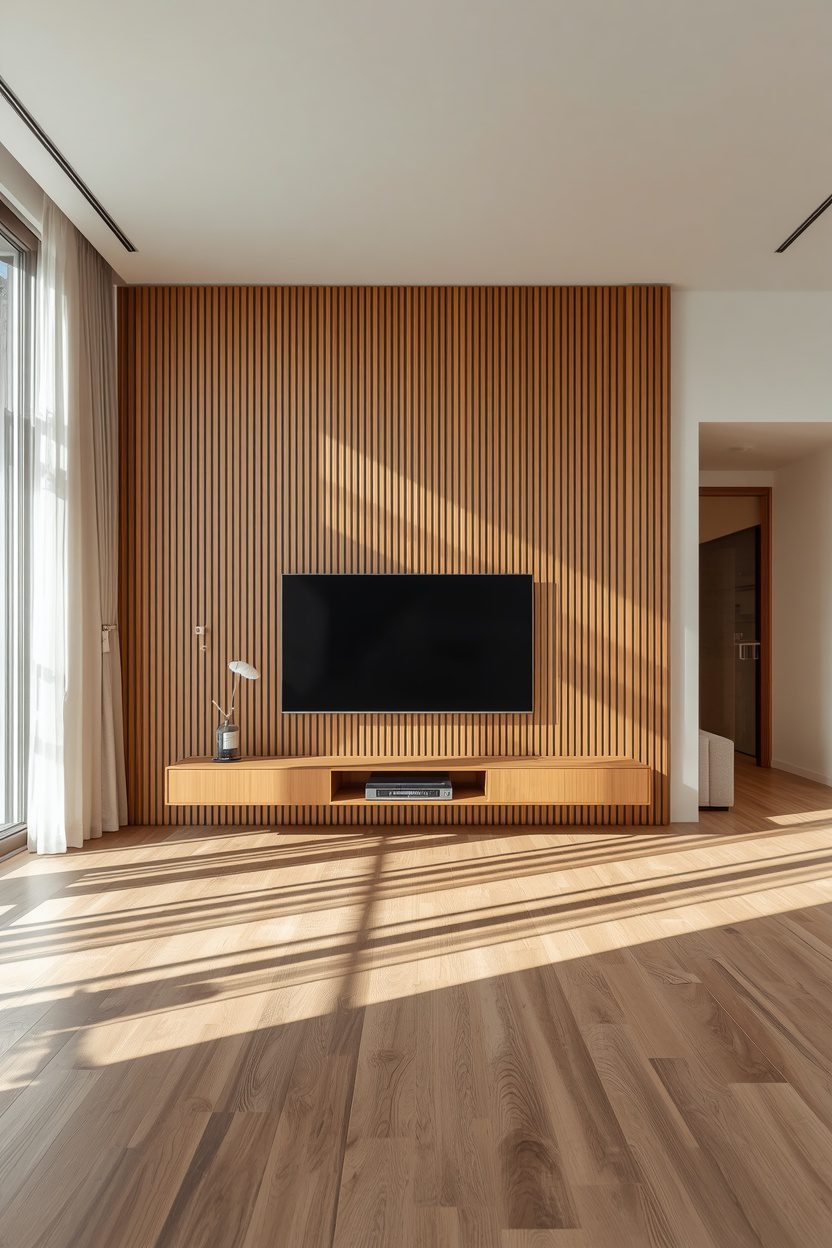
The wall behind the television is one of the most visible surfaces in the entire living room, yet it’s often left completely plain or treated as an afterthought. A wood panel treatment turns that wall into the room’s main architectural feature, whether through a clean slat pattern, a dramatic herringbone design, or a fully integrated built-in with hidden storage.
These twenty ideas cover a wide range of panel styles and layouts specifically designed around a wall-mounted television. The table below breaks down the general panel style, how cables are typically managed, and the cost level for each idea.
Quick Reference: Idea, Panel Style, Cable Management, and Cost
| Idea | Panel Style | Cable Management | Cost Level |
| Full-height vertical slats | Slat | Routed behind slats | Moderate |
| Integrated floating console | Flat panel | Internal cable channel | High |
| Herringbone TV wall | Herringbone | Routed behind panels | High |
| Panel wall with fireplace | Flat panel | Routed around fireplace | High |
| Matte black slat wall | Slat | Routed behind slats | Moderate |
| Backlit LED slat wall | Slat | Internal with LED wiring | High |
| Two-tone panel and paint | Wainscoting | Routed behind lower panel | Moderate |
| Reclaimed wood TV wall | Reclaimed plank | Routed behind boards | Moderate |
| Panel wall with flanking shelves | Flat panel | Routed behind panel | Moderate |
| Geometric panel statement | Geometric | Routed behind panels | High |
| Monochrome panel wall | Slat | Routed behind slats | Moderate |
| Shiplap media wall | Shiplap | Routed behind boards | Low to moderate |
| Hidden compartment panel wall | Flat panel | Fully concealed | High |
| Corner-wrapping panel wall | Slat | Routed behind slats | High |
| Board and batten media wall | Board and batten | Routed behind panel | Moderate |
| Panel wall with sound bar shelf | Flat panel | Routed behind panel | Moderate |
| Mixed wood and metal trim | Slat | Routed behind slats | High |
| Framed accent panel section | Flat panel | Routed behind panel | Low |
| Mantel shelf panel wall | Flat panel | Routed behind panel | Moderate |
| Full-height seamless panel wall | Flat panel | Routed behind panel | High |
1. Floor-to-Ceiling Vertical Slats Behind the TV
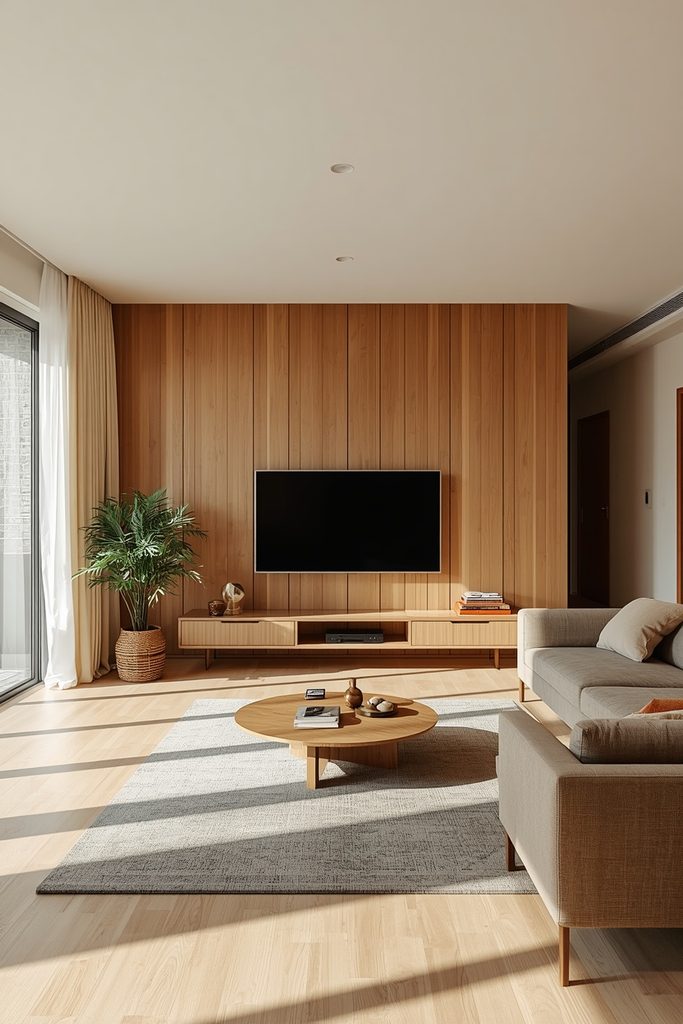
Vertical slats running the full height of the wall behind the television draw the eye upward, making the room feel taller while giving the TV a textured, architectural backdrop. Choose a slat spacing between two and four inches for the most current proportion. This is one of the most popular and widely applicable styles on this entire list.
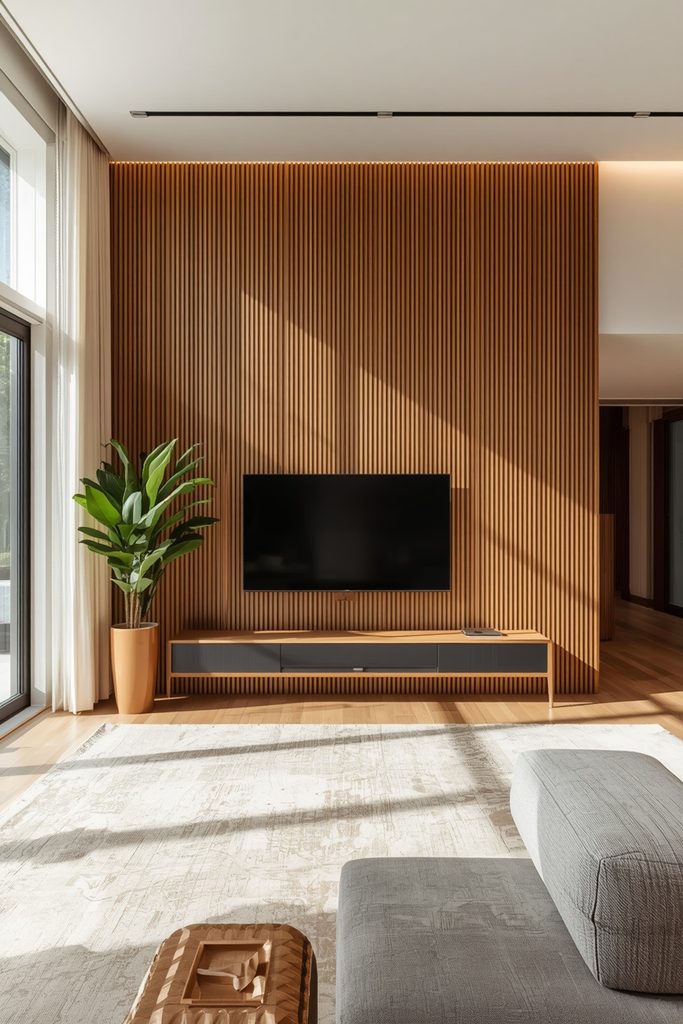
2. A Floating Console Integrated Into the Panel Wall
A floating media console built directly into the slat or panel wall, rather than added separately afterward, creates one fully integrated, custom-feeling media wall. Plan the console’s bracket locations against your stud map before installing any panels. This combination elevates a standard TV wall into a genuinely custom-feeling built-in.
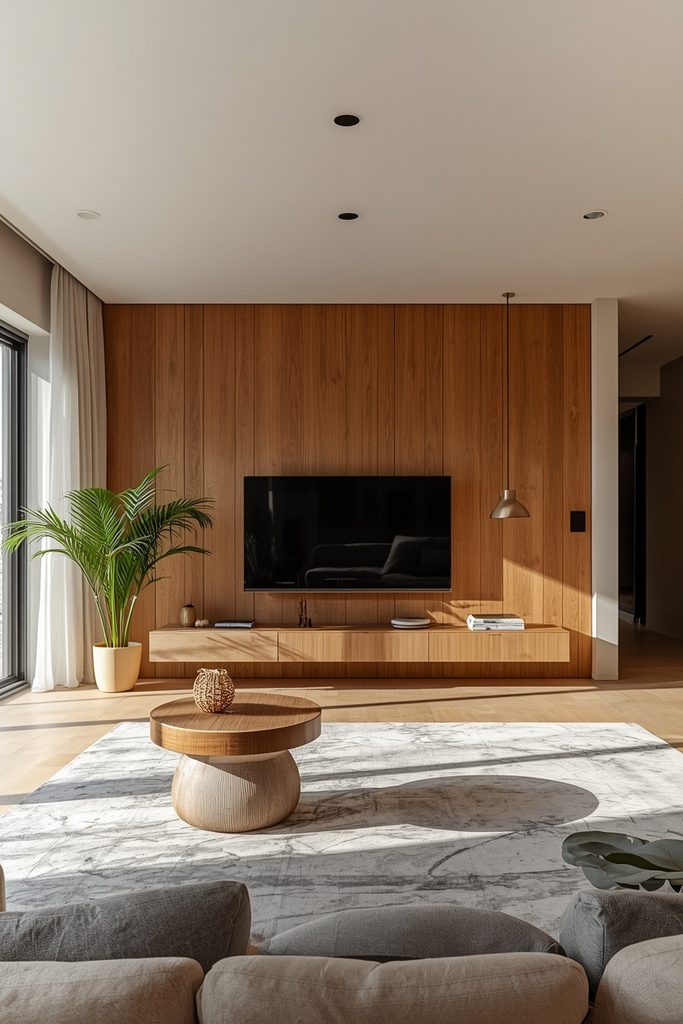
3. A Herringbone Panel Pattern Behind the Screen
A herringbone-patterned wood panel wall brings graphic energy and texture behind the television, turning the media wall into a genuine design feature rather than just a mounting surface. Choose a panel kit designed specifically for herringbone installation for the most precise result. This is a higher-effort style but delivers one of the most striking results on this list.
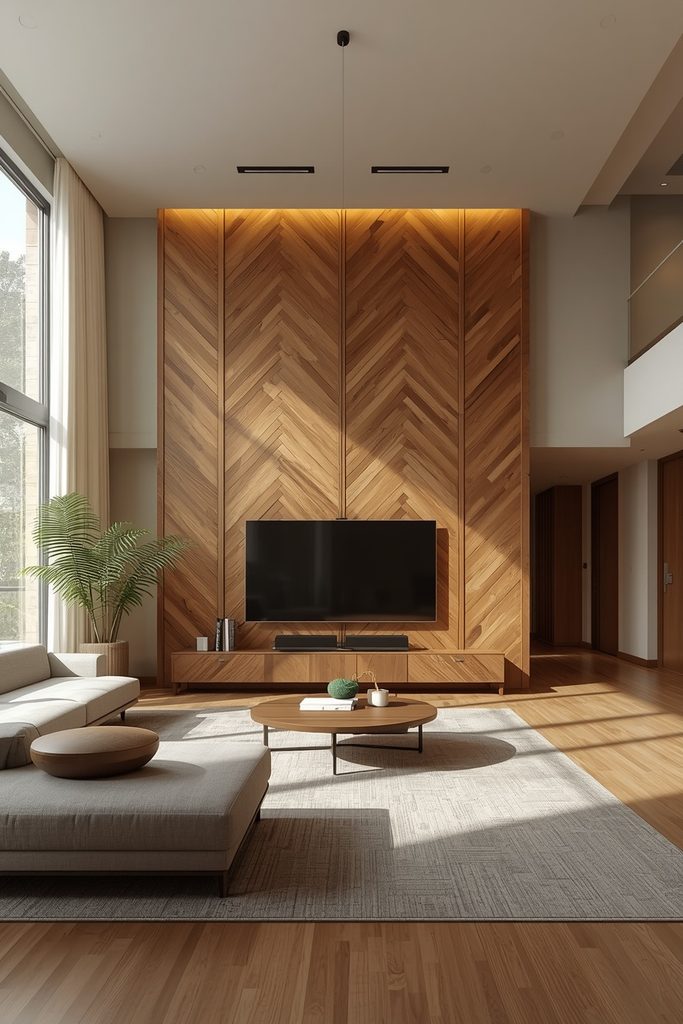
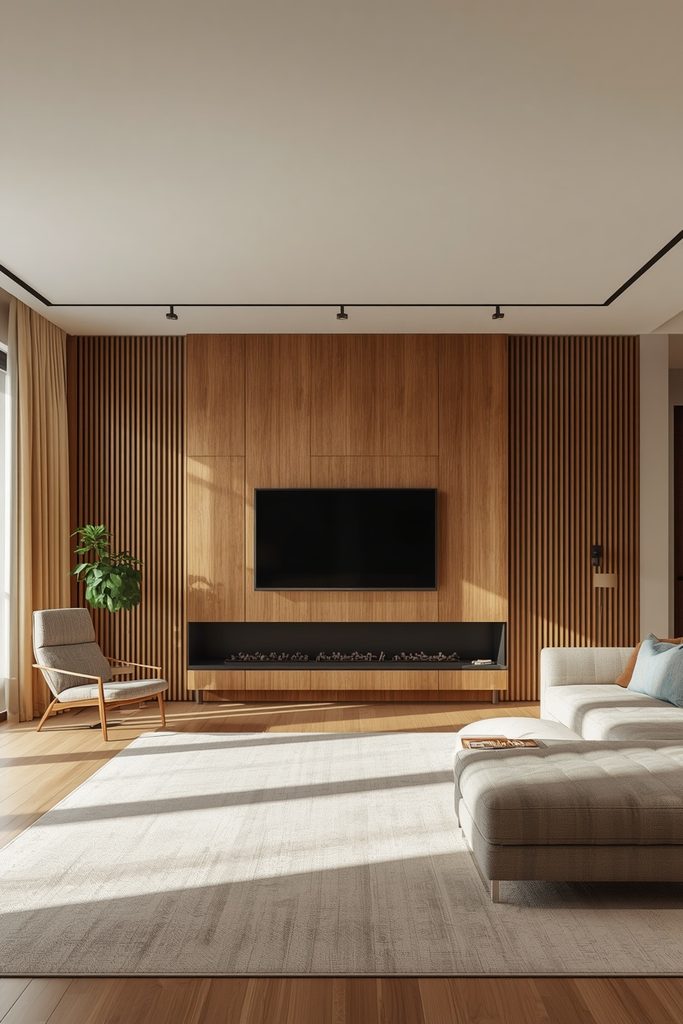
4. A Panel Wall Framing a Linear Fireplace Below
Wood paneling surrounding both the television and a linear fireplace beneath it integrates two focal points into one cohesive architectural moment. Choose a fire-rated material and maintain appropriate clearances from the heat source. This combination is one of the most popular living room renovation choices, since both features already draw the eye to the same wall.
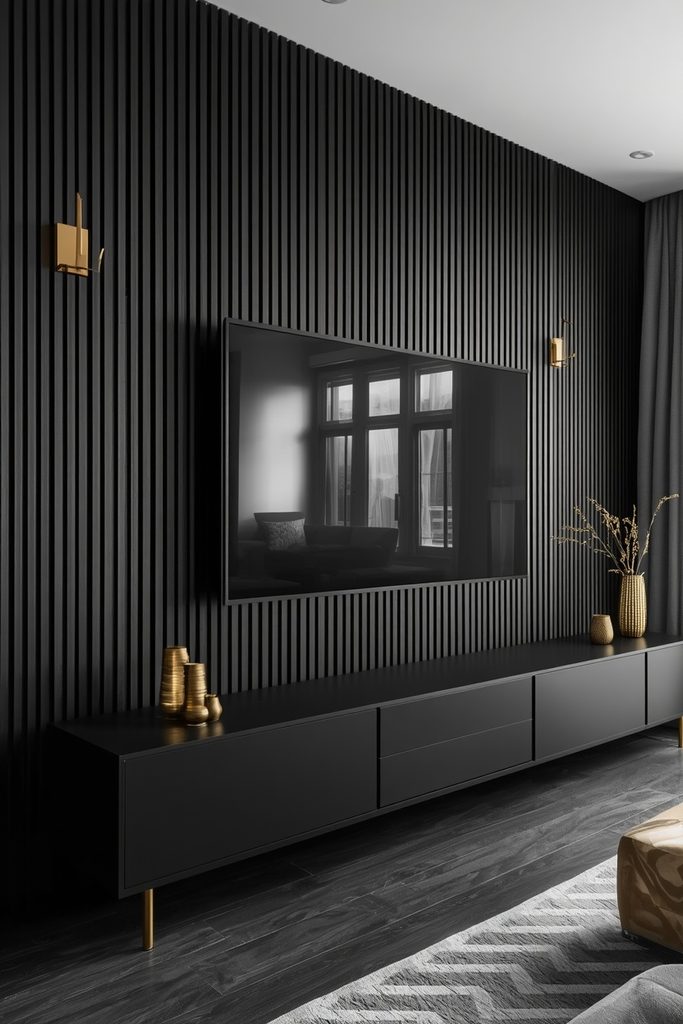
5. A Matte Black-Stained Slat Wall Behind the Screen
Staining slat paneling in a deep matte black rather than a natural wood tone gives the media wall a bold, contemporary edge that makes the television blend in rather than stand out against the dark background. Pair it with warm brass accents elsewhere in the room for contrast. This is a striking, design-forward choice for a modern living room.
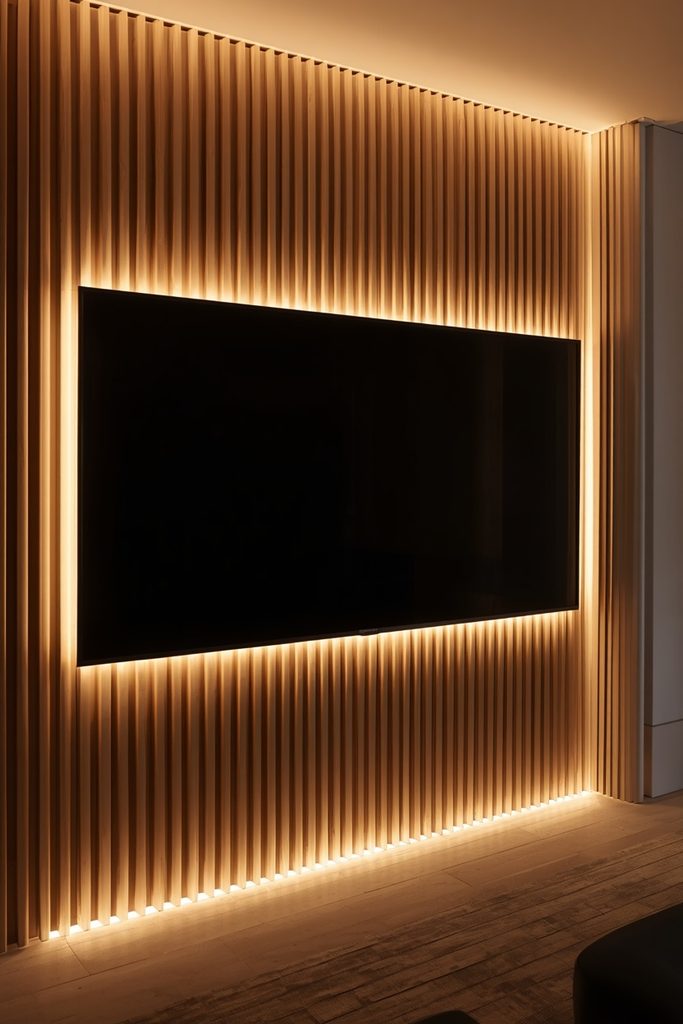
6. A Backlit Slat Wall With the TV as a Focal Point
Running warm LED strips behind the slats surrounding the television adds a soft, even glow that frames the screen dramatically, especially once the room is dimmed for movie watching. Choose a warm color temperature and a dimmable driver for the most flexible ambiance. This detail elevates a standard slat wall into a genuinely cinematic media room feature.
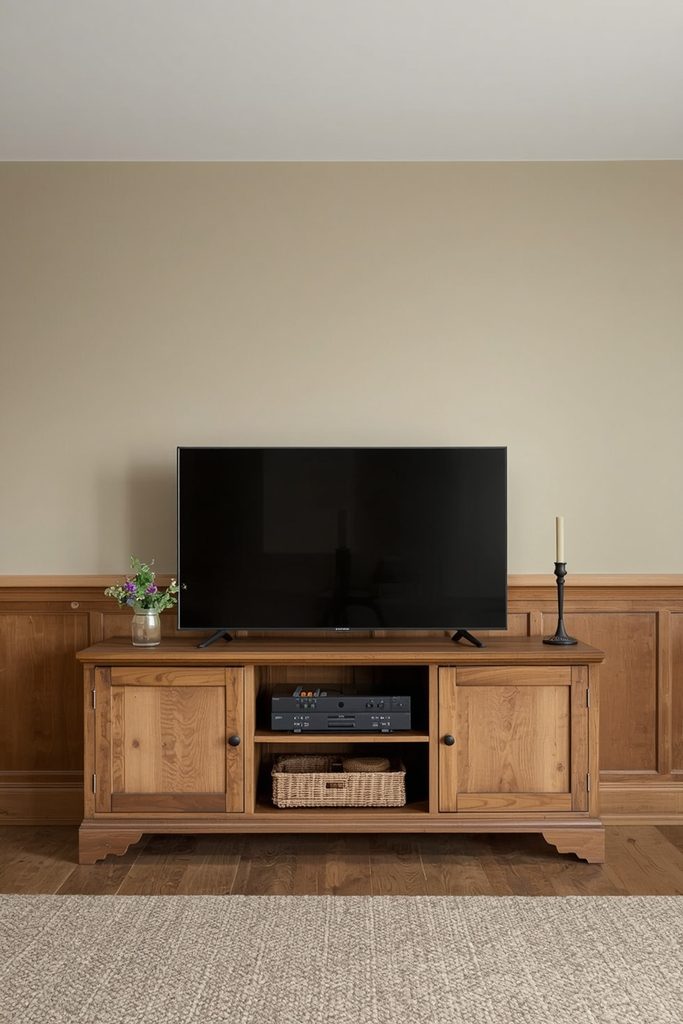
7. A Two-Tone Panel and Paint Combination
Pairing wood paneling on the lower section of the wall, where the TV and console sit, with a contrasting paint color above creates visual interest and a sense of height beyond a flat single-material wall. Choose a paint color that complements rather than clashes with the wood’s natural tone. This works well in almost any room and at almost any budget level.
8. Reclaimed Wood Paneling for a Rustic Media Wall
Reclaimed wood boards, with visible nail holes, weathering, and varied grain, bring genuine history and texture to a media wall that new lumber simply can’t replicate. Source reclaimed wood from a salvage yard or a supplier specializing in authentic barn material. This works especially well in a farmhouse or rustic-leaning living room.
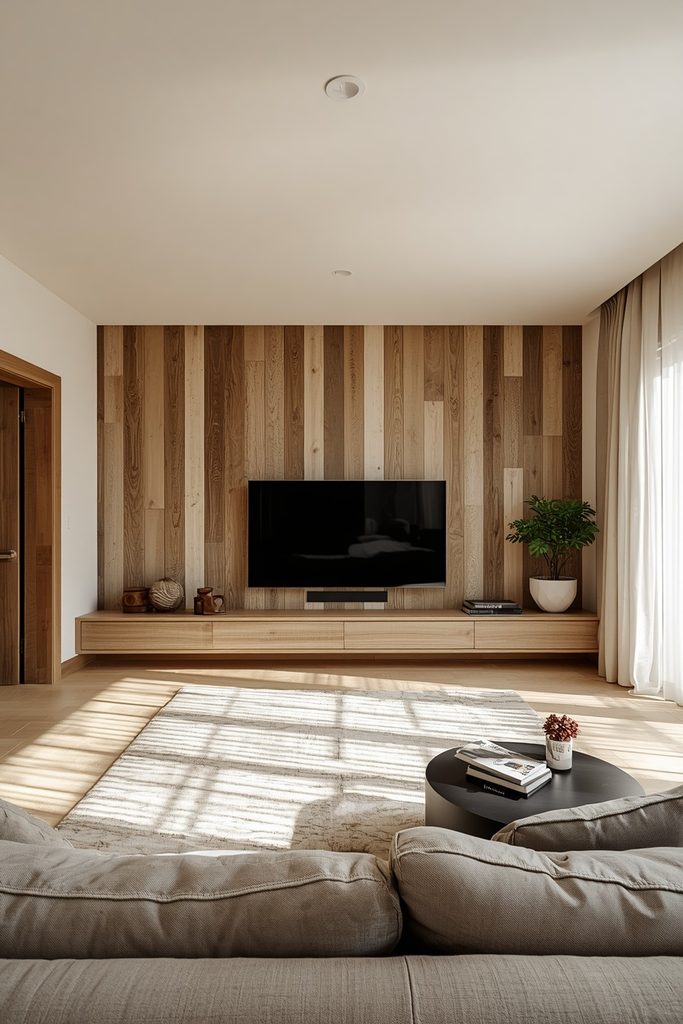
9. A Panel Wall With Open Shelving on Either Side
Wood paneling centered behind the TV, flanked by open shelving built into the same wall, gives the media wall both a textured backdrop and genuine storage or display space. Keep the shelving styling simple so it doesn’t compete visually with the paneling itself. This is a popular, highly functional media wall layout.
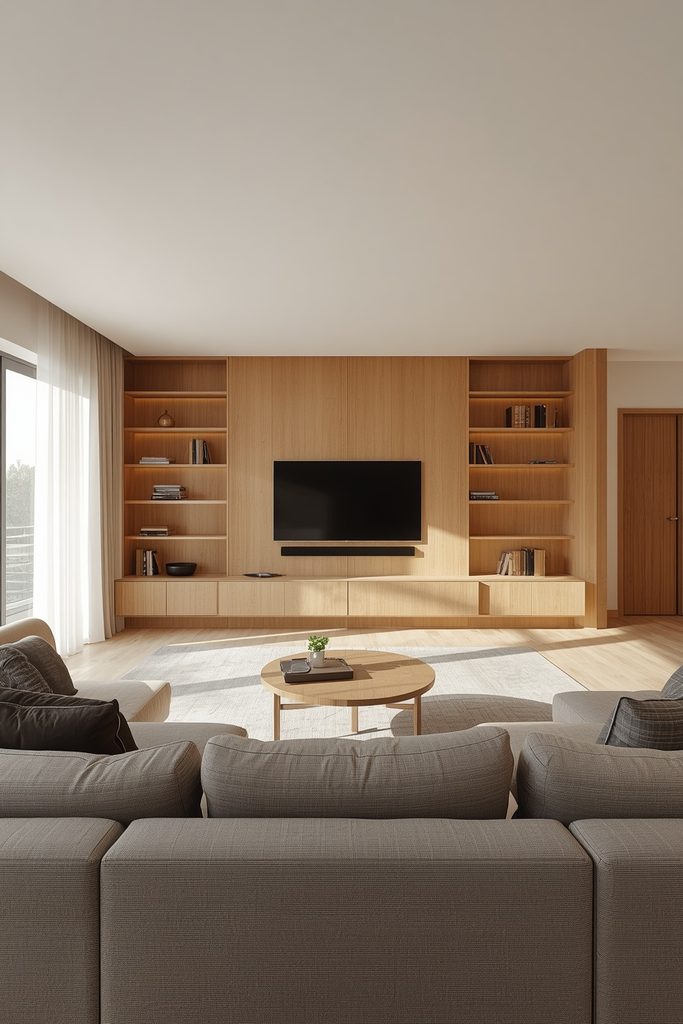
10. A Geometric Panel Design as a Bold Statement
A bold geometric wood panel pattern behind the television turns the media wall into the room’s clear design statement, rather than a neutral backdrop. Choose a design with clean, simple angles rather than an overly intricate pattern for the most balanced, contemporary proportion. This works well in a living room that wants the media wall to double as art.
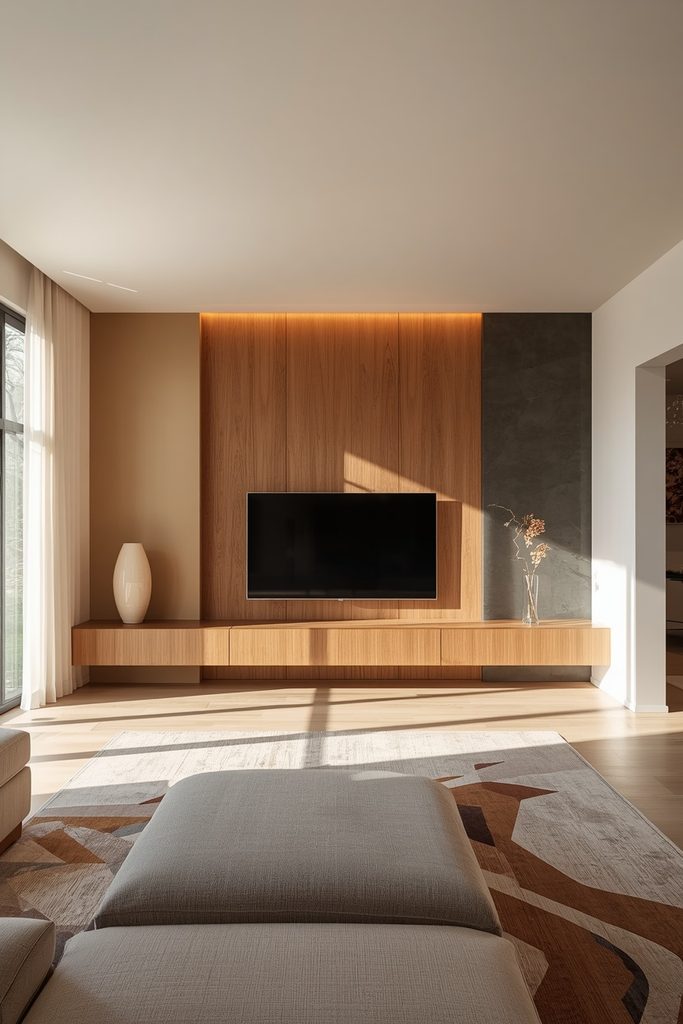
11. A Monochrome Panel Wall Matching the Room’s Paint Color
Painting slim wood panels the exact same color as the surrounding wall, rather than leaving them a contrasting natural wood tone, creates a subtle, textural effect behind the TV that relies on shadow rather than color contrast. This is a quiet, sophisticated technique favored in minimalist modern interiors. It works especially well in a room kept otherwise simple and uncluttered.
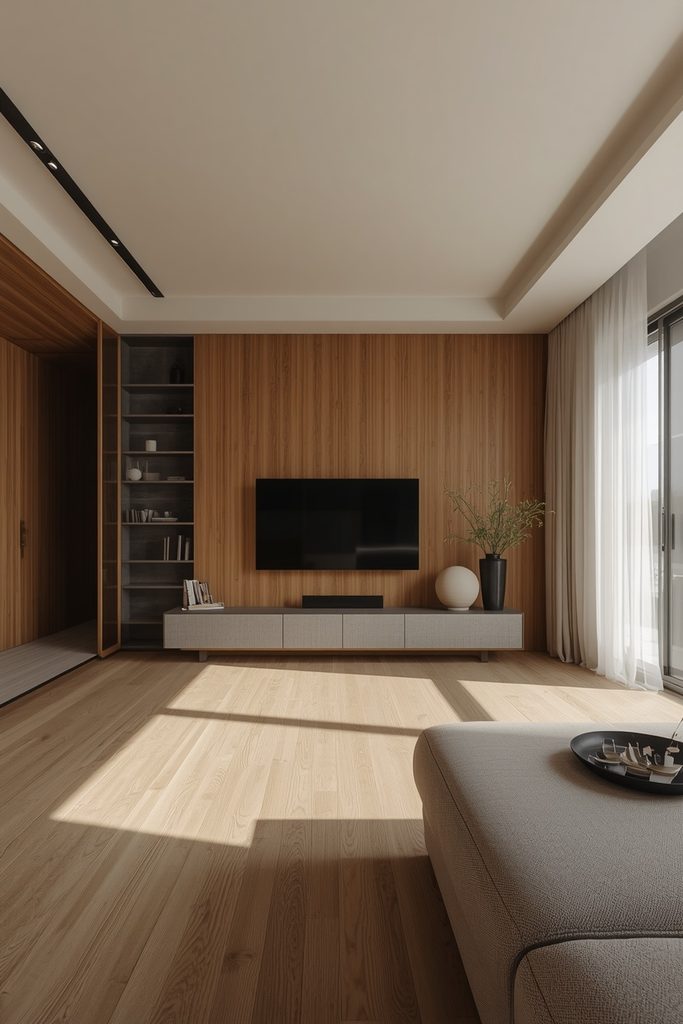
12. A Shiplap Wall for a Classic Farmhouse Media Wall
Classic horizontal shiplap boards, with their characteristic small reveal gap between planks, bring an easy, recognizable farmhouse feel behind the television. Choose a crisp white paint finish for the most classic look, or a natural wood stain for more warmth. This is one of the most widely recognized and approachable panel styles for a first-time project.
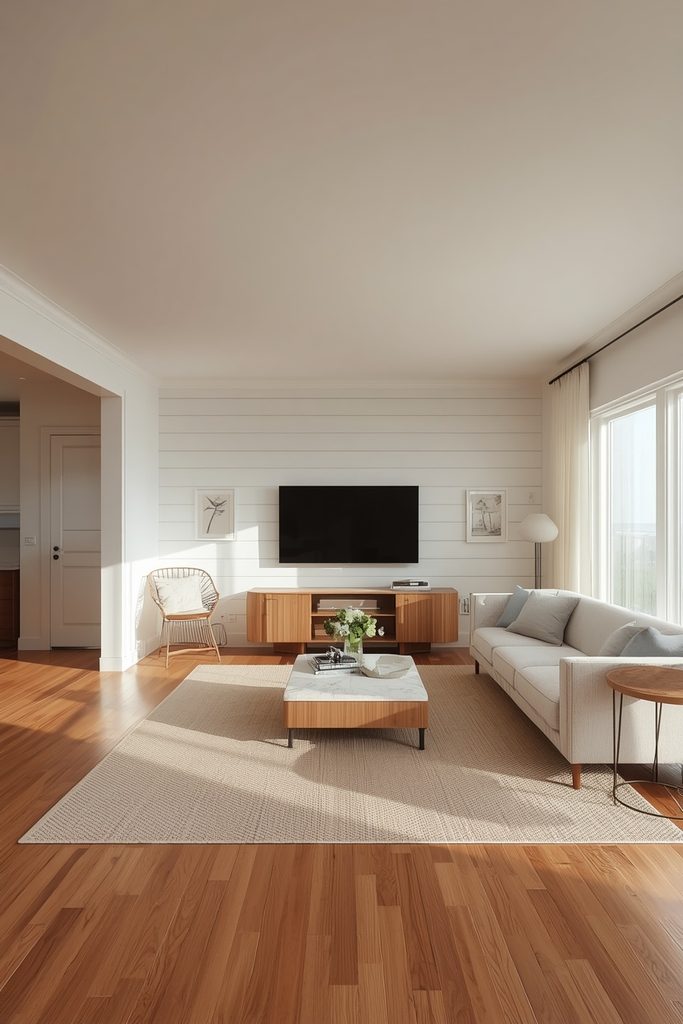
13. A Panel Wall With a Hidden Storage Compartment
A section of the panel wall designed with a concealed, hinged or push-to-open compartment hides a cable box, router, or game console completely out of sight while keeping the panel surface visually seamless. This requires more advanced custom carpentry than a standard panel installation. It’s a favorite detail in high-end media room design for its clean, uninterrupted final appearance.
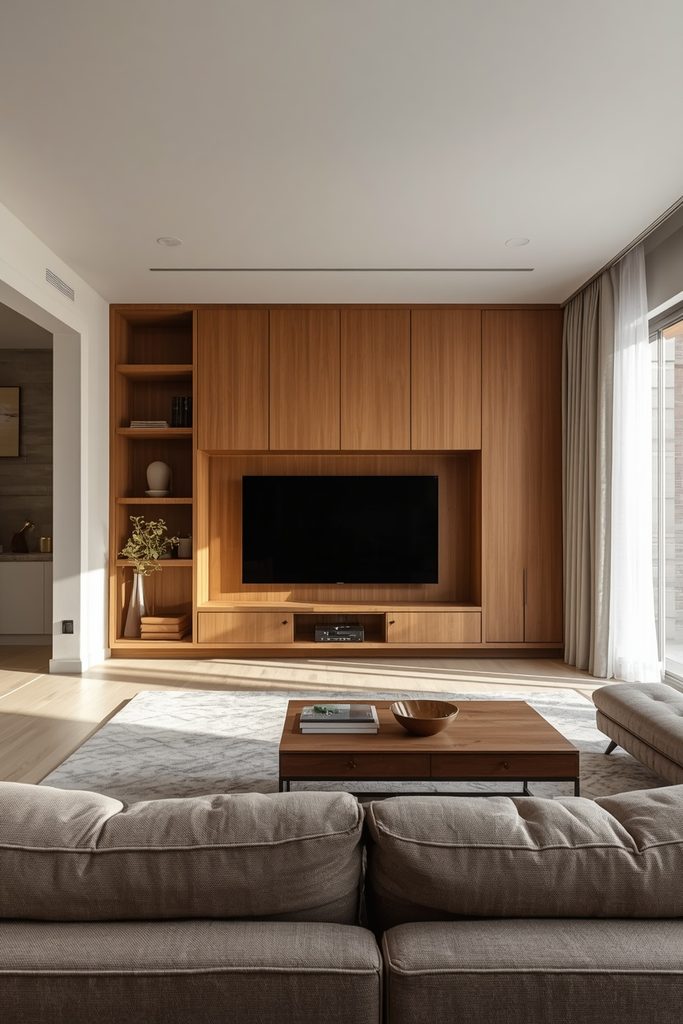
14. A Panel Wall That Wraps Around a Corner
Continuing a slat or panel pattern seamlessly around an interior corner, past the television itself, creates a more immersive, architectural media wall moment than a single flat wall treatment. This requires careful planning to maintain consistent spacing as the pattern turns the corner. It’s a technique that signals a higher level of design and installation intention.
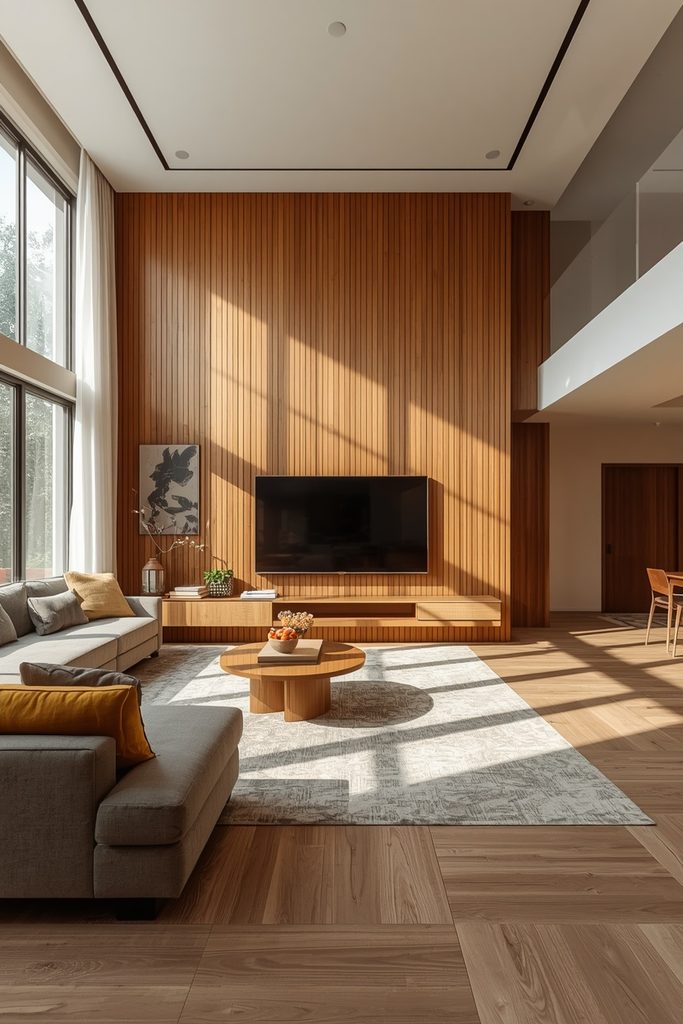
15. A Board and Batten Media Wall for Traditional Charm
Board and batten paneling, with vertical strips over a flat panel base, brings classic architectural detail behind the television for a more traditional or transitional living room aesthetic. Paint the battens in a single tone for a cohesive, tailored look. This style suits a room that wants the media wall to feel timeless rather than trend-driven.
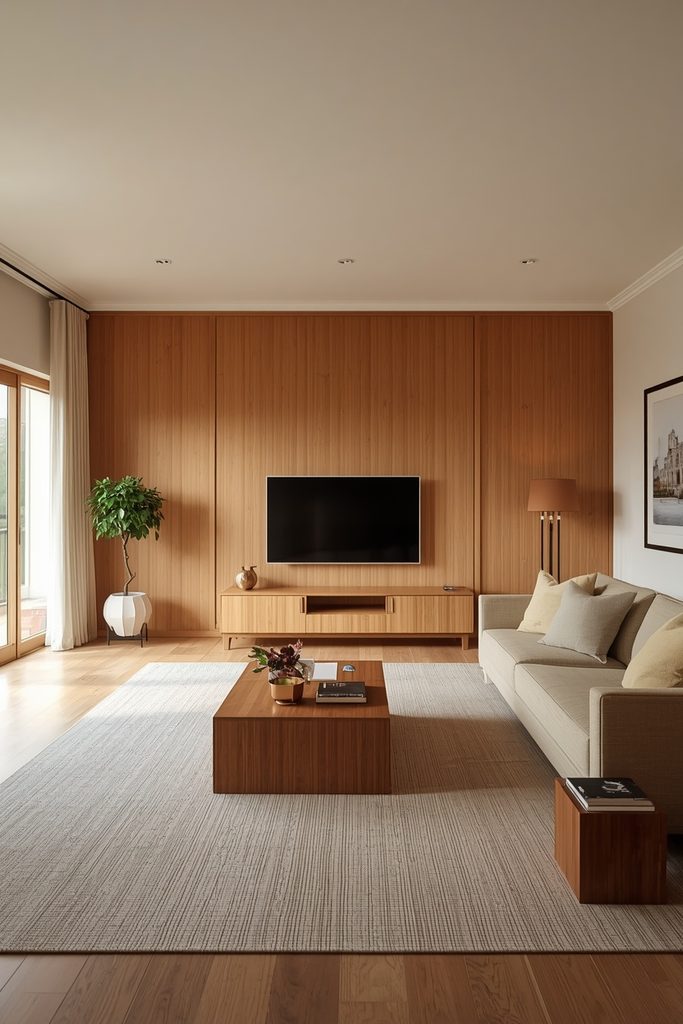
16. A Panel Wall With Integrated Sound Bar Shelf
A slim, built-in shelf integrated directly into the panel design beneath the television gives a sound bar a clean, considered home rather than a separately mounted bracket interrupting the wall’s surface. Measure the sound bar’s exact dimensions before finalizing the shelf’s size and placement. This small detail keeps the whole media wall feeling fully planned and intentional.
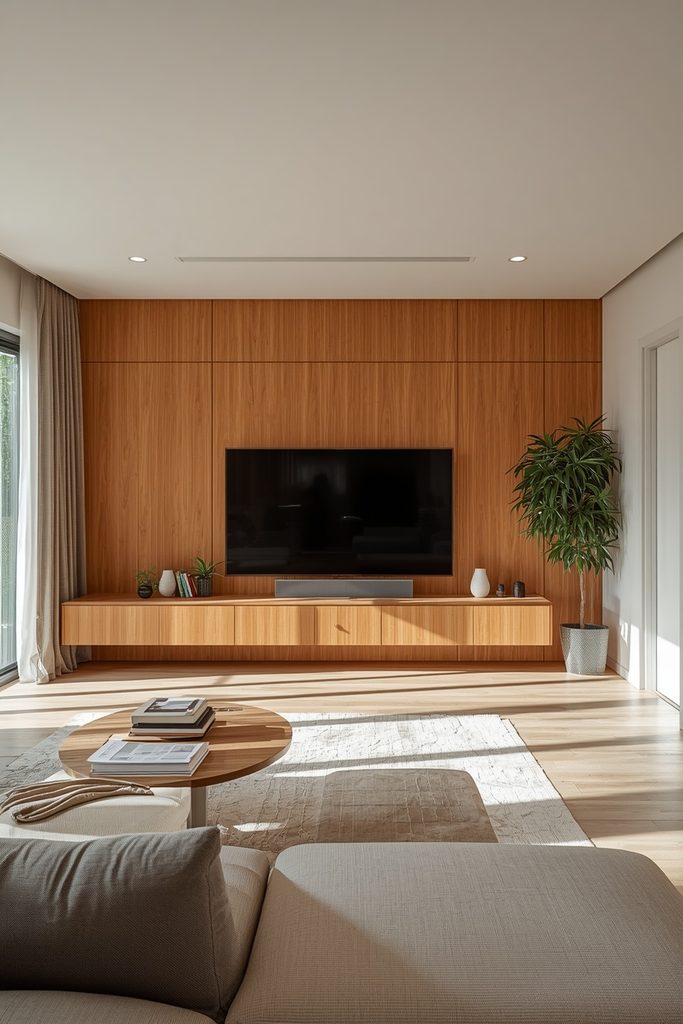
17. A Mixed Wood and Metal Trim Media Wall
Pairing wood slats with thin strips of black or brass metal trim between sections introduces a mixed-material look distinctly associated with current, high-end modern design. Keep the metal trim minimal and evenly spaced rather than overusing it. This combination elevates a standard slat media wall into something considerably more custom-feeling.
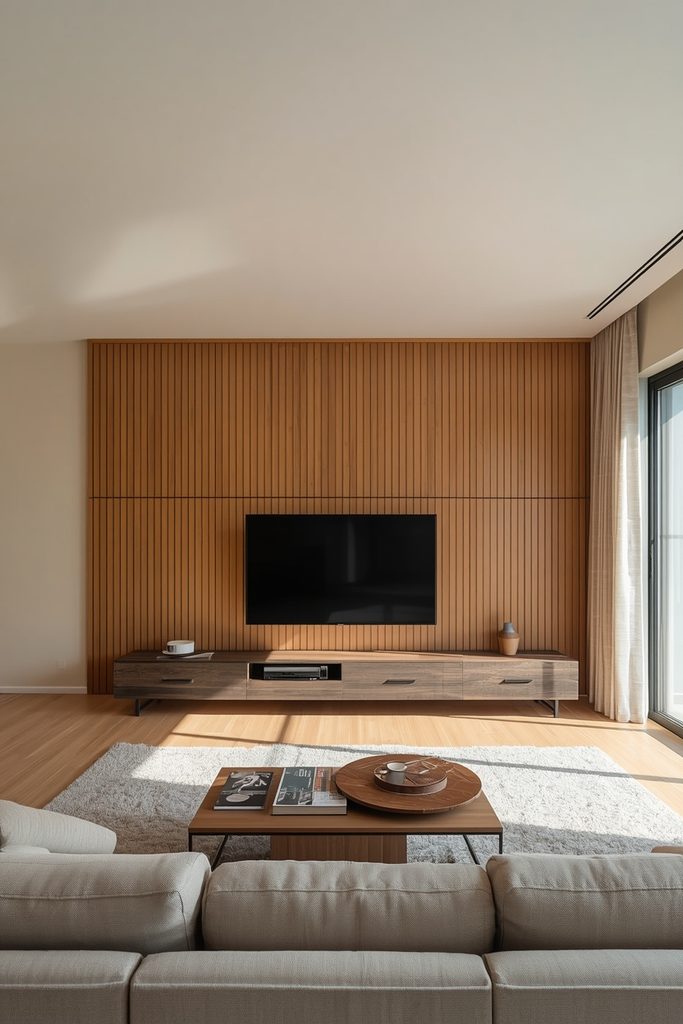
18. A Small Accent Panel Section Rather Than a Full Wall
Limiting the paneling to a section sized just slightly wider than the television itself, rather than covering the entire wall, frames the screen the way art would be framed without committing the whole room to the treatment. This is a lower-cost, lower-commitment way to add texture behind the TV. It works especially well in a smaller living room where a full wall treatment might feel overwhelming.
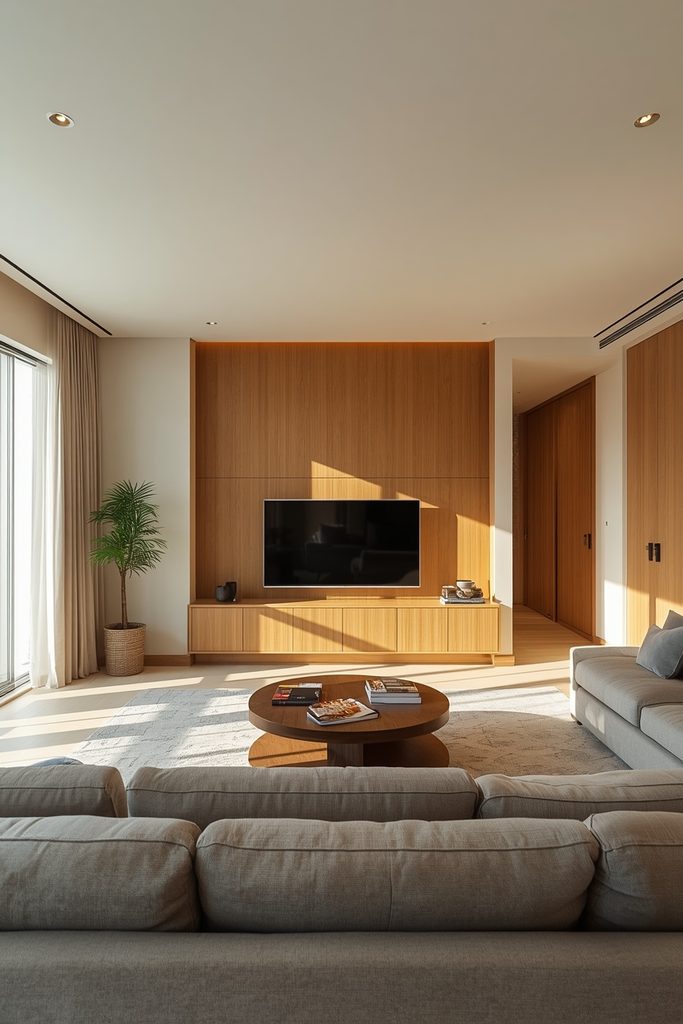
19. A Panel Wall With a Built-In Fireplace Mantel Shelf
A simple floating shelf built into the panel wall at mantel height, even without an actual fireplace beneath it, gives the media wall a traditional focal-point quality and a spot to display a few styled objects. Keep the shelf styling minimal so it doesn’t compete with the television above or below it. This detail borrows the warmth of a classic mantel without requiring an actual fireplace.
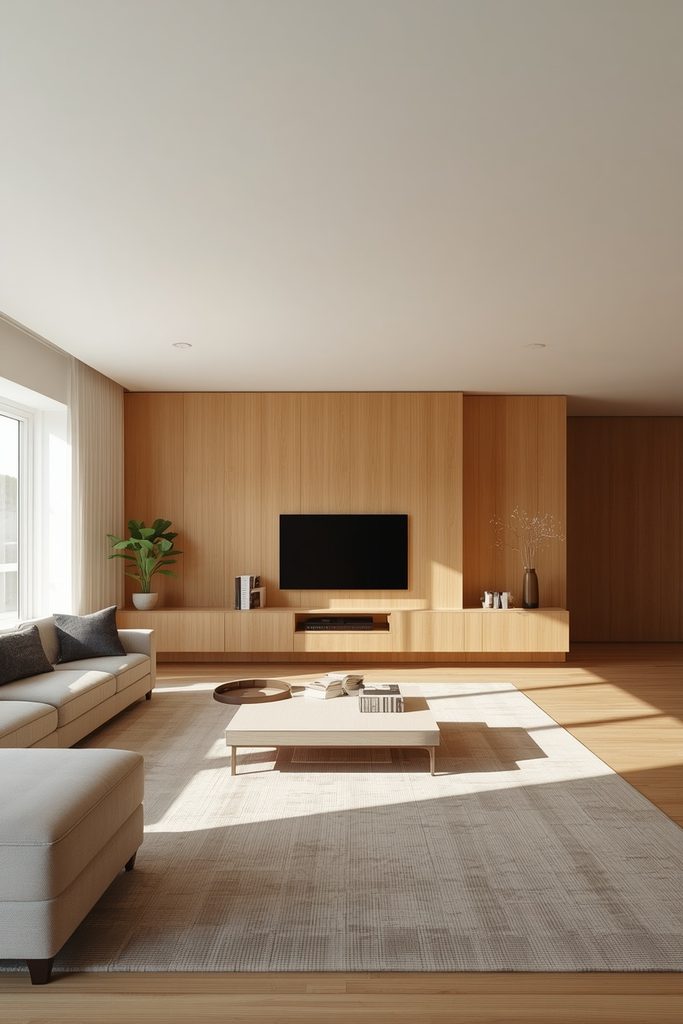
20. A Full Room-Height Panel Wall With No Trim or Molding
Extending paneling fully from floor to ceiling behind the television, with no baseboard or crown molding interrupting the surface, creates the clean, uninterrupted look associated with contemporary architecture. This requires precise installation and planning around outlets and switches. It’s a more advanced project but delivers one of the most convincingly high-end results on this entire list.
Where I’d Start If I Only Did Three Things
If I only had one weekend, I’d start with floor-to-ceiling vertical slats from idea one, since it’s one of the most popular and widely applicable styles for a media wall. Second, I’d integrate a floating console directly into the wall from idea two, because it elevates a standard panel wall into a genuinely custom-feeling built-in. Third, if a fireplace is already part of the room, I’d frame both the TV and the fireplace together from idea four, since that combination makes the most of two features already competing for the same wall’s attention.
FAQ
How do I hide cables behind a wood panel TV wall?
Most panel styles allow cables to be routed directly behind the slats or panels before final installation, which is the cleanest and most common approach. For a fully seamless look with zero visible gaps, a hidden internal cable channel or concealed compartment, as described in a few ideas on this list, keeps everything completely out of sight.
What’s the easiest wood panel style to install behind a TV for a first-time project?
A simple flat panel accent section or classic shiplap are generally the most approachable styles, since they involve straightforward installation without the precise angle cutting required for herringbone or geometric patterns. A full floor-to-ceiling slat wall is also fairly manageable once consistent spacing is planned out.
Should the panel wall cover the whole wall or just frame the TV?
A full wall works well when the media wall is meant to be the room’s main focal point, while a smaller framed section is better suited to a smaller living room or when you want a more contained, lower-cost accent. Budget and the room’s overall scale are both worth considering when choosing between the two approaches.
Can I add a wood panel wall around an existing fireplace and TV combination?
Yes, and it’s one of the most popular renovation choices, since both features already draw the eye to the same wall and benefit from being integrated into one cohesive architectural treatment. Just be sure to use a fire-rated material and maintain the appropriate clearances from the heat source during installation.
Conclusion
A wood panel wall behind the television transforms one of the living room’s most visible surfaces from a plain backdrop into the room’s main architectural feature. Choose the panel style, layout, and cable management approach that fits your space and budget from this list, and the media wall will become something the whole room is designed around.