

When designing a beautiful home, ceilings are often overlooked. However, a thoughtfully designed ceiling can dramatically influence how a room feels, adding depth, character, and sophistication without overwhelming the space.
Furthermore, minimalist ceiling designs focus on clean lines, subtle textures, and intentional details that complement modern interiors. Rather than competing with furniture and decor, these ceilings enhance the overall atmosphere while maintaining a calm and uncluttered aesthetic.
If you appreciate simple yet impactful design, these minimalist ceiling ideas will inspire you to transform the fifth wall of your home into a stylish architectural feature.
1. Keep It Crisp with a Smooth White Ceiling
A smooth white ceiling remains one of the most timeless minimalist design choices. Its clean appearance reflects light effectively and helps rooms feel brighter and more spacious.
Furthermore, white ceilings create a seamless backdrop that allows furniture, artwork, and architectural details to stand out naturally. The simplicity supports virtually every interior style.
This classic option never loses its appeal.
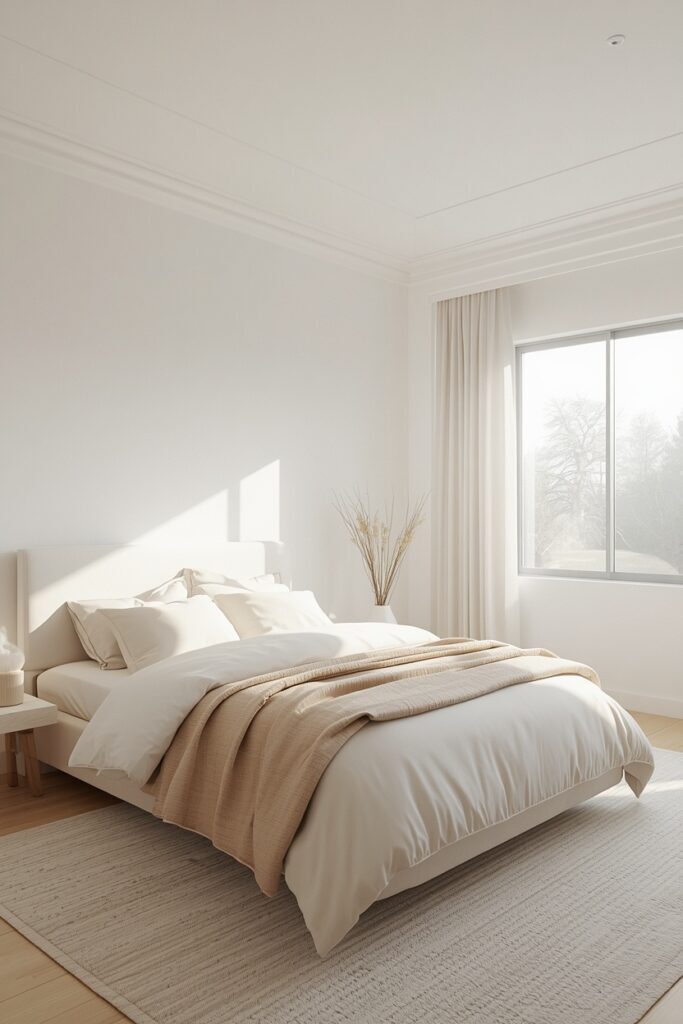
As a result, the room feels fresh, airy, and visually balanced. The ceiling quietly enhances the overall design without drawing excessive attention.
This approach is ideal for achieving effortless minimalism.
2. Add Subtle Recessed Lighting
Recessed lighting offers a sleek and modern solution for illuminating minimalist interiors. The fixtures remain discreet while providing effective and even light distribution.
Moreover, recessed lights help maintain clean ceiling lines and eliminate visual clutter. Their understated appearance perfectly complements contemporary spaces.
The result feels refined and sophisticated.

Consequently, the room feels modern and inviting. The lighting enhances comfort while preserving the minimalist aesthetic.
This feature works beautifully in bedrooms and living spaces alike.
3. Incorporate Thin Ceiling Beams
Minimalist ceiling beams add subtle architectural interest without creating visual heaviness. Slim profiles provide texture while maintaining simplicity.
Furthermore, light wood or painted beams can introduce warmth and character to modern interiors. Their clean geometry aligns perfectly with minimalist design principles.
The effect feels intentional and elegant.
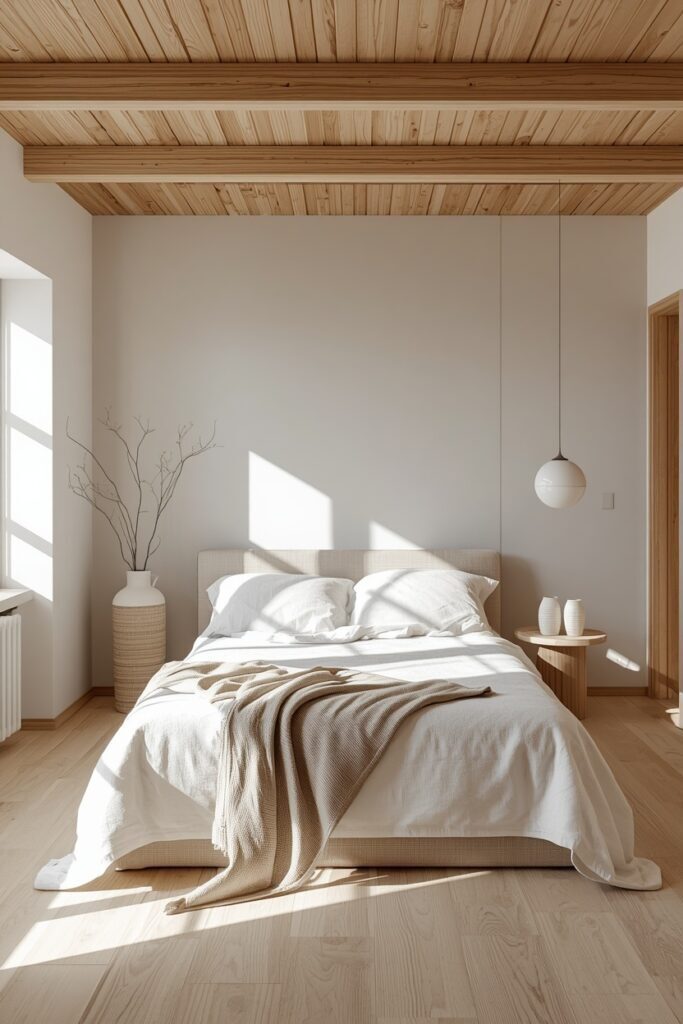
Therefore, the ceiling gains depth without becoming overpowering. The architectural detail contributes to a more polished appearance.
This design balances warmth and simplicity beautifully.
4. Create a Floating Ceiling Effect
Floating ceilings use recessed perimeter lighting to create the illusion that the ceiling is suspended above the room. This modern design adds visual interest while maintaining clean lines.
Additionally, hidden lighting introduces soft ambient illumination that enhances the atmosphere. The effect feels luxurious yet understated.
The ceiling becomes a subtle focal point.

As a result, the room feels more contemporary and sophisticated. The lighting adds depth while preserving visual simplicity.
This idea works especially well in modern homes.
5. Use Natural Wood Ceiling Panels
Natural wood panels bring warmth and texture to minimalist spaces while maintaining a clean aesthetic. The organic material creates a welcoming atmosphere.
Moreover, wood tones soften modern interiors and add visual richness without excessive decoration. The natural grain introduces subtle character.
This approach balances minimalism and comfort perfectly.
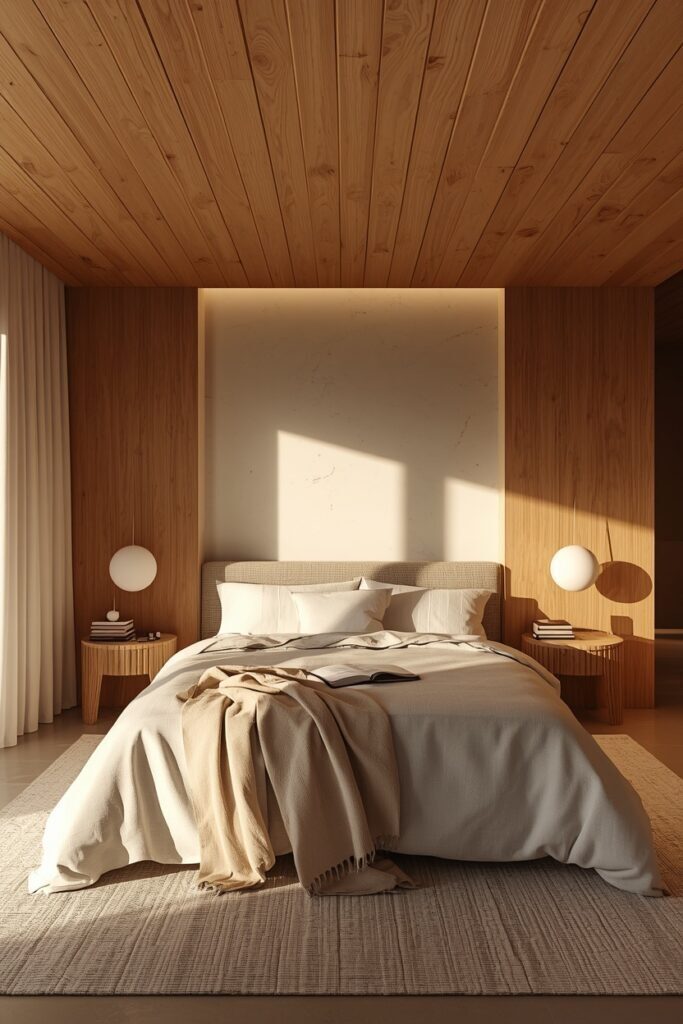
Consequently, the room feels warmer and more inviting. The ceiling becomes a beautiful architectural feature.
This design remains highly popular in contemporary interiors.
6. Highlight Architectural Lines
Clean geometric lines can transform a plain ceiling into a subtle design statement. Minimal molding or panel details add structure while maintaining simplicity.
Furthermore, these understated details create visual interest without overwhelming the room. The design remains elegant and timeless.
Every line serves a deliberate purpose.

As a result, the ceiling feels more custom and sophisticated. The subtle detailing enhances the room’s overall design quality.
This idea suits both modern and transitional spaces.
7. Paint the Ceiling a Soft Neutral Tone
While white ceilings remain popular, soft neutral shades can create a more intimate and cohesive atmosphere. Warm beige, greige, and light taupe work especially well.
Additionally, extending wall colors onto the ceiling can make a room feel more unified and calming.
The result feels soft and elegant.

Therefore, the room gains warmth without sacrificing minimalism. The gentle color adds depth and comfort.
This is a simple update with significant visual impact.
8. Install Minimalist Cove Lighting
Cove lighting provides indirect illumination that enhances the room’s ambiance while remaining visually discreet. The hidden light source creates a soft and luxurious glow.
Furthermore, minimalist cove lighting emphasizes architectural forms without introducing unnecessary decorative elements.
The atmosphere feels calm and sophisticated.

Consequently, the room feels more relaxing and refined. The subtle illumination enhances comfort and style.
This feature elevates minimalist interiors beautifully.
9. Embrace Vaulted Minimalist Ceilings
Vaulted ceilings naturally create a sense of openness and architectural drama. When paired with minimalist design, they feel both impressive and calming.
Moreover, uncluttered finishes allow the ceiling’s shape to become the primary design feature.
The height contributes to a spacious atmosphere.

As a result, the bedroom feels larger and more dramatic. The architectural form creates visual interest naturally.
This design celebrates simplicity through scale and proportion.
10. Add Thin Wood Slat Details
Wood slats introduce texture and rhythm while maintaining a minimalist appearance. Their linear design adds sophistication without excessive ornamentation.
Furthermore, natural wood tones create warmth and complement modern furnishings beautifully.
The detail feels contemporary and refined.
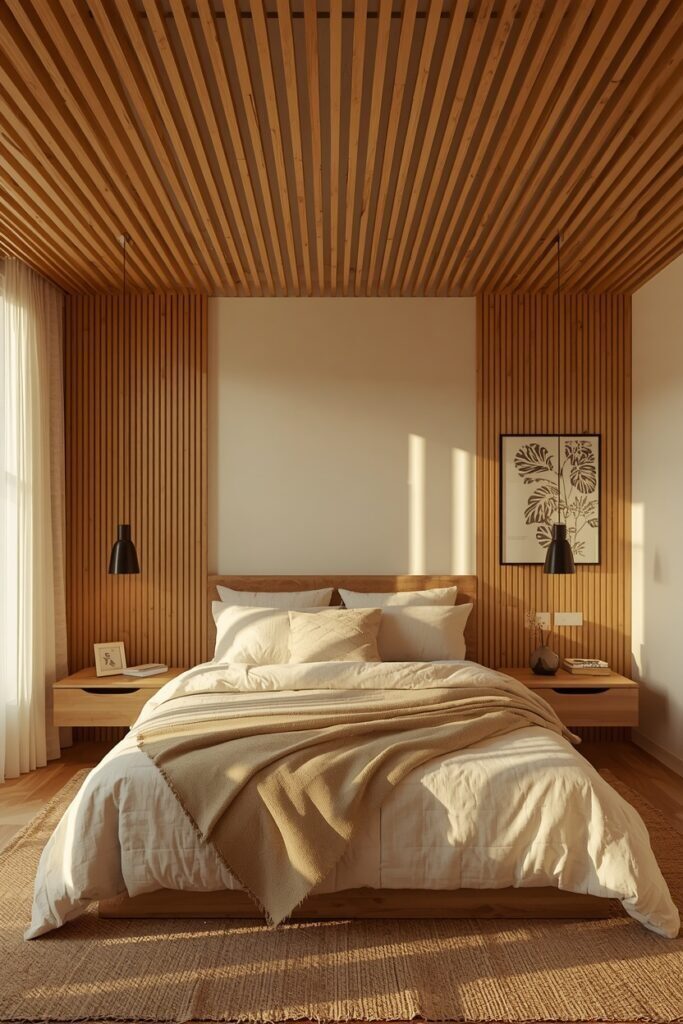
Consequently, the ceiling becomes a distinctive feature while remaining understated. The texture enriches the overall design.
This trend continues to grow in popularity.
11. Keep Fixtures Simple and Elegant
Minimalist ceilings benefit from carefully selected light fixtures that complement rather than dominate the room. Simple pendants and streamlined designs work best.
Additionally, restrained fixtures maintain visual harmony while providing functional lighting.

As a result, the room feels balanced and cohesive. The lighting supports the minimalist philosophy beautifully.
Thoughtful restraint often creates the strongest design.
12. Use Monochromatic Ceiling Designs
Monochromatic interiors create a seamless and calming visual experience. Matching the ceiling to surrounding elements enhances continuity and simplicity.
Furthermore, a consistent palette helps small rooms feel larger and more unified.
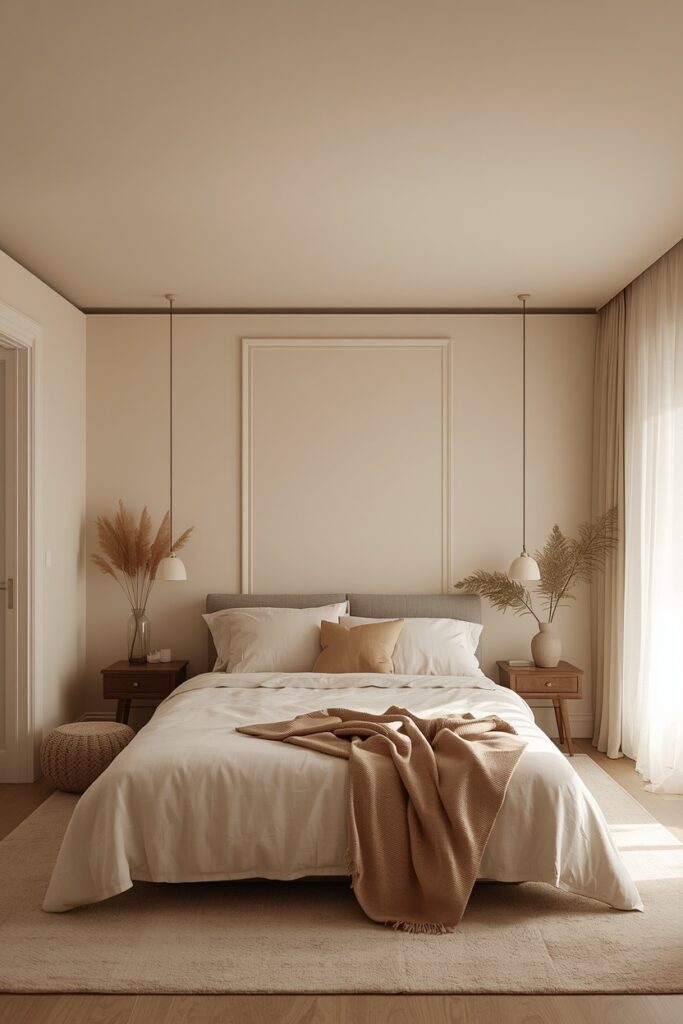
Consequently, the room feels calm and harmonious. The ceiling becomes an integrated part of the overall design.
This approach embodies the essence of minimalism.
13. Introduce Concrete-Inspired Finishes
Concrete-inspired ceilings bring subtle texture and modern sophistication to minimalist interiors. The finish adds character while maintaining a restrained appearance.
Moreover, soft concrete tones pair beautifully with wood, linen, and neutral furnishings.
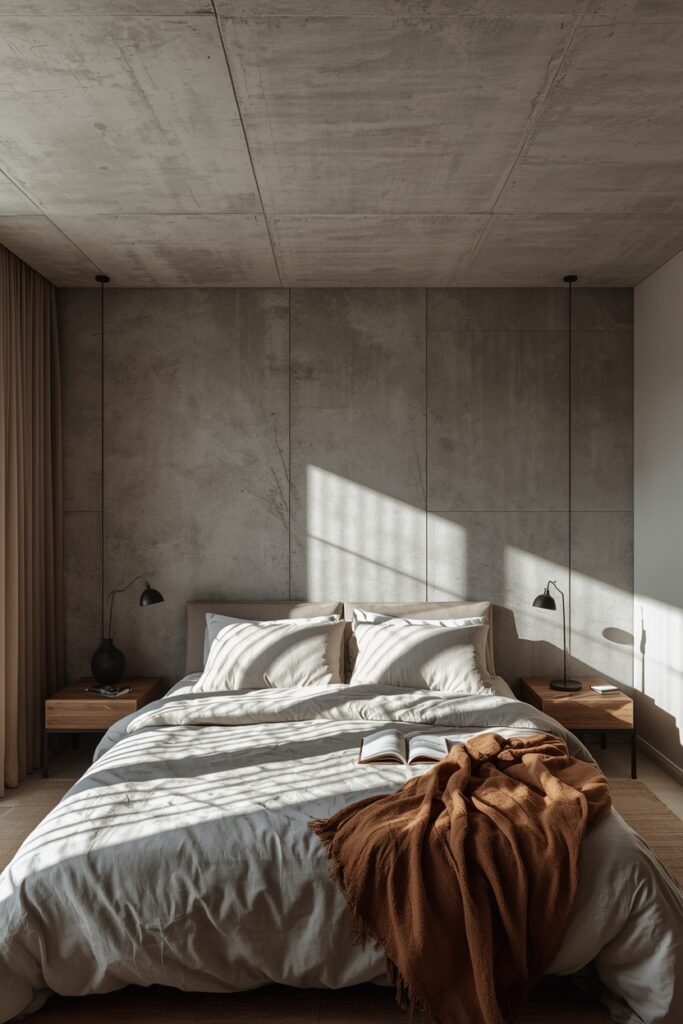
As a result, the room feels contemporary and architecturally interesting. The texture adds depth without clutter.
This design is especially popular in modern urban homes.
14. Highlight Natural Light Through Ceiling Design
Minimalist ceilings often work best when they complement natural light rather than compete with it. Simple designs allow sunlight to become a defining feature.
Furthermore, reflective finishes and thoughtful layouts help distribute light evenly throughout the room.
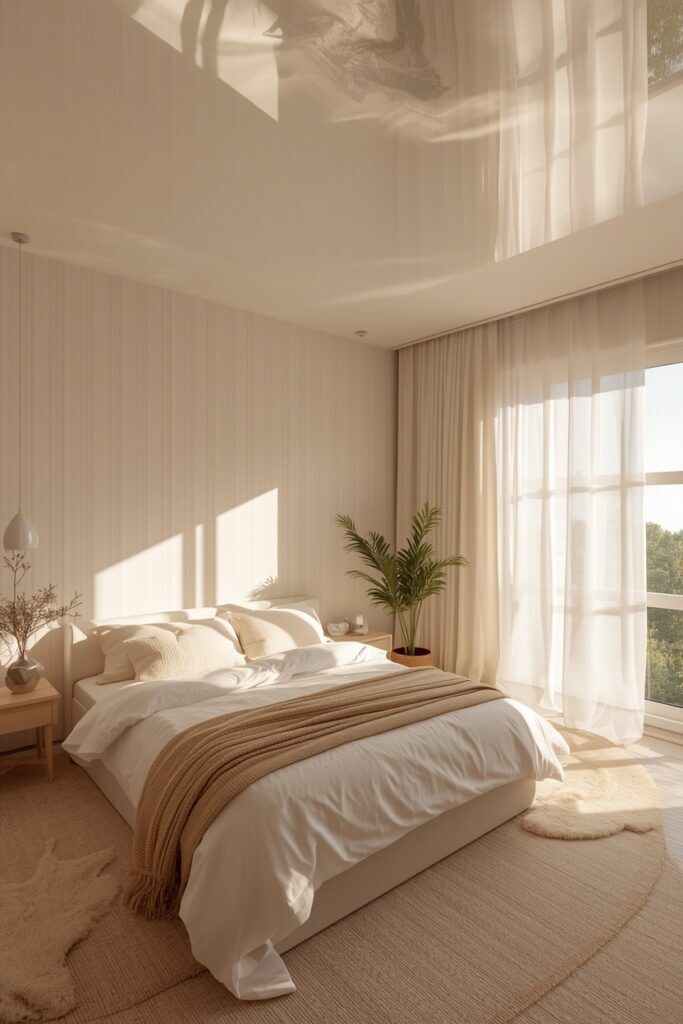
Consequently, the room feels brighter, fresher, and more welcoming. Natural light becomes part of the design experience.
This approach enhances both beauty and comfort.
15. Focus on Simplicity Above All
The most successful minimalist ceilings embrace simplicity while supporting the room’s overall design. Every detail should feel intentional and purposeful.
Additionally, clean finishes, subtle textures, and thoughtful lighting create timeless spaces that remain beautiful for years.

Therefore, the ceiling contributes quietly yet meaningfully to the room’s atmosphere. Simplicity becomes a powerful design statement.
Ultimately, minimalist ceiling designs prove that subtle details often create the most lasting impact.
FAQ
1. What is a minimalist ceiling design?
A minimalist ceiling focuses on clean lines, simple finishes, subtle textures, and understated lighting.
2. Are white ceilings still in style?
Yes, white ceilings remain one of the most timeless and versatile choices for modern interiors.
3. How can I make my ceiling look more interesting without adding clutter?
Use recessed lighting, wood slats, subtle molding, or soft ceiling colors for added visual interest.
4. What ceiling color works best for minimalist interiors?
White, ivory, warm beige, greige, and soft gray are excellent minimalist choices.
5. Can minimalist ceilings work in small rooms?
Absolutely. Minimalist ceilings often help small spaces feel larger, brighter, and more open.
Conclusion
Minimalist ceiling designs demonstrate how simplicity can create remarkable visual impact. Whether you choose clean white finishes, natural wood details, recessed lighting, or subtle architectural features, the right ceiling design can enhance the beauty of an entire room. By focusing on thoughtful details and understated elegance, you can create a space that feels timeless, sophisticated, and effortlessly inviting.