
A genuinely elevated wood panel wall doesn’t have to mean an expensive material or a professional installation. Peel-and-stick options, MDF instead of solid wood, and smart techniques like a half-wall treatment or repurposed lumber all deliver much of the same visual warmth and texture for a fraction of the typical cost.
These thirty strategies cover material swaps, shopping tactics, and installation approaches that keep a paneling project affordable without sacrificing the finished look. Because choosing a budget approach involves genuine trade-offs against a full-price professional installation, here’s a pros and cons breakdown before the full list.
Pros and Cons of a Budget-Friendly Wood Panel Approach
| Pros | Cons |
| • Budget techniques like peel-and-stick panels and MDF slats deliver much of the visual impact of solid wood at a fraction of the material cost. • DIY installation removes labor costs entirely, which often make up a significant portion of a professional paneling project’s total price. • Smaller-scale approaches, like a single accent wall or half-height treatment, let you test the look before committing to a full-room investment. • Resourceful material sources, like reclaimed pallet wood or repurposed furniture, can bring material costs close to free for a smaller project. • Many budget techniques, like lattice strips or trim-only faux paneling, are genuinely beginner-friendly and achievable in a single weekend. | • Lower-cost materials like MDF and peel-and-stick options generally don’t offer the same durability or authentic texture as solid wood. • DIY installation takes real time and a learning curve, and mistakes on a budget material can still require a full re-purchase. • Reclaimed and repurposed wood sources require careful inspection for safety and structural soundness before use. • A half-wall or single-accent-wall approach delivers less dramatic impact than a full floor-to-ceiling treatment throughout a room. • Value-line panel products can vary significantly in quality between brands, so comparison shopping is necessary to avoid a disappointing result. |
1. Peel-and-Stick Wood Panel Tiles
Peel-and-stick panels, made from a thin wood veneer or a convincing wood-look material, apply directly to a clean wall without any nails, adhesive mess, or specialized tools. This is one of the most budget-friendly and beginner-accessible options on this list. Choose a high-quality brand for the most convincing texture and the cleanest eventual removal if needed.
2. MDF Slat Panels Instead of Solid Wood
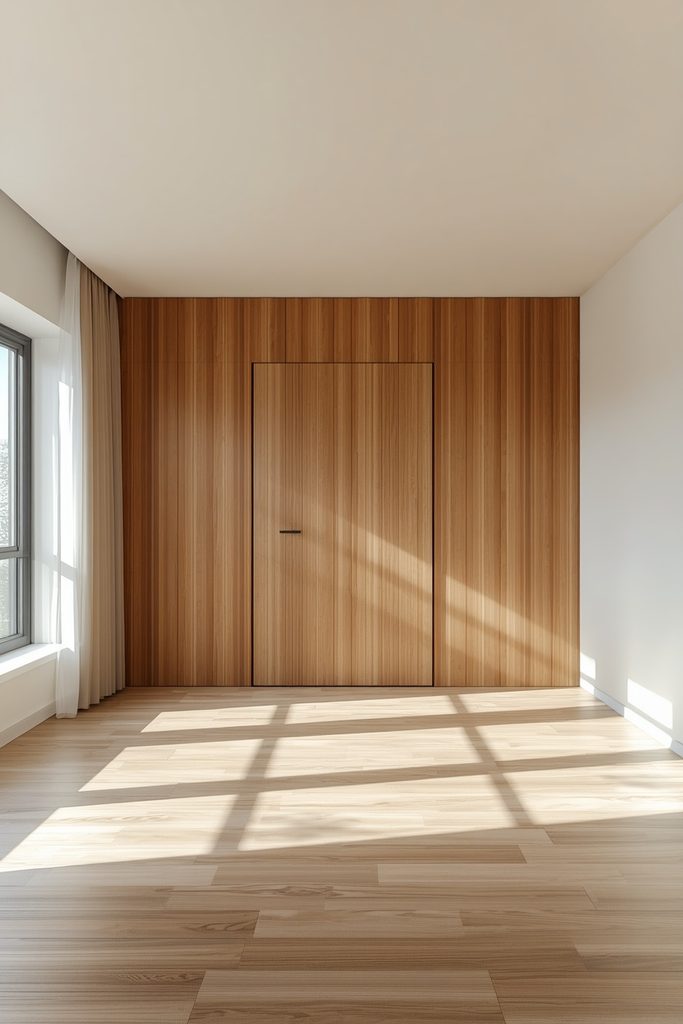
MDF slat panels, pre-finished with a wood veneer or paintable surface, cost considerably less than solid wood while still delivering the same slim vertical slat look. Choose a moisture-resistant MDF variety for a bathroom or other humid space. This material swap is one of the most effective ways to keep a slat wall project affordable.
3. Paint-Grade Panels You Finish Yourself
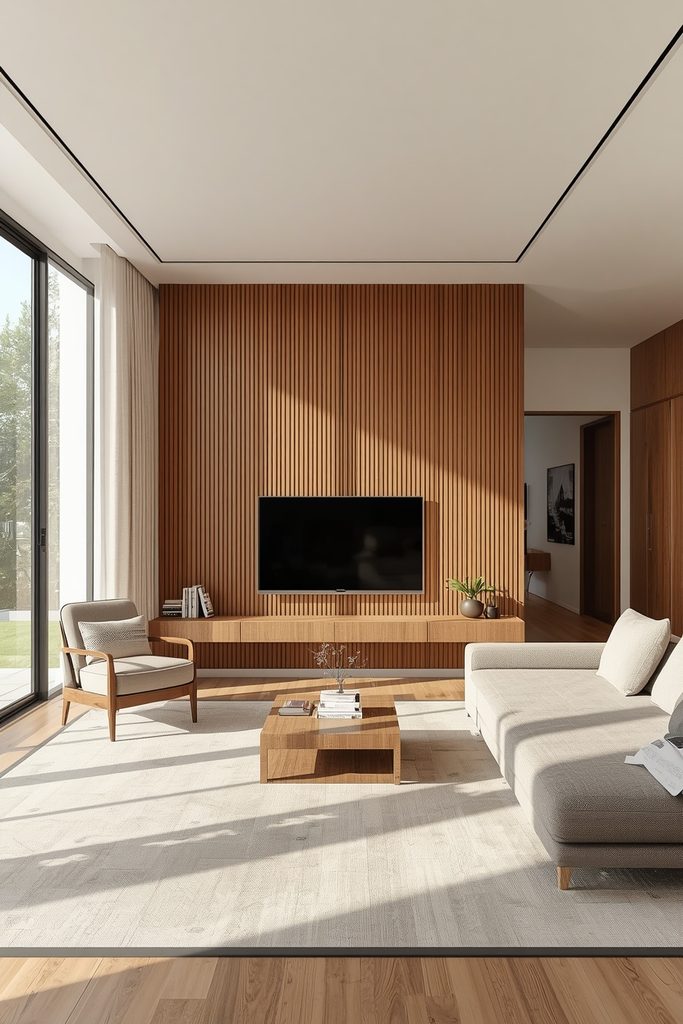
Choosing unfinished, paint-grade panels and applying the stain or paint finish yourself, rather than purchasing pre-finished panels, saves on material cost while giving you full control over the final color. This adds some labor time but meaningfully reduces the material budget. It’s a good option for anyone comfortable with a paintbrush and a bit of patience.

4. A Single Small Accent Wall Instead of a Full Room
Limiting the paneling project to one smaller wall, like behind a headboard or a media console, rather than an entire room, dramatically reduces material costs while still delivering strong visual impact. Choose the wall most visible from the room’s main sightline for the best return on the smaller investment. This is one of the simplest ways to control budget without sacrificing style.

5. Reclaimed Pallet Wood for a Rustic Look
Deconstructed shipping pallets, sanded and cleaned, provide free or very low-cost wood boards for a rustic accent wall, provided the pallets are sourced safely and aren’t chemically treated. This requires more labor to prepare the wood than purchasing pre-cut panels. It’s one of the most affordable options available for anyone willing to put in the extra preparation time.

6. Wallpaper With a Realistic Wood Panel Print
High-quality wallpaper printed with a realistic wood panel or slat design delivers much of the visual effect of real paneling at a fraction of the material and installation cost. Choose a paper with a slightly textured finish rather than a flat, glossy print for the most convincing look from a normal viewing distance. This is the most budget-friendly option on this entire list.
7. Thin Lattice Strips Instead of Thick Panels
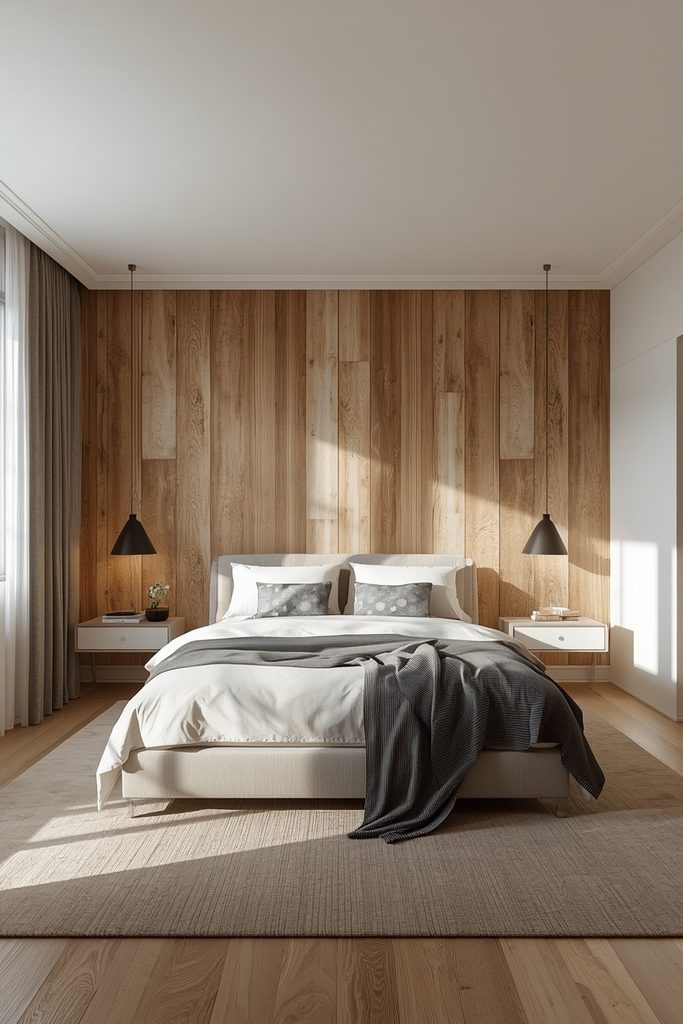
Thin wood lattice or furring strips, typically sold inexpensively at any hardware store, create the same vertical slat effect as purpose-made slat panels at a considerably lower material cost. Sand and finish the strips yourself for a polished result. This is a favorite budget hack among DIY home renovators specifically for slat wall projects.

8. Shopping End-of-Season or Clearance Panel Stock
Home improvement stores frequently discount discontinued or end-of-season panel styles significantly, making it worth checking clearance sections before purchasing at full price. This requires some flexibility on the exact style or finish available. Patient shoppers can often find substantial savings this way.

9. A DIY Board and Batten Using Basic Lumber
Standard, inexpensive pine boards combined with simple flat trim battens recreate the board and batten look without needing any specialized paneling product at all. This requires basic measuring, cutting, and nailing skills. It’s one of the most cost-effective ways to achieve a classic, tailored look on a tight budget.
10. A Half-Wall Panel Treatment to Cut Material in Half
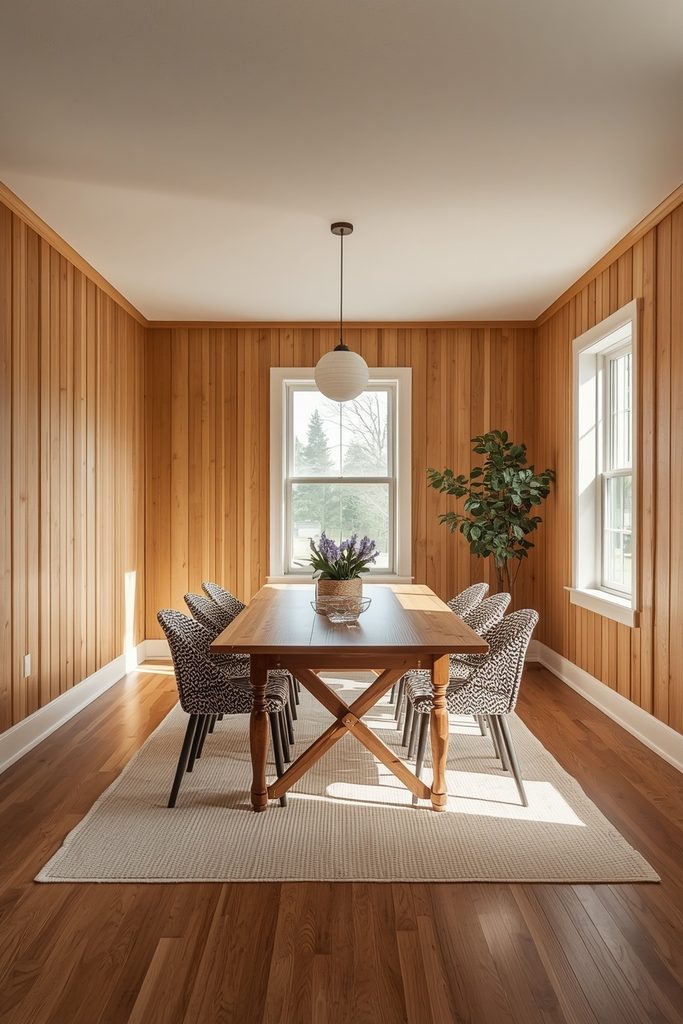
Installing paneling only to chair-rail height, rather than floor to ceiling, immediately cuts the material needed roughly in half while still delivering meaningful texture and visual interest. Pair it with a simple paint color above for a finished, intentional look. This budget technique also happens to be a classic, timeless style choice in its own right.

11. Repurposed Furniture Wood for a Small Accent
Wood salvaged from an old dresser, bed frame, or other furniture piece being discarded can be cut down into boards for a small accent wall section, provided the wood is solid and free of damage. This works best for a smaller project rather than a full wall, given the limited quantity available. It’s a genuinely free material source for anyone willing to do some careful disassembly and prep work.

12. Big-Box Store Value Panel Lines
Most major home improvement retailers carry an entry-level or value line of wood panel products specifically designed to compete on price, often at a meaningful discount compared to specialty or boutique panel brands. Compare the actual panel thickness and finish quality before purchasing, since value lines can vary. This is often the most convenient budget option for anyone wanting a straightforward, one-stop purchase.

13. A Painted Faux Panel Look Using Trim Only
Thin, inexpensive trim strips applied directly to a painted wall in a grid or vertical pattern create the visual effect of paneling using minimal material, since the wall itself, not a full panel surface, provides the background color. This is one of the lowest-material-cost techniques on this entire list. It works particularly well for a geometric or grid pattern rather than a solid slat look.

14. Bulk-Buying Panels for Multiple Rooms at Once
Purchasing enough panel material for several planned projects in one bulk order often qualifies for a quantity discount that isn’t available when buying smaller amounts room by room. This requires having multiple paneling projects planned in advance. It’s a smart strategy for anyone planning to panel more than one room over time.

15. A Single DIY Weekend Project Instead of Hired Installation
Installing the paneling yourself, rather than hiring a contractor, removes labor costs entirely, which typically make up a significant portion of a professional paneling project’s total price. This requires basic tools and a comfort level with measuring and cutting. Most simple flat or slat panel styles are genuinely achievable for a confident beginner over a single weekend.

16. Plywood Sheets Cut Into Custom Slats
A single sheet of inexpensive plywood, ripped down into your own custom slat widths at a hardware store’s cutting station, often costs considerably less than pre-cut slat products sold individually. Most stores offer this cutting service for free or a small fee. This gives you full control over slat size while keeping material costs to a minimum.

17. Secondhand Panels From Online Marketplaces
Leftover or gently used wood panels listed on local online marketplaces, often from someone else’s completed renovation, can be purchased for a fraction of retail price. Inspect the material carefully for damage or warping before committing to a purchase. This requires some patience and flexibility on style, but the savings can be substantial.

18. A Single Statement Strip Instead of a Full Pattern
Rather than covering an entire wall, a single vertical or horizontal strip of wood paneling, run as an accent line through an otherwise plain painted wall, uses a small fraction of the material a full wall would require. This works especially well as a design detail behind a bed or sofa. It’s one of the most material-efficient ways to introduce wood texture into a room.

19. Off-Cuts and Remnant Bins at Lumber Yards
Many lumber yards sell off-cuts and remnant pieces at a steep discount, since these shorter or irregular boards are less useful for larger construction projects but work perfectly for a smaller accent wall. Visit in person to sort through what’s available, since remnant stock changes frequently. This is a favorite budget source among experienced DIY renovators.

20. A Paint-and-Trim Grid Instead of Solid Panels
Thin trim strips arranged in a grid pattern directly on a painted wall, rather than covering the wall with solid panel material, creates dimensional, paneled-looking squares using a fraction of the material a full panel wall would need. This technique is especially popular for a more traditional, molding-inspired look on a tight budget. Paint the trim and wall the same color for the most classic, cohesive effect.

21. Bamboo Panels as a Lower-Cost Wood Alternative
Bamboo, technically a fast-growing grass rather than a hardwood, is typically more affordable than many traditional wood species while still offering a genuine natural material with attractive grain. Choose a panel product specifically designed for wall application rather than flooring-grade bamboo. This is a sustainable and budget-conscious alternative worth considering.

22. A Powder Room or Small Closet as a Low-Material Test Project
Starting a first paneling project in a small powder room or closet requires only a small amount of material, making it an ideal low-cost way to build confidence and test a technique before committing to a larger, more expensive room. The contained space also means mistakes are less costly to fix. This approach lets you learn on a budget before tackling a bigger project.

23. Pre-Primed Panels to Skip a Separate Priming Step
Choosing panels that arrive pre-primed, rather than raw, saves both the cost and time of purchasing primer and applying it yourself as a separate step. This is a small but meaningful saving when multiplied across a full wall’s worth of material. It also reduces the total project timeline, which matters if labor time itself has a cost associated with it.

24. Using Leftover Panels From a Previous Project
Saving and repurposing leftover panel material from a past renovation, even if it means a smaller accent section rather than a full wall, effectively brings that portion of the project cost to zero. Plan a smaller feature, like a headboard backdrop or a section behind open shelving, sized to whatever material remains. This is a genuinely free option for anyone who has completed a previous paneling project.

25. A Community Tool Library for Free Equipment Rental
Many communities have tool libraries or hardware stores with free or low-cost tool rental programs, letting you access a table saw, nail gun, or other specialized equipment without purchasing it outright for a single project. This removes one of the hidden costs of a DIY paneling project. It’s worth checking local library or community center listings before assuming tool costs are unavoidable.

26. A Vinyl Wood-Look Panel for Wet Areas
PVC or vinyl panels printed with a convincing wood grain finish cost less than real wood while offering genuine water resistance, making them a smart, affordable choice for a bathroom or laundry room. Choose a textured rather than flat-printed version for the most realistic look. This material trade-off makes sense specifically in a room where real wood would need extra sealing and maintenance anyway.

27. Buying Panels in the Off-Season for Lower Prices
Home improvement and building material prices sometimes dip during slower renovation seasons, typically late fall and winter in most climates, making it worth timing a purchase around these lulls rather than during a peak spring or summer renovation rush. This requires some planning ahead rather than an impulse purchase. Watching for seasonal sales can add up to meaningful savings on a larger project.

28. A Feature Nook Instead of an Entire Wall
Paneling just the back wall of a built-in nook, shelf unit, or window seat, rather than the surrounding walls, uses a fraction of the material a full room treatment would require while still delivering a considered, textured detail. This works especially well as a focal point within a room that’s otherwise simply painted. It’s one of the smallest-scale, most budget-conscious applications on this entire list.

29. A Combination of Real Wood Accents With Painted MDF Base
Using a small amount of real wood trim or molding as an accent detail over a painted MDF or drywall base lets you get the visual warmth of real wood grain without paneling the whole wall in solid material. This hybrid approach balances cost with genuine texture. It’s a smart middle ground between a fully budget material and a full solid wood investment.

30. Negotiating Bulk Contractor Pricing Even for a DIY Project
Some lumber yards and specialty suppliers offer contractor or bulk pricing tiers that a homeowner can sometimes access simply by asking, even without being a licensed contractor, especially for a larger material order. It never hurts to ask about available discounts before paying full retail price. This small negotiation step can meaningfully reduce the cost of a larger paneling project.

Where I’d Start If I Only Did Three Things
If I only had a tight budget, I’d start with a single small accent wall from idea four, since limiting the scope immediately controls material cost while still delivering strong visual impact. Second, I’d choose thin lattice strips from idea seven instead of purpose-made slat panels, because they’re one of the most effective material swaps for a slat wall look. Third, I’d install it myself over a weekend from idea fifteen, since removing labor costs entirely is one of the biggest overall savings on this list.
FAQ
What’s the single cheapest way to get a wood panel wall look?
Wallpaper with a realistic wood panel print is generally the most affordable option on this list, since it requires no actual wood material or specialized installation tools. Thin lattice strips are the most budget-friendly option if you want the texture and depth of genuine wood.
Is peel-and-stick paneling durable enough for long-term use?
Quality varies by brand, but higher-end peel-and-stick products can hold up well for several years in a low-traffic area like a bedroom accent wall. For a higher-traffic space or a longer-term investment, MDF or solid wood panels generally offer better durability.
Can I really install wood paneling myself without any experience?
Simple flat panel or straightforward slat wall styles are genuinely achievable for a confident beginner with basic tools and a weekend of time. More complex patterns, like herringbone or curved paneling, are better suited to someone with more DIY experience or a professional installer.
Is reclaimed or repurposed wood actually free, or does it still cost something?
Reclaimed wood is often free or very low-cost to source, but preparing it, sanding, cleaning, and checking for safety, does require real time and some basic tools. For a small accent wall, this trade-off of time for money is usually well worth it for anyone on a tight budget.
Conclusion
A budget-friendly wood panel wall comes down to choosing the right material swap and installation approach for your specific project, whether that’s peel-and-stick tiles, MDF slats, or a smaller accent wall scope. Weigh the pros and cons of each budget technique against your timeline and DIY comfort level, and a genuinely elevated wood panel look is achievable at nearly any price point.