
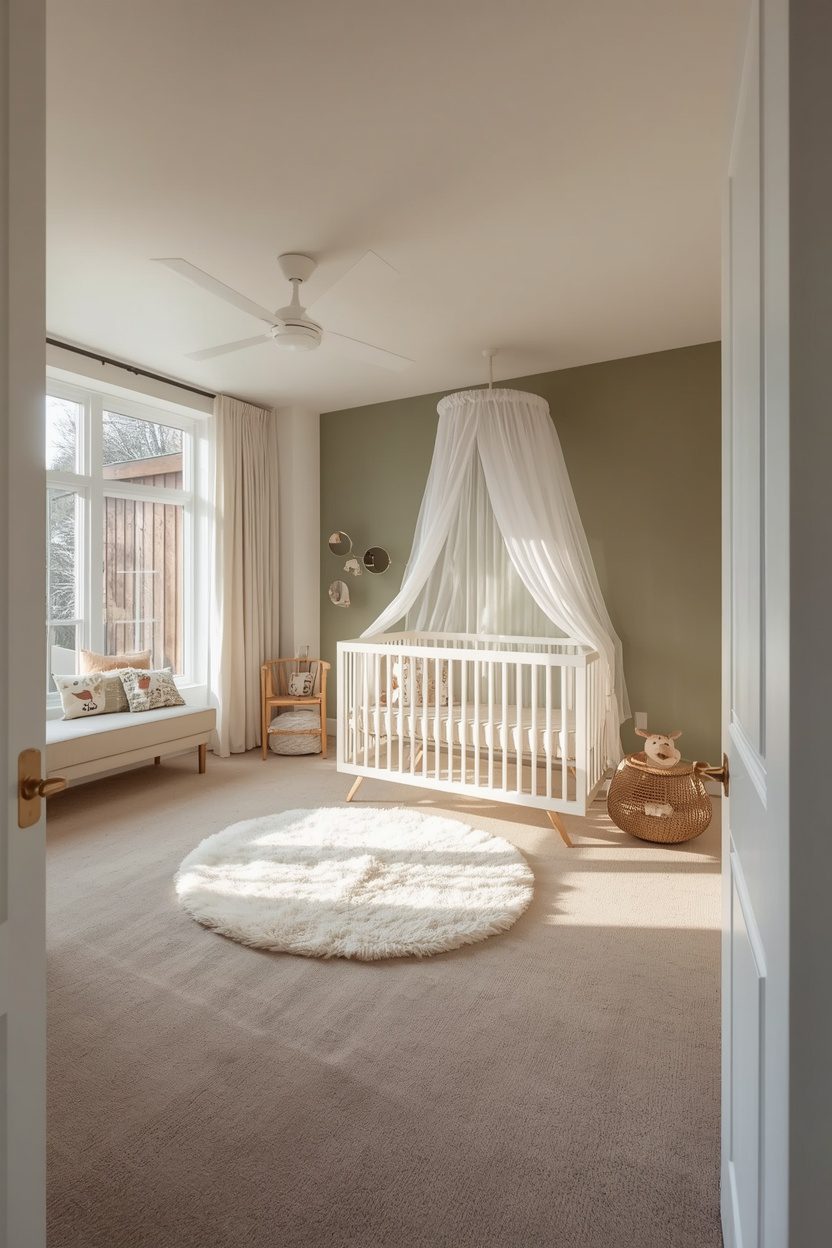
A woodland nursery works best when it leans into soft, natural materials and a calm, muted palette rather than trying to fit every forest animal and leaf pattern into one small room. Sage green walls, warm wood furniture, and soft natural textures like faux fur and jute do more for the dreamy, cozy feeling than an abundance of themed decor items ever could.
These twenty five ideas range from foundational choices like wall color and crib finish to smaller finishing touches like lighting and textiles. Below are a few tips worth keeping in mind as you bring the room together.
| Tips for a Genuinely Cozy Woodland Nursery |
| ★ Tip: Keep the color palette to sage green, warm cream, soft tan, and muted brown rather than introducing brighter, more saturated seasonal colors. |
| ★ Tip: Layer natural textures (wood, jute, faux fur, felt) rather than relying on one single woodland signature like animal prints alone. |
| ★ Tip: Prioritize soft, warm lighting over bright overhead light, especially for nighttime feeding routines. |
| ★ Tip: Choose furniture, like the crib and glider, in warm wood tones so the room’s biggest pieces support the theme rather than working against it. |
| ★ Tip: Leave some open wall and floor space rather than filling every surface, since a woodland nursery should feel calm and airy, not densely themed. |
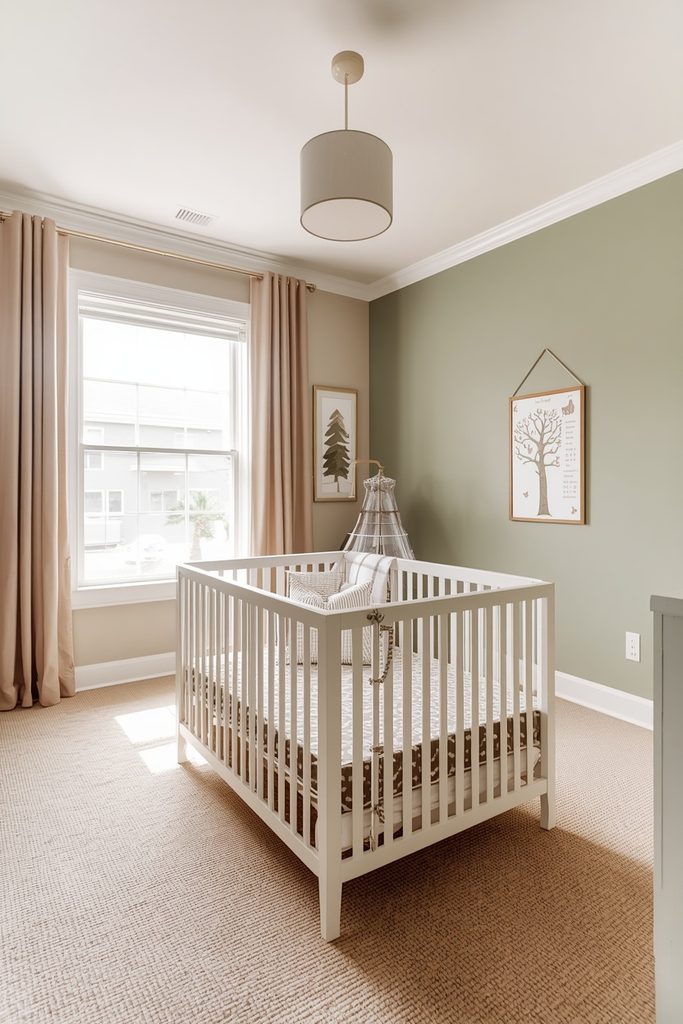
1. A Soft Sage Green Wall as the Room’s Base
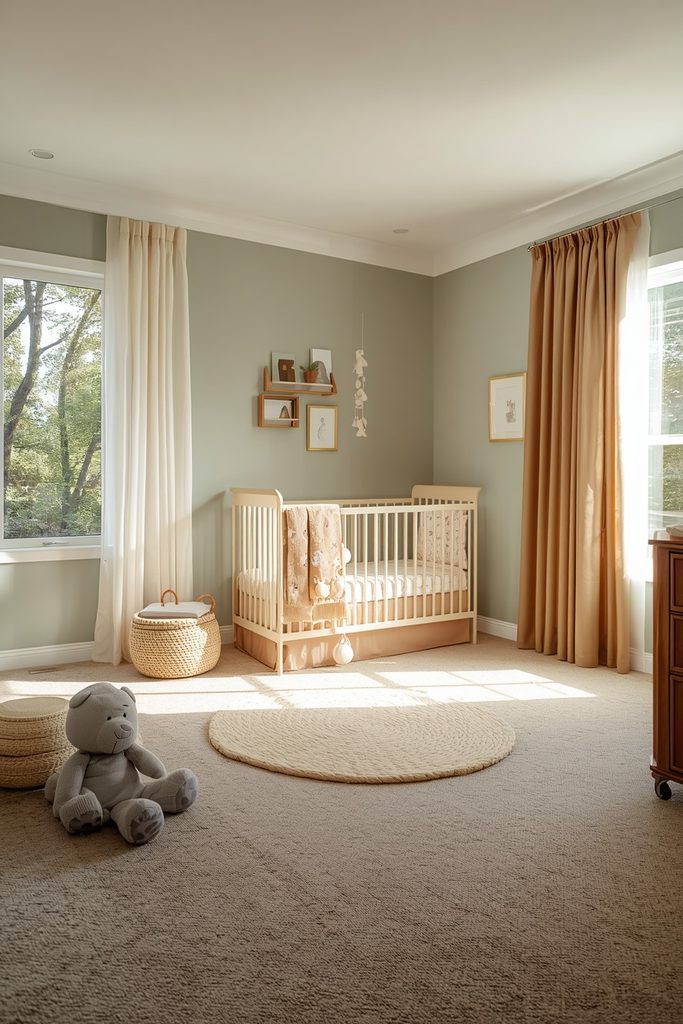
A soft sage green wall, either fully painted or as a single accent, echoes the forest floor and gives the whole room a calm, natural foundation to build the rest of the woodland theme on top of. Choose a muted, slightly greyed-out sage rather than a bright, saturated green for the coziest effect. This is usually the first decision that sets the tone for every other choice in the room.

2. A Canopy Draped Above the Crib
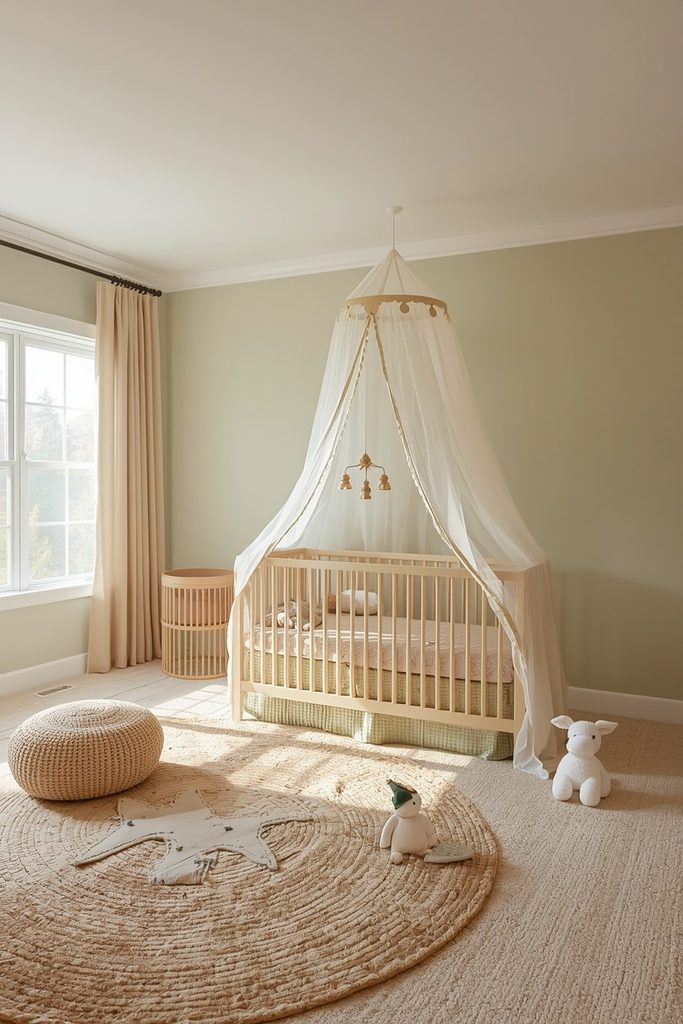
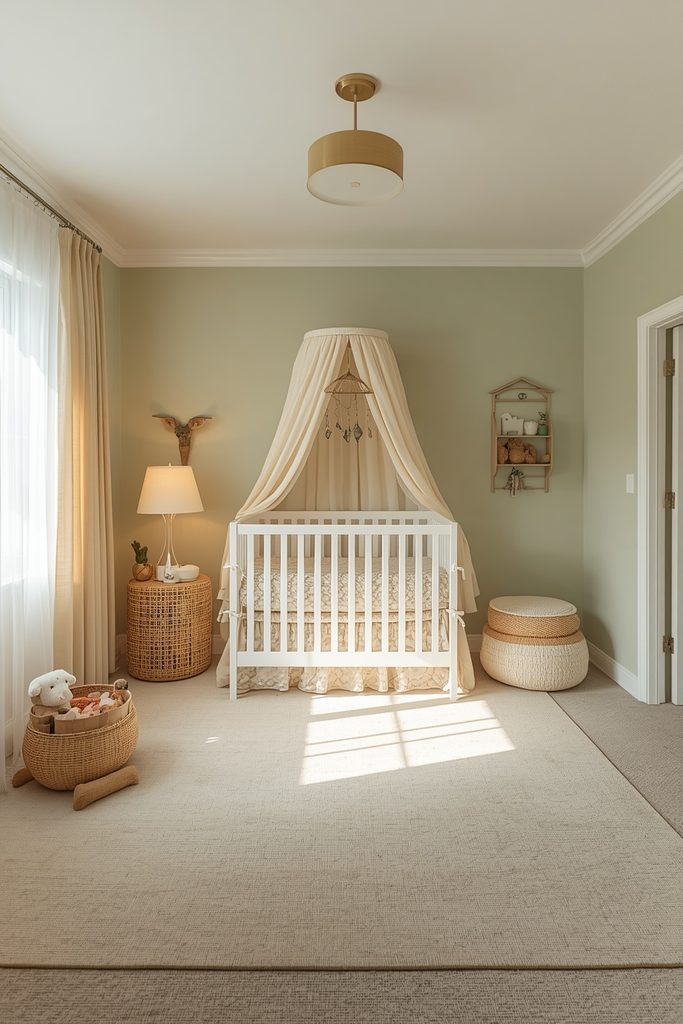
A soft, sheer canopy draped above the crib creates a cozy, enclosed feeling reminiscent of a treehouse nook, adding both a decorative and gently protective layer above where the baby sleeps. Choose a lightweight, breathable fabric in cream or soft tan so it drapes naturally rather than looking heavy. This is one of the most requested cozy woodland nursery details.
3. A Faux Fur Rug in a Warm Neutral Tone
A soft faux fur rug placed beside the crib or in a reading corner adds genuine tactile coziness and works especially well in a warm tan or cream tone that echoes the room’s woodland palette. Choose a rug generously sized rather than a small token piece so it reads as a genuine floor feature. This is a small addition with an outsized comfort payoff for barefoot mornings and evening feedings.

4. Wood Peg Wall Hooks for Storage and Display
A row of simple wood peg hooks mounted on the wall gives you a spot to hang blankets, a stuffed animal, or a small bag while adding a natural, handcrafted material to the room. Choose unfinished or lightly stained wood pegs rather than painted plastic versions for the most authentic woodland feel. This is both a practical storage solution and a styling detail in one.

5. A Mobile With Felt Woodland Animals
A soft felt mobile featuring simple woodland animal shapes, hung above the crib, gives the baby something gentle to look at while reinforcing the room’s theme in a subtle, tactile way. Choose muted, natural felt colors rather than bright primary tones to keep the mobile cohesive with the rest of the palette. This is a classic nursery detail that also makes a lovely handmade or gifted item.

6. A Reading Nook With a Small Chair and Basket of Books
A small chair or glider paired with a low basket of board books creates a dedicated corner for quiet time and bedtime stories, which becomes one of the most-used spots in the room once the baby grows a bit. Add a soft throw and a small side table for a bottle or a cup of tea. This nook also gives the room a lived-in, considered feeling beyond just the crib area.

7. Botanical or Leaf-Print Wallpaper on One Wall
A subtle botanical or leaf-print wallpaper on a single accent wall brings pattern and depth without overwhelming the room, especially when kept in muted greens and creams rather than bold contrasting colors. Apply it to the wall behind the crib or the wall facing the doorway for the most visual impact. Peel-and-stick versions make this an easy weekend project.

8. A Wood Tree Slice Wall Decor Set
A set of wood slice discs, in varying sizes, arranged on the wall in a loose cluster brings a genuine, natural material into the room as simple, understated wall art. Choose slices with visible grain and a light natural finish rather than painted versions for the most authentic woodland look. This pairs beautifully with the peg wall hooks and wood tones elsewhere in the room.

9. Soft Woodland Animal Plush Toys as Styling
A few soft plush woodland animals, like a fox, deer, or owl, displayed on a shelf or in the crib corner (kept out of the crib itself for safety once the baby is sleeping there) double as both toys and decor. Choose plushes in muted, natural tones rather than bright synthetic colors to keep them cohesive with the room’s palette. This is an easy, affordable way to reinforce the theme.

10. A Warm Wood Crib Instead of a White or Painted One
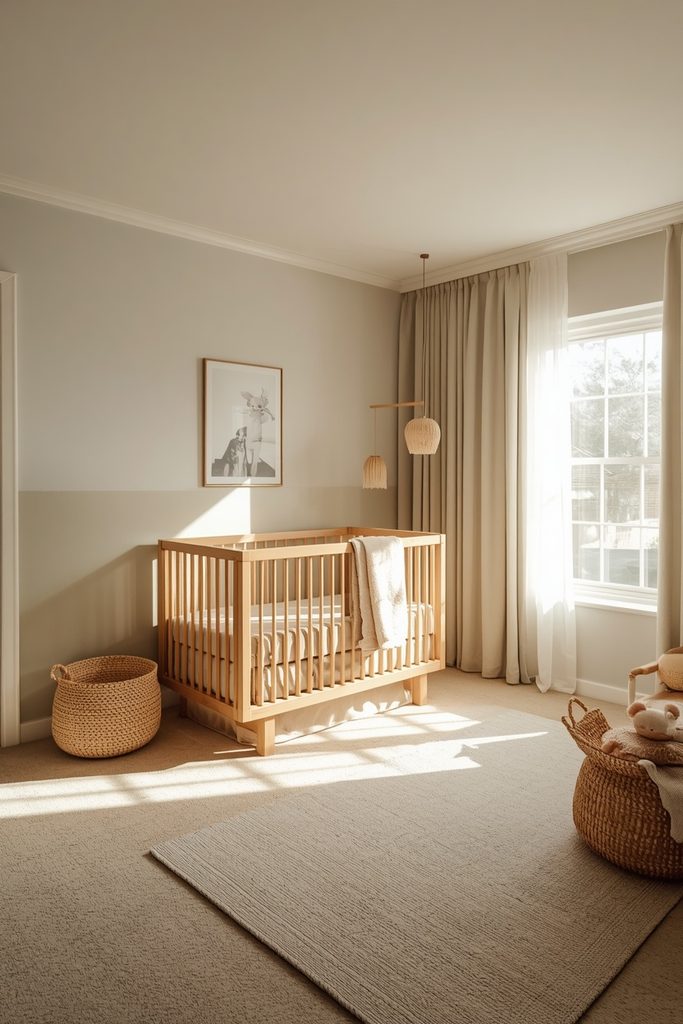
Choosing a crib in a natural or warm-toned wood finish, rather than a painted white or grey version, ties the room’s biggest piece of furniture directly into the woodland theme from the start. Choose a finish that complements your existing floor or other wood furniture in the room. This single furniture choice does a lot of work toward the overall aesthetic.
11. A Cloud or Moon-Shaped Nightlight
A soft, glowing cloud or moon-shaped nightlight gives the room a gentle, ambient glow for nighttime feedings without needing to turn on a bright overhead light. Choose a warm, dimmable option rather than a cool white one for the coziest effect. This small detail also doubles as a sweet piece of nursery decor during the day.
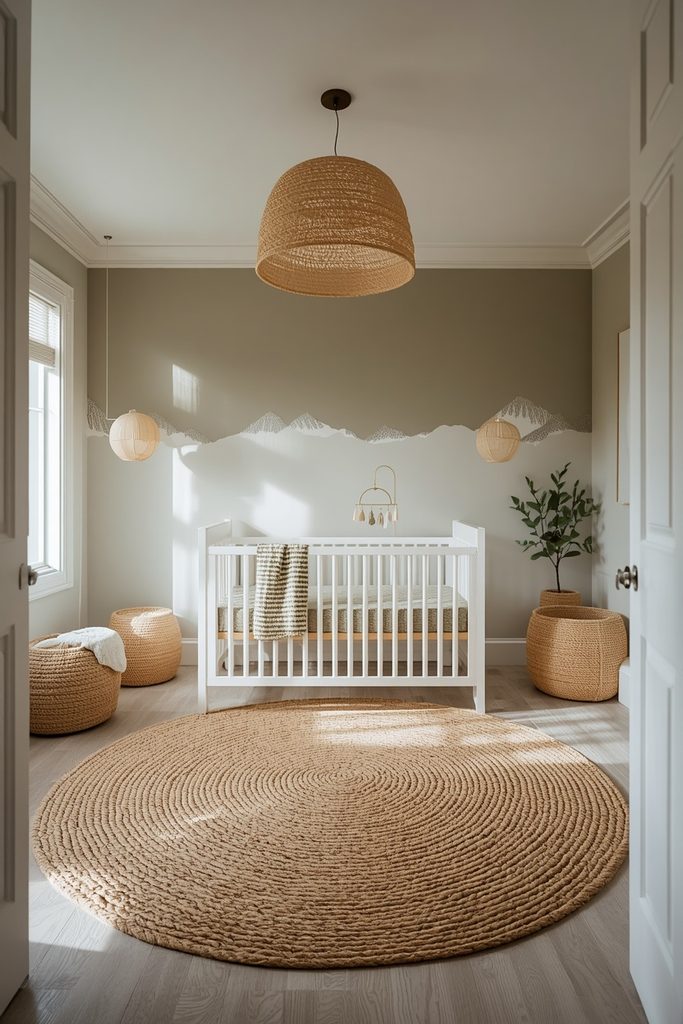
12. A Braided or Jute Area Rug Underfoot
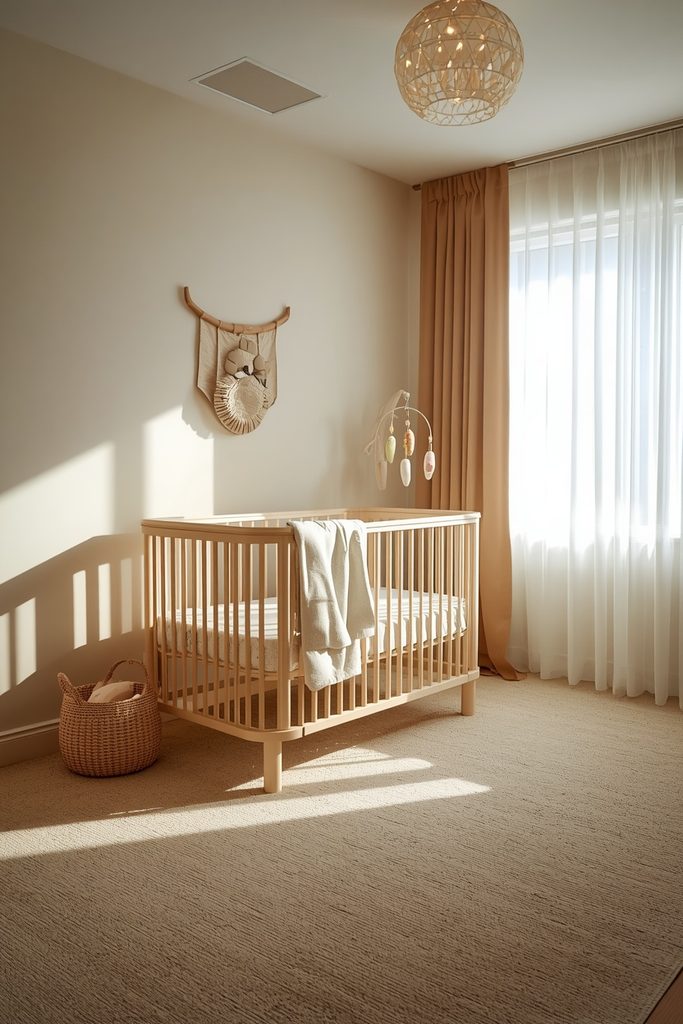
A natural jute or braided rug grounds the room in genuine natural fiber texture, working especially well layered under the crib or in the main open floor area. Choose a rug soft enough to be comfortable for supervised tummy time later on. This material choice reinforces the woodland theme even more than a plain solid-color rug would.
13. A Gallery Wall of Woodland Animal Prints
A small cluster of framed prints featuring foxes, deer, owls, or rabbits in a soft, illustrated style brings personality to a blank wall while reinforcing the theme through art rather than pattern or furniture. Keep the frames in one consistent finish, like natural wood or matte black, for a cohesive look. Three to five prints in a loose grid is usually enough for a nursery-sized wall.

14. A Woven Basket for Diapers and Essentials
A large woven basket beside the changing area keeps diapers, wipes, and essentials organized while adding another layer of natural texture to the room. Choose a basket in a warm, natural tone that complements the rest of the room’s palette. This is a practical storage solution that also functions as intentional styling.

15. Soft Curtains in a Muted Botanical Print
Lightweight curtains in a subtle leaf or botanical print, in the same muted green and cream tones as the rest of the room, soften the window while tying into the overall woodland theme. Choose a blackout lining behind the decorative fabric to help with daytime naps. This detail also helps the room feel finished from every angle, not just around the crib.

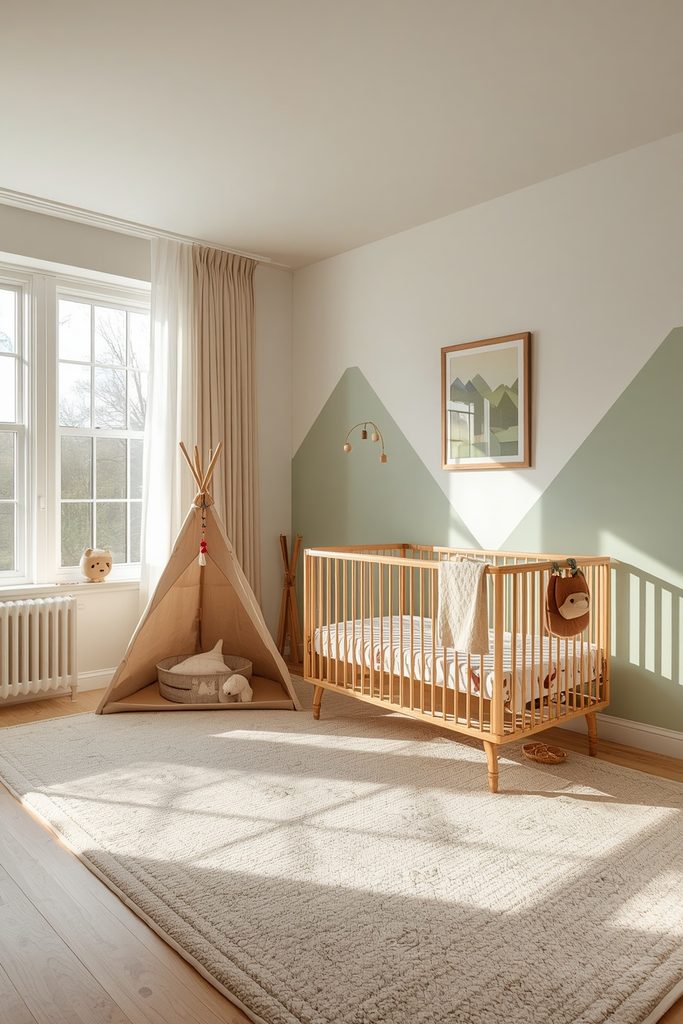
16. A Teepee or Play Tent for a Cozy Hideaway
A small fabric teepee or play tent in the corner of the room gives an older baby or toddler a cozy hideaway space, and even before that stage it functions as a sweet, photogenic decor piece. Choose a canvas or cotton fabric in a muted tone rather than a bright primary color. This is a good addition to plan for as the nursery transitions into a toddler room later on.
17. A Woodland Creature Growth Chart
A fabric or wood growth chart featuring a woodland scene, like a tree with height markers climbing upward, adds a functional keepsake element that grows with the child well beyond the nursery years. Choose one with a simple illustrated style that matches the rest of the room’s aesthetic. This is a detail that becomes more meaningful over time rather than losing relevance as the baby grows.
18. A Rocking Chair or Glider With a Soft Throw
A comfortable glider or rocking chair, dressed with a soft knit throw in a warm neutral tone, becomes the room’s most-used piece of furniture during late-night feedings and quiet moments. Position it near the window if possible for natural light during daytime use. Choose a chair with a deep enough seat for genuine comfort during long feeding sessions.

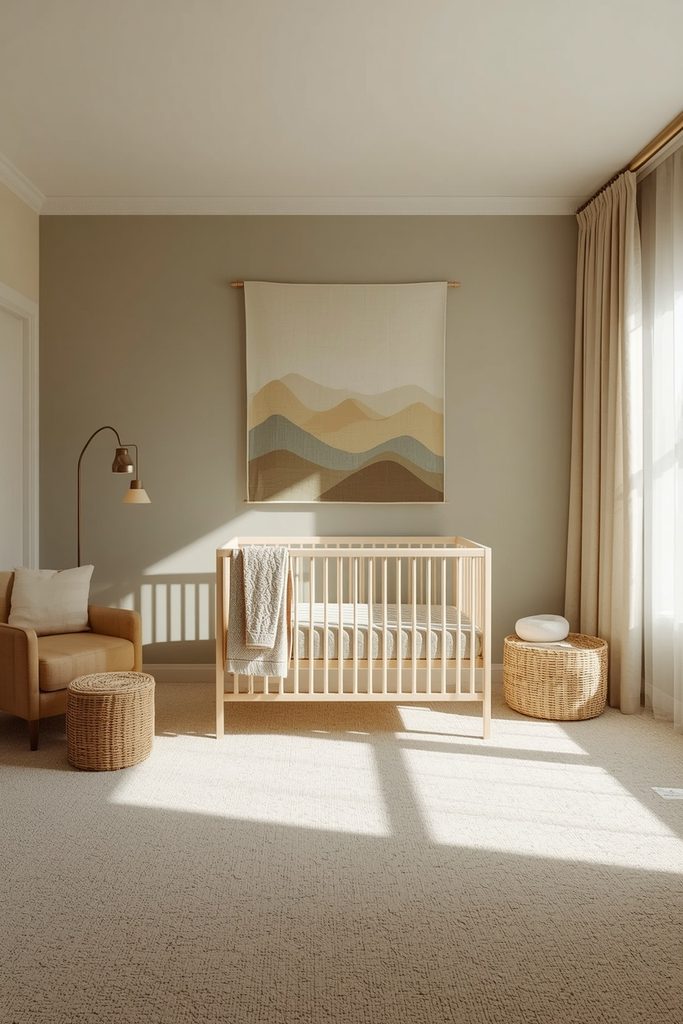
19. A Fabric Wall Hanging With a Forest Scene
A soft, woven or printed fabric wall hanging depicting a simple forest scene, like layered tree silhouettes, brings texture and visual interest to a large blank wall without needing any hardware beyond a simple hanging rod. Choose muted tones that complement rather than compete with the room’s existing palette. This is a striking, larger-scale alternative to a cluster of small framed prints.
20. A Small Faux Potted Tree or Plant in the Corner
A small faux tree or a low-maintenance real plant in the corner of the room brings a genuine living, natural element that reinforces the woodland theme better than any printed decor could. Choose a plant safe to have in a room with a baby, since some varieties aren’t recommended near infants. This is a simple addition that adds real depth and life to the room.
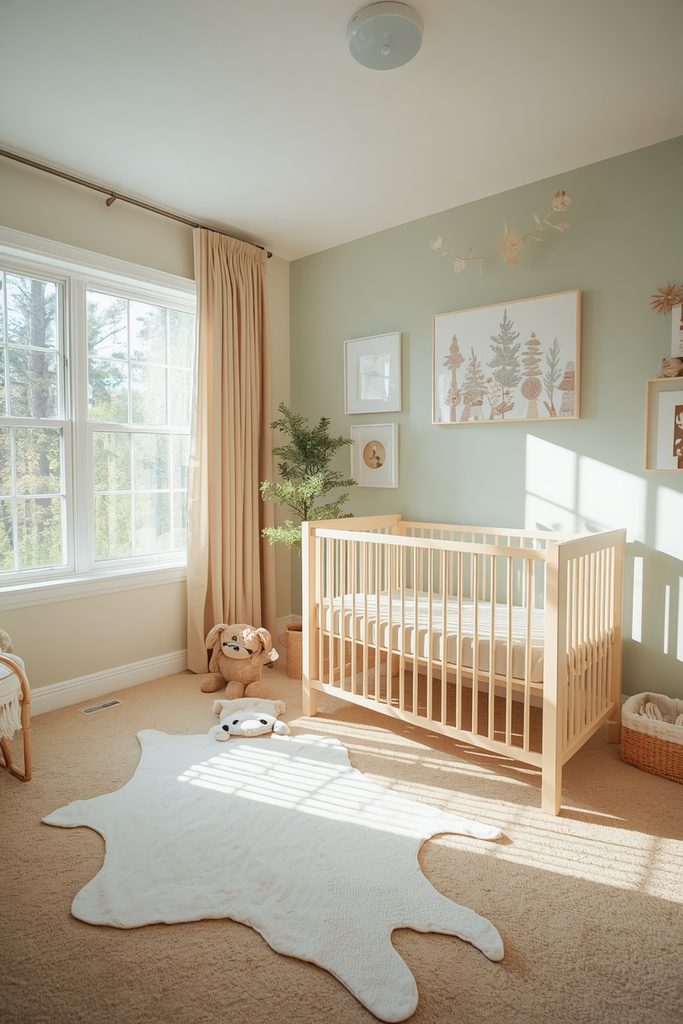
21. A Personalized Name Sign in Wood or Felt
A wood-cut or felt name sign, hung above the crib or on the door, personalizes the space while staying consistent with the room’s natural material palette. Choose a simple, readable font rather than an overly ornate script for the most cohesive look. This is often one of the first pieces new parents choose for the nursery, since it makes the space feel truly theirs.
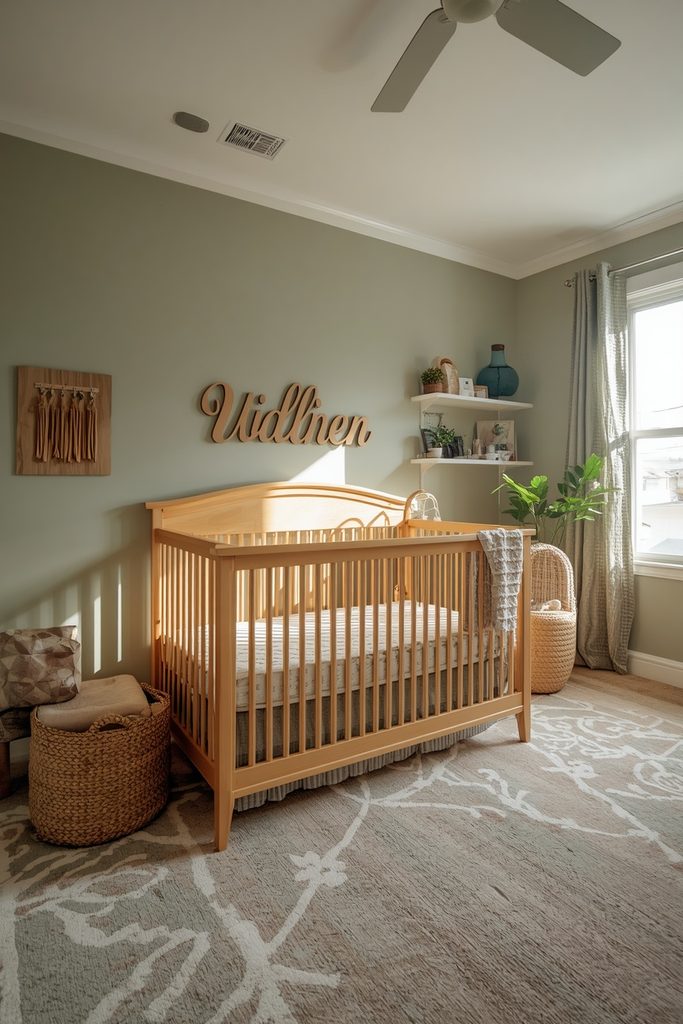
22. A Soft Knit Blanket Ladder for Extra Throws
A small wooden ladder leaned against the wall, holding one or two extra soft blankets, gives the room a styled, cozy detail while keeping practical items within easy reach. Choose blankets in coordinating warm neutral tones rather than bright or patterned ones. This is a low-cost addition that adds genuine visual warmth to the room.
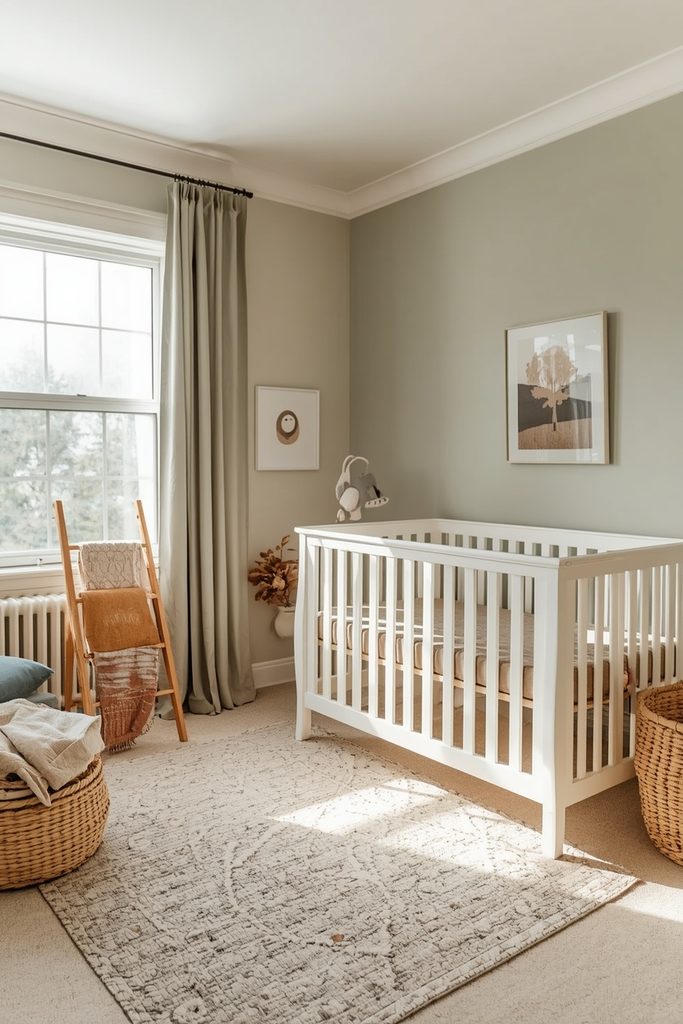
23. A Woodland Alphabet or Number Print
An educational print featuring woodland animals paired with letters or numbers brings a playful, functional piece of art that serves the child well beyond infancy. Choose a design with the same muted, illustrated style as the rest of the room’s art. This is a good addition for a wall that’s otherwise a bit bare once the crib and main furniture are placed.
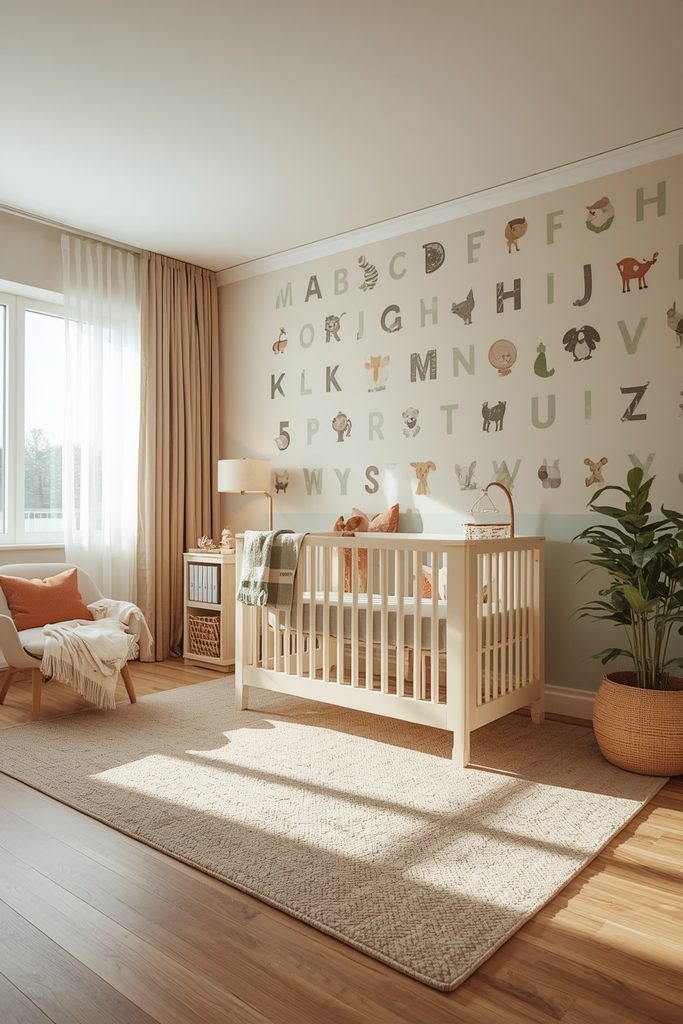
24. A Soft Area for Tummy Time With a Padded Mat
A padded play mat, chosen in a muted tone or a subtle woodland print rather than the bright primary colors most mats default to, gives the baby a safe floor space for supervised play while staying visually consistent with the room. Position it in an open area away from furniture edges. This detail matters more once the baby is a few months old, but it’s worth planning for from the start.
25. A Warm, Layered Lighting Plan Beyond the Overhead Fixture
Adding a soft table lamp or the moon nightlight in addition to the room’s main overhead light lets you keep things dim and calm during nighttime routines rather than relying on one bright switch. Choose warm-toned bulbs throughout rather than cool white for the coziest overall feeling. This final layering detail ties together every other design choice made throughout the room.
Where I’d Start If I Only Did Three Things
If I only had a weekend, I’d start with a soft sage green accent wall from idea one, since it sets the tone for every other decision in the room. Second, I’d add a canopy draped above the crib from idea two, because it delivers one of the most dreamy, photogenic details for relatively little cost or effort. Third, I’d set up a reading nook with a glider and a basket of books from idea six, since it becomes one of the most genuinely used spots in the room once the baby arrives.
FAQ
What colors work best for a cozy woodland nursery?
Sage green, warm cream, soft tan, and muted brown consistently create the calm, natural feeling associated with a woodland theme. Avoid bright, saturated greens or primary colors, since muted, slightly greyed tones read as considerably cozier and more sophisticated.
Do I need a lot of woodland animal decor for the theme to come through?
No, a few well-chosen pieces, like a felt mobile, a small gallery wall, and a couple of plush toys, are usually enough to establish the theme clearly. Relying too heavily on animal prints and figures across every surface can start to feel cluttered rather than genuinely cozy.
What’s the most important furniture choice for a woodland nursery?
The crib, since it’s the largest piece of furniture in the room, has the most influence on the overall look. Choosing a warm wood finish rather than a painted white or grey version ties the whole room’s biggest piece directly into the woodland theme from the start.
How do I keep the room feeling calm rather than overly themed?
Leaving some open wall and floor space, rather than filling every surface with decor, keeps a woodland nursery feeling airy and restful rather than densely themed. Choosing a restrained, three-to-four-tone color palette also helps every individual piece feel considered rather than competing for attention.
Conclusion
A dreamy, cozy woodland nursery comes down to a calm, muted palette, warm natural materials, and a handful of well-chosen decor pieces rather than an abundance of themed items on every surface. Start with the wall color and crib finish, layer in soft textures and warm lighting, and the room will feel like a genuine, restful retreat for both baby and parent.